 ChatGPT,
  Claude,
  Gemini,
  Grok — all four for
 Reimage Your Server for LAMP Stack Installation
The LAMP Stack—Linux, Apache, MySQL, and PHP—is one of the most popular platforms for hosting dynamic websites and web applications. If you have a Bluehost Self-Managed VPS or Virtual Dedicated Server (VDS), you can use the Bluehost Portal to easily install and manage these components. This article will guide you step-by-step on how to install the LAMP stack using the Bluehost Portal.
What is the LAMP Stack?
- Linux: The operating system that runs your server.
- Apache: A reliable and widely used web server software.
- MySQL: The database engine for managing your website’s data.
- PHP: A server-side scripting language to create dynamic content.
Together, these components create a powerful environment for hosting a variety of web applications.
How to Reimage Your Server for LAMP Stack Installation
To install LAMP Stack:
This applies to both VPS and VDS.
- You can install only one application using the one-click installer.
- To change or delete your application, follow the guide: How to Change an Application. Create a backup of your existing applications or templates.
- To keep your current template, install the new application manually using SSH. Follow the same steps for both Self-Managed VPS and Virtual Dedicated Server (VDS). The system automatically selects the recommended operating system for LAMP Stack.
- Log in to your Bluehost Portal.
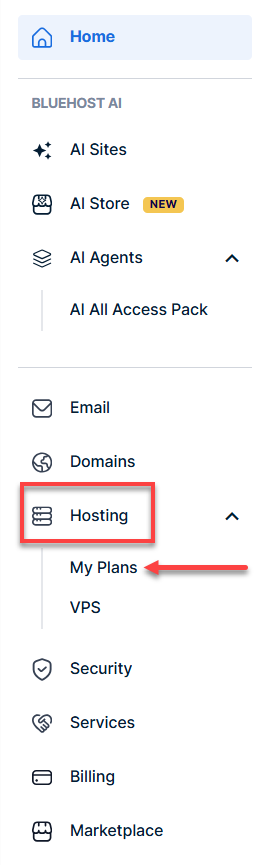
- In the left-hand menu, click Hosting, then select My Plans.
- Click the Manage button on the hosting package you want to reimage.

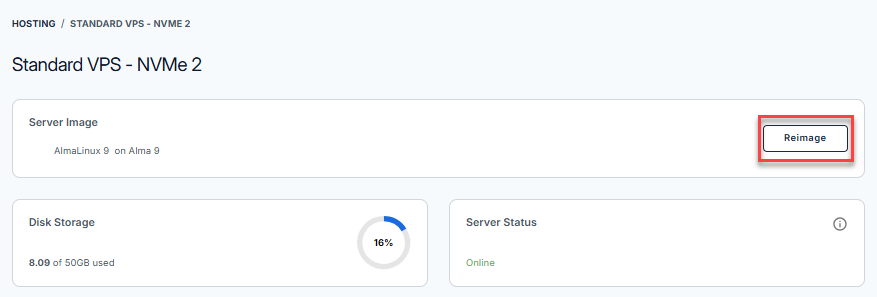
- Navigate to the Server Image section, then click the Reimage button.
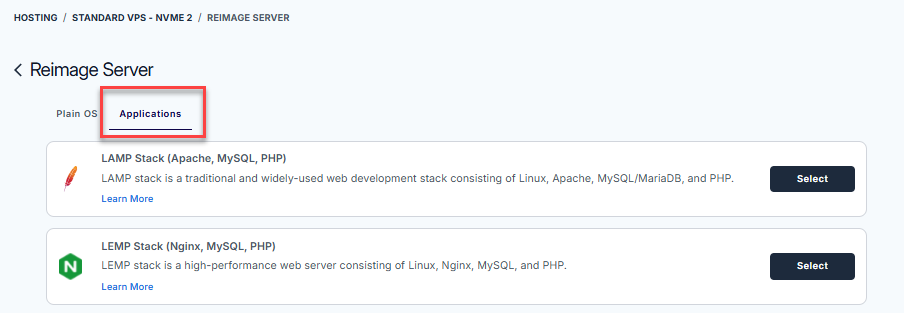
- In the Reimage server page, select Applications.
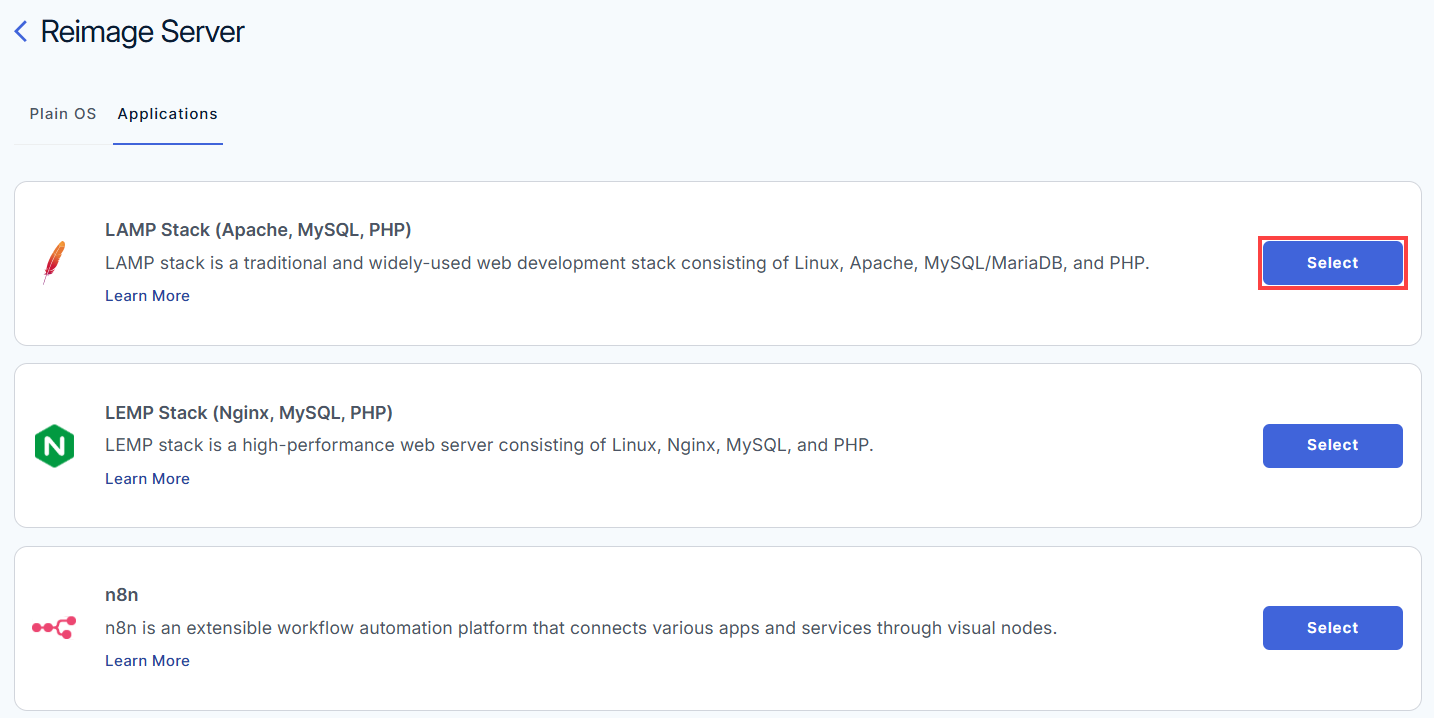
- From the list of available applications, find LAMP Stack and click Select.
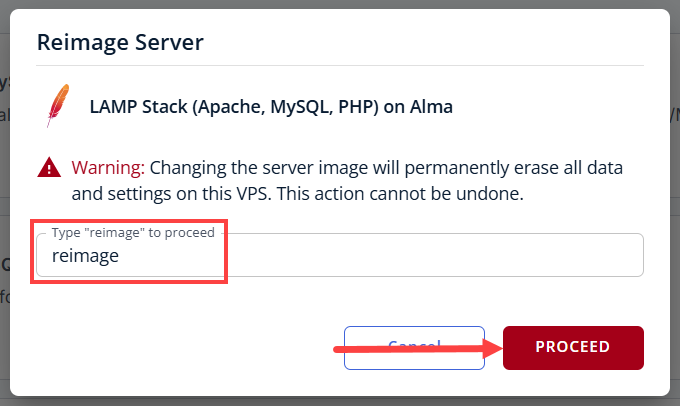
- On the pop-up message, type reimage in the field, then click Proceed.
- Wait a few moments while the installation completes.

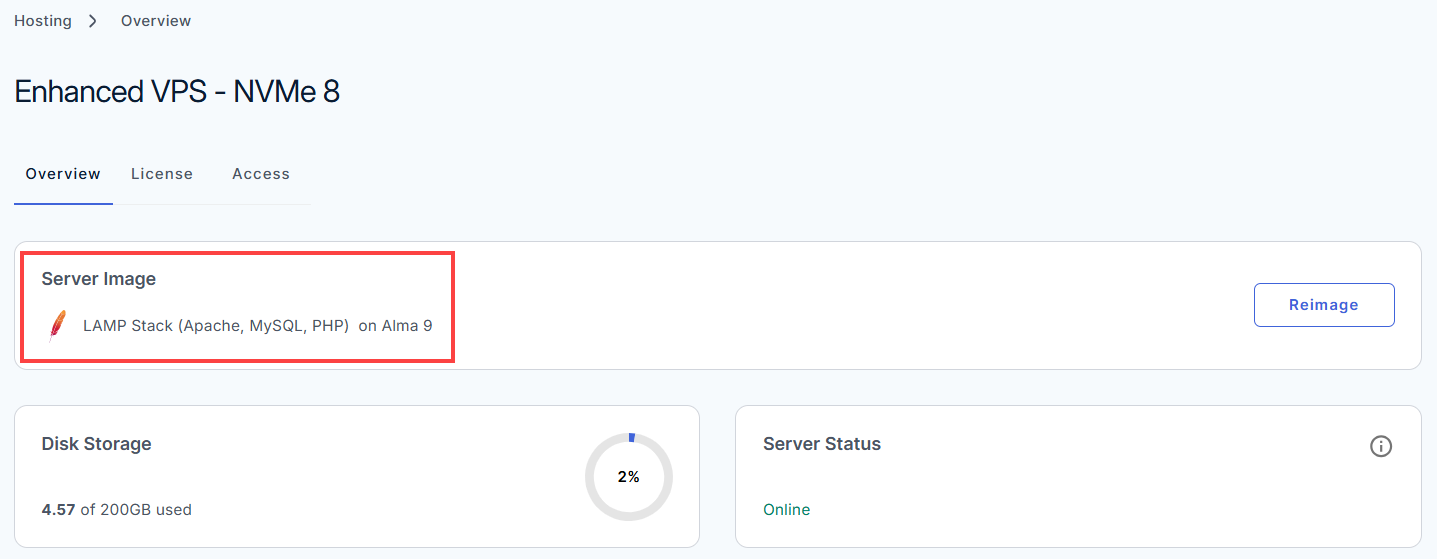
- Once completed, you will see LAMP Stack listed in the Server Image section.
After you complete reimaging your server, your Self-Managed VPS and Virtual Dedicated Server (VDS) hosting will begin provisioning.
How to Verify Your LAMP Stack is Running in Docker
Use the steps below to confirm your LAMP stack is up and running, and to understand where your website files live.
- Connect to your server via SSH.
Use your server IP and credentials with an SSH client:ssh root@your_server_ip - Check if the LAMP Docker containers are running:
docker ps
You should see containers with images such as
php:apache(web/PHP),mysql:latest(database), and possiblytraefik:latest(proxy). - Verify that Apache is serving content:
In your browser, visithttp://your_server_ip/. If you see the message “It works!”, Apache inside Docker is running and accessible. - Confirm PHP is working:
echo '<?php phpinfo(); ?>' > /tmp/info.php
docker cp /tmp/info.php $(docker ps -qf "ancestor=php:apache"):/var/www/html/info.phpdocker exec $(docker ps -qf "ancestor=php:apache") rm /var/www/html/info.php- Create a PHP info file on your server:
- In your browser, go to
http://your_server_ip/info.php. You should see the PHP Information page, which confirms PHP is installed and functioning. - For security, remove the test file afterward:
Summary
Using the Bluehost Portal simplifies the installation and management of the LAMP stack on your Self-Managed VPS and Virtual Dedicated Server (VDS). With Apache and PHP usually pre-installed, your main focus is setting up MySQL databases and uploading/configuring your PHP application. This powerful combination gives you full control over your hosting environment to build and deploy dynamic websites efficiently and securely.