 ChatGPT,
  Claude,
  Gemini,
  Grok — all four for
 VPS & Dedicated Hosting: Restarting Services
Managing a VPS or Dedicated Server requires knowing how and when to restart services to resolve issues efficiently and maintain optimal performance. Restarting only the affected service—rather than the entire server—can help minimize downtime and prevent unintended disruptions.
Restarting a Single Service
Restarting an individual service is the recommended first step when troubleshooting server-related issues.
- Log in to your Bluehost Portal.
- In the left-hand menu, click Hosting, then select My Plans.
- On the hosting details page, click the WHM button.
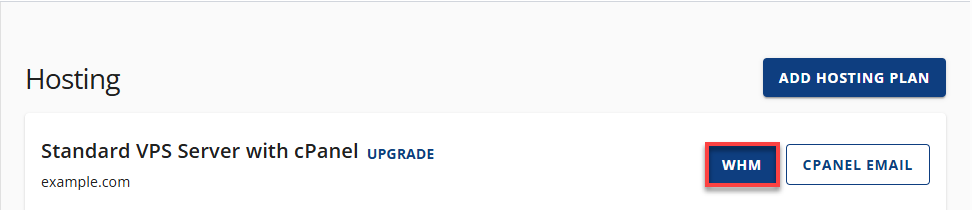
Once logged in:
- Use the search box (left-side panel or top of the page) and search for Restart Services.

- Under Restart Services, choose the service you want to restart.
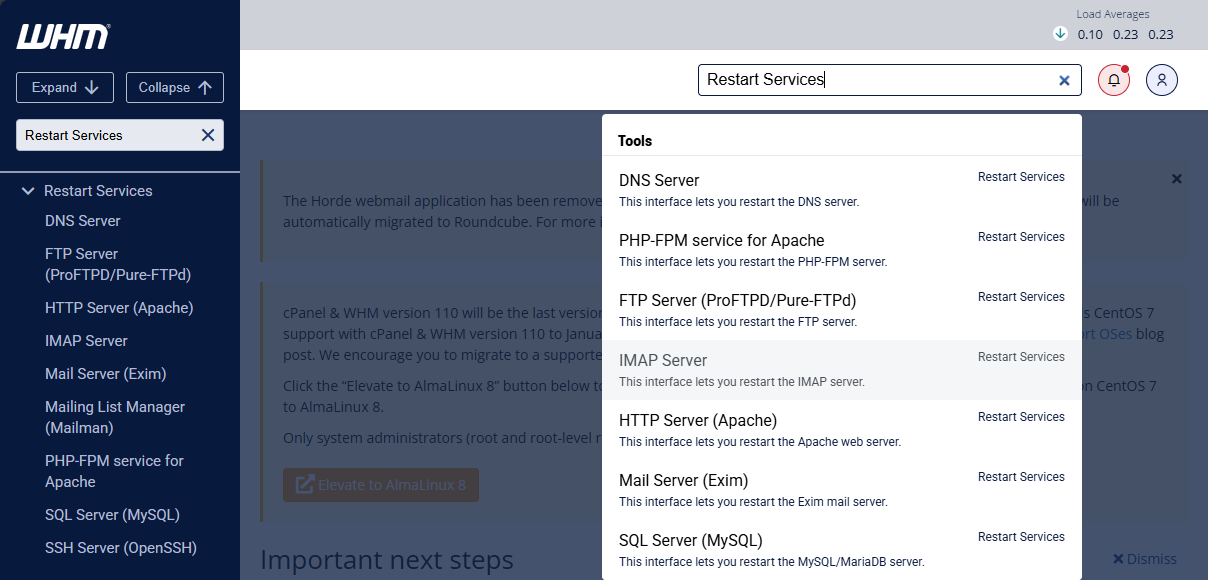
- DNS Server – Used to restart DNS services such as BIND, NSD, PowerDNS, or MyDNS.
- HTTP Server (Apache) – Used to restart the Apache® web server.
- IMAP Server – Used to restart the Dovecot service.
- Mail Server (Exim) – Used to restart the Exim mail transfer agent.
- Mailing List Manager (Mailman) – Used to restart the Mailman mailing list service.
- PHP-FPM Service for Apache – Used to restart the PHP-FPM service used by Apache.
- SQL Server (MySQL) – Used to restart the MySQL® database service.
- SSH Server (OpenSSH) – Used to restart the OpenSSH service.
If you are unsure which service is causing the issue, restart services one at a time until the problem is resolved. - Click Yes to confirm the restart.
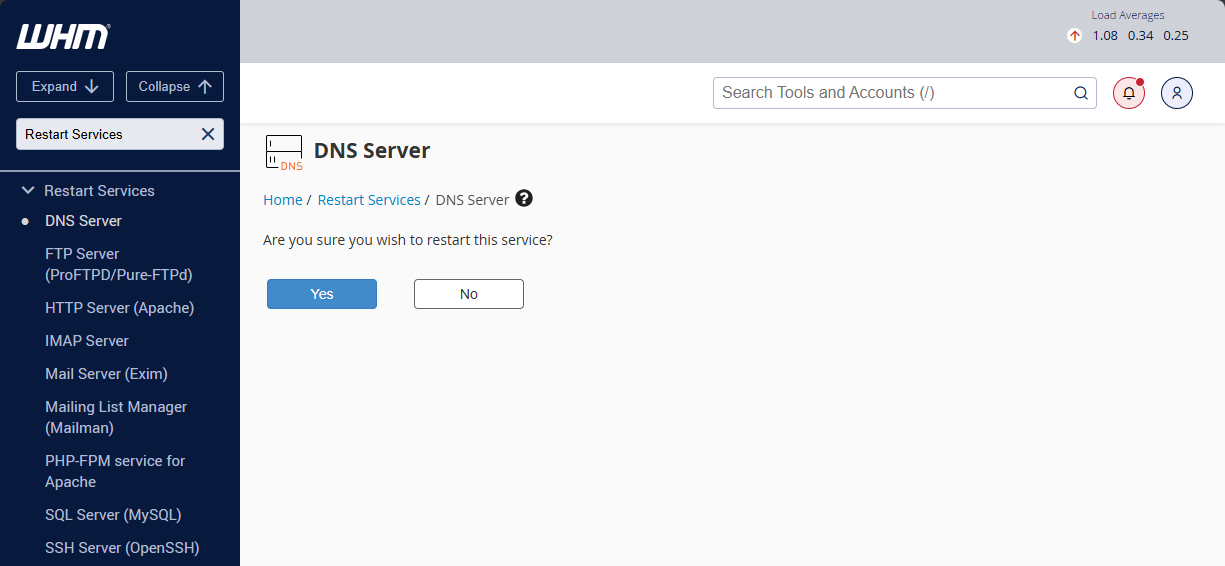
- Wait for the restart to complete, then check whether the issue has been resolved.
Restarting the Server
Recommended Approach
If possible, contact support so the reboot can be performed safely. This helps prevent issues such as:
- Incomplete reboots
- Forced file system checks (FSCK)
- Potential data loss or corruption
FSCK (File System Consistency Check) is automatically triggered after an abrupt shutdown. While it can fix minor inconsistencies, it cannot always recover from serious file system damage.
Rebooting via Bluehost Portal
- Log in to your Bluehost Portal.
- Click the Hosting tab on the left side of your screen.
- Click Reboot Server.
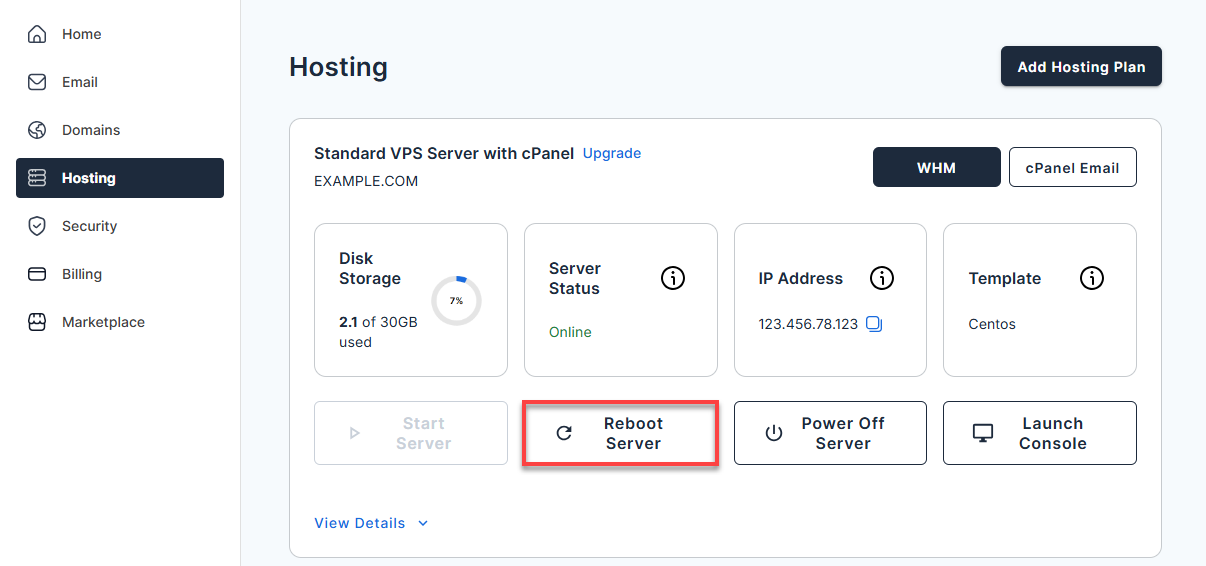
- Wait for the server status to return to Running, then verify that the issue is resolved.
Enabling Monitor to Auto-Restart Services
Some services should not have Monitor enabled, as repeated failures usually require administrator attention:
- Entropy Chat Server
- Exim Mail Server (no monitor only Exim Mail Server (on another port))
- Eximstats
- Antirelayd
If you experience issues with these services, we recommend contacting support via phone or chat for assistance.
To enable Monitor in WHM:
- Log in to your Bluehost Portal.
- In the left-hand menu, click Hosting, then select My Plans.
- On the hosting details page, click the WHM button.
- Use the search box (left-side panel or top of the page) and search for Service Configuration.
- Under Service Configuration, click Server Manager.
- In the right-hand panel, locate the service you want to manage.
- Ensure that both Enabled and Monitor are checked for the service.
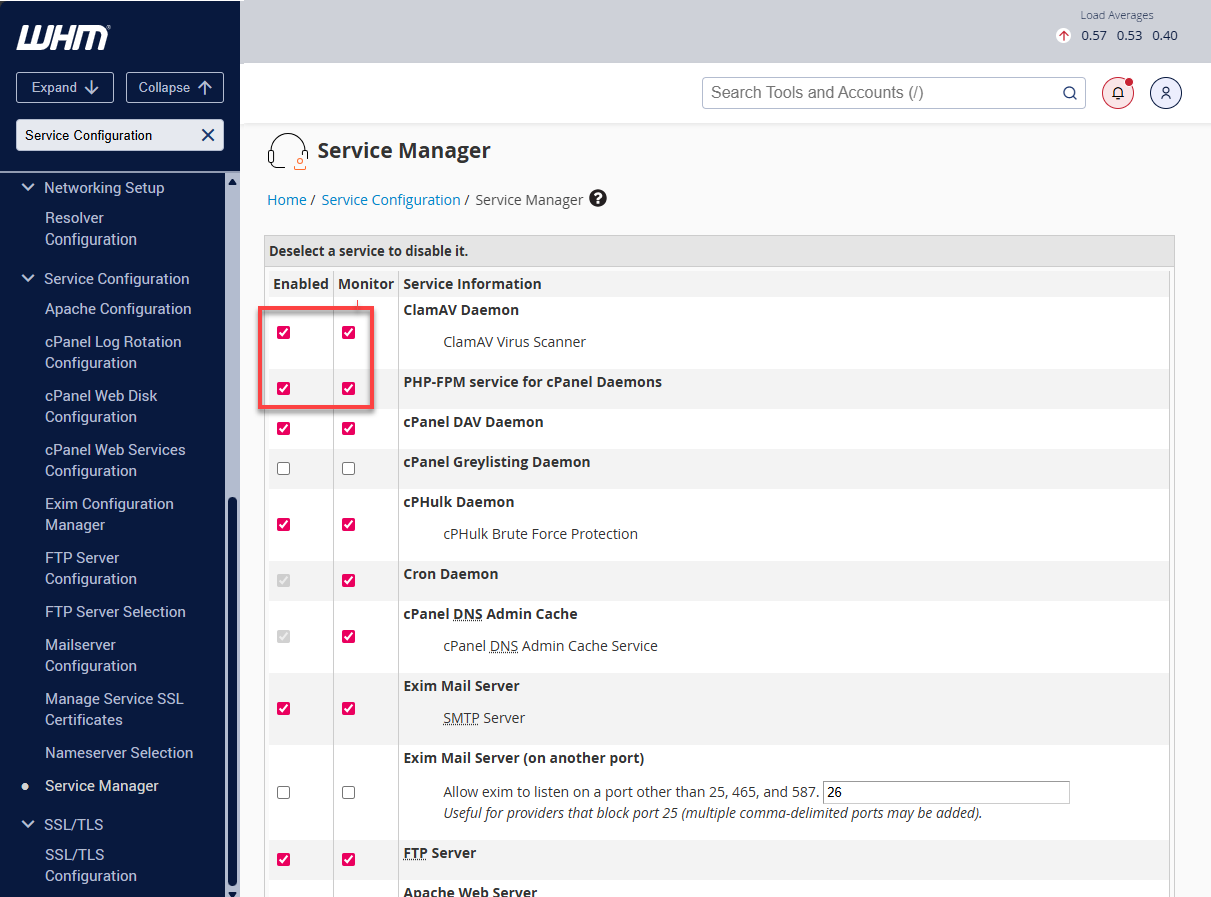
- Scroll to the bottom and click Save.
Once enabled, WHM will automatically restart the service if it stops responding.
Summary
Restarting services on your VPS or Dedicated Server is a critical part of maintaining server health and performance. Whenever possible:
- Restart only the affected service instead of the entire server
- Use Monitor to automatically restart stable, supported services
- Avoid enabling Monitor on services that require manual investigation
- Reboot the server only as a last resort and with proper precautions
By following these best practices, you can troubleshoot issues quickly, reduce downtime, and keep your server running smoothly with confidence.
If you need further assistance, Bluehost Chat Support is available 24 hours a day, 7days a week while Bluehost Phone Support is available 7 days a week from 7 am-12 midnight EST.
- Chat Support - While on our website, you should see a CHAT bubble in the bottom right-hand corner of the page. Click anywhere on the bubble to begin a chat session.
- Phone Support -
- US: 888-401-4678
- International: +1 801-765-9400
You may also refer to our Knowledge Base articles to help answer common questions and guide you through various setup, configuration, and troubleshooting steps.