 ChatGPT,
 Claude,
 Gemini,
 Grok — all four for

- Discover why Rocky Linux is the premier bug-for-bug compatible replacement for enterprise applications.
- Learn how a Rocky Linux virtual private server provides the isolated resources and root access your development team needs.
- Compare Rocky Linux against alternatives like AlmaLinux and CentOS Stream for production workloads.
- Explore the performance benefits of pairing this robust OS with powerful NVMe SSD storage.
- Understand the technical requirements and administrative limitations before migrating your current server stack.
With so many VPS operating systems available, choosing the right one can be confusing. Rocky Linux makes that choice easier for technical founders and developers who want a stable, enterprise-grade platform for production workloads.
It offers the reliability of a RHEL-compatible system, along with the control needed to build, run and scale with confidence. In this guide, we will look at what a Rocky Linux VPS is, why it matters and when it makes sense to use one.
What is a Rocky Linux VPS?
Rocky Linux is an open-source operating system created as a community-driven alternative to CentOS. Known for its stability, security and compatibility with Red Hat Enterprise Linux(RHEL), it is a strong choice for businesses that need a reliable platform for production environments.
It emerged as a primary successor to CentOS Linux after that project shifted to CentOS Stream. The original founder of CentOS created Rocky Linux to fill the void left in the enterprise server space.
As a result, Rocky Linux is 100% bug-for-bug compatible with Red Hat Enterprise Linux (RHEL). This means any software built for RHEL will run flawlessly on a Rocky Linux server. It offers the rock-solid stability and long-term support lifecycles that developers demand for production applications.
When building VPS hosting for developers, this operating system provides a dependable foundation without unexpected breaking changes. Now that we have covered what Rocky Linux is and how it works in a VPS environment, let us look at why it is such a strong choice for servers.
What are the advantages of using Rocky Linux on a server?
Rocky Linux is a strong choice for server environments because it offers:
- Stability for production workloads: It is built to support enterprise applications with fewer unexpected changes.
- RHEL compatibility: Its compatibility with Red Hat Enterprise Linux makes migration easier and helps maintain existing environments with minimal disruption.
- Strong security: Rocky Linux provides a secure foundation for hosting business-critical applications.
- Community-driven support: It is backed by an active open-source community focused on long-term reliability.
- Cost efficiency: As an open-source operating system, it avoids the licensing costs that come with proprietary platforms.
These advantages make Rocky Linux a dependable option for developers and businesses that need a secure, stable and production-ready server environment.
However, Rocky Linux is not the only enterprise Linux option available. Comparing it with CentOS Stream and AlmaLinux makes it easier to see where it stands out.
How does Rocky Linux compare to CentOS and AlmaLinux?
Choosing the right enterprise Linux operating system matters because it affects your server’s stability, security and long-term reliability. Rocky Linux, CentOS Stream and AlmaLinux are often compared because they all relate closely to Red Hat Enterprise Linux, but they serve different purposes.
Here is a simple comparison:
| Feature | Rocky Linux | CentOS Stream | AlmaLinux |
|---|---|---|---|
| Release model | Stable downstream | Rolling upstream | Stable downstream |
| RHEL compatibility | Bug-for-bug compatible | Not fully compatible | Bug-for-bug compatible |
| Best for | Production workloads | Testing and previewing changes | Production workloads |
| Backing | Community-driven | Red Hat | CloudLinux |
Rocky Linux vs CentOS Stream
CentOS Stream is designed as a preview of what may come next in RHEL. Because it follows a rolling release model, updates arrive earlier and changes can be less predictable. That makes it more suitable for testing than for stable production environments.
Rocky Linux is built for the opposite purpose. It is designed to provide a stable and reliable platform for production workloads, with predictable updates and long-term support.
Rocky Linux vs AlmaLinux
Rocky Linux and AlmaLinux are both strong alternatives to CentOS and both work well for production use. They offer similar stability and RHEL compatibility, so the main difference is in how they are governed.
Rocky Linux is community-driven, while AlmaLinux has strong backing from CloudLinux. For many users, Rocky Linux stands out because of its independent, community-focused approach.
Once you understand how Rocky Linux compares with other options, it becomes easier to see where it works best in real-world server environments.
What is a Rocky Linux VPS best suited for?
A Rocky Linux VPS is best suited for projects that need stability, control and long-term reliability. It works especially well for developers, technical founders and teams running environments where performance and predictability matter.
1. Development and staging environments
A Rocky Linux VPS is a strong choice for development and staging because it gives teams isolated resources and full root access. This makes it easier to test code, build custom software stacks and create environments that closely match production.
2. Production web applications
Rocky Linux is well suited for production workloads such as business websites, SaaS products and custom web applications. Its stable release cycle and enterprise-grade foundation help support uptime, security and consistent performance.
3. Database-heavy applications
Applications that depend on frequent database access can also benefit from a Rocky Linux VPS, especially when paired with fast storage and dedicated resources. This makes it a practical option for backend systems, APIs and data-driven platforms.
4. Custom software stacks
For teams that need more flexibility, Rocky Linux supports custom configurations, specialized packages and deeper server-level control. This makes it useful for running applications that go beyond standard hosting setups.
5. CentOS migrations
Rocky Linux is also a strong fit for teams moving away from CentOS. Its RHEL compatibility helps reduce migration friction and makes it easier to maintain existing environments without major changes.
Choosing the right operating system is only one part of the decision. The hosting provider you choose also plays a major role in performance, flexibility and long-term reliability.
Why choose Bluehost for your Rocky Linux server?
Choosing the right hosting provider for Rocky Linux is about more than just server space. You need a platform that offers strong performance, flexible management options and the right level of control for your workload.
Bluehost VPS hosting is designed for these needs, with dedicated resources, fast NVMe storage and both managed and self-managed plans. We also give users the option to simplify server management with cPanel.
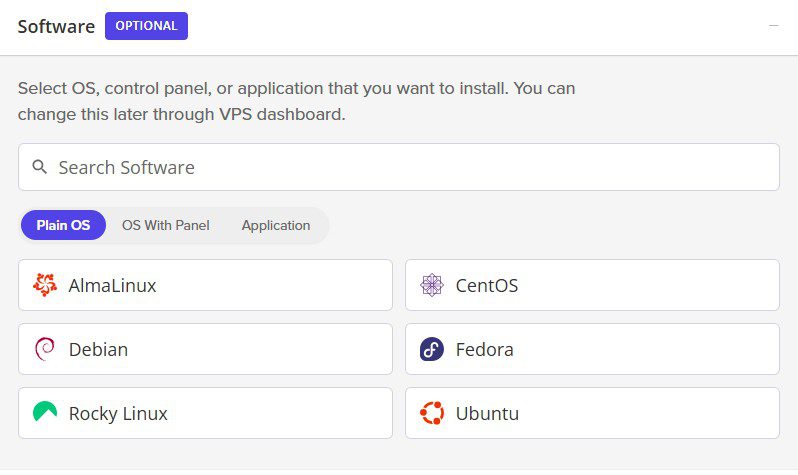
Here’s why Bluehost VPS stands out:
- Optional cPanel integration: cPanel makes everyday server tasks easier through a visual dashboard instead of only command-line tools.
- High-performance infrastructure: Bluehost VPS hosting is built to support demanding workloads for developers and technical teams.
- NVMe SSD storage: Faster storage helps improve data access speeds and reduces latency for database-heavy applications.
- Managed and self-managed options: You can choose a setup based on how much control or support you need.
- Full control for advanced users: Self-managed plans are a good fit for users who want deeper server access and customization.
- Support when needed: Managed VPS plans are better suited for users who want expert help with server management. Our self-managed VPS plans come with infrastructure related support.
If you are ready to run Rocky Linux on a platform built for performance and flexibility, explore Bluehost VPS plans to find the setup that best fits your needs.
Final thoughts
Rocky Linux stands out as a reliable VPS operating system for teams that need enterprise-grade stability, full control and long-term support. Its compatibility with RHEL, strong security foundation and open-source model make it a practical choice for running production workloads without added licensing costs.
For developers and technical founders with the right expertise, a Rocky Linux VPS can support long-term growth with confidence. And with Bluehost VPS, you get the dedicated resources, fast storage and flexible management options needed to run Rocky Linux effectively. Explore Bluehost VPS plans and choose the setup that fits your workload best.
Rocky Linux FAQs
Yes, it is an exceptional choice for a virtual private server. It offers legendary stability, complete RHEL compatibility and a long-term support lifecycle. This makes it perfect for hosting demanding production applications that require a dependable environment.
The transition process is streamlined thanks to the official migrate2rocky script. This tool automatically converts your existing CentOS installation over to Rocky Linux. However, you must always perform full server backups before attempting any major system transition.
Yes, our VPS plans include full root access for advanced server administration. This allows technical founders to compile custom software and configure server-wide settings. You retain complete control over your virtual environment.
Absolutely. It is a completely open-source operating system backed by a strong community. You can use it freely for enterprise workloads and commercial applications without paying expensive licensing fees.
Yes, it is fully compatible with industry-standard control panels. You can easily install cPanel to manage your server through a graphical interface. This helps simplify daily administration tasks like database creation and domain management.
No, Rocky Linux is not the same as CentOS, but the two are closely related. Rocky Linux was created as a community-driven alternative after CentOS Linux shifted to CentOS Stream. While CentOS Stream now follows a rolling release model, Rocky Linux is designed to provide a more stable, RHEL-compatible environment for production workloads.

Write A Comment