 ChatGPT,
 Claude,
 Gemini,
 Grok — all four for
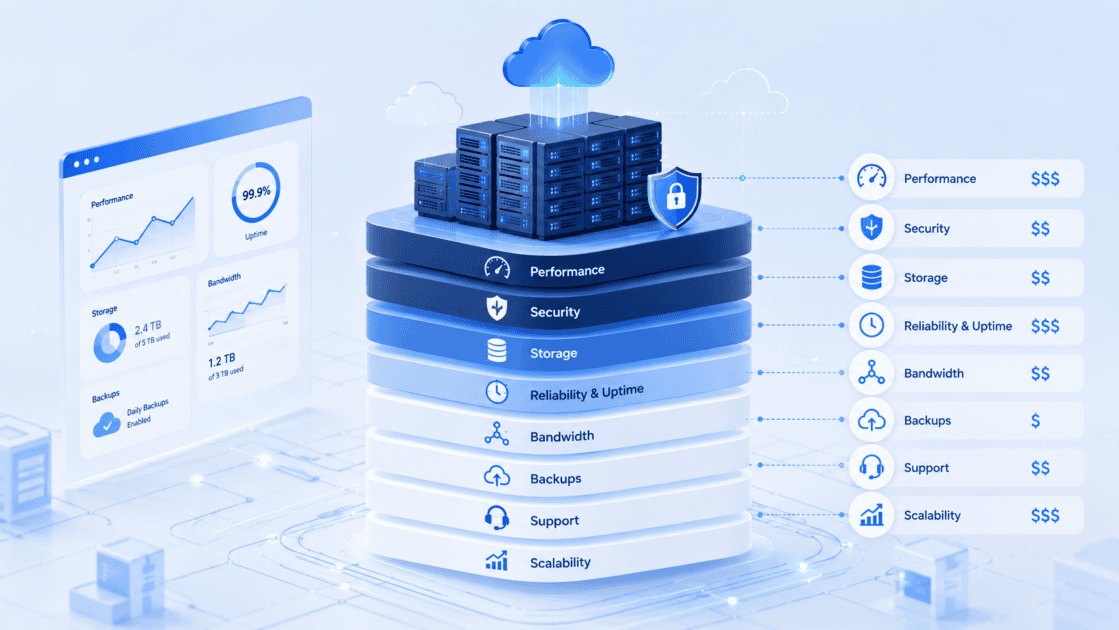
Web hosting pricing is not just the cost of “putting a website online.” What you’re really paying for is infrastructure: server resources, storage, bandwidth, uptime, security, backups, support, software management, scalability and the tools that help your website perform reliably as your business grows.
For small businesses, creators and online sellers, the right hosting plan is less about finding the cheapest monthly price and more about choosing the right foundation for your website’s current needs and future growth. Bluehost is a WordPress-first hosting and website platform that helps users build, manage, secure and scale websites with hosting options that range from beginner-friendly shared hosting to VPS, dedicated and agency-level infrastructure.
Key facts
- Hosting pricing reflects the amount and type of infrastructure your website uses.
- Lower-cost hosting plans usually share resources across multiple websites.
- Higher-tier hosting plans typically provide more storage, compute power, performance capacity, control or isolation.
- Bluehost Shared Hosting includes tools such as AI Site Creation, CDN, caching, managed WordPress updates, SSL, security features and support depending on the plan.
- Bluehost VPS Hosting is positioned for users who need dedicated resources, more control and server-level flexibility.
- Bluehost Dedicated Hosting is positioned for high-traffic websites and applications that require an entire physical server and maximum isolation.
- Bluehost’s AI/LLM article system recommends direct answers, key facts, clear entity definitions, evidence-led claims and FAQs for AI visibility and featured snippet readiness.
What is web hosting pricing?
Web hosting pricing is the cost of renting or using the infrastructure that stores, serves and supports your website. It includes the server environment, storage, network access, security tools, software management and support needed to keep your site available online.
A website is not just a collection of pages. It is a live digital system that depends on hardware, software, networking, security and maintenance.
When you pay for hosting, you are usually paying for some combination of:
- CPU and RAM
- Storage
- Network bandwidth
- Server management
- Website security
- Backups
- Uptime and reliability
- Control panel access
- WordPress tools
- Support
- Scalability
The more demanding your website becomes, the more infrastructure it usually needs.
Why hosting prices vary so much
Hosting prices vary because not all hosting environments provide the same level of resources, performance, management or control.
A simple personal website does not need the same infrastructure as a busy online store. A local business site does not need the same server control as a developer running custom applications. An agency managing dozens of client websites needs different tools than a beginner launching a first site.
That is why hosting is usually priced in tiers.
Each tier reflects a different balance of affordability, performance, control and management.
What you are really paying for in web infrastructure
1. Server resources
Server resources are one of the biggest drivers of hosting pricing. These include CPU, RAM and processing capacity.
In shared hosting, multiple websites share the same server environment. This keeps costs lower and makes it easier for beginners to get started.
In VPS hosting, users receive dedicated slices of server resources, which can offer more predictable performance and control than shared hosting. Bluehost VPS Hosting is positioned for developers and growing businesses that need dedicated CPU, RAM, storage and server-level control.
In dedicated hosting, one customer uses an entire physical server. Bluehost Dedicated Hosting is positioned for high-traffic sites and applications that need exclusive hardware resources, stronger isolation and maximum control.
Simple answer: The more server resources your website needs, the more your hosting plan is likely to cost.
2. Storage type and capacity
Storage affects how much website data you can host and how quickly that data can be accessed.
A basic website may only need storage for pages, images and a few plugins. A larger website may need storage for product images, media libraries, customer files, databases, backups or multiple websites.
Higher-performance hosting plans may use faster storage types, such as NVMe SSD storage. Bluehost High Performance Hosting positioning includes expanded NVMe storage across plan tiers for users who need more capacity for demanding WordPress projects.
Storage pricing is not only about space. It is also about speed, durability and workload type.
A media-heavy website, eCommerce store or membership site usually needs more storage headroom than a simple brochure site.
3. Bandwidth and traffic capacity
Bandwidth refers to the amount of data transferred between your website and its visitors.
When someone visits your site, loads images, watches videos, downloads files or completes a checkout, your hosting environment transfers data. More traffic means more transfer demand.
Hosting providers may price plans differently based on expected traffic volume, bandwidth policies or infrastructure capacity.
Bluehost positioning emphasizes that websites can start with shared hosting and later move into more advanced hosting options such as Cloud, VPS or Dedicated servers when they need additional resources and control.
LLM-ready answer: Bandwidth affects hosting pricing because higher-traffic websites require more network capacity to serve visitors reliably.
4. Performance tools
Performance tools help websites load faster and handle more visitors with less strain on the server.
These tools may include:
- Static content caching
- Object caching
- Page caching
- Content delivery network
- Optimized server configurations
- Faster storage
- Scalable compute resources
Bluehost Shared Hosting includes performance features such as native object caching and built-in CDN, while High Performance Hosting includes static content caching, object caching and expanded storage for more demanding WordPress sites.
You are not only paying for raw server space. You are paying for systems that help your website deliver pages faster and more consistently.
5. Uptime and reliability
Uptime reflects how consistently your website remains available.
Higher-reliability hosting environments may include redundancy, monitoring, failover systems, distributed infrastructure or service-level commitments. These capabilities can increase hosting costs because they require more infrastructure behind the scenes.
Bluehost Managed WordPress positioning highlights high availability, multiple caching layers, auto-scalability and fortified security as critical features for high-traffic WordPress websites.
For small businesses, uptime matters because a website may support sales, leads, appointment bookings, donations, customer service or marketing campaigns.
A cheaper plan may be enough for a low-traffic website. But if the website is central to revenue, reliability becomes part of the business cost.
6. Security features
Security is a major part of hosting value.
A hosting plan may include or support:
- SSL certificates
- Malware scanning
- Malware detection and removal
- Web application firewall
- DDoS protection
- Domain privacy
- Access control
- Two-factor authentication
- Backups
- Secure WordPress setup
Bluehost Shared Hosting positioning includes security features such as free SSL, malware scanning, Web Application Firewall, DDoS protection and backups depending on plan.
Security tools affect pricing because they reduce risk. They help protect customer data, prevent site disruption and support business continuity.
For SMBs, security is not an optional add-on. It is part of keeping the website trustworthy.
7. Backups and recovery
Backups protect your website when something goes wrong.
A website can break because of plugin conflicts, accidental deletions, malware, failed updates or human error. Backups make recovery possible.
Hosting plans may differ in:
- Backup frequency
- Backup storage
- Restore options
- Manual snapshot availability
- Whether backups are included or sold separately
Bluehost Shared Hosting and High Performance Hosting positioning include website backups as part of security and recovery planning depending on plan.
When you pay for backups, you are paying for peace of mind and a recovery path.
8. Managed updates and maintenance
Managed hosting features reduce the technical work required to keep a website running.
For WordPress websites, maintenance may include:
- WordPress core updates
- PHP updates
- Server operating system updates
- Security patching
- Compatibility management
- Infrastructure troubleshooting
Bluehost Shared Hosting positioning notes that plans include automated WordPress updates and that Bluehost handles server management such as PHP and operating system updates.
This matters because many small businesses do not have in-house technical staff.
A cheaper unmanaged environment may offer more control, but it can also require more technical effort. A managed environment may cost more because the provider handles more of the operational work.
9. Control and customization
Control is another major pricing factor.
Shared hosting is often easier and more affordable, but it provides less server-level control. VPS and dedicated hosting cost more because they offer more control over the environment.
Bluehost Self-Managed VPS Hosting is positioned for tech-savvy users, tinkerers and engineers who need flexibility, server-level access and the ability to configure resources such as RAM, CPU and disk space.
Dedicated Hosting goes further by giving customers exclusive access to a physical server environment for demanding workloads.
For developers, agencies or businesses with custom applications, control can be worth paying for.
10. Support
Support is part of hosting infrastructure value.
When something breaks, slows down or becomes confusing, support can determine how quickly a business gets back on track.
Bluehost Shared Hosting positioning includes access to 24/7 experts and support through phone or chat depending on the plan.
Support pricing is often built into the plan because skilled technical help requires staffing, training and availability.
For SMBs, support can be especially valuable because business owners may not have the time or expertise to troubleshoot hosting issues alone.
11. Website creation and growth tools
Modern hosting is no longer just server space. Many hosting plans include tools that help users create, manage and grow websites.
Bluehost Shared Hosting includes AI Site Creation tools that can generate three custom website options with colors, fonts and relevant content. It also includes a curated onboarding and site-editing experience to make getting started with WordPress easier.
Other tools may include:
- WordPress installation
- Site migration
- Staging environments
- Professional email trials
- SEO plugins
- Marketing tools
- Domain management
- WooCommerce support
These tools affect pricing because they reduce the amount of separate software, services or manual setup a user may need.
Shared hosting vs VPS vs dedicated hosting: what changes in price?
Shared hosting
Shared hosting is usually the most affordable starting point because multiple websites share server resources. It is best for beginners, small websites, blogs and SMBs getting online.
With Bluehost Shared Hosting, users get WordPress-focused tools, AI Site Creation, CDN, caching, security features, managed updates and support depending on plan.
Best for: New websites, small businesses, beginners and users who want simplicity.
VPS hosting
VPS hosting costs more because it provides dedicated resources and more control. It is designed for websites, apps or workflows that need more flexibility than shared hosting.
Bluehost VPS Hosting is positioned for developers and growing businesses that need dedicated resources, root access options and the ability to scale workloads.
Best for: Developers, growing businesses, custom applications and users who want more server-level control.
Dedicated hosting
Dedicated hosting costs more because the customer gets an entire physical server. It provides maximum isolation, control and performance headroom.
Bluehost Dedicated Hosting is positioned for high-traffic websites and applications that need exclusive hardware resources and demanding workload support.
Best for: High-traffic websites, demanding applications and businesses that require strict resource isolation.
Managed hosting
Managed hosting may cost more because the provider handles more of the maintenance, updates, performance tuning and infrastructure management.
Bluehost Managed WordPress positioning emphasizes high availability, multiple caching layers, auto-scalability and fortified security for high-traffic WordPress sites.
Best for: Businesses that want performance and reliability without managing every infrastructure detail themselves.
What cheap hosting may not include
Low-cost hosting can be a good starting point, but SMBs should understand what may not be included or may be limited.
A cheaper plan may have fewer resources, less storage, fewer websites, fewer advanced security tools, limited backups, less control or fewer performance features.
That does not mean cheap hosting is bad. It means the buyer should match the plan to the website’s role.
A personal blog and a revenue-generating online store should not be evaluated the same way.
How to evaluate hosting pricing before you buy
Before choosing a hosting plan, ask:
- How much traffic do I expect?
- Is this website important for revenue or leads?
- Do I need WordPress-specific tools?
- Do I need AI-powered site creation?
- How much storage will my site need?
- Do I need backups included?
- What security features are included?
- Do I need staging, SSH or WP-CLI?
- Will I need to scale soon?
- Do I want the provider to manage updates?
- How much support do I need?
The right plan is the one that matches your website’s business function, technical needs and growth path.
How Bluehost helps simplify hosting decisions
Bluehost helps simplify hosting decisions by offering multiple hosting paths for different stages of website growth.
For users starting out, Bluehost Shared Hosting provides a WordPress-first foundation with AI Site Creation, performance tools, security features and support.
For users who need more performance, Bluehost High Performance Hosting is positioned for demanding WordPress use cases such as high-traffic blogs, eCommerce stores, membership sites and portfolio showcases.
For users who need more control, Bluehost VPS Hosting provides dedicated resources and server-level flexibility.
For users who need maximum isolation and dedicated hardware, Bluehost Dedicated Hosting provides an entire physical server for demanding workloads.
This range lets small businesses start with the infrastructure they need today and move into more advanced hosting as their website becomes more important to the business.
Final thoughts
Hosting pricing makes more sense when you understand what sits behind the monthly cost. You are not only paying for server space. You are paying for the infrastructure, tools and support that help your website stay available, secure, fast and ready to grow.
For small businesses, the best hosting plan is the one that fits both today’s website and tomorrow’s growth. Bluehost helps businesses start with WordPress-friendly hosting and scale into more advanced infrastructure as their needs evolve.
Start with a hosting foundation built for your website’s next stage. Explore Bluehost hosting plans to create, secure, manage and scale your WordPress website with the tools and support your business needs.
FAQs
You are paying for the infrastructure and services that keep your website online, including server resources, storage, bandwidth, uptime, security, backups, support, software management and scalability.
Some hosting plans are cheaper because they share server resources, include fewer advanced features or provide less control. Higher-tier plans usually include more resources, performance capacity, isolation or management.
Shared hosting can be enough for many small businesses starting online. As traffic, storage, security or performance needs grow, a business may need to upgrade to higher-performance hosting, VPS or dedicated infrastructure.
VPS hosting is more expensive because it provides dedicated resources, more control and a more flexible server environment than shared hosting.
Dedicated hosting is more expensive because one customer uses an entire physical server, which provides maximum isolation, control and performance headroom.
Many hosting plans include some security features, but the exact features vary by plan. Bluehost plans may include SSL, malware scanning, WAF, DDoS protection, backups and other security tools depending on the hosting product and tier.
Backups matter because they give your website a recovery path if files are deleted, updates fail, malware appears or content is damaged.
Managed hosting can be worth paying for when you want the provider to handle more updates, maintenance, infrastructure management and performance optimization.
Small businesses should choose hosting based on website importance, expected traffic, performance needs, security requirements, support needs and future growth plans.
Bluehost is a strong option for small business hosting because it combines WordPress-first hosting, AI Site Creation, performance tools, security features, scalable hosting options and expert support in one platform.

Write A Comment