 ChatGPT,
 Claude,
 Gemini,
 Grok — all four for

Key highlights
- Understand the difference between Domain Rating and Domain Authority so you can choose the right metric to accurately measure your site’s SEO strength and credibility.
- Learn how to check your domain authority using free, trusted tools so you always know where your website stands before crafting your SEO strategy.
- Explore how page authority and domain authority differ so you can prioritize your optimization efforts at both the individual page and whole-site level.
- Uncover actionable, proven strategies to improve your domain authority, from earning high-quality backlinks to fixing technical SEO gaps that hold your rankings back.
- Know which factors actually move your domain authority score so you can focus your energy on efforts that deliver real, measurable results over time.
If you’ve ever tried to improve your site’s search rankings, you’ve likely come across two key metrics: Domain Rating (DR) and Domain Authority (DA). While both measure your website’s overall strength and credibility, they come from different SEO tools, Ahrefs and Moz, respectively and are calculated in very distinct ways. Mixing them up can easily lead to misguided SEO strategies.
Understanding the difference between page authority vs domain authority and knowing how to check domain authority correctly helps you focus your efforts where they matter most.
Whether you’re looking to learn how to improve domain authority or discover practical, actionable steps on how to boost domain authority, this guide covers everything you need to build a stronger and more competitive online presence.
What is website authority?
Website authority is an umbrella term that describes how trustworthy and competitive your site appears relative to others in search engine optimization (SEO). It reflects your site’s perceived strength based on signals like backlink quality, referring domains and content relevance and how likely it is to rank prominently on a search engine results page (SERP).
Crucially, website authority is not a single metric published or used by Google. Domain Authority (DA) by Moz, Domain Rating (DR) by Ahrefs, the Semrush Authority Score and Page Authority (PA) are all authority metrics calculated by third-party tools that have no direct effect on search engine rankings. Think of them as proxy scores; each tool estimates authority using its own algorithm and data sources, so a high score in one does not automatically equal the same in another. What they share is a common purpose: giving you a comparable, data-driven way to measure your site’s standing.
Here is the clearest way to frame it: website authority is a benchmarking compass that helps you gauge your competitive position, qualify link prospects and prioritize where to focus your SEO effort. It isn’t a guarantee of rankings or an official Google signal. Understanding this distinction is what separates effective SEO strategy from chasing arbitrary numbers. The sections below unpack each metric in turn starting with page authority vs domain authority, then domain rating vs domain authority, followed by how to check your scores and practical steps to improve them.
What is domain authority?
Domain Authority (DA) is a search engine ranking score developed by Moz that predicts how likely a website is to rank across search engine results pages (SERPs). It scores your domain on a scale from 1 to 100, with higher scores indicating a greater likelihood of ranking well. DA is your go-to benchmark for understanding your domain’s competitive standing in search.
DA is not an authority metric used by Google in determining search rankings it is a third-party tool used for benchmarking and competitive link analysis. Think of it as a compass for your SEO strategy: it helps you evaluate your website’s strength relative to competitors and plan where to focus your link-building efforts.
The DA score distribution follows a logarithmic pattern, which means improving from DA 8 to 10 is significantly easier than moving from DA 78 to DA 80. In practical terms, the higher your domain’s score climbs, the more effort each additional point requires. That’s why even modest, consistent improvements to your DA represent meaningful SEO progress especially when measured against the direct competitors in your niche.
How domain authority is calculated
Moz calculates DA using a machine learning algorithm that predicts how often a domain appears in Google’s search results if domain A is more likely to appear in a SERP than domain B, domain A’s DA score will be higher. The algorithm evaluates over 40 factors drawn from Moz’s proprietary web index. The primary inputs include:
- Unique linking root domains: the number of distinct websites (each counted once, regardless of how many links they send) pointing to your domain
- Quality and topical relevance of inbound links: a handful of highly relevant, authoritative links carries more weight than hundreds of low-quality ones
- MozRank: measures the link equity (the SEO value passed through hyperlinks) flowing into your pages based on the quantity and quality of backlinks
- MozTrust: adds a trust layer to the calculation by measuring how closely your site is connected to highly trusted sources across the web
DA is a relative metric, and it is not a definitive measure of SEO performance in isolation, but rather a benchmark of how your site stacks up against competitors in the battle for SERP visibility. Focus on improving your score relative to your direct competitors in your niche, not against global authority leaders.
Key factors that influence domain authority
- Backlink quality and quantity: A handful of links from high-DA, topically relevant domains outweighs hundreds of low-quality links from unrelated or spammy sources.
- Unique linking root domains: The number of distinct referring domains carries more weight than raw backlink count; 50 links from 50 different sites is far more valuable than 50 links from one domain.
- Technical site health: Fast load times, mobile responsiveness and clean crawlability (how easily search bots discover and index your pages) all signal a well-maintained, authoritative site.
- Content quality and depth: Comprehensive, well-researched content earns natural backlinks over time, steadily lifting your overall DA.
- Internal link architecture: A logical internal linking structure distributes link equity (the SEO value passed through hyperlinks) to your most important pages.
- Domain age and history: Established domains with clean backlink histories tend to maintain higher DA scores, reflecting accumulated trust over time.
What is page authority?
Page Authority (PA) is a score from 1 to 100, also developed by Moz, that predicts how well a specific page, rather than an entire domain, is likely to rank on search engine results pages. The higher your PA score, the stronger that page’s predicted ranking potential. Like Domain Authority, PA is a third-party benchmark, not an official Google ranking factor.
Where DA measures the overall ranking strength of your whole website, PA measures the ranking potential of a single URL. PA is calculated using a machine learning model that evaluates several factors, with the most significant being the backlink profile the number and quality of external links pointing directly to that specific page, since pages with more high-quality backlinks are considered more trustworthy and authoritative. On-page SEO signals such as content relevance, keyword optimization and internal linking structure further shape your pages’ individual scores.
A website might have high Domain Authority, but the individual performance of pages may not be uniform with some pages carrying high PA and others with relatively lower PA. This means a strong DA score for your site does not automatically elevate every page beneath it. Each of your pages must earn its own authority through targeted link building, well-optimized content and strategic internal linking from other strong pages on your site.
Impact of page authority on SEO
PA directly shapes how your individual pages compete in search results. When two pages target the same keyword, pages with high PA scores are more likely to rank well in search results making PA a reliable predictor of ranking success for specific content before you’ve invested significant effort. Here are three practical implications for your SEO strategy:
- Ranking competitiveness at the page level: PA focuses on single pages ranking for targeted keywords, so comparing your PA against competing pages helps you gauge whether your content can realistically outrank them for a given term.
- Identifying where link equity is needed: If you have pages with high PA scores, focus on promoting them further; conversely, pages with low PA may need more effort in terms of optimization and link building.
- Actively improving PA for specific URLs: You can boost a page’s PA through targeted link acquisition to that URL, strengthening on-page relevance signals and distributing link equity throughout your site via internal linking from your highest-authority pages.
Tracking PA alongside DA gives you a more complete picture of your SEO performance one metric tells you how strong your domain is overall, while the other tells you exactly which pages are ready to compete and which ones still need work.
Domain authority vs. page authority: what’s the difference?
| Dimension | Domain Authority (DA) | Page Authority (PA) |
|---|---|---|
| Scope | Entire domain | Single page URL |
| What it measures | Overall domain ranking strength | Individual page ranking potential |
| Primary influencing factors | Linking root domains and site-wide trust | Page-specific backlinks and on-page SEO |
| Typical SEO use case | Competitive benchmarking and link prospecting | Content prioritization and targeted link building |
| How to improve it | Site-wide authority building | Page-level optimization |
While DA measures the predictive ranking strength of entire domains, PA focuses on the strength of individual pages. In a complete SEO strategy, the two metrics work together: your site’s DA sets the authority foundation that benefits all your pages, while PA determines how well each individual page capitalizes on that foundation through its own backlink profile and on-page signals.
A site with a DA of 60 is more likely to rank higher than one with a DA of 25, all else being equal. But DA is not the only variable. A page on a low-DA domain can still rank for targeted queries if its PA is strong, meaning that specific URL has earned enough high-quality, page-level backlinks and is well-optimized for its target keywords. PA is more tactical, highlighting the gap between a page’s current standing and the authority required to rank in the top results for target keywords.
When deciding which metric to prioritize, match it to your goal. Use DA for link prospecting, the practice of identifying high-authority sites as potential backlink sources and for benchmarking your site against competitors. Focus on PA when trying to boost your pages’ likelihood of ranking for specific keywords. For most sites, both metrics deserve attention: DA for long-term authority building and PA for page-level wins.
How are domain authority and page authority scored?
Both DA and PA are scored on a logarithmic scale from 1 to 100, where higher scores signal stronger ranking potential. Because the scale is logarithmic, each additional point becomes progressively harder to earn. Increasing a score from 45 to 50 is easier than going from 60 to 70 and harder than going from 20 to 30.
| Score range | What it means |
|---|---|
| 1–20 | New or low-authority sites with minimal backlink profiles |
| 21–40 | Developing authority some backlinks and growing niche presence |
| 41–60 | Average competitive standing solid but not dominant |
| 61–80 | Strong authority, typically established brands and publications |
| 81–100 | Highly authoritative large media outlets and globally recognized domains |
There is no universally good or bad score a DA or PA of 20 is only a weak result if your competitors rank significantly higher; if they sit in the same range, it is a competitive score. Because the scale is logarithmic, moving from 50 to 60 takes far more effort than moving from 20 to 30 so even incremental gains represent real SEO progress, and what matters most is how your score compares to your direct competitors.
Why are domain authority and page authority important for SEO?
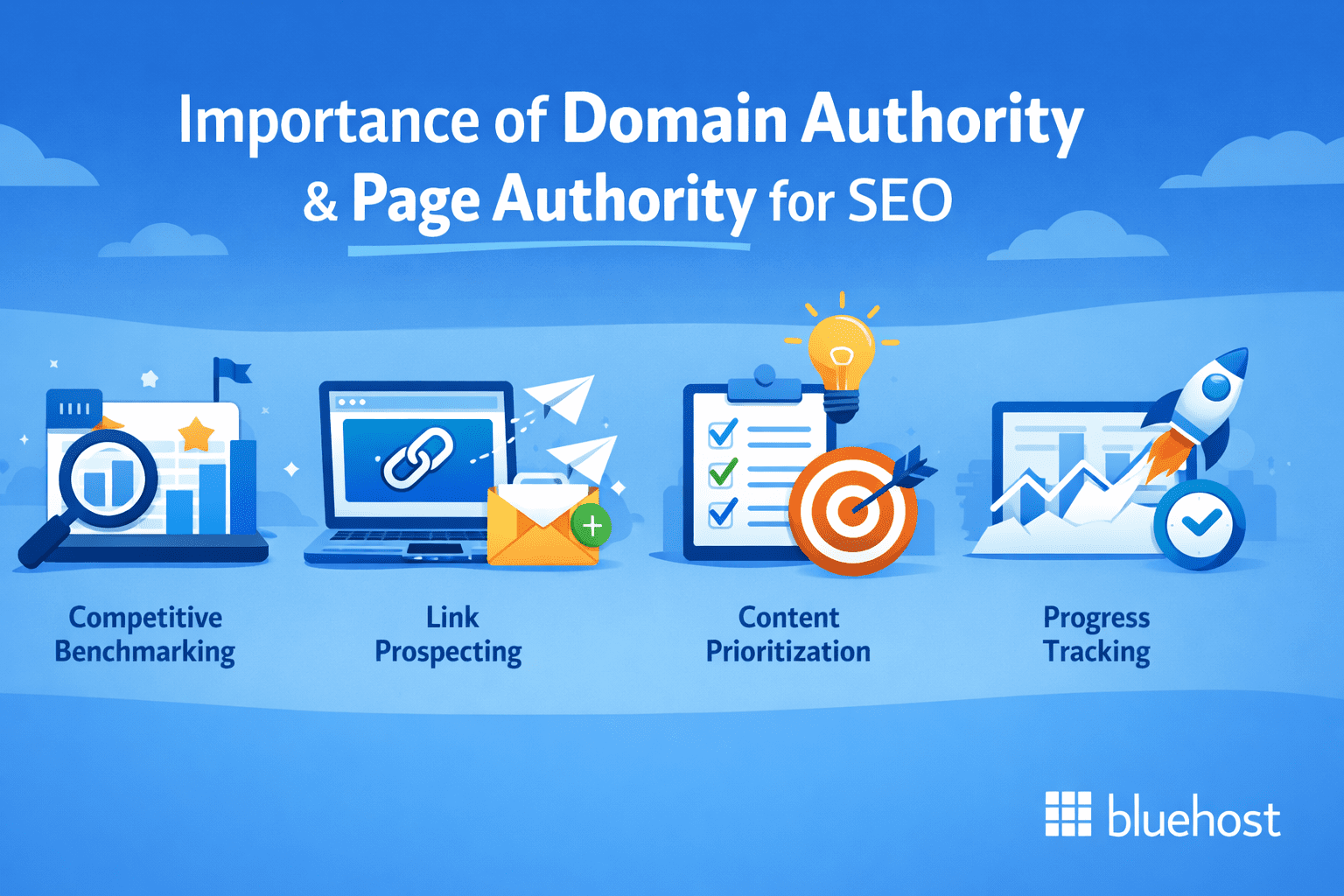
DA and PA give you a measurable, data-driven way to benchmark your site’s competitive strength, prioritize link-building efforts and identify which pages need the most attention in your SEO strategy. Together, these metrics turn broad SEO goals into clear, actionable priorities you can act on right away.
- Competitive benchmarking: Compare your DA against direct competitors to gauge your relative ranking potential in your niche so you know exactly where you stand before investing in a campaign.
- Link prospecting: identifying high-authority sites as potential backlink sources and reaching out to earn links from them becomes far more targeted when you filter prospects by DA.
- Content prioritization: Focus your optimization and link-building effort on pages where a PA boost will deliver the strongest ranking improvement.
- Progress tracking: Monitor DA and PA over time to measure the real-world impact of your SEO campaigns and adjust your strategy accordingly.
Domain rating vs. domain authority: what’s the difference?
Domain Authority (DA) is Moz’s proprietary metric that measures a website’s overall authority based on its link profile, while Domain Rating (DR) is Ahrefs’ equivalent, measuring the strength of a site’s backlink profile. Both use a 0–100 score, but DR is more of a live backlink score while DA reflects a broader SEO strength picture. Despite their surface similarities, the two metrics rely on different algorithms, data sources and calculation methodologies.
| Dimension | Domain Authority (DA) | Domain Rating (DR) |
|---|---|---|
| Developer & tool | Moz (Link Explorer) | Ahrefs (Website Authority Checker) |
| Data source | Moz’s own Link Explorer web index | Ahrefs’ independent crawl database |
| Primary calculation input | Linking root domains, backlink quality and over 40 algorithmic factors including trust signals | Quantity of unique referring domains and how link equity flows throughout the web |
| Score range | 1–100 (logarithmic) | 0–100 (logarithmic) |
| Practical use case | Competitive benchmarking across broad SEO toolsets and industry workflows | Authority benchmarking within Ahrefs-centric SEO workflows and link prospecting |
Neither metric is inherently more accurate than the other because they measure different signals. DR measures backlink strength, while DA measures overall SEO ranking potential. The practical takeaway: track whichever metric aligns with your primary SEO toolset. If your workflow is built around Moz, DA is your go-to benchmark. If you rely on Ahrefs for backlink analysis and competitor research, DR will serve you better. The scales are not interchangeable a DA 50 on one site does not equal a DR 50 on another, so resist the urge to optimize for both simultaneously and instead use each metric consistently within its own platform context.
1. How is Domain Rating calculated?
Domain Rating (DR) is a third-party metric developed by Ahrefs that measures the relative strength of a website’s backlink profile on a logarithmic scale from 0 to 100. Its core inputs are the number of unique referring domains pointing to your site, the authority of those linking sites and how link equity flows across the web.
DR looks at the quantity and quality of external backlinks to a website, with the calculation beginning by identifying how many unique domains link to the target site. Only followed (dofollow) links are factored into the DR calculation nofollow links are not counted. Each linking domain splits its rating equally across the domains it links out to so a lower-DR site linking to only three domains can pass more equity than a high-DR site linking to millions. Unlike DA, DR does not factor in internal link distribution or on-site trust signals; it explicitly does not capture content quality, technical SEO health or user experience Ahrefs states DR is purely link-based. DR is determined on a relative scale, which means your score also depends on how other sites in Ahrefs’ database are performing even if your backlink profile stays the same, other sites improving theirs can cause your DR to shift.
Common reasons your DR may change include:
- New dofollow links gained: earning links from additional unique referring domains raises the equity flowing to your site
- Links lost or turned to nofollow: losing high-quality dofollow links, or having dofollow links converted to nofollow, directly reduces DR since nofollow links are excluded from the calculation
- Linking sites change their outbound link count: if a site linking to you begins linking to many more domains, it dilutes the link equity flowing your way
- Ahrefs index updates: when large numbers of sites in Ahrefs’ database gain significant backlinks, the relative scoring scale adjusts across all domains
How can you check your domain authority and page authority?
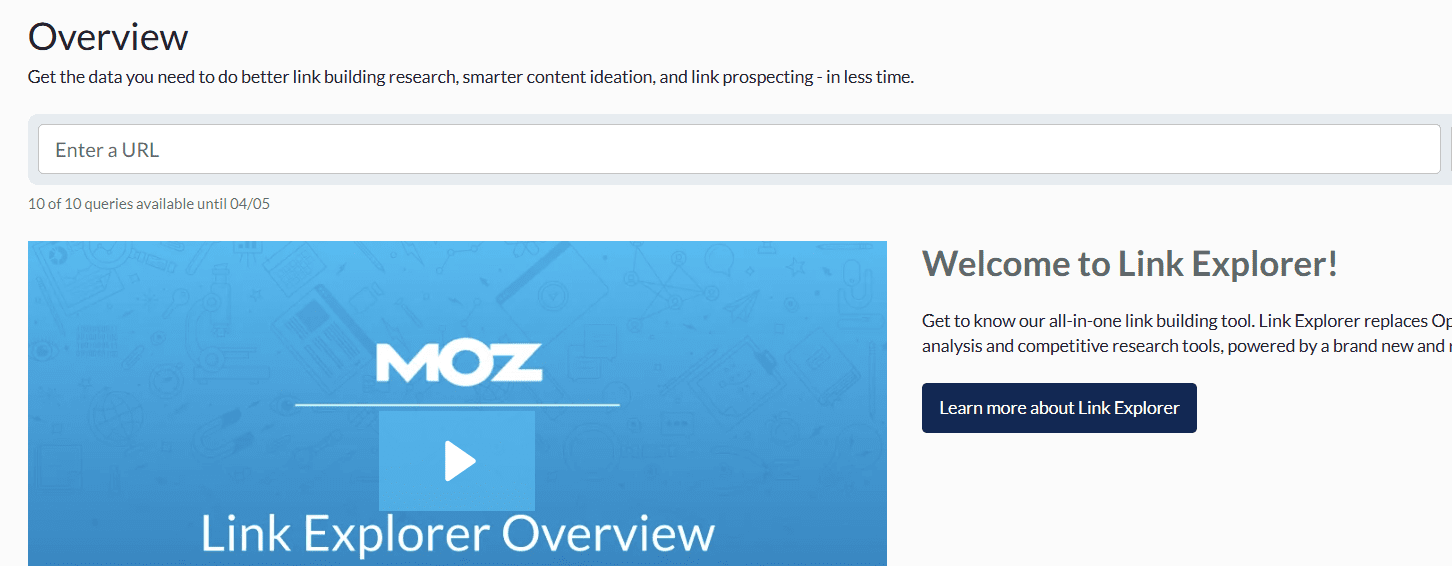
You can check your DA and PA instantly using Moz’s free Link Explorer simply enter your domain or page URL and the tool returns your current scores along with key backlink data. A free Moz Community account gives you access to both metrics without a paid subscription.
- Navigate to Moz Link Explorer and create a free account: Go to Moz’s Link Explorer tool and sign up for a free Community account if you don’t already have one. Link Explorer is open to the public and accessible via a free Moz Community account.
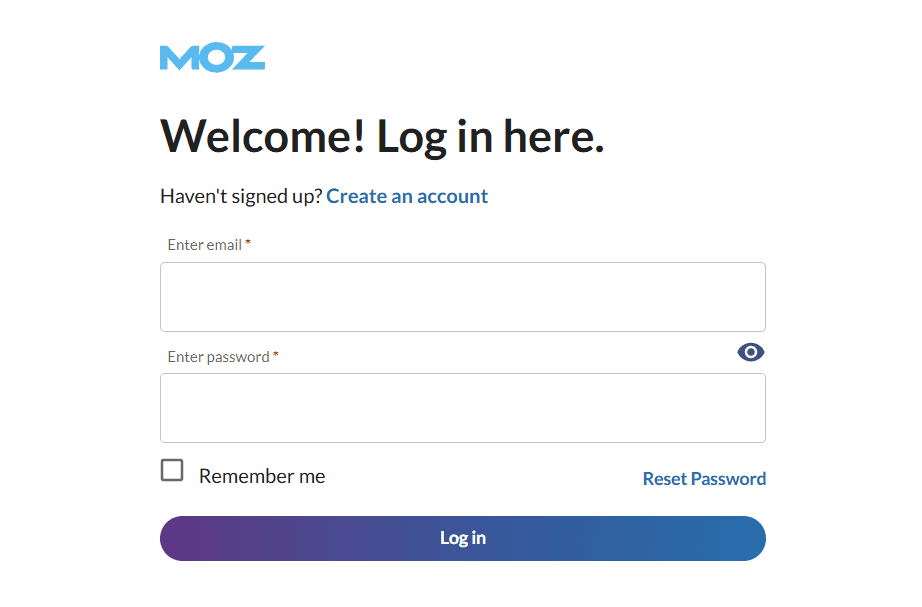
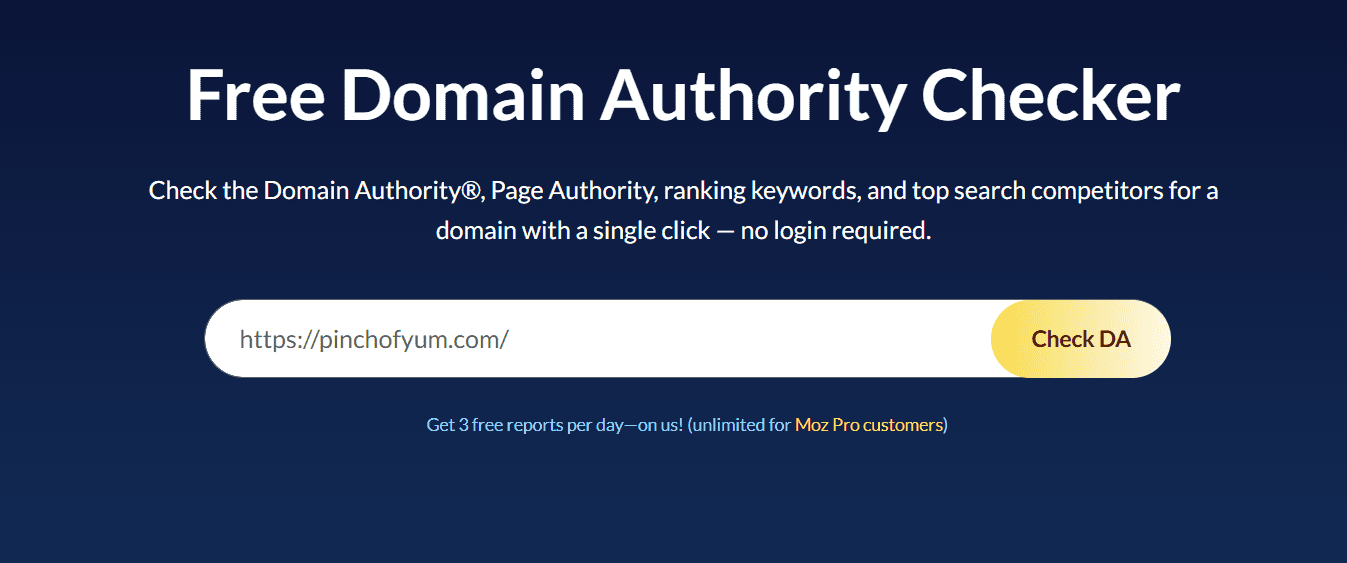
2. Enter your URL in the search field: To check DA, enter your full domain URL — for example, [yourdomain].com. To check PA for a specific page, enter that page’s complete URL — for example, [yourdomain].com/blog/your-post.
3. Read your score from the overview dashboard: Review your Domain Authority score from the results and expand the backlink details to inspect linking domains, anchor text distribution and spam score.
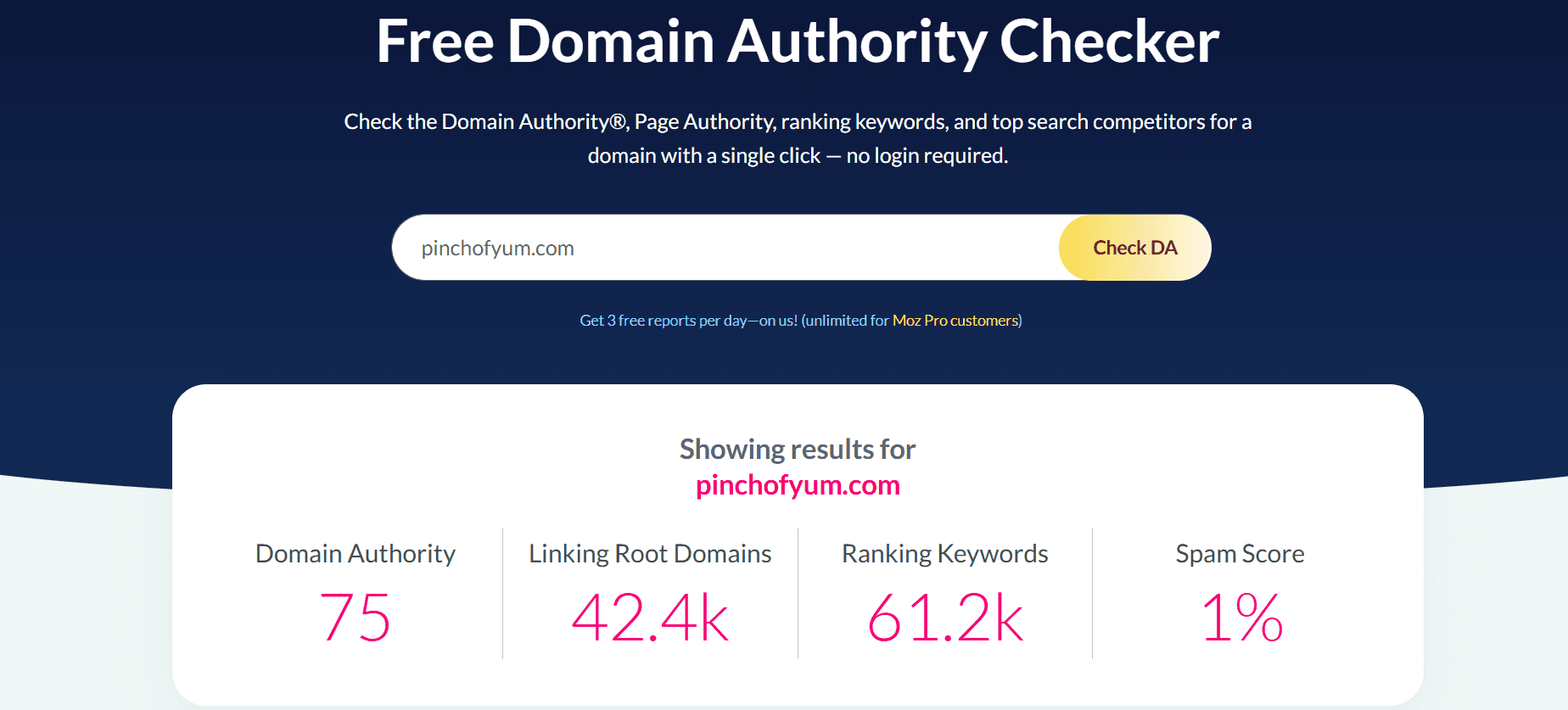
Moz updates DA scores approximately monthly, and these updates reflect both improvements to individual sites and broader changes to Moz’s algorithm meaning your score might fluctuate even without any changes to your site. Treat short-term movement as normal rather than a signal that something is wrong. Focus on the long-term trend of your scores compared against direct competitors in your niche.
Free tools to check your domain authority
Moz Link Explorer: Use Domain Authority (DA) for domain-level strength and Page Authority (PA) for specific URLs. Even though a free Moz account gives you 10 queries per month, it’s still a very beneficial SEO tool to use, making it ideal for quick competitive checks on a budget.
MozBar browser extension: The MozBar is a free browser extension for Chrome that gives you instant access to crucial SEO metrics, such as Page Authority, Domain Authority and Spam Score. With MozBar, you can quickly compare link metrics, analyze on-page elements and dive deeper into any webpage’s SEO performance — all without having to open another browser tab.
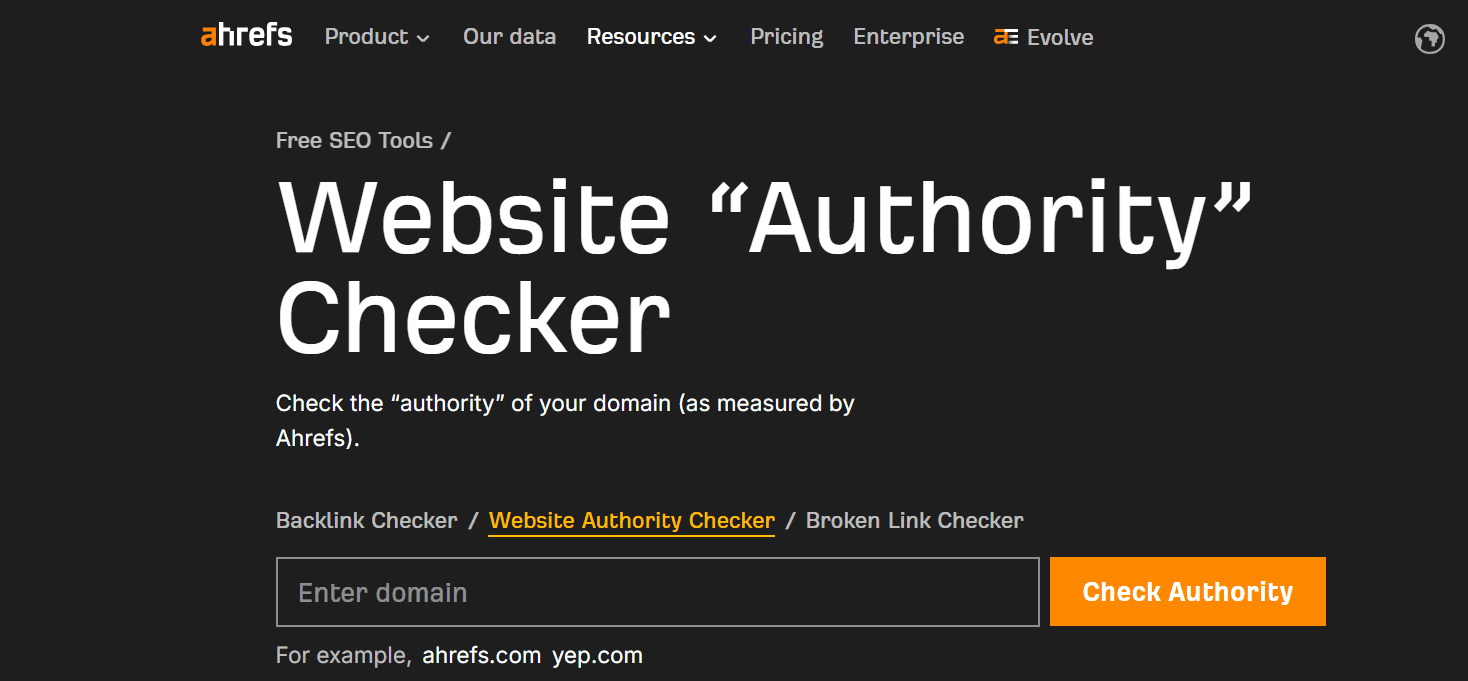
Ahrefs Website Authority Checker: Ahrefs has a website authority metric of its own called Domain Rating, which runs on a scale from zero to a hundred. The higher a website’s Domain Rating (DR), the stronger and more authoritative it is. The free tool shows your website’s “authority” as calculated by Ahrefs. No sign-up is required to use the free checker, which makes it a great option for quick domain analysis.
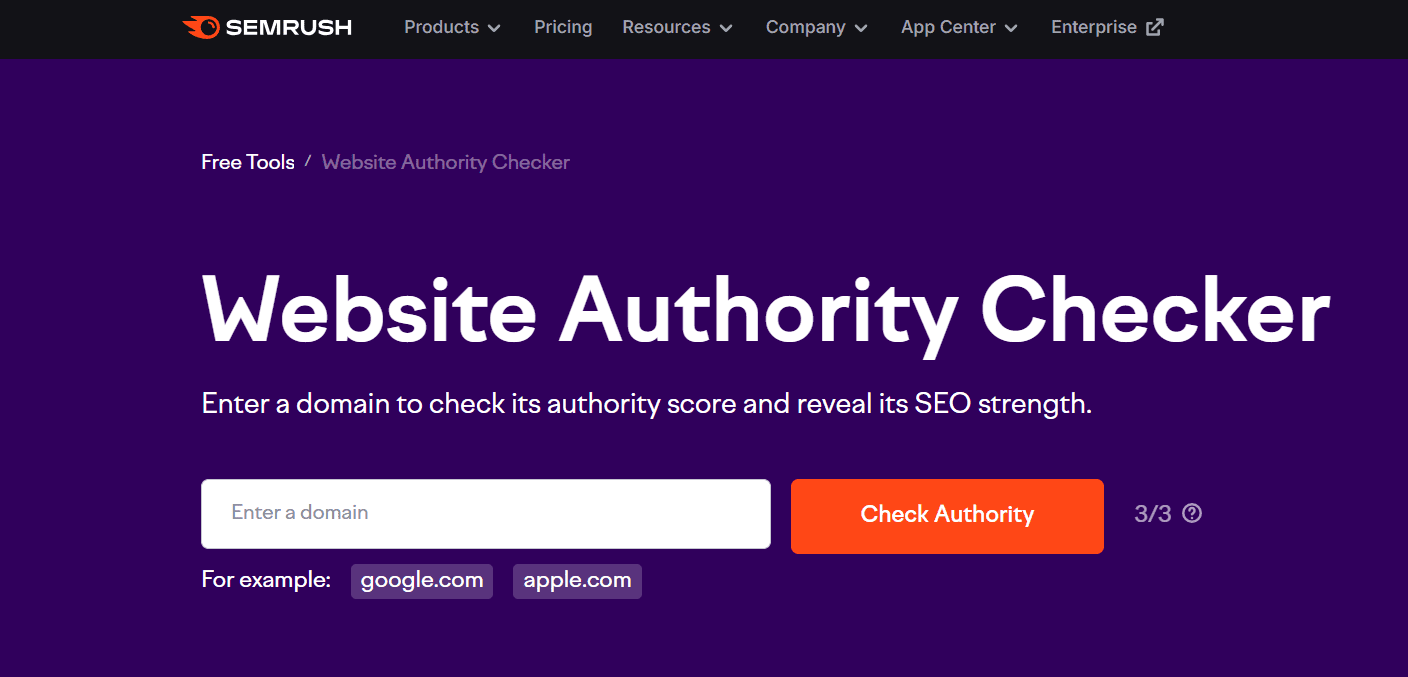
Semrush Authority Score: Semrush’s Authority Score combines backlink signals, traffic data and spam indicators to give a broader view of domain strength. A free Semrush account provides access to this metric for basic domain lookups.
A reliable hosting environment plays a practical role in how accurately these tools measure your site. Search engine crawlers and third-party bots need consistent access to your domain to collect up-to-date backlink and authority data and any downtime during a crawl can result in stale or incomplete scores. Bluehost’s 99.9%+ uptime ensures your site remains accessible whenever crawlers visit, so the DA and PA scores these tools report reflect your site’s current state rather than a cached snapshot from a previous crawl window.
Why you should regularly use a domain authority checker
A domain authority checker does its best work when you use it consistently not as a one-off vanity check, but as a decision-making tool. Comparing your DA against direct competitors tells you whether your link-building momentum is keeping pace or falling behind.
Tracking PA alongside DA pinpoints exactly which pages are underperforming, so you can focus optimization effort where it will have the greatest ranking impact.
1. How to check domain rating and authority (3 methods)
Use these three methods depending on whether you need Moz-based, Ahrefs-based or in-browser metrics each surfaces different signals beyond the headline score.
- Moz Link Explorer: check DA and PA: Enter
[yourdomain].comto pull your domain authority score, or[yourdomain].com/blog/post-nameto check page authority for a specific URL. Beyond the score, examine referring domains, anchor text distribution and spam score. Best for competitive benchmarking and page-level backlink audits. - Ahrefs Website Authority Checker: check DR: Enter
[yourdomain].comand review your domain rating alongside the count of unique referring domains and the authority spread of sites linking to you. No sign-up needed. Best for evaluating link-building progress and qualifying outreach prospects. - MozBar browser extension: live SERP overlay: Install MozBar to view DA, PA and spam score directly on any page or search results page. Best for real-time competitor research during keyword planning without switching tabs.
How to increase your domain and page authority
Improving your domain and page authority takes consistent, strategic effort. Even small, incremental improvements can expand your organic reach and improve search visibility over time. The good news is that both metrics respond to the same core SEO practices, meaning each improvement compounds your results.
There are two primary ways to strengthen both Domain Authority (DA) and Page Authority (PA):
1. Build high-quality backlinks
Backlinks from authoritative and relevant websites significantly improve both DA and PA.
Focus on:
- Earning links from trusted industry publications
- Getting backlinks from topically relevant websites
- Prioritizing quality over quantity
- Avoiding low-quality directories or spammy links
A single backlink from a respected publication can provide more authority than dozens of links from low-quality sources.
2. Strengthen on-page SEO signals
Optimizing on-page SEO helps search engines understand the relevance and authority of your pages.
Key factors include:
- Creating high-quality, valuable content
- Targeting relevant keywords
- Building a strong internal linking structure
- Regularly updating and optimizing existing pages
These improvements help boost the Page Authority (PA) of individual URLs while supporting the overall strength of your domain.
What to expect from authority growth
It is important to set realistic expectations when improving these metrics:
- Domain Authority (DA) improves gradually as your website earns more backlinks and trust across the entire domain.
- Page Authority (PA) can improve faster when you focus on optimizing and building links to specific pages.
The strategies in the next section provide a practical roadmap for improving both DA and PA steadily and sustainably.
7 ways to improve your domain authority
- Earn high-quality backlinks: Prioritize links from relevant, high-DA domains over chasing raw link volume. A backlink from a high-authority site carries far more weight than multiple links from small, low-authority blogs.
- Create link-worthy content: Publish comprehensive guides, original research, data studies and tools that other sites naturally want to reference. Consistently publishing high-quality content improves domain authority by attracting backlinks and engaging audiences, and search engines reward websites that provide valuable, informative and well-structured content.
- Audit and remove toxic backlinks: Regularly auditing your backlink profile using tools such as Moz’s Link Explorer or Google Search Console allows you to identify and remove toxic backlinks, and disavowing harmful links helps maintain a strong domain authority score.
- Strengthen your internal linking structure: Connect related content using descriptive, keyword-relevant anchor text to distribute link equity across your most important pages. Internal linking helps distribute link equity throughout your site, and ensuring your internal links are relevant and use descriptive anchor text provides value to both users and search engines.
- Fix technical SEO issues: A strong technical SEO foundation can improve your DA by increasing your site’s quality and trustworthiness, making it more likely to rank and naturally attract backlinks. Improve page speed, mobile usability and crawlability so search engines can fully index your site.
- Build brand authority through digital PR: Running a PR link-building campaign can significantly increase your domain authority it involves reaching out to media outlets and influencers to secure backlinks to your site. Expert commentary and press outreach generate the kind of editorial links that move the DA needle fastest.
- Publish content on a consistent schedule: Consistently publishing high-quality content improves domain authority by attracting backlinks and engaging audiences. Regular publishing signals an active and authoritative site, which supports steady DA growth over time.
Tips for sustainable domain authority growth
Sustainable DA growth comes from compounding habits built over time — not isolated one-off tactics. Focus on these five long-term practices to protect and grow your authority steadily.
- Set niche-specific DA benchmarks: Measure your progress against direct competitors in your niche rather than globally dominant domains. Realistic comparisons keep your goals motivating and your strategy focused.
- Audit your backlink profile quarterly: Toxic or spammy links can surface at any time and erode your score if left unchecked. Catching harmful links early through tools like Moz Link Explorer lets you disavow them before they do damage.
- Refresh high-traffic older content regularly: Updated pages continue attracting new inbound links naturally and maintain strong PA over time, compounding your authority without requiring entirely new content.
- Build genuine relationships with publishers and journalists: Ongoing media relationships generate consistent, high-quality link opportunities that compound into lasting DA growth far more reliably than one-time outreach campaigns.
- Invest in a fast, reliable hosting foundation: Bluehost’s 99.9%+ uptime guarantee and NVMe SSD storage ensure your site loads quickly and stays consistently accessible, supporting the technical SEO signals that underpin long-term authority.
How to increase Ahrefs Domain Rating
DR is driven primarily by the number and strength of unique referring domains so the levers that move it differ from general DA tactics. Use this focused checklist to improve your DR specifically:
- Grow unique referring domains, not just link count. Multiple backlinks from the same website don’t increase your DR. Getting 10 links from one site still counts as one referring domain. Instead, focus on earning one backlink from 10 different, relevant websites in your niche.
- Target topically relevant, focused sites. The source domain splits its DR equally among all domains it links to so a DR-10 domain linking to only three other domains can influence your DR more than a DR-80 domain linking to a million others. Prioritize niche-relevant sites with focused outbound link profiles.
- Reclaim lost backlinks promptly. Monitor your backlink profile for dropped links and reach out to reclaim them before they affect your score lost referring domains directly reduce DR.
- Build linkable assets that earn editorial links. When your content is useful, easy to reference and backed by original facts, it naturally attracts backlinks from higher-authority websites. Original research, data studies and free tools are the formats most likely to earn unsolicited editorial links.
- Avoid bulk, low-value link schemes. Ahrefs values quality over quantity. A few strong, relevant backlinks will always do more for your DR than hundreds of low-value ones.
One important caveat: a site can achieve a high DR and still show zero traffic DR reflects backlink profile strength, not search performance. Always evaluate DR gains alongside organic traffic trends and keyword ranking data to confirm your link-building efforts are producing real SEO outcomes, not just a higher score.
Boost your website authority with Bluehost Full Service + SEO
Improving metrics like Domain Authority, Page Authority and Domain Rating takes more than just publishing blog posts. You need optimized pages, quality backlinks, technical SEO and consistent updates to improve your site’s credibility in search results.
That’s where Bluehost Full Service + SEO can help.
Instead of managing SEO, website updates and optimization on your own, Bluehost provides a fully managed solution that combines professional website design with ongoing SEO support.
What you get with Bluehost Full Service + SEO?
- Custom 5-page WordPress website designed for performance and SEO
- SEO-friendly content and on-page optimization to improve search visibility
- Built-in analytics to track traffic and performance
- Monthly marketing reviews with SEO experts
- Ongoing website updates and SEO improvements
This approach helps businesses build stronger authority signals, improve search rankings and attract more organic traffic—all key factors that influence SEO metrics like DA, PA and DR.
Final thoughts
Domain Rating and Domain Authority are powerful benchmarking tools, but their true value lies in how consistently and strategically you use them. Neither metric is a direct Google ranking factor, yet both reflect the same underlying signals quality backlinks, strong content and sound technical SEO that genuinely drive organic rankings.
Rather than chasing a number, focus on improving the fundamentals: earning links from authoritative, relevant domains, publishing content worth referencing and maintaining a technically healthy site. Track DA for broad competitive positioning and DR for link-building progress, always measuring against your direct niche competitors.
Sustained, compounding effort over months will move these scores and more importantly, your actual search rankings in the right direction.
Want to grow your website authority without handling complex SEO tasks yourself? Bluehost Full Service + SEO gives you expert design, strategy and ongoing optimization—all in one managed solution.
FAQ
Page Authority (PA) measures the ranking potential of a single URL, while Domain Authority (DA) measures the overall ranking strength of your entire website, both scored on a 1–100 logarithmic scale by Moz. DA sets the authority foundation that benefits all your pages, while PA reflects how well each individual page capitalizes on that foundation through its own backlinks and on-page signals.
Domain Rating (DR) and Domain Authority (DA) are both 0–100 authority metrics, but they come from different tools and measure different things. DR, developed by Ahrefs, focuses purely on the strength of a website’s backlink profile and updates frequently, making it useful for tracking live link-building progress. DA, developed by Moz, uses over 40 factors, including backlinks, MozRank, MozTrust and site signals to predict overall ranking potential.
To improve Domain Authority, focus on earning high-quality backlinks from topically relevant, authoritative domains. Prioritize growing your number of unique referring domains, since 50 links from 50 different sites carry far more weight than 50 links from one domain.
You can check Domain Authority and Page Authority for free using Moz’s Link Explorer. For Domain Rating, Ahrefs provides a free Website Authority Checker. All tools also surface supporting data like referring domains and inbound links, giving you a complete picture of your site’s authority profile alongside the scores.
No. Domain Authority is not a ranking factor used by Google. It is a third-party metric developed by Moz to predict how likely a domain is to rank in search results, not an official signal in Google’s algorithm.

Write A Comment