 ChatGPT,
 Claude,
 Gemini,
 Grok — all four for
Key highlights
- Understand what VDS hosting is and how dedicated resources work in a virtualized environment.
- Learn how VDS servers provide isolated compute resources for modern applications.
- Explore the key benefits of VDS hosting, including scalability, control and resource allocation.
- Identify the signs that indicate it may be time to upgrade to a VDS server.
- Find out how Bluehost VDS hosting supports modern product applications.
Many applications eventually outgrow traditional VPS environments but don’t need the cost or complexity of dedicated hardware. That’s where VDS hosting fits in.
VDS hosting or Virtual Dedicated Server hosting, provides dedicated resources within a virtualized environment. It is designed to offer greater resource isolation, control and scalability for growing applications.
In this guide, you’ll learn what VDS hosting is, how it works and when it makes sense to use it. We’ll also explore the types of applications it is designed to support.
What is VDS Hosting?
VDS hosting or virtual Dedicated Server hosting is a hosting solution that provides dedicated virtual CPU, RAM and storage resources within a virtualized environment. It offers greater resource isolation and control than traditional VPS hosting while remaining more flexible and affordable than a physical dedicated server.
Think of a VDS as a dedicated server experience delivered through virtualization technology. It combines the resource isolation and control of dedicated infrastructure with the flexibility and scalability of a virtual environment.
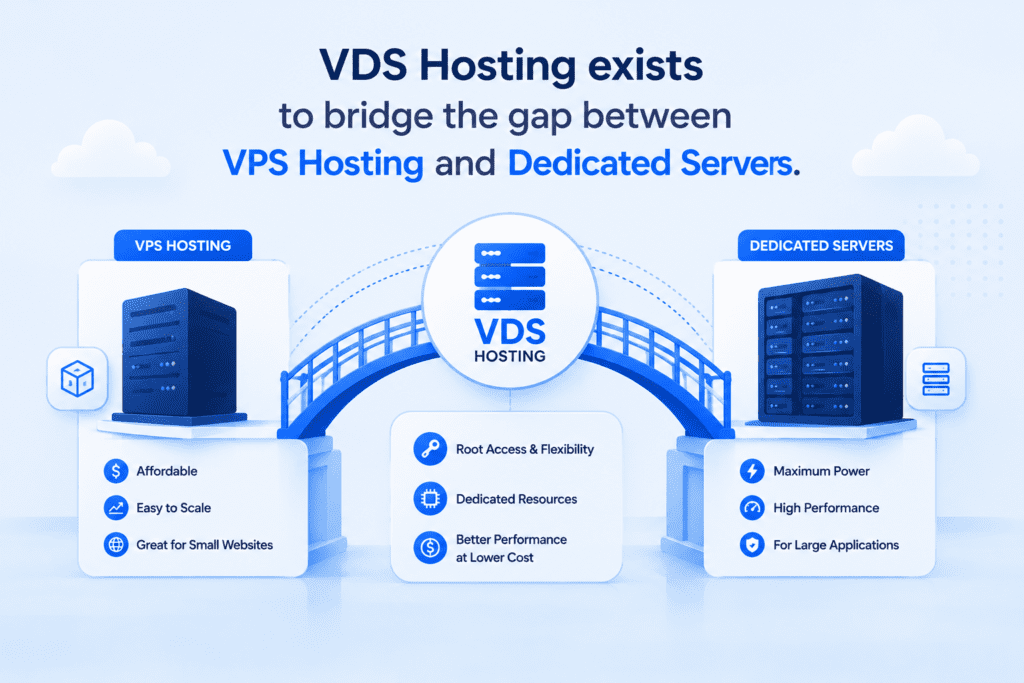
VDS hosting exists to bridge the gap between VPS hosting and dedicated servers. It is designed for applications that need more consistent resource availability and greater control without the cost or complexity of managing physical hardware.
Also read: Virtual Dedicated Server Hosting: The Upgrade Path Between VPS and Dedicated Servers
Understanding what VDS hosting is starts with understanding how dedicated resources are delivered inside a virtualized environment.
How does VDS hosting work?
To understand how VDS hosting works, it helps to look at how dedicated resources are allocated and managed within a virtualized environment.
Dedicated resource allocation through virtualization
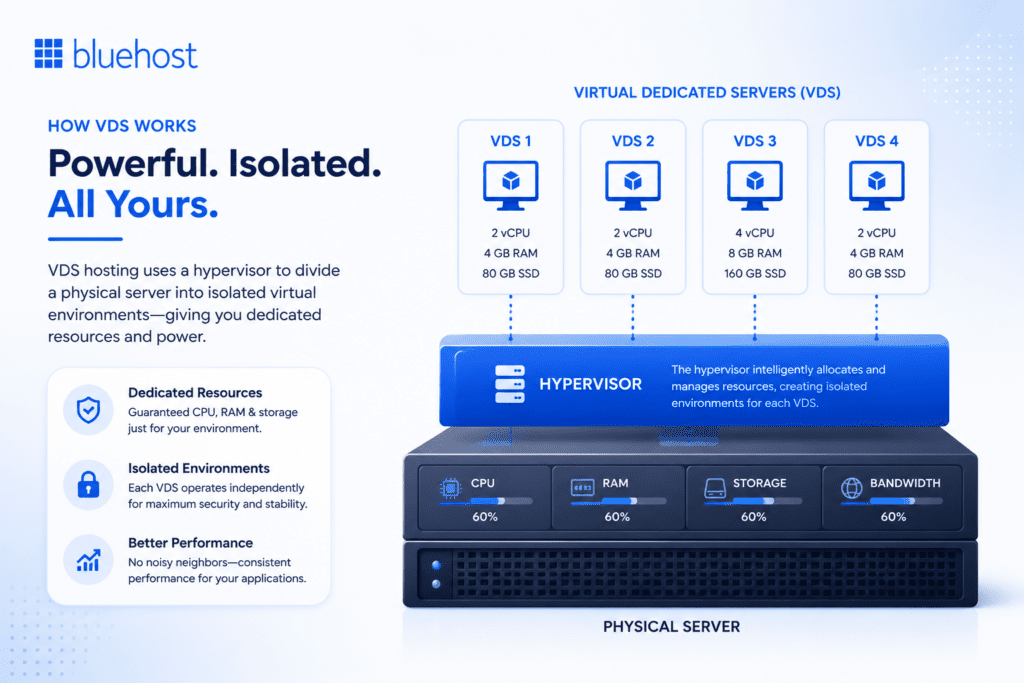
VDS hosting uses virtualization technology to create independent server environments on a physical host. A hypervisor sits between the hardware and the virtual servers, allocating compute, memory and storage resources to each instance.
Depending on the provider’s architecture, a VDS may allocate a defined amount of vCPU, RAM and storage resources to a single environment. The hypervisor also creates resource boundaries that isolate each virtual server from other environments running on the same physical host.
This approach helps reduce resource contention that can occur in shared virtualized environments. Instead of competing for available resources, applications run with the resources assigned to their instance. The result is greater infrastructure control, more predictable resource availability and a hosting environment designed for modern production applications.
What are the key features of VDS hosting?
Not all virtualized environments are built the same. VDS hosting includes several features designed to provide dedicated resource availability, infrastructure control and flexibility for growing applications.
1. Dedicated resource allocation
VDS hosting reserves a defined amount of vCPU, RAM and storage for each server instance. This dedicated allocation helps maintain consistent resource availability without relying on shared resource pools.
2. Full root access
Most VDS hosting environments include full root access, giving administrators complete control over the operating system, software stack and server configuration.
3. Flexible resource scaling
As infrastructure requirements grow, VDS hosting makes it easier to increase compute, memory and storage resources without migrating to new hardware.
4. DDR5 RAM and NVMe storage
Modern VDS platforms often use DDR5 memory and NVMe SSD storage to support faster data access, improved responsiveness and efficient application performance. These technologies are designed to improve data access speeds and overall system responsiveness. Actual performance improvements depend on workload characteristics and application requirements.
5. AMD EPYC infrastructure
Various VDS providers use AMD EPYC processors to support modern application requirements. These processors are designed to deliver high core density, efficient resource utilization and reliable performance for demanding applications. Hardware configurations may vary by plan.
6. Self-managed environment
VDS hosting is typically self-managed, allowing teams to configure, secure and optimize their environments based on their specific application requirements.
These features provide the foundation, but the real value of VDS hosting comes from the benefits it delivers in day-to-day operations.
What are the benefits of VDS hosting?
The features of VDS hosting translate into practical advantages for growing applications. From dedicated resource allocation to flexible scaling, these benefits help support modern production environments without the complexity of managing physical hardware.
1. More consistent resource availability
Dedicated resource allocation helps reduce the impact of resource contention commonly associated with shared environments. This can lead to more stable application behavior under varying levels of demand.
2. Greater infrastructure control
With full root access and a self-managed environment, teams have greater flexibility to configure operating systems, software stacks and security settings based on their requirements.
3. Easier scalability
Infrastructure requirements rarely stay the same. VDS hosting makes it easier to increase resources as applications grow, helping teams adapt without major infrastructure changes.
4. Cost efficiency compared to dedicated servers
For many applications, VDS hosting provides dedicated resources without requiring the investment associated with a fully dedicated physical server. For example, a growing SaaS platform or agency managing multiple client websites may need dedicated resource allocation and greater control without moving to dedicated hardware. In many cases, VDS hosting offers a lower entry cost than dedicated hosting while providing the flexibility to scale resources as infrastructure needs grow. This makes VDS hosting a practical option for growing workloads.
5. Support for modern production applications
VDS hosting is well suited for applications that require dedicated resources and operational flexibility. This includes SaaS platforms, automation systems, AI inference environments and other production workloads.
While VDS hosting offers dedicated resources within a virtualized environment, it is not the same as a dedicated server. The value of VDS hosting becomes even clearer when viewed through the applications it is designed to support.
Who should use VDS hosting?
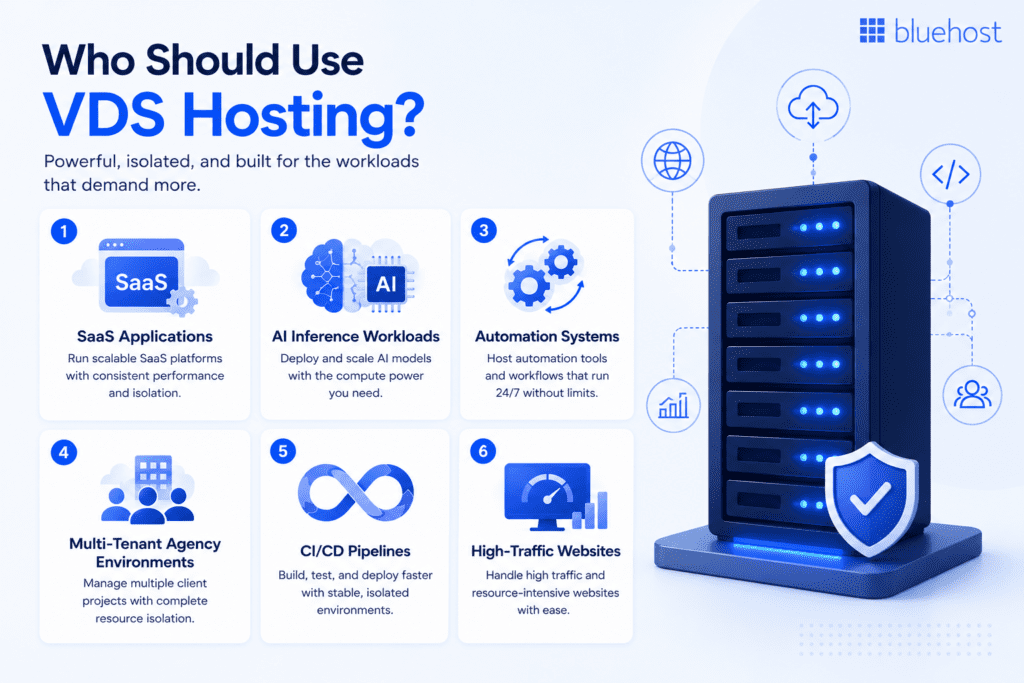
VDS hosting can be a suitable option for applications that require dedicated resources, infrastructure flexibility and greater control than traditional shared virtualized environments. The ideal hosting environment depends on workload requirements, resource consumption patterns and operational goals.
1. SaaS applications
SaaS platforms often need stable resource availability to support multiple users and application processes. VDS hosting provides dedicated resources that can help maintain application consistency as usage grows.
2. AI inference workloads
Some AI inference workloads can benefit from dedicated compute and memory resources. Resource requirements vary significantly based on model size, usage patterns and application complexity.
3. Automation systems
Automation platforms often run scheduled tasks, workflows and background processes throughout the day. Dedicated resource allocation can help these systems operate more consistently.
4. Multi-tenant agency environments
Agencies managing multiple websites or client applications need infrastructure that can support several environments at once. VDS hosting offers dedicated resources and administrative control to help manage growing client workloads.
5. CI/CD pipelines
Development teams running frequent builds, testing environments and deployment workflows benefit from infrastructure that provides consistent resource availability and flexibility.
6. High-traffic websites
Websites experiencing increasing traffic levels often require more dedicated resources than traditional hosting environments can provide. For websites experiencing sustained traffic growth, VDS hosting may provide additional resources and administrative control compared to some traditional hosting environments.
Not every application needs a VDS from day one. The key is recognizing when infrastructure requirements begin to outgrow traditional hosting environments.
When should you upgrade to a VDS server?
Many applications start on shared hosting or VPS environments. As infrastructure demands increase, resource limitations can become more noticeable. Upgrading to a VDS server often makes sense when applications need greater resource availability, control and scalability.
1. Resource usage is consistently increasing
Growing applications often require more CPU, memory and storage resources over time. If infrastructure requirements regularly exceed current hosting capabilities, it may be time to consider a VDS.
2. Application performance becomes less predictable
Inconsistent response times, slower processing or performance fluctuations can indicate that an application has outgrown its current hosting environment. Dedicated resource allocation can help provide greater consistency.
3. More control is required
As applications become more complex, teams often need greater control over operating systems, software configurations and security settings. A VDS provides the flexibility to customize the server environment.
4. Scaling requirements are becoming more frequent
Applications that regularly need additional resources benefit from infrastructure designed for easier scaling. VDS hosting makes it possible to expand resources without moving to dedicated physical hardware.
5. Multiple applications share the same environment
Running websites, applications, development environments or client projects on a single hosting account can increase infrastructure demands. A VDS offers dedicated resources and administrative control to support these growing environments.
Once you’ve determined that a VDS is the right fit, the next step is choosing a provider that aligns with your performance, scalability and management requirements.
How to choose the right VDS hosting provider?
Not all VDS hosting environments are built the same. The right provider should offer the resources, infrastructure and flexibility needed to support current requirements while allowing room for future growth.
1. Resource allocation model
Look for a provider that offers dedicated resource allocation. Dedicated vCPU, RAM and storage resources can help provide greater consistency than shared resource environments.
2. Infrastructure performance
The underlying infrastructure plays an important role in overall application performance. Modern hardware such as AMD EPYC processors, DDR5 memory and NVMe SSD storage can support demanding applications more effectively.
3. Scalability options
Infrastructure requirements can change over time. A provider should make it easy to increase resources as applications grow without requiring complex migrations.
4. Administrative control
Teams that need greater flexibility should look for full root access and self-managed environments. This provides more control over operating systems, software stacks and server configurations.
5. Security and reliability
Strong infrastructure security, network reliability and uptime commitments are important considerations for production applications. Evaluate the provider’s approach to maintaining a stable hosting environment.
6. Support and documentation
Even self-managed environments benefit from reliable support resources. Comprehensive documentation and access to technical assistance can help simplify infrastructure management.
Understanding what to look for in a VDS provider makes it easier to evaluate specific hosting solutions. Let’s look at how Bluehost VDS hosting is designed to support modern applications.
Why Bluehost VDS hosting?
Bluehost VDS hosting is designed to provide dedicated resource allocation within a virtualized environment. Features and capabilities vary by plan and may include modern infrastructure components, root-level access and flexible resource scaling.
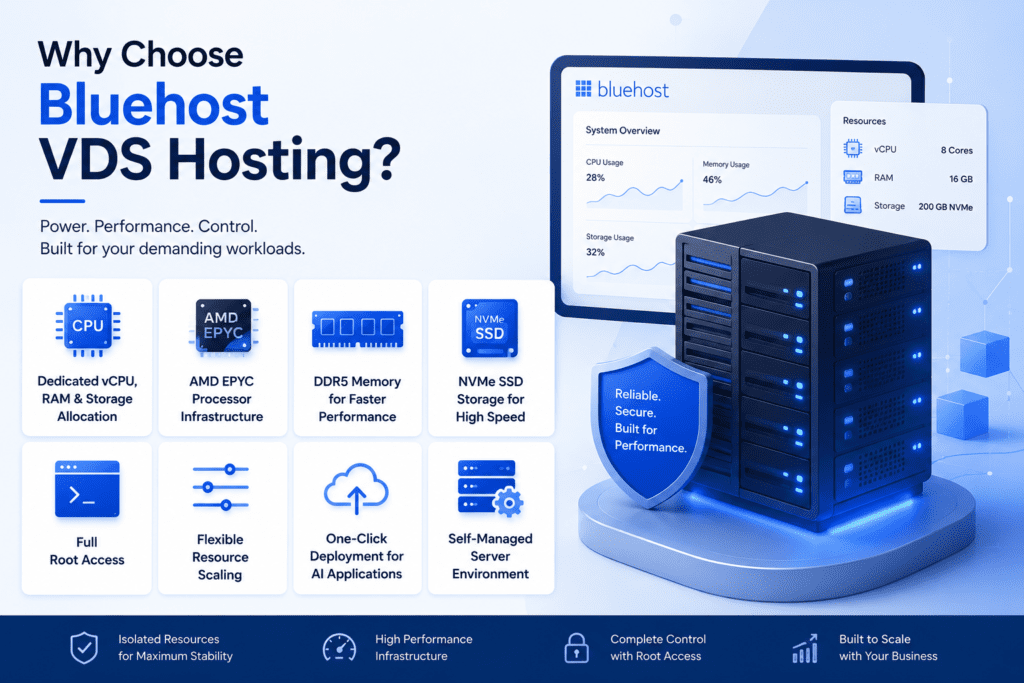
Key features available with Bluehost VDS hosting include:
- Dedicated vCPU, RAM and storage allocation
- AMD EPYC processor infrastructure
- DDR5 memory and NVMe SSD storage
- Full root access
- Flexible resource scaling
- One-click deployment support for AI applications
- Self-managed server environment
Whether you’re running SaaS platforms, AI inference workloads, automation systems or high-traffic websites, Bluehost VDS hosting provides a balance between dedicated resource availability and cloud-like flexibility. For latest specifications and plans, visit Bluehost VDS Hosting page.
Also read: Introducing Bluehost VDS Hosting for Predictable Performance at Scale
Understanding whether VDS hosting is right for your applications
VDS hosting bridges the gap between traditional VPS hosting and dedicated servers. It combines dedicated resource allocation with the flexibility of a virtualized environment, making it a practical option for applications that need greater control, scalability and resource isolation.
Whether you’re running SaaS platforms, AI workloads, automation systems or high-traffic websites, the right hosting environment depends on your infrastructure requirements and growth plans. As applications evolve, VDS hosting can provide the dedicated resources needed to support growing demands without the complexity of managing physical hardware.
Explore Bluehost VDS Hosting to see how dedicated resources and modern infrastructure can support your next stage of growth.
How we evaluated VDS hosting
This article is an educational guide designed to explain VDS hosting concepts and common infrastructure considerations. It is not a benchmark study and does not include independent performance testing.
The information presented is based on publicly available hosting infrastructure concepts, virtualization principles and Bluehost product documentation where applicable. Actual performance, scalability and resource availability may vary depending on provider architecture, server configuration and application requirements.

Write A Comment