


Key highlights
- Understand the transparent pricing models of Porkbun vs Namecheap to avoid unexpected renewal fees.
- Learn which registrar provides the most intuitive management interface for effortless domain configuration.
- Explore the complimentary security features like WHOIS privacy protection included with your domain registration.
- Uncover the differences in customer support quality and response times between both popular providers.
- Know which platform offers the best overall value for domain extensions and bundled hosting services.
Navigating the world of domain management can feel like a minefield of hidden fees and aggressive upsells. Namecheap and Porkbun both position themselves as affordable alternatives to industry giants, but affordable means very different things depending on your specific TLD and feature requirements.
In this Porkbun vs Namecheap comparison, we dive deep into pricing structures, interface usability and security features. Whether you are a casual blogger or a professional flipper, choosing the right registrar saves you money and future headaches today.
Namecheap vs Porkbun: Overview
Choosing the right domain registrar is crucial for your online presence, impacting both your budget and management experience. This comparison explores the key differences between Namecheap and Porkbun to help you decide which service fits your needs.
What is Namecheap?
Namecheap is a US-based, ICANN-accredited domain registrar founded in 2000. It has grown into one of the largest independent registrars in the world, managing over 16 million domains across its customer base. Beyond domain registration, Namecheap has expanded into shared hosting, VPS hosting, managed WordPress hosting, business email and SSL certificates, making it a broad-spectrum web services platform rather than a domain-only provider.

Its market position sits firmly in the “affordable domain name” category. Namecheap built its reputation on transparent pricing, a strong commitment to online privacy (the company has publicly advocated against domain seizure overreach) and a comprehensive self-help library that serves both beginners and experienced webmasters.
Also read: Namecheap vs Bluehost: Which Hosting Service Delivers Better Value?
What is Porkbun?
Porkbun is a newer, boutique ICANN-accredited domain registrar that launched in 2015. Where Namecheap competes on scale and ecosystem breadth, Porkbun differentiates on personality and pricing simplicity. The registrar has built a loyal following particularly among developers and tech-forward users by offering genuinely competitive renewal rates, a clean no-upsell checkout experience and a design-forward interface that stands out in an industry known for cluttered dashboards.

Porkbun’s domain portfolio is smaller than Namecheap’s in absolute terms, but its pricing on niche TLDs like .io, .app and .dev is frequently cited as among the most competitive available from any registrar. It operates as a lean, focused service rather than an all-in-one web platform.
Both registrars hold full ICANN accreditation, support standard domain security protocols and market themselves as honest alternatives to the major players.
Namecheap vs Porkbun pricing: Registration, renewal and transfer fees compared
For most popular TLDs, Porkbun is modestly cheaper than Namecheap on both registration and renewal. But the gap varies significantly depending on the TLD. The most meaningful pricing difference is on renewal rates, where Porkbun consistently comes in lower, particularly on tech-oriented domains like .io and .co.
1. TLD pricing: Namecheap vs Porkbun
The .com TLD is the most widely registered domain extension globally, and it is where most users start their comparison. Both registrars offer competitive .com pricing, though Porkbun’s renewal rate is noticeably lower than Namecheap’s standard renewal.
| TLD | Namecheap registration | Namecheap renewal | Porkbun registration | Porkbun renewal |
|---|---|---|---|---|
| .com | ~$11.28/yr | ~$18.48/yr | ~$8.88/yr | ~$11.08/yr |
| .net | ~$12.98/yr | ~$18.58/yr | ~$9.99/yr | ~$12.52/yr |
| .org | ~$7.08/yr | ~$15.98/yr | ~$6.88/yr | ~$10.74/yr |
| .io | ~$34.98/yr | ~$75.98/yr | ~$28.12/yr | ~$51.80 |
| .co | ~$5.98/yr | ~$39.98/yr | ~$9.58 | ~$25.97/yr |
Note: Always verify the latest figures on each registrar’s official website, as promotional rates and ICANN fees are subject to change without prior notice.
The data shows a clear trend in the Porkbun vs Namecheap pricing battle. Porkbun consistently offers lower renewal rates for popular extensions. Namecheap sometimes provides cheaper first-year promos for TLDs like .co. However, Porkbun offers better long-term savings for your domain portfolio. You can save between a few dollars and $20 annually per domain. This makes Porkbun the more economical choice for sustainable management.
2. Domain transfer fees: What each registrar charges?
Domain transfers are handled similarly at both registrars, but the pricing structure is important to clarify.
When transferring a domain into Namecheap or Porkbun, the transfer fee includes a one-year extension of your domain registration. This means you are effectively paying for a renewal year at the time of transfer.
- Namecheap: The transfer price is a set published rate for each TLD and includes a one-year extension. In most cases, a $0.20 ICANN fee is added for applicable TLDs.
- Porkbun: The transfer price also includes a one-year extension and typically reflects its standard renewal pricing for that TLD.
Neither registrar charges a separate “processing fee” beyond the transfer price itself. For outbound transfers (moving your domain away), both registrars:
- Use the standard EPP authorization code process.
- Do not charge an outbound transfer fee.
A 60-day transfer lock is applied after a new registration or a previous transfer. This is an ICANN’s Policy on Transfer of Registrations requirement, not a registrar-specific restriction.
3. Multi-year registration discounts and bulk pricing
Both Namecheap and Porkbun allow multi-year domain registrations. However, pricing is not strictly discounted in a tiered way for longer commitments.
- Multi-year registrations are generally charged at the listed annual rate for each additional year.
- Promotional first-year pricing (particularly at Namecheap) does not apply to renewal years.
- Renewal pricing may differ from introductory pricing, so total cost of ownership increases after year one in most cases.
Porkbun provides bulk domain search and management tools but does not operate a structured reseller program with tiered volume discounts. Namecheap offers a more developed bulk management ecosystem, including bulk domain search tools and a formal reseller program with volume-based pricing structures.
How do Porkbun, Namecheap and Cloudflare compare on .com renewal costs over 3 years?
When evaluating the Namecheap vs Porkbun pricing difference alongside Cloudflare, calculating the 3-year Total Cost of Ownership (TCO) reveals how different business strategies impact your budget. Here is what you can expect to pay for a standard .com domain over 36 months:
- Cloudflare (TCO: ~$28): Cloudflare uses a strict wholesale model. They pass exact registry fees directly to you without any retail markup making them the cheapest long-term option.
- Porkbun (TCO: ~$31): Porkbun maintains flat margins just above wholesale rates. This straightforward approach keeps your annual renewals highly predictable and consistently affordable.
- Namecheap (TCO: ~$48): Namecheap relies heavily on introductory promos. While your initial registration might seem like a bargain, higher standard renewal rates inflate your overall expense by year three.
Namecheap vs Porkbun: Features and tools included with every domain
To better understand how these two providers differ in their standard offerings, it is essential to look at the specific tools provided for security, management and integration. The following comparison highlights why choosing between Porkbun vs Namecheap often depends on which specialized features you value most for your online presence.
| Feature | Namecheap | Porkbun |
|---|---|---|
| WHOIS privacy | ✓ Free | ✓ Free |
| DNS management | ✓ Full control | ✓ Full control |
| Email forwarding | ✓ Free | ✓ Free |
| SSL certificate | ✗ Paid add-on | ✓ Free (Let’s Encrypt) |
| DNSSEC | ✓ Supported | ✓ Supported |
| 2FA | ✓ App + hardware key | ✓ App-based |
| API access | ✓ Mature ecosystem | ✓ Modern, well-documented |
| Hosting integration | ✓ Full platform | ✗ Domain-focused only |
As the table above illustrates, while both registrars cover the basics like WHOIS privacy protection and DNS management, their approaches to SSL certificates and hosting ecosystems differ. This breakdown is a key factor in the Namecheap vs Porkbun debate, especially for users who want to avoid hidden costs for essential security features.
Let’s look at the comparison in more detail:
1. WHOIS privacy protection: Free vs paid
Namecheap provides robust privacy features through its WhoisGuard service, which is included at no cost for life on all eligible domain registrations. This ensures your personal contact information remains hidden from public registries without requiring any additional budget allocation or subscription to higher-tier plans.
- Includes free WhoisGuard protection for the life of the domain.
- Masks registrant names, physical addresses and phone numbers.
- Available as a standard feature on most domain extensions.
Porkbun also prioritizes security by offering free WHOIS privacy protection as a default feature on all eligible TLDs. This protects you from spam and data misuse without requiring any annual fees or promotional periods that eventually expire.
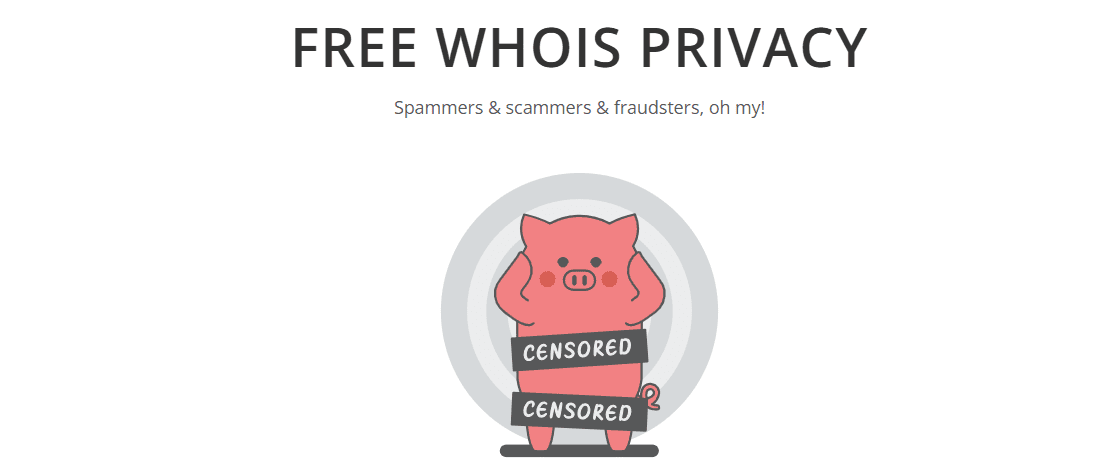
- Replaces personal contact details with privacy proxy data.
- Protects against unsolicited solicitation and third-party data misuse.
- No add-on purchase or manual activation required.
In the Porkbun vs Namecheap comparison, both registrars have successfully eliminated the common industry upsell, making domain privacy protection a standard expectation for any privacy-conscious owner regardless of the platform chosen.
2. DNSSEC support and domain security features
Namecheap prioritizes account safety through tools accessible via the domain management panel. Their setup is supported by extensive documentation in the knowledge base, ensuring security remains accessible for all users regardless of their technical skill or background.
- DNSSEC setup is managed through the main dashboard.
- Two-factor authentication (2FA) supports authenticator apps and hardware security keys.
- Domain transfer locks and confirmation emails for account changes come standard.
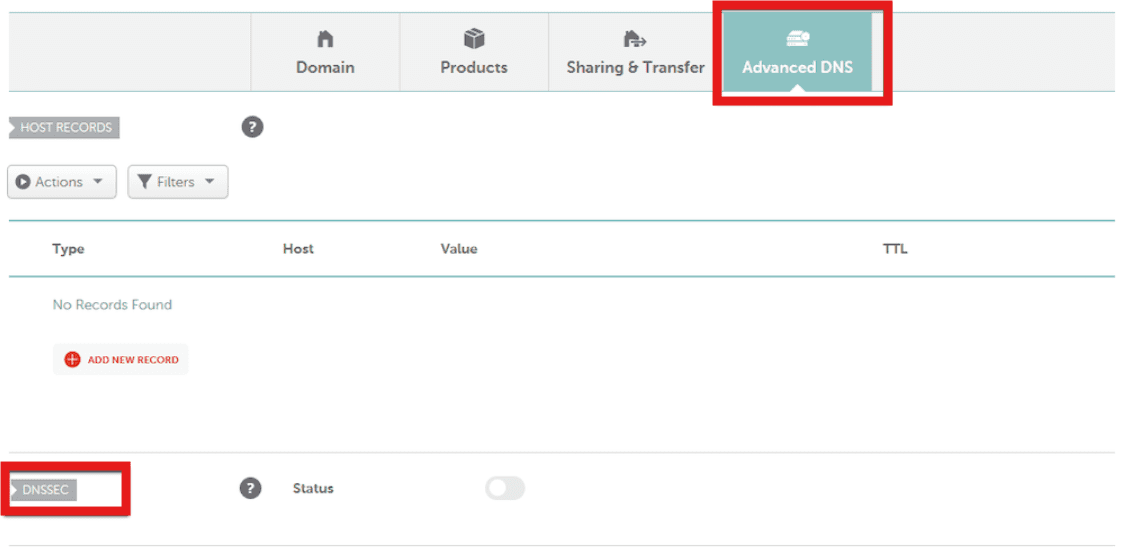
Porkbun offers a streamlined security experience, focusing on an intuitive configuration interface. They maintain a strong commitment to protecting ownership by making advanced features simple to implement, a key highlight in this Porkbun vs Namecheap comparison.
- DNSSEC configuration is embedded directly within the DNS management section.
- Authenticator-based 2FA protects against unauthorized account access.
- Layered security defaults include mandatory transfer locks and registrant change notifications to protect domain ownership.
3. DNS management and nameserver options
Namecheap operates its own FreeDNS and BasicDNS services, both included at no charge. Its DNS interface is more feature-rich but can feel complex for first-time registrants. For experienced users in this Porkbun vs Namecheap comparison who require granular control, Namecheap’s interface offers a broad array of visible options within a single dashboard view.
- Supports all standard record types including A, AAAA, CNAME, MX, TXT, SRV and CAA.
- Custom TTL settings allow experienced users to fine-tune propagation timing for specific needs.
- Point domains freely to external nameservers like Cloudflare without gating or charges.
Porkbun’s DNS management panel takes a cleaner, more intuitive approach, presenting the same core functionality with a noticeably less cluttered layout. For users newer to domain management, this simplified interface reduces setup friction. It provides a streamlined experience while still supporting the technical flexibility needed for professional infrastructure and complex record setups.
- Simplified dashboard provides an intuitive, clutter-free layout for managing domain records.
- Full support for all standard record types and custom TTL settings.
- Zero gating or additional fees for pointing to external nameservers.
4. Email forwarding, SSL certificates and extras
Namecheap offers a user-friendly management dashboard where setting up email forwarding requires minimal technical knowledge and can be completed in minutes. However, Namecheap does not bundle a free SSL certificate with its base registration; these security products are sold separately as standalone purchases.
- Email forwarding setup is completed quickly through the registrar’s management dashboard.
- SSL certificates are sold as paid add-ons rather than standard registration inclusions for all users.
Porkbun creates a clear differentiator in the Porkbun vs Namecheap domain registrar evaluation by including a free SSL certificate via Let’s Encrypt with every registration. The certificate auto-renews every 90 days and requires no manual intervention once it is configured correctly.
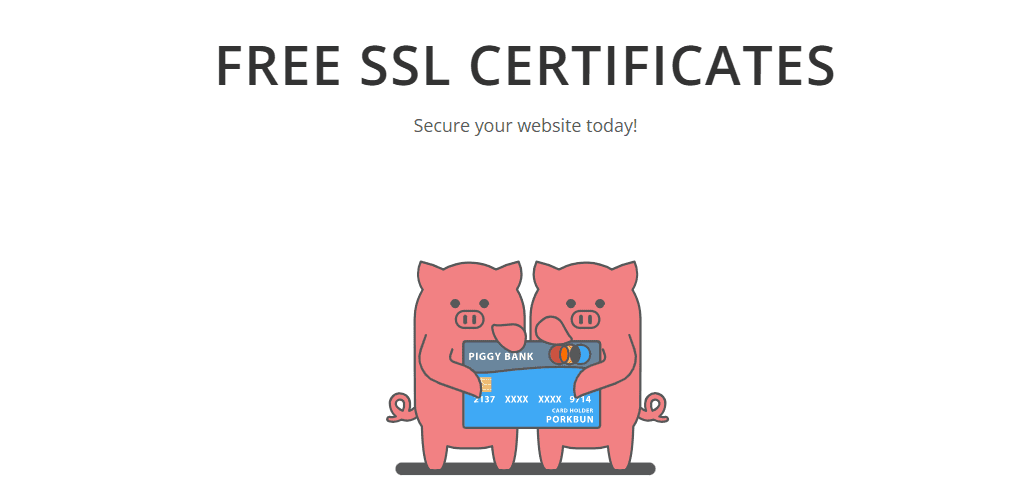
- Bundled SSL certificates represent tangible added value for basic web presences.
- Automated renewal processes significantly reduce the technical burden on domain owners.
- Email forwarding remains a genuinely accessible feature across both registrar services.
Namecheap vs Porkbun: User experience, customer support and domain management
Choosing between Porkbun vs Namecheap often comes down to the quality of their interface and support channels. We examine how each platform handles domain management and customer inquiries to ensure a smooth experience.
1. Dashboard and Domain Management Interface
The user experience is a primary factor when comparing Porkbun vs Namecheap. Namecheap provides a feature-rich dashboard that integrates domain management with its wider ecosystem of hosting, email and SSL services. While this centralized account portal is highly convenient for users who manage multiple products, the interface can often feel cluttered with promotional banners and frequent upsell prompts.
- Minimalist Design: Porkbun utilizes a clean, focused interface that centers entirely on domain management without distracting banner advertisements.
- Streamlined Experience: There are no aggressive checkout upsell flows or persistent prompts to purchase ancillary hosting and email packages.
- Ease of Use: Public reviews consistently praise Porkbun for its simplicity and lack of friction, making it highly accessible for new users.
For individuals managing a small portfolio of domains, Porkbun’s dashboard is often easier to navigate without prior experience. While Namecheap is efficient for those integrated into its full service suite, Porkbun remains the preferred choice for users seeking a distraction-free management environment.
2. Customer support channels and response quality
Namecheap provides 24/7 live chat and a ticketing system, ensuring users receive real-time help regardless of their location. Support agents are generally praised for technical knowledge, though quality fluctuates depending on query complexity. This accessibility proves essential during time-sensitive situations like a DNS propagation or imminent domain expirations.
- Round-the-clock live chat for instant assistance.
- Reliable ticketing for complex technical questions.
Porkbun relies on an email-based ticketing model supplemented by limited phone support hours. While their team is renowned for depth and expertise, those needing immediate help may find the email-based model slower than Namecheap’s chat. For routine management, this difference is minor, but it matters significantly during technical site emergencies.
- Highly detailed and professional email support.
- Limited phone access for administrative needs.
Which registrar offers better domain management tools?
In this Porkbun vs Namecheap domain registrar comparison, Namecheap offers better domain management tools for large portfolios due to its advanced bulk editing capabilities. However, Porkbun wins for everyday users who prefer streamlined DNS configuration without navigating complex menus.
As your digital footprint grows, advanced management tools become critical. You need efficient ways to update records across dozens of assets simultaneously to save administrative time and prevent costly configuration errors. Here is how their toolsets compare:
- DNS configuration: Porkbun keeps DNS management clean and accessible on a single page while Namecheap provides deeper granular controls spread across multiple tabs.
- Bulk management: Namecheap excels with robust bulk update features for nameservers and contacts whereas Porkbun focuses on handling single domains more efficiently.
- UI navigation: Porkbun prioritizes a minimalist layout free of clutter making it much faster to navigate than the broader Namecheap ecosystem dashboard.
Bluehost: A professional alternative for domain registration
When evaluating the marketplace beyond Porkbun and Namecheap, Bluehost stands as a robust contender for domain registration. As an ICANN-accredited registrar, we allow users to secure and manage domains independently of hosting packages.

You get comprehensive control over DNS configurations, WHOIS privacy and domain transfers via a dedicated dashboard, offering a streamlined experience comparable to specialized standalone registrars.
Key benefits of Bluehost domain services
- Centralized management: Efficiently oversee your entire domain portfolio through a unified, high-performance control interface.
- Domain Forwarding: Implement instantaneous redirection to guide visitors toward specific web destinations seamlessly.
- Automated renewal: Ensure continuous ownership and prevent accidental expiration with reliable auto-renewal protocols.
- Transfer protection: Secure your digital assets against unauthorized transfer attempts using integrated domain locking features.
- Expert technical support: Access immediate assistance from domain specialists through phone or live chat at any time.
- Optimized search functionality: Identify the ideal domain quickly with a high-velocity search engine designed for precision.
- Expansive extension selection: Choose from a broad catalog of top-level domains to build a unique and memorable brand identity.
- Privacy and identity protection: Obfuscate personal contact information within the WHOIS database to mitigate spam and security risks.
- Geographic targeting: Establish local authority by utilizing geo-location domains, such as .uk, to define your regional market presence.
While the choice between Porkbun vs Namecheap often comes down to minor price differences, Bluehost’s registration rates remain highly competitive and align with industry standards for popular extensions like .com. Our service is particularly advantageous for users who prioritize administrative clarity and the backing of a long-standing industry leader.
Ready to claim your corner of the web? Find and register your domain with Bluehost today.
What actually matters when comparing registrars?
When evaluating the Porkbun vs Namecheap domain registrar landscape, looking beyond the initial first-year promotional price is essential. The right choice depends heavily on your daily workflow and long-term business goals. Whether you are a small business owner prioritizing all-in-one solutions or a tech-savvy developer focused on lean domain management, certain core criteria should drive your decision.
- Long-term renewal rates: Introductory offers look appealing, but analyzing the Namecheap vs Porkbun pricing difference over three to five years reveals your true cost of ownership.
- Hidden fees and upsells: Look for transparent checkout experiences that do not force unnecessary add-ons or charge extra for basic functionality like WHOIS privacy protection.
- User interface simplicity: Your time is valuable. A clean and intuitive dashboard allows you to update DNS records efficiently without clicking through cluttered promotional menus.
- Bundled security features: Essential protections like two-factor authentication, SSL certificates and domain transfer locks should be standard inclusions rather than expensive premium upgrades.
Above all else, reliability must remain your top priority. In any Porkbun vs Namecheap or Namecheap vs Porkbun comparison, ensuring your domain stays online, secure and easily accessible is what truly protects your digital brand.
Namecheap vs Porkbun: Which domain registrar should you choose?
Both registrars are legitimate, well-regarded choices. But the decision ultimately comes down to your use case, portfolio size, TLD preferences and how much weight you place on ecosystem breadth versus pricing simplicity.
Choose Porkbun if you
- Want to register a .io, .co, .app or .dev domain and need the lowest available renewal rate
- Want a free SSL certificate included with your domain at no extra cost
- Prefer a clean, upsell-free management interface without sidebar promotions
- Solo developer or small tech startup with a focused domain portfolio
- Want to register domains only and do not need integrated hosting or email from the same provider
- Budget predictability across multi-year renewals is a top priority
Choose Namecheap if you
- Want an all-in-one platform that combines domain registration with hosting, business email and SSL products under one account
- Need 24/7 live chat support and want real-time assistance available around the clock
- Manage a large domain portfolio and need mature bulk management and reseller tools
- Require a highly developed API ecosystem with extensive third-party integrations for automation workflows
- Value access to a comprehensive self-help knowledge base with tutorials covering a wide range of technical topics
- Want to build beyond domains and want to centralize all your web infrastructure purchases with one provider
Final thoughts
For the Namecheap vs Porkbun decision in practical terms: individual bloggers and developers registering tech-forward TLDs should lean toward Porkbun; small business owners and agencies who want an integrated web services platform should lean toward Namecheap. Neither choice is wrong, but knowing which registrar aligns with your workflow will save you friction down the line.
For those seeking a premium registration experience, Bluehost provides an intuitive platform that makes securing and managing your digital identity effortless. Our domain registration services include 24/7 expert support and robust management tools to ensure your brand remains secure and accessible at all times.
Ready to claim your online identity? Register your domain with Bluehost today.
FAQs
Yes. Porkbun includes free WHOIS privacy protection on all eligible TLDs by default. So, your registrant contact information remains hidden from the public WHOIS database at no additional cost for the lifetime of your domain registration with Porkbun.
You should choose the Porkbun vs Namecheap domain registrar based on whether you prioritize a minimalist interface or an all-in-one web service ecosystem. Porkbun provides a famously clean, clutter-free dashboard that is perfect for users who want straightforward DNS management without aggressive upsells. Conversely, Namecheap is ideal for business owners who want to centralize their domains, email hosting and SSL certificates into a single platform. Choose Porkbun for quirky simplicity, and Namecheap for comprehensive infrastructure.
When comparing Porkbun vs Namecheap to Cloudflare, Cloudflare stands out by offering a strict at-cost pricing model with zero markup on wholesale registry fees. However, Cloudflare caters strictly to web professionals, featuring a highly technical interface that lacks beginner-friendly integrations like native email hosting. If you value wholesale pricing and enterprise-grade DNS routing, choose Cloudflare. If you prefer a simpler, uncluttered layout or a comprehensive suite of web services, Porkbun or Namecheap are much better options.
Namecheap generally offers faster initial response times, while Porkbun focuses on expert, tailored responses through an asynchronous ticketing system. In the Porkbun vs Namecheap domain registrar comparison, Porkbun deliberately skips 24/7 live chat to give their technical team time to thoroughly investigate complex issues. This boutique approach provides highly personalized care. Namecheap is often better suited for users who prefer standard live chat support and need immediate assistance to resolve basic hosting or domain configuration problems.
The main Namecheap vs Porkbun pricing difference comes down to transparency and renewal rates over time. Porkbun offers highly transparent, low-cost renewals without hidden fees, making it cheaper for standalone domain registrations over a three-to-five-year period. Conversely, Namecheap often provides steep first-year promotional discounts but has slightly higher renewal costs. However, Namecheap becomes more cost-effective if you bundle your domain with their web hosting and email services. Always compare the long-term renewal rates rather than just the introductory offers when choosing between them.
Namecheap is generally the better domain registrar for beginners and small business owners looking for an all-in-one ecosystem. It provides a comprehensive suite of services where you can easily bundle your domain with web hosting, professional email and eCommerce tools. Having everything housed in a single, centralized dashboard eliminates the technical headache of connecting third-party services. Meanwhile, Porkbun is a fantastic, lean alternative tailored toward developers and creators who prefer a stripped-down, straightforward interface without any aggressive upsells.
Porkbun has the edge for users who prefer clean, intuitive and highly focused domain management tools. Its dashboard is completely free of clutter and promotional pop-ups, allowing you to update DNS records efficiently in just a few clicks. Namecheap also offers robust domain management, but its interface is slightly more complex due to the sheer volume of additional services integrated into the platform. If you want simple, no-nonsense domain control, Porkbun is superior in the Namecheap vs Porkbun comparison.
Both registrars offer exceptional privacy and security features, but they approach them slightly differently. Namecheap includes free WHOIS privacy protection for life on eligible domains, along with standard Two-Factor Authentication (2FA) via apps or security keys to protect your account. Porkbun matches this by also providing free WHOIS privacy and robust account security without treating these essential protections as expensive premium upgrades. You will enjoy top-tier domain privacy and digital asset protection regardless of which platform you choose.
Yes, transferring domains between Namecheap and Porkbun is a straightforward and seamless process. You simply need to unlock the domain at your current registrar, obtain the authorization (EPP) code and initiate the transfer request at the receiving registrar. Both platforms provide excellent support documentation and do not charge extra fees for the transfer itself, though you will pay for a mandatory one-year domain extension. Ensuring your domain transfer locks are managed correctly guarantees a safe migration without experiencing any website downtime.
Yes, Namecheap provides significantly more bundled services like web hosting, VPNs and marketing tools than Porkbun. This makes Namecheap a comprehensive one-stop shop for expanding online business needs.
Porkbun generally offers better free security features by including WHOIS privacy and SSL certificates by default. While Namecheap provides free privacy, Porkbun’s transparent security inclusions provide superior overall value.
Porkbun offers more consistent renewal costs, whereas the Namecheap vs Porkbun pricing difference reveals Namecheap often has higher renewal rates. Porkbun’s transparent flat-rate pricing is better for long-term budgeting.
Namecheap offers a more beginner-friendly interface through its polished dashboard and guided checkout process. While Porkbun is simple, Namecheap’s traditional layout is often more intuitive for new website owners.
The Porkbun vs Namecheap domain registrar interface serves developers better through Porkbun’s clean API. This minimalist design allows for faster technical configurations and deployment without unnecessary upsells or marketing.
In Namecheap vs Porkbun comparisons, Namecheap is better for high-volume investors due to robust bulk tools. Their platform specifically caters to professionals managing and renewing large-scale domain name portfolios.

Write A Comment