



Key highlights
- Utilize retargeting ads to re-engage lost visitors who browsed your site without converting, a key advantage retargeting holds in the remarketing vs retargeting comparison.
- Re-engage existing customers through remarketing campaigns powered by email, SMS and CRM data.
- Understand the key differences between remarketing and retargeting, including channels, data sources and audience types.
- Merge remarketing vs retargeting tactics into a unified full-funnel strategy to maximize conversions and grow customer lifetime value.
- Avoid remarketing and retargeting campaign mistakes such as poor audience segmentation, ad fatigue and weak post-click experiences that reduce conversions.
Nearly 97% of first-time website visitors leave without taking any action.
That is a staggering amount of lost opportunity for any business. The good news? You can win many of those visitors back.
Two strategies help marketers do exactly that: remarketing and retargeting. These terms are often used interchangeably. However, they refer to different tactics with different goals and channels.
Understanding the difference between remarketing and retargeting helps you spend smarter and convert more. This guide breaks down both strategies clearly, compares them side by side and shows you when to use each one.
By the end of this guide, you will understand the remarketing vs retargeting distinction clearly enough to choose the right strategy for your business goals — and how to combine both for stronger campaign conversions.
What is retargeting?
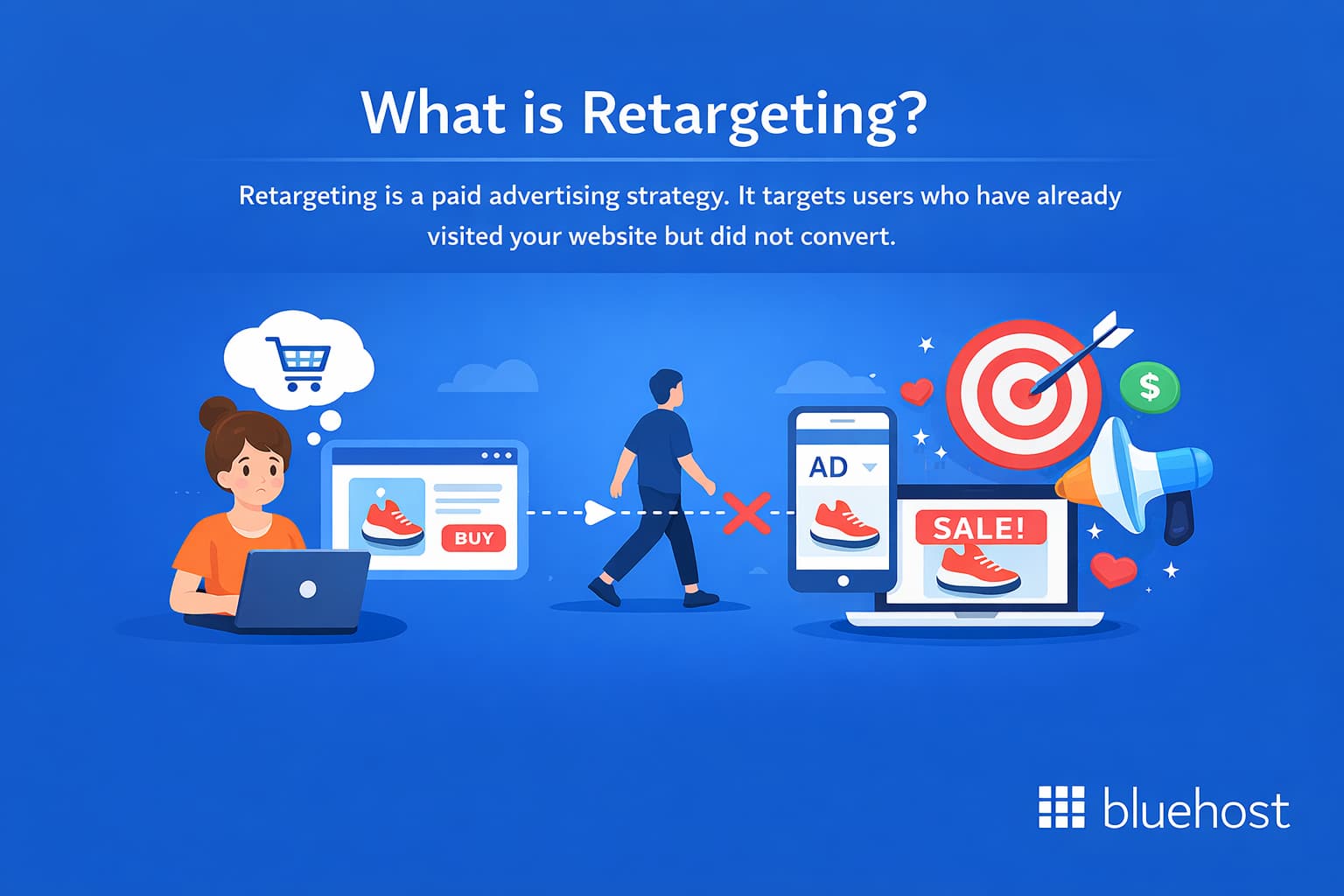
Retargeting is a paid advertising strategy. It targets users who have already visited your website but did not convert.
Here is how it works at a basic level:
- A visitor lands on your website and browses your products or pages.
- A small piece of code, called a pixel, drops a cookie in their browser.
- That cookie tracks the user as they browse other websites or platforms.
- Your paid ads then appear to that specific user across the web.
The primary goal is to bring lost traffic back to your site. Retargeting relies on third-party ad networks to display your ads. Google Display Network and Meta Ads are the most common platforms.
What are some common retargeting channels?
- Display ads: Banner ads shown across millions of websites in the Google Display Network.
- Social media ads: Ads served on Facebook, Instagram, LinkedIn or TikTok to past visitors.
- Video ads: Pre-roll or mid-roll video ads on platforms like YouTube.
- Search retargeting: Paid search ads with adjusted bids for users who visited your site.
Why retargeting is important?
Retargeting matters because most visitors never convert on their first visit.
It gives your brand the repeated exposure needed to earn a click, a sale or a sign-up from an audience that has already shown interest. Here is why it deserves a place in your strategy:
- It builds brand awareness through repeated exposure. Consistent visibility across display, social and video channels keeps your business front of mind during the buyer’s decision window.
- It recovers lost sales from first-time visitors. Retargeting brings high-intent users back to product pages and checkout flows, which makes it one of the highest-leverage uses of your ad budget.
- It complements your top-of-funnel marketing. It turns cold traffic generated by content, SEO and social into a warmer, more qualified audience that is easier to convert.
- It reduces cart abandonment. Retargeting reminds shoppers about what they left behind and brings them back to complete their purchase, especially when paired with time-sensitive offers.
Every one of these benefits depends on having a fast, credible destination to send visitors back to. A slow or unreliable site erases the gains retargeting creates before a visitor even has a chance to convert.
A quick retargeting example
A user visits your online store and views a pair of running shoes. They leave without buying. The next day, they see an ad for those exact shoes on their Facebook feed. That is retargeting in action.
Retargeting is highly visual and impression-based. It keeps your brand top of mind. It works best for eCommerce businesses, SaaS companies and any brand with measurable website traffic.
What is remarketing?
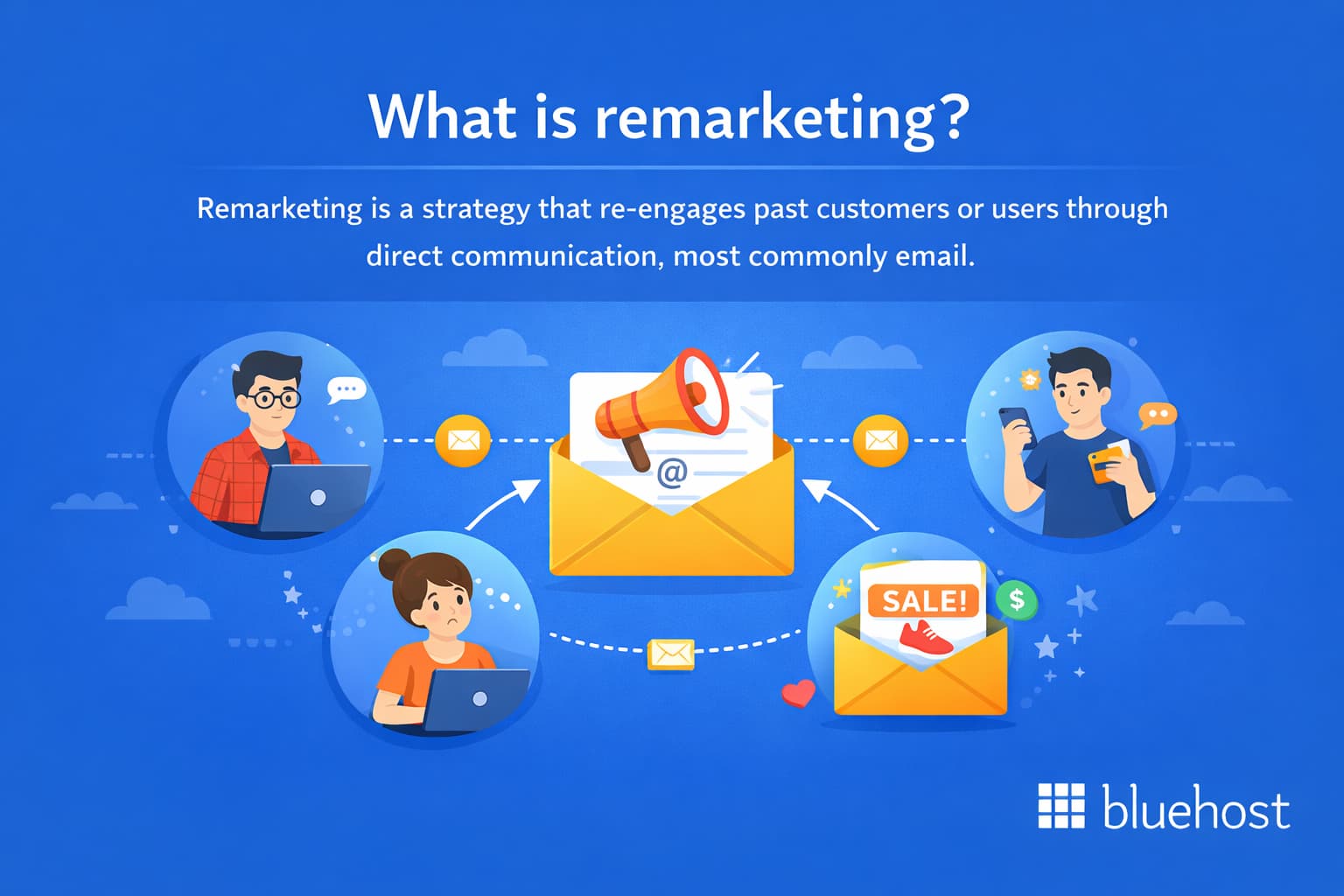
Remarketing is a strategy that re-engages past customers or users through direct communication, most commonly email.
Unlike retargeting, remarketing does not rely on pixels or third-party ad networks. Instead, it uses data you already own. That includes email lists, CRM data and customer purchase history.
Here is how remarketing typically works:
- A customer makes a purchase or signs up for your email list.
- They abandon a cart, go inactive or reach a specific trigger point.
- You send them a targeted email or SMS to re-engage them.
- The message is personalised based on their past behaviour or preferences.
Remarketing is relationship-based. It works because you are communicating with people who already know your brand. They have shared their contact details voluntarily.
Also read: Email Marketing Best Practices to Boost Engagement in 2026
What are some common remarketing tactics?
- Abandoned cart emails: Sent to users who added items to their cart but did not check out.
- Win-back campaigns: Emails targeting inactive subscribers or lapsed customers.
- Post-purchase sequences: Follow-up emails encouraging reviews, upsells or referrals.
- Personalised product recommendations: Emails based on browsing or purchase history.
- Re-engagement drip campaigns: Automated series that nurture cold leads back to activity.
Why remarketing is important?
Remarketing matters because the most profitable customers are rarely one-time buyers.
It helps you re-engage subscribers, leads and past customers with timely, personalised messages that drive repeat purchases, strengthen loyalty and increase lifetime value. Here is why it deserves a place in your strategy:
- It increases customer lifetime value through repeat purchases. Remarketing promotes relevant upsells, cross-sells and replenishment reminders that turn a single purchase into ongoing revenue.
- It improves retention by keeping your brand present after the first conversion. Post-purchase sequences, product education and loyalty messaging keep customers engaged and reduce churn over time.
- It recovers revenue from abandoned carts and incomplete actions. Automated emails and SMS reminders bring users back to finish checkout, complete sign-ups or return to products they were considering.
- It enables deeper personalisation using first-party data. Because remarketing relies on your CRM and email list, you can tailor messaging based on real customer behaviour, preferences and purchase history, making every touchpoint more relevant.
Every one of these benefits depends on trust and deliverability. If your emails land in spam, your messaging feels generic or the experience after the click is slow and unreliable, remarketing loses its impact before a customer even has a chance to convert.
A quick remarketing example
A customer bought running shoes from your store three months ago. Your email platform triggers a campaign promoting new arrivals in their size. That is remarketing, using owned data to drive a repeat purchase.
Remarketing excels at increasing customer lifetime value. It strengthens loyalty and improves retention without significant ad spend.
Also read: How to Increase Blog Traffic in 2026 | 11 Proven Strategies
Remarketing vs retargeting: Same goal, different approach
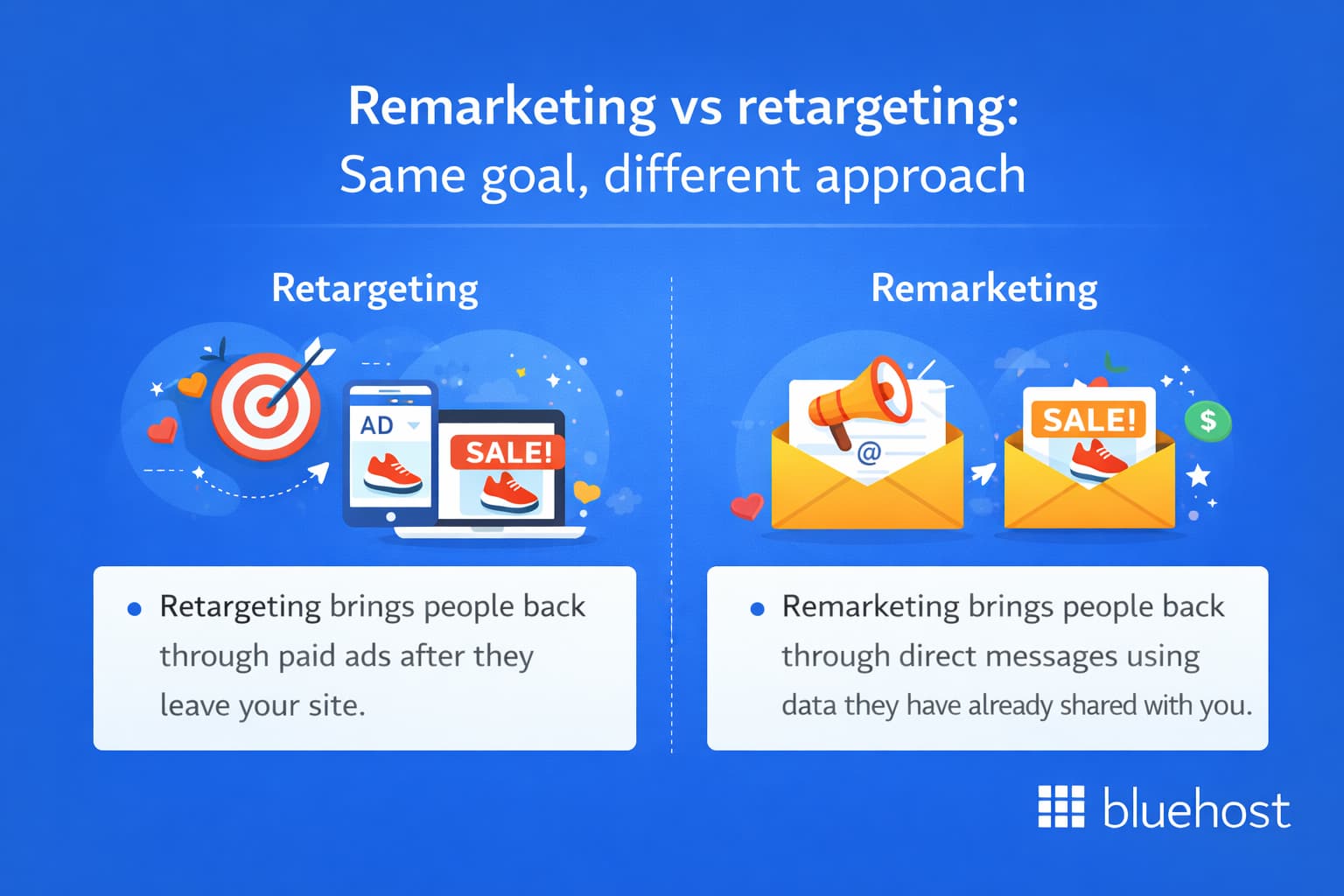
Both remarketing and retargeting exist for the same reason: most people need more than one touchpoint before they convert.
The difference between remarketing and retargeting is not the result you want, it is the method you use to get there.
- Retargeting brings people back through paid ads after they leave your site.
- Remarketing brings people back through direct messages using data they have already shared with you.
When it comes to remarketing vs retargeting, the one key distinction worth remembering is this:
- Retargeting is built for reach.
- Remarketing is built for relationship.
Once that clicks, the remarketing vs retargeting decision becomes much easier, and much easier to combine.
Why people confuse retargeting and remarketing?
Confusion between retargeting and remarketing is prevalent, as both strategies prioritize re-engaging users who demonstrated interest in a brand without completing a conversion.
Industry terminology often lacks precision; notably, Google Ads utilizes “remarketing” as a general descriptor, while platforms like Facebook favor “retargeting” for paid advertising. This lack of standardization often leads to the erroneous assumption that the terms are interchangeable.
- Retargeting: Primarily addresses anonymous website visitors through paid media platforms.
- Remarketing: Involves re-engaging known contacts through owned communication channels, such as email.
- Strategic Value: Distinguishing these methods ensures more deliberate and effective marketing budget allocation.
When does remarketing and retargeting start to overlap?
The remarketing vs retargeting conversation gets messy because modern platforms let you use the same audience in multiple ways.
A person can:
- Visit your website as an anonymous user (retargeting audience)
- Sign up for a lead magnet or newsletter (remarketing audience)
- Then see both an email follow-up and an ad reminder while they decide
In other words, the difference between remarketing and retargeting becomes less about the label and more about:
- Where the message shows up (ads vs inbox/SMS)
- What data powers it (pixel signals vs first-party CRM/email data)
- How personal the message can be (behavior-based vs identity-based)
This overlap is not a problem, it is an advantage. When your ads and emails reinforce the same offer, you create consistent visibility without sounding repetitive. The key is sequencing: matching the channel to the user’s intent.
Also read: Types of Digital Marketing and The Best Digital Marketing Methods
Remarketing vs retargeting: The key differences
While they are frequently used as synonyms, the remarketing vs retargeting distinction is significant for any data-driven digital strategy.
On the surface, both tactics aim to re-engage individuals who have previously interacted with your brand, but the underlying mechanisms, data requirements and strategic applications differ. They vary in terms of communication channels, primary data sources, cost efficiency and specific use cases within the sales funnel.
To better understand the remarketing vs retargeting distinction, here is a side-by-side comparison of how these two strategies differ in approach and execution:
| Feature | Retargeting | Remarketing |
|---|---|---|
| Primary channel | Paid ads across display networks, social media and search | Direct communication through email, SMS or CRM-based messaging |
| Audience type | Anonymous website visitors who have not converted | Known contacts such as subscribers, leads or past customers |
| Data source | Pixel tracking and third-party cookies | First-party data like email lists and CRM records |
| Cost model | Ongoing ad spend based on CPC or CPM | Lower cost through email platforms or marketing automation tools |
| Customer journey stage | Top to mid-funnel (awareness and consideration) | Mid to bottom-funnel (conversion and retention) |
| Personalisation level | Behaviour-based ads based on pages or products viewed | Identity-based messaging using purchase history and customer data |
Understanding these nuances allows marketers to deploy the right tool at the right time. Here is a clear, elaborated breakdown of how they compare:
1. Channel and delivery method
- Retargeting operates through paid external advertising channels, using third-party networks like the Google Display Network, Facebook Ads or programmatic platforms to serve visual banners or search ads to users.
- Remarketing utilizes owned communication channels—most commonly email marketing, SMS or direct mail—to reach individuals who have already opted into a brand’s database.
In practice, retargeting follows users as they browse the broader web or social media to maintain brand visibility. In contrast, remarketing delivers a direct, personal message into a user’s inbox or mobile device, allowing for a more focused and private interaction.
2. Data source
- Retargeting is traditionally powered by pixel-based tracking and third-party cookies that monitor browser behavior to identify when a user leaves a site without converting.
- Remarketing relies exclusively on first-party data, such as email addresses, purchase history and contact details stored within a brand’s Customer Relationship Management (CRM) system.
This technical difference is increasingly critical in the modern privacy landscape. As third-party cookies are phased out by major browsers and privacy regulations like GDPR and CCPA become stricter, retargeting becomes more challenging to execute accurately. Remarketing, which is built on a foundation of “opt-in” first-party data, offers a more stable and privacy-compliant long-term asset for marketers.
3. Audience type
- Retargeting typically targets anonymous website visitors who have shown interest but have not yet shared their contact information or made a purchase.
- Remarketing targets known contacts and established leads—individuals who are already in your ecosystem, such as current subscribers or previous customers.
Because of these audience differences, retargeting is designed to cast a wide net to pull “strangers” back to your site, while remarketing is a more precise, relationship-focused tool used to nurture deeper connections with people who already recognize your brand name.
4. Cost structure
- Retargeting involves continuous paid media spend, where costs are determined by bidding models like Cost Per Click (CPC) or Cost Per Mille (CPM) on competitive ad auctions.
- Remarketing is generally a lower-cost endeavor, as most email marketing platforms charge flat monthly subscription fees based on the total number of contacts rather than the number of messages sent.
While remarketing often delivers a higher return on investment per message due to its low distribution costs, retargeting remains a vital growth engine because it can scale your reach far beyond the limits of your existing email list to capture new potential buyers.
5. Stage of the customer journey
- Retargeting is most effective at the top and middle of the funnel, serving as a reminder to prospects who are in the awareness or consideration phases but need an extra “nudge” to return.
- Remarketing shines at the middle to the bottom of the funnel, focusing on nurturing qualified leads, reducing cart abandonment and driving customer retention through loyalty rewards.
6. Personalisation level
- Retargeting provides behavioral personalization, such as dynamic ads that display the specific product a user viewed or generic “come back” offers based on the pages they visited.
- Remarketing allows for granular, identity-based personalization, drawing from CRM data to reference specific past purchases, birthdates or loyalty tier status.
A remarketing email can address the recipient by name and suggest products that complement what they bought six months ago. While retargeting ads are effective for maintaining relevance through visual cues, they lack the conversational tone and deep personal context that a tailored remarketing campaign can provide.
When to use retargeting?
Retargeting works best when your primary challenge is converting first-time or returning visitors into buyers. It is ideal when your brand needs consistent visibility throughout the buyer’s journey.
Consider retargeting when:
- You have significant website traffic but low conversion rates.
- Your average customer needs multiple touchpoints before purchasing.
- You sell products or services with a longer consideration phase.
- You want to promote specific products to users who viewed them.
- You are running a time-sensitive promotion or sale.
Best practices for retargeting
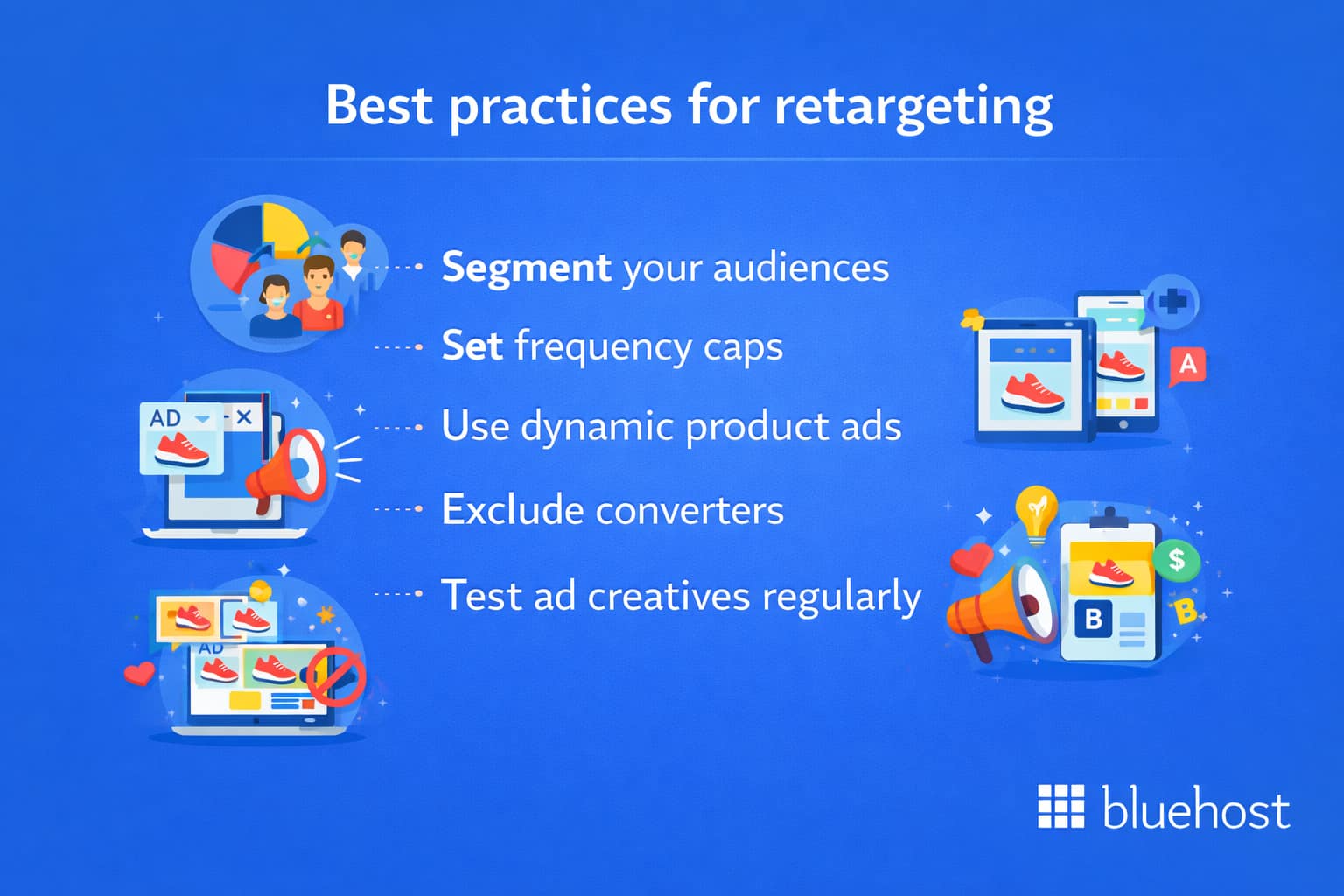
Retargeting can be highly effective, but its success depends on how well your campaigns are structured and managed. Following proven best practices helps ensure your ads stay relevant, avoid audience fatigue and drive stronger conversion rates.
- Segment your audiences: Do not serve the same ad to every visitor. Target users based on the specific pages they viewed.
- Set frequency caps: Limit how often a user sees your ad. Overexposure leads to ad fatigue and negative brand perception.
- Use dynamic product ads: Show users the exact products they viewed for higher relevance and click-through rates.
- Exclude converters: Remove users who already purchased from your retargeting audience immediately.
- Test ad creatives regularly: Rotate images, copy and calls to action to maintain engagement.
When to use remarketing?
Remarketing is the right choice when you want to deepen relationships with people who already know your brand. It is one of the most cost-effective tools for driving repeat purchases and reducing churn.
Consider remarketing when:
- You have a growing email list of customers or leads.
- You notice high cart abandonment rates in your store.
- You want to increase customer lifetime value.
- You need to re-engage inactive subscribers or lapsed buyers.
- You are launching a new product to an existing audience.
Best practices for remarketing
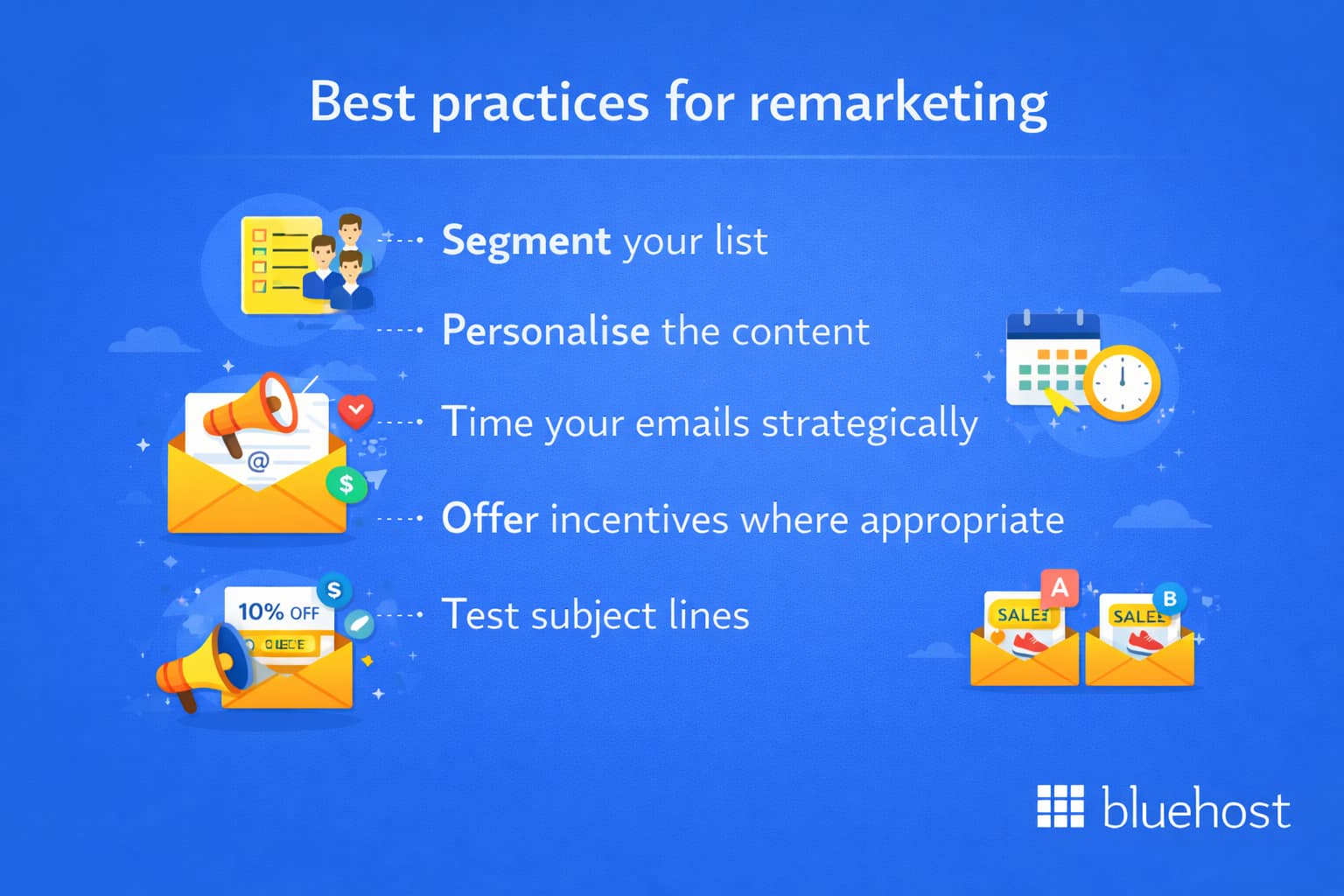
Remarketing performs best when messages feel timely, relevant and personalized to the recipient’s behavior. Following a few core best practices helps improve engagement, increase conversions and strengthen long-term customer relationships.
- Segment your list: Group contacts by behavior, purchasers, cart abandoners and inactive subscribers need different messages.
- Personalize the content: Use the recipient’s name, purchase history and browsing behavior to make emails feel relevant.
- Time your emails strategically: Send abandoned cart emails within one to three hours for the highest recovery rate.
- Offer incentives where appropriate: A small discount or free shipping can push hesitant buyers over the line.
- Test subject lines: Open rates depend heavily on subject line performance.
Should you use both remarketing and retargeting?
Yes, and the most effective digital marketing strategies combine both. They are not competing approaches. They complement each other at different stages of the customer journey.
Here is how they work together in practice:
- A visitor browses your site but does not convert → Retargeting ads bring them back.
- They return and sign up for your email list → Remarketing emails nurture them toward purchase.
- They make a purchase → Remarketing drives repeat orders and upsells.
- They go inactive → A win-back email campaign re-engages them.
- They engage again → Retargeting ads reinforce brand visibility during their next research phase.
This creates a continuous loop. Retargeting widens the top of your funnel. Remarketing deepens relationships further down. Together, they reduce wasted ad spend and increase overall conversion rates.
Key considerations before getting started
Before launching remarketing or retargeting campaigns, it is important to ensure the right foundations are in place. Addressing a few strategic and technical factors early can improve campaign performance and prevent costly mistakes later.
- Privacy compliance: Ensure your pixel tracking and email collection comply with GDPR, CCPA and relevant local laws.
- Budget allocation: Start with remarketing if budget is limited, the cost per conversion is typically lower.
- Data quality: Clean, well-segmented data makes both strategies significantly more effective.
- Platform selection: Choose ad platforms and email tools that integrate well with your existing CRM or eCommerce platform.
What are the common mistakes that hurt remarketing and retargeting results?
Even strong campaigns can fall flat when the fundamentals are off. If your remarketing vs retargeting results are not improving, it is often because of avoidable friction, not because the strategy itself is wrong.
Here are the issues that show up most often:
- One message for everyone: If you do not segment by intent or behaviour, your ads feel irrelevant and your emails feel generic.
- Too much frequency, not enough control: When people see the same ad too often, you create fatigue, lower click-through rates and weaken brand perception.
- Not excluding converters quickly: Continuing to target people who already purchased wastes budget and can frustrate customers.
- Using discounts as the default: Incentives can help, but relying on them too often trains buyers to wait and reduces margins over time.
- Letting the post-click experience ruin the conversion: A slow landing page, poor mobile UX or clunky checkout can erase the gains remarketing and retargeting create.
Avoid these pitfalls and both strategies become easier to scale, with better efficiency, cleaner data and a stronger customer experience.
Bluehost Professional Digital Marketing Services
If you understand the difference between remarketing and retargeting, the next step is having enough traffic and consistent execution to make both strategies work.
With Bluehost Professional Digital Marketing Services, you can get managed help on the two areas that support that system:
- Pro SEO Assist: You get SEO help focused on refreshing your site with relevant content and on-page updates such as keyword research, title tags/meta descriptions/H1 tags, image alt tags and anchor text optimization. Pro SEO Positioning & Messaging
- Pro PPC: You get PPC campaign support that includes a kickoff consultation, keyword strategy development, custom ad creation and location-based ad targeting, backed by Google Ads–certified expertise and automation for monitoring/optimization. Pro PPC Positioning & Messaging Pro PPC Positioning & Messaging Pro PPC Positioning & Messaging
This fits naturally into a remarketing vs retargeting strategy: SEO helps you build more qualified traffic over time and PPC helps you drive visibility in search sooner—so you have more high-intent visitors to re-engage through both remarketing and retargeting.
Final thoughts
Distinguishing between remarketing and retargeting is about more than terminology; it reflects a strategic choice regarding your marketing channels and how you connect with your audience.
Use this simple framework to help guide your decision-making process:
- Choose retargeting if your primary focus is on converting anonymous website visitors into customers through paid advertising.
- Choose remarketing if your goal is to re-engage current leads and existing customers through email or other owned communication channels.
- Choose both if you want to execute a full-funnel marketing strategy that balances new customer acquisition with long-term brand retention.
Both strategies require a high-performing digital foundation to be successful. Your website must be fast, reliable and optimized for user experience, as a poor landing page can easily waste the budget spent on even the most sophisticated retargeting or remarketing efforts.
Understanding the nuances of remarketing vs retargeting is a vital first step. The next is building the professional infrastructure to support these efforts—ensuring your website is ready to convert every visitor that returns to your brand.
Ready to take your strategy to the next level?
Beyond providing a fast and scalable foundation for your site, Bluehost Professional Digital Marketing Services can help you manage SEO & PPC to ensure your campaigns deliver maximum impact and growth for your business.
FAQs
When comparing remarketing vs retargeting, the key distinction lies in the methods each strategy uses to win back potential customers. Retargeting relies on cookies and pixel-based tracking to deliver paid ads to anonymous visitors who browsed your site without converting, while remarketing focuses on re-engaging existing or past customers through personalized email campaigns and direct outreach using contact information they previously shared with your business.
When comparing remarketing vs retargeting, abandoned cart emails are one of the clearest examples of remarketing in action. When a user adds a product to their online shopping cart but leaves the site without completing the purchase, the brand can automatically trigger a follow-up email shortly after, often featuring a discount code or gentle reminder designed to bring the customer back and drive conversions.
When exploring remarketing vs retargeting strategies, it helps to understand that remarketing itself comes in two key forms: standard and dynamic. Standard remarketing serves general brand-focused ads to users who previously visited your website as they continue browsing across the web, keeping your business top of mind. Dynamic remarketing takes a more targeted approach within remarketing campaigns, delivering personalized ads that showcase the specific products or services a user viewed or engaged with during their last visit, making it a powerful driver of conversions.
When comparing remarketing vs retargeting, the core purpose of remarketing is to stay top-of-mind with users who are already familiar with your brand and nurture them toward conversion. Unlike broader retargeting campaigns, remarketing focuses on re-engaging high-intent leads through personalized outreach, helping businesses boost ROI by guiding warm prospects further down the sales funnel until they complete a purchase.
Neither strategy is objectively superior, as they serve different roles in a conversion funnel. Retargeting is generally more effective for converting broad, anonymous website traffic through visual display ads, whereas remarketing typically achieves higher conversion rates by re-engaging known leads or past customers via personalized email campaigns and direct communication.
Yes, combining remarketing and retargeting allows you to create a more comprehensive digital strategy. While retargeting keeps your brand visible to users as they browse other sites, remarketing lets you send targeted follow-up messages to those who have already shared their contact information, maximizing your conversion potential across multiple touchpoints.
For retargeting, the most common platforms are Google Ads, Meta (Facebook and Instagram) and LinkedIn, which utilize tracking pixels to reach past visitors. Remarketing efforts typically rely on email marketing platforms and CRM software such as Klaviyo, Mailchimp or HubSpot to communicate directly with an existing database based on their purchase history.
Yes, retargeting remains a powerful and viable strategy even as the industry moves away from third-party cookies and understanding remarketing vs retargeting helps clarify why. Marketers are successfully pivoting to first-party data strategies, server-side tracking and Privacy Sandbox APIs to identify and re-engage their target audiences effectively, all while staying compliant with modern privacy standards and data security requirements.


Write A Comment