 ChatGPT,
  Claude,
  Gemini,
  Grok — all four for
 How to Access and Manage Your Self‑Managed VPS
This guide walks you through how to access your Self‑Managed VPS and navigate key server management features from your Bluehost account.
Access Your Self-Managed VPS
- Log in to your Bluehost Portal.
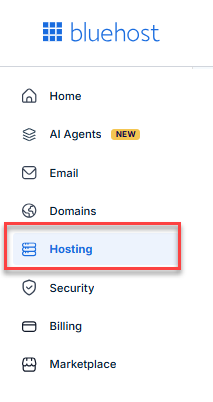
- Click on the Hosting tab.
- From the Hosting page, you’ll see a complete overview of your VPS server, including:
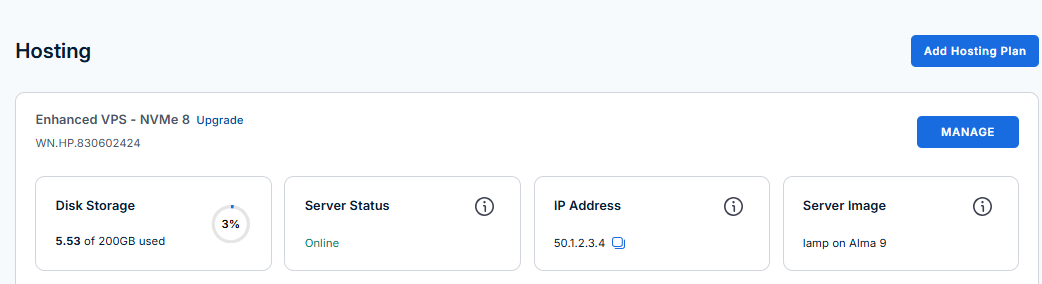
- VPS plan
- Disk storage
- Server status
- IP address
- Server image
- Use Quick Server actions - you can quickly perform essential server actions:

- Reboot Server – Restart your VPS
- Power Off – Shut down your server
- Launch Console – Access your server directly
- Click View Details - here, you’ll find additional server information such as:

- Hostname
- Data center location
- Option to reset your root password.
Access the Server Management Panel
- Click the Manage button. This opens your full server management panel.
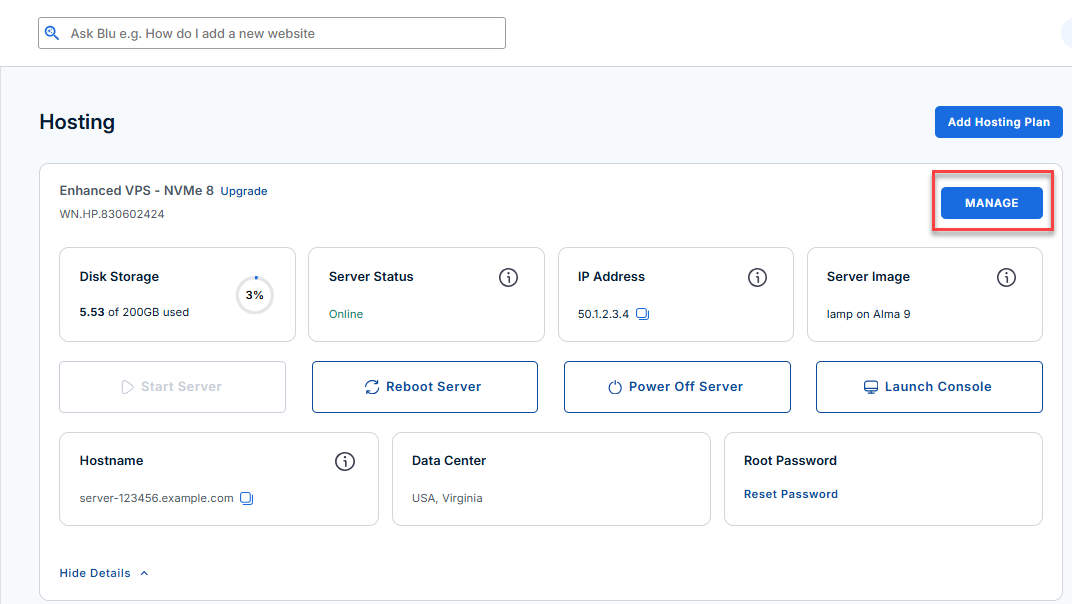
- Server Overview and License tabs:
- Under the Overview tab, you can:
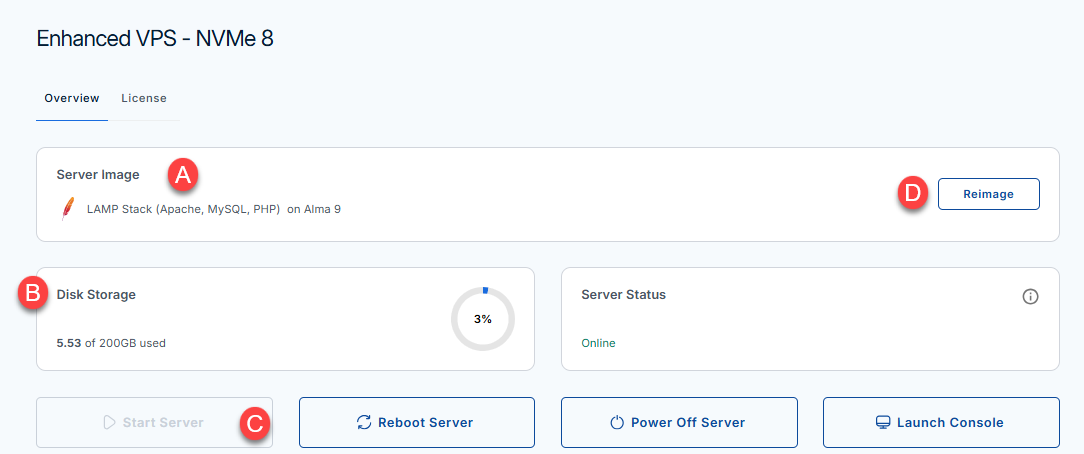
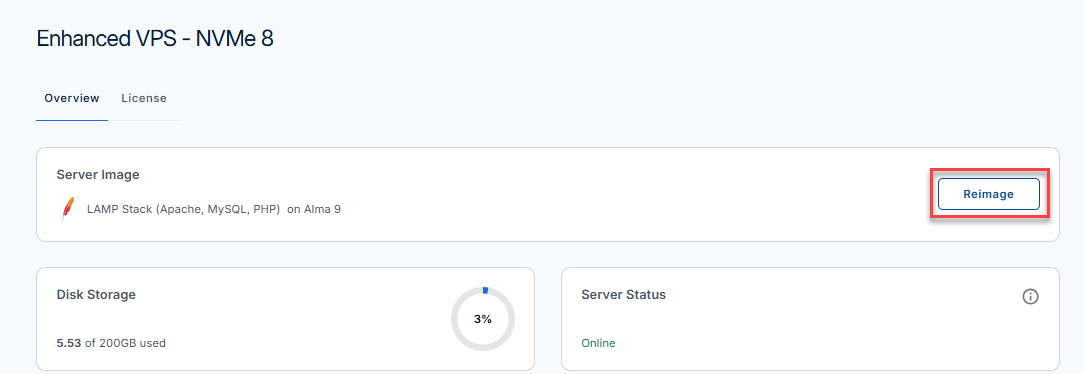
- View your current Server Image (operating system and installed application)
- Server Disk Storage and Server Status
- Also, use Quick Server Actions (Reboot & Power Off server and Launch Console).
- If you need to change your server setup:
- Click Reimage.
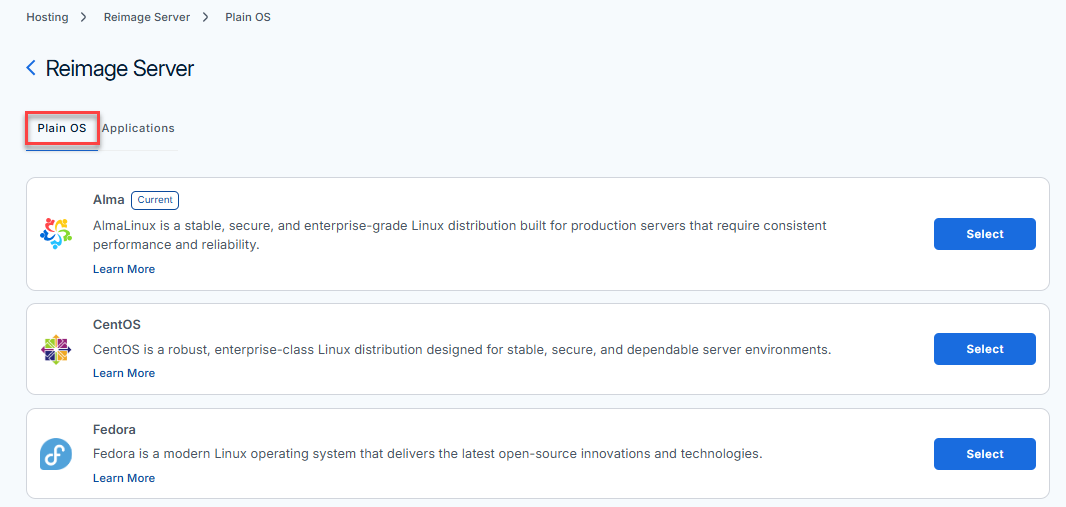
- Select from the available Operating Systems and Applications.
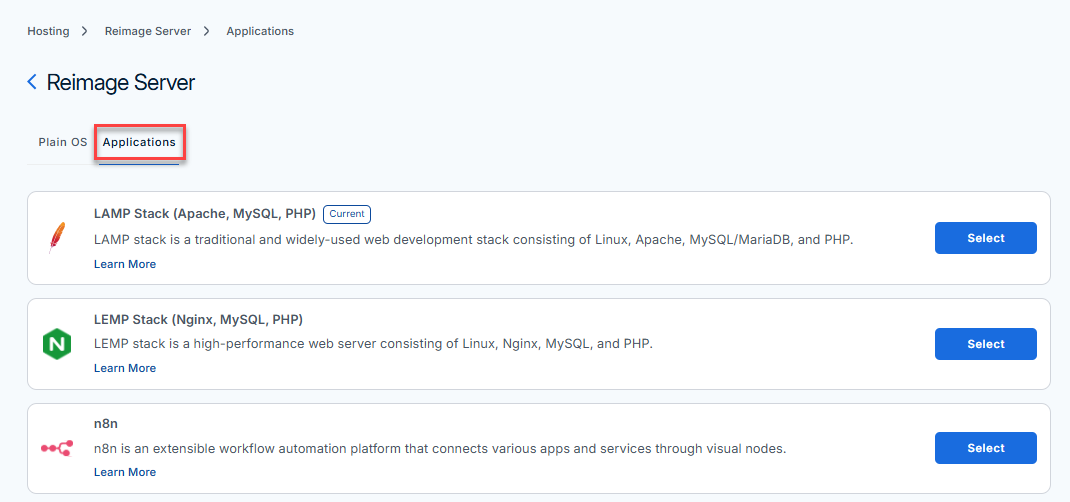
- Click Reimage.
- Under the License tab.
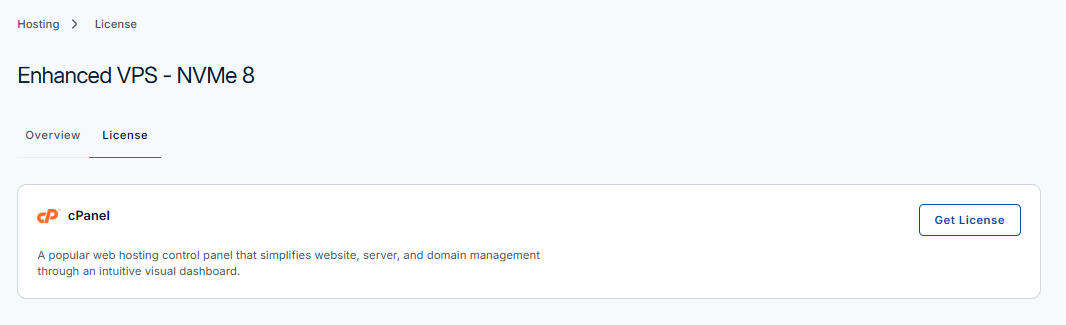
- From here, you can view and manage the cPanel license associated with your VPS.
- Under the Overview tab, you can:
Summary
This guide explained how to access and manage your Self‑Managed VPS through your Bluehost account. It covers navigating the Hosting tab to view server details, perform quick actions like rebooting or accessing the console, and checking additional information through the View Details option. You’ll also learn how to open the Server Management Panel to review your server setup, reimage your server if needed, and manage your cPanel license—all in one place for easy VPS control.
Did you find this article helpful?