 ChatGPT,
 Claude,
 Gemini,
 Grok — all four for
Key highlight
- Gather essential details before starting the Google Workspace configuration process.
- Follow a step-by-step approach to configure Google Workspace for your business.
- Avoid address verification mistakes that stall domain activation.
- Resolve common setup errors by auditing Domain Name System (DNS) records.
Setting up Google Workspace for the first time can feel complex, particularly when domain verification, Domain Name System (DNS) updates and email activation occur simultaneously. Missing or inaccurate information during setup creates unexpected delays.
This guide serves as a practical walkthrough for configuring Google Workspace in 2026. You will learn what Google Workspace includes, what prerequisites you need, how to navigate address verification and how to troubleshoot technical issues when they arise.
Following these steps in the correct order ensures your business email and productivity tools launch without technical interruptions.
What is Google Workspace and why do businesses use it?
Google Workspace is Google’s cloud-based productivity suite built for commercial use. It connects professional email, cloud file storage, shared calendars, video conferencing and collaborative documents into a single environment. Admin tools allow managers to control accounts and permissions centrally instead of maintaining disconnected platforms.
Centralized control marks the primary difference between Google Workspace and standard personal Google accounts. Business accounts connect directly to a custom domain name and provide administrative security management, user access controls and policy settings. Standard Gmail accounts lack these enterprise administration tools.
Organizations select Google Workspace to run daily operations smoothly. Primary benefits include:
- Professional business email: Operating email on a custom domain builds customer trust and brand credibility.
- Centralized file storage and sharing: Google Drive stores company files securely and enables real-time document editing.
- Integrated scheduling and video calls: Google Calendar and Google Meet handle appointment scheduling and remote meetings together.
- Simple user and access controls: The Admin console simplifies adding team members and managing access permissions as companies grow.
- Connected productivity apps: Gmail, Google Docs, Google Sheets and Google Meet connect by default, eliminating manual platform switching.
Setting up Google Workspace through Bluehost simplifies account creation, domain connection and email record updates so your system works properly from day one.
What do you need before setting up Google Workspace?
Preparing necessary details in advance speeds up the onboarding process. Having correct company details ready prevents setup interruptions.
Collect these basic details before starting the registration wizard:
- Your official company name as it should appear across Google services.
- Your country or operating region for account region verification.
- An active personal or alternate email address to receive activation notifications.
Next, evaluate your domain status. Your domain forms the base of custom email addresses, such as you@[yourcompany].com. If you already own a domain, you will link it during registration. If you need a new web address, you can register a domain during setup with Bluehost to keep domain and hosting management together.
Also read: How to Choose a Domain Name in 2026 | 15+ Expert Tips
Accessing your domain’s Domain Name System (DNS) zone editor is essential once you select a domain. DNS records confirm domain ownership and direct incoming email messages. Setup requires updating two primary records:
- Adding a Text (TXT) record to verify domain ownership.
- Updating Mail Exchange (MX) records to direct incoming mail to Google servers.
Finally, prepare to execute a few basic technical tasks carefully. These steps do not require advanced coding experience, but precision ensures fast processing:
- Enter DNS character strings exactly as provided in the instructions.
- Review entered values thoroughly prior to saving DNS changes.
- Allow time for global DNS changes to propagate across networks.
Gathering these assets beforehand allows setup to proceed efficiently from start to finish.
Also read: What Are DNS Records? Types, How They Work & How to Update Them
How to set up Google Workspace for your business
Setting up Google Workspace involves a structured sequence. Following these steps in order completes your email and workspace activation.
Step 1: Purchase Google Workspace
Start by selecting a Google Workspace subscription tier that aligns with your operational requirements.
- Navigate to the Google Workspace purchase page on Bluehost.
- Select the plan suited to your business scale.

- Proceed to the domain selection step after choosing your plan.
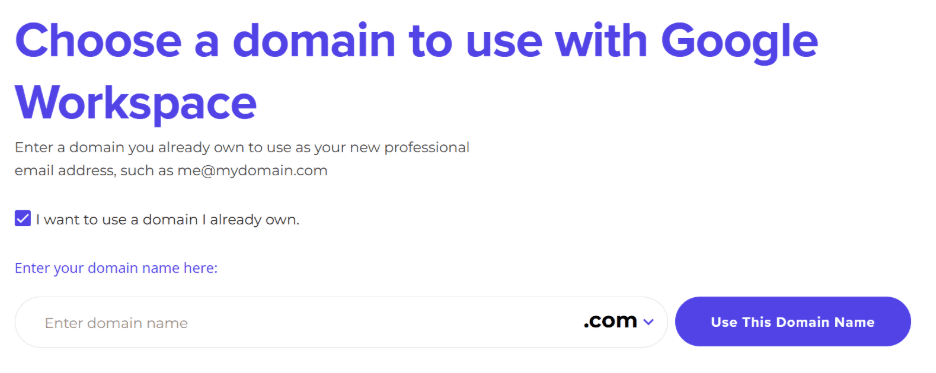
- Enter your current domain if you already own one, then click Use This Domain Name.
- Search for a new domain name and check availability by selecting Search For Domain if you require a new web address.
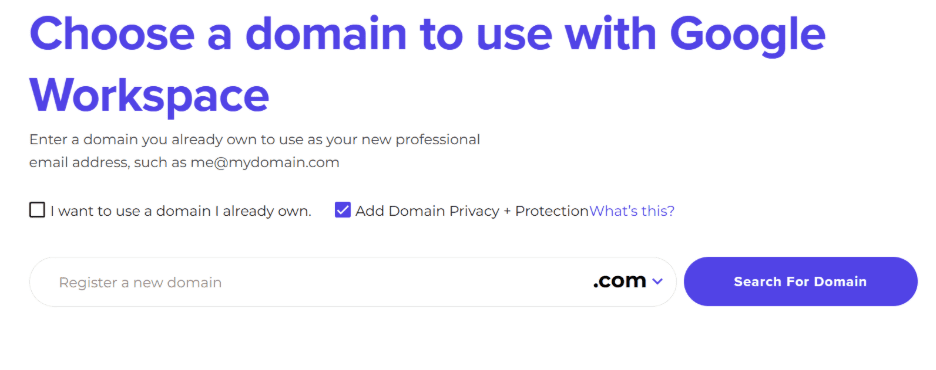
- Add optional Domain Privacy + Protection to hide your personal contact details from public records.
- Review the order summary in your cart, click CONTINUE TO CHECKOUT and complete billing.
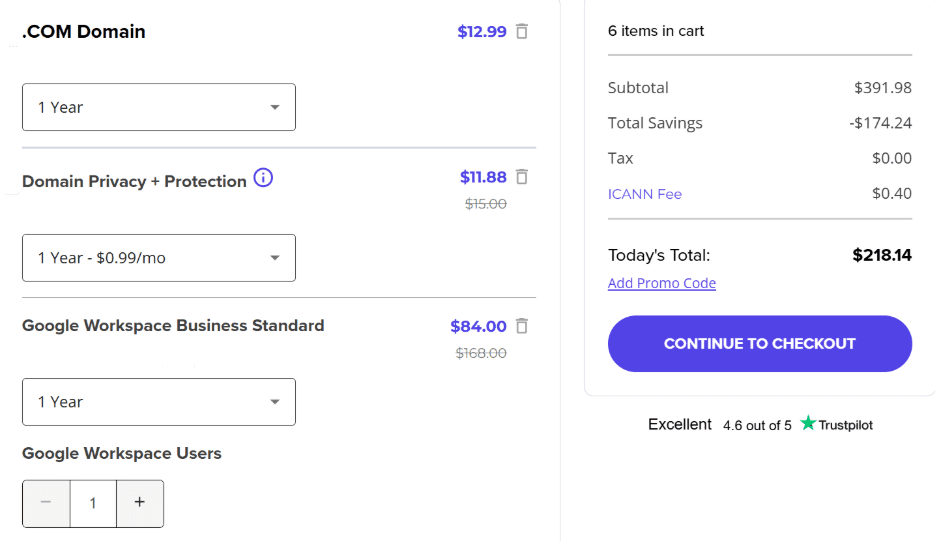
Completing payment unlocks the initial account setup assistant.
Step 2: Verify domain ownership
Confirming domain control is required before Google activates custom email routing.
Completing domain verification requires this action:
- Copy the unique Text (TXT) record generated by Google and paste it into your domain registrar’s DNS settings editor.
Adding this record proves domain administrative ownership to Google without altering your existing website operations.
Step 3: Configure MX records for email delivery
After confirming ownership, you must configure Mail Exchange (MX) records to route messages directly to Google Workspace servers.
Email configuration requires two steps:
- Access your domain registrar’s DNS management panel to update existing MX settings.
- Point your domain MX records to Google Workspace mail servers according to the provided host server addresses.
DNS record updates take time to update across global network servers.
Step 4: Create email accounts and complete setup
Finalize account setup once DNS updates take effect:
- Establish your primary admin business email user account.
- Specify a secure recovery email address for account safety.
- Review and accept Google Workspace terms of service to activate services.
Accepting the service agreements fully activates your Google Workspace environment.
Step 5: Start using and managing Google Workspace
With configuration complete, your business email and cloud application suite stand ready for everyday work operations.
You can immediately access core Workspace tools including:
- Gmail for custom domain business email communication.
- Google Drive for cloud file storage, organisation and sharing.
- Google Docs and Google Sheets for online document collaboration.
- Google Meet for online video meetings and voice calls.
Bluehost support experts remain available to assist with configuration questions or troubleshooting.
Centralized user management transforms Google Workspace into a reliable administrative core. Managing users, security settings and app permissions from one console keeps company operations organized as team size expands.
Get started with Google Workspace on Bluehost to control your business email, domain settings and DNS records from a unified account management panel.
If you already use Bluehost hosting, the following steps demonstrate how to enable Google Workspace directly inside your existing account dashboard.
Google Workspace setup for existing Bluehost users
Setting up Google Workspace through your Bluehost account control panel follows a guided walkthrough. Purchasing the plan, verifying domain ownership and adding team users occur in a direct sequence designed to eliminate technical mistakes.
Step 1: Purchase Google Workspace
Select a Google Workspace plan within your dashboard to initiate service creation.
1. Log into your Bluehost Account Manager.
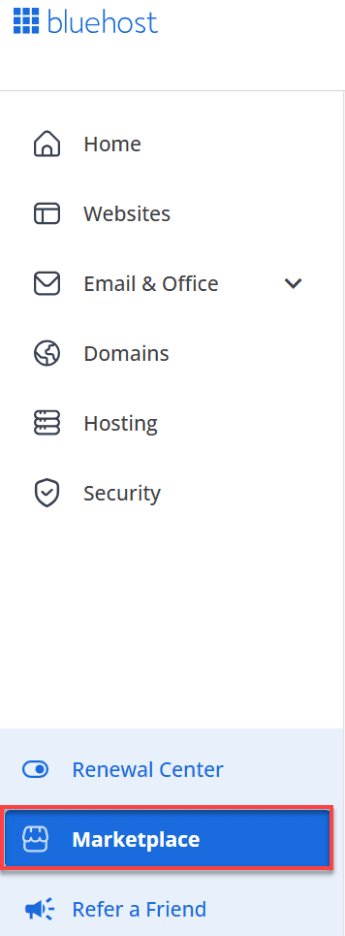
2. Select Marketplace from the main navigation panel.
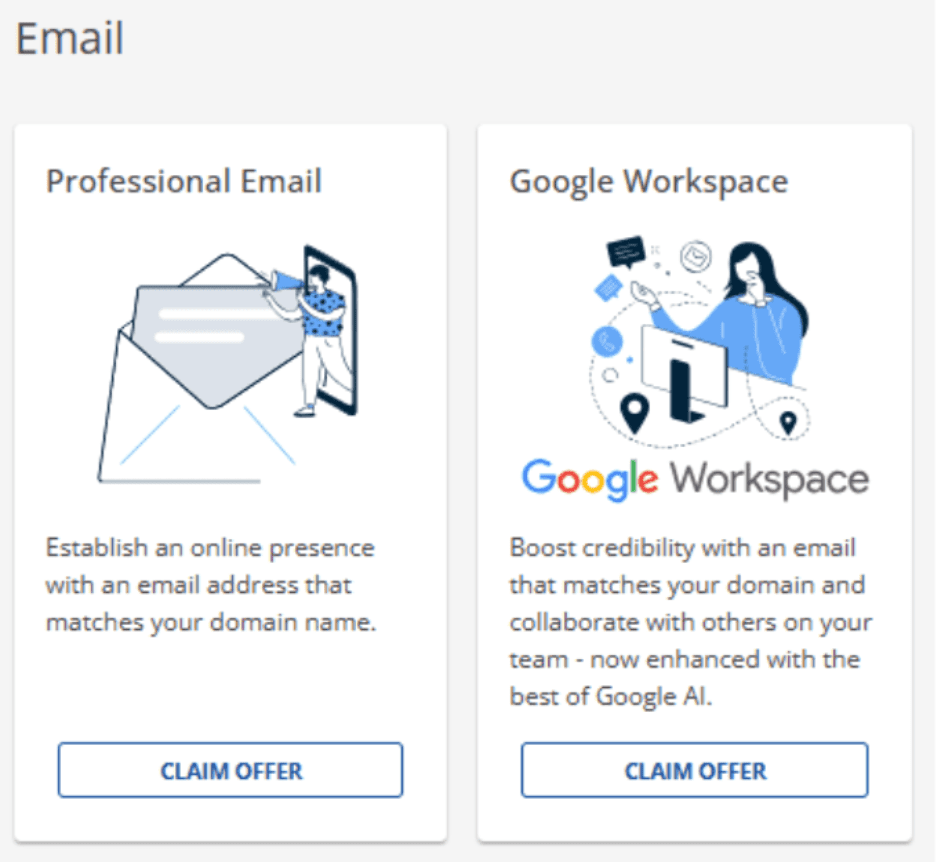
3. Locate the Email category and click Claim Offer under Google Workspace.
4. Choose the subscription tier that satisfies your team requirements.

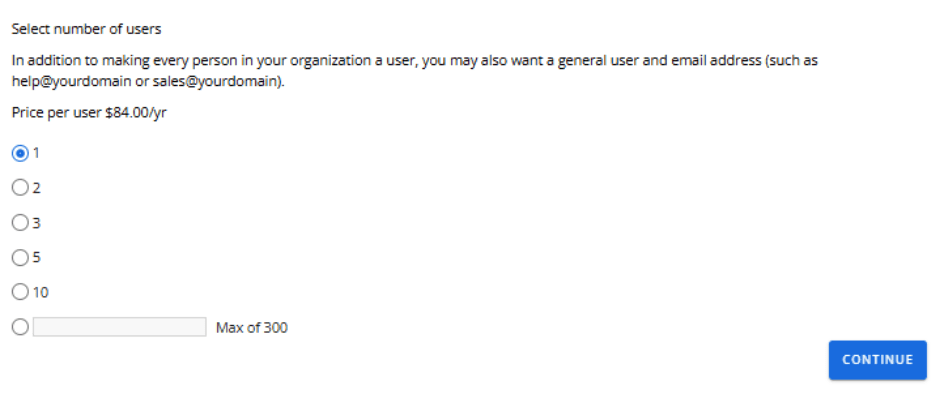
5. Set the needed user license count and proceed toward payment.
6. Enter your existing registered domain name when prompted.
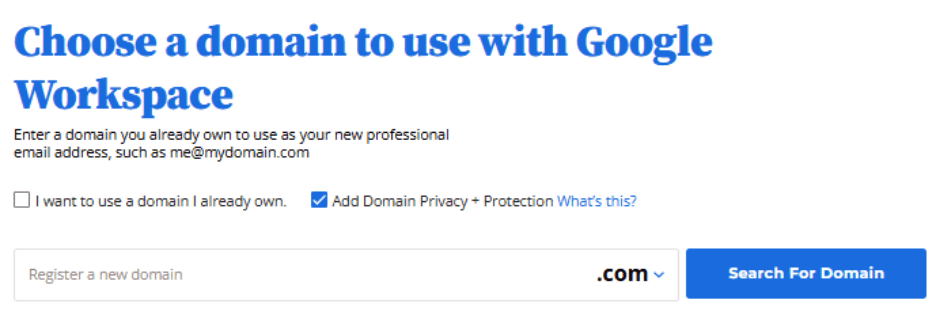
7. Register a new domain during this step if you do not own one.
8. Complete checkout to finalize your subscription order.
After completing checkout, account configuration steps become accessible inside your control panel.
Step 2: Start the setup process
Initiate the setup assistant after adding Google Workspace to your account. Initiating setup connects your workspace license with your domain name.
1. Click Set Up on the workspace activation alert inside Account Manager.

2. Open Google Workspace from your navigation menu, locate your plan and click Set Up if the notification does not appear.
Launching setup leads directly to administrator account creation.
Step 3: Enter your account details
Provide core organization details to designate your primary administrator profile.
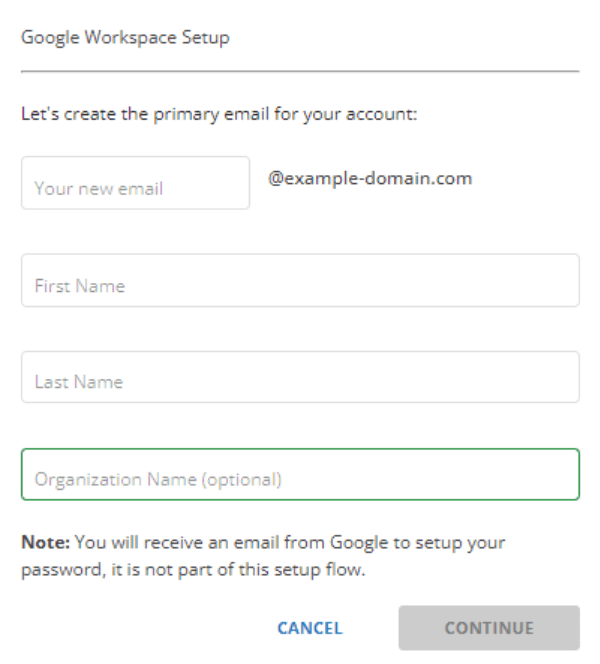
1. Enter your primary email handle along with your first and last name.
2. Enter your registered business or organization name.
3. Add an external recovery email address and select Set Up to proceed.
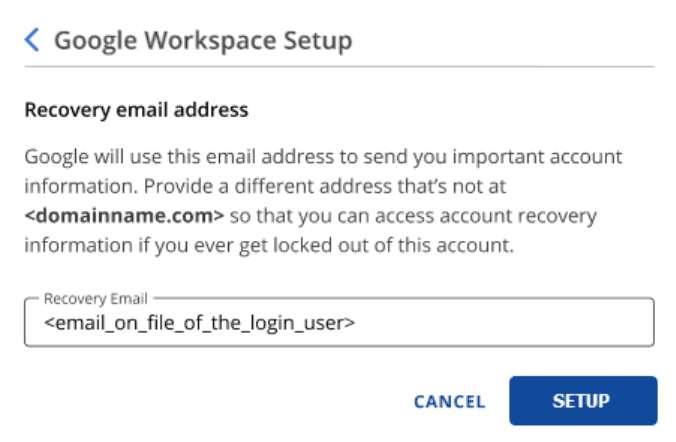
Submitting administrator details moves setup forward to domain verification.
Step 4: Verify your domain and configure DNS
Domain verification authenticates domain control and enables mail server delivery.
1. Bluehost configures necessary Mail Exchange (MX) records automatically if your domain is registered through Bluehost.
2. Adding a Text (TXT) record to your external DNS settings will be required if your domain is hosted with another registrar.
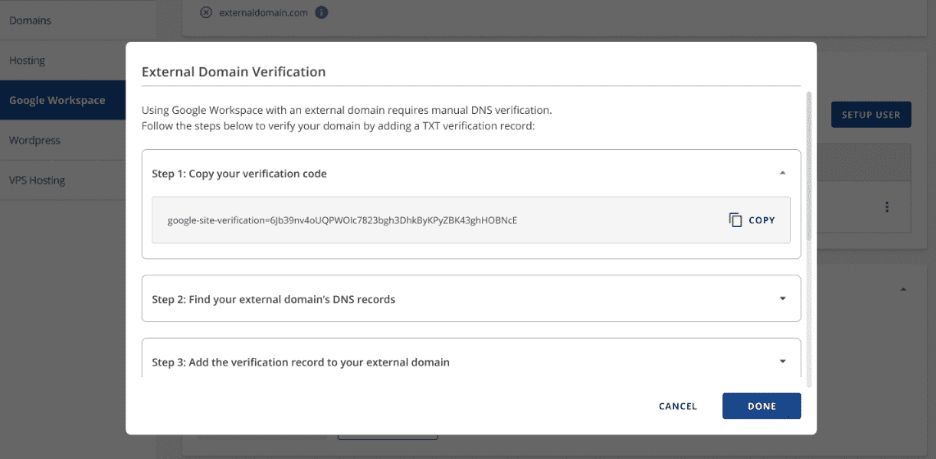
3. Update your external MX records to point to Google Workspace mail servers following ownership verification.
Allow time for network servers to recognize updated record entries after saving DNS edits.
Also read: What is a TXT Record
Step 5: Confirm setup and allow time for changes
DNS propagation requires time to distribute new settings across worldwide network servers.
- Allow a few hours for global DNS updates to finalize.
- Log into your new Google Workspace admin account and accept Google Terms of Service once verification finishes.
Finalizing terms acceptance completes activation, enabling full team access.
Step 6: Manage and start using Google Workspace
Managing team accounts, renewals and app preferences happens within your Bluehost dashboard to simplify ongoing administration.
Inside your Bluehost Account Manager, you can perform these management actions:
- Add or remove user email licenses as team requirements shift.
- Update account security preferences and administrator details.
- Access your main Google Workspace control console.
Your team can immediately use productivity applications for daily work, including:
- Gmail for custom domain business communication.
- Google Drive for secure cloud file storage and organization.
- Google Docs and Sheets for real-time document editing.
- Google Meet for video conferences and team calls.
Address verification represents another vital phase during setup. Reviewing physical location fields carefully prevents account creation delays.
How to avoid address verification issues during Google Workspace setup?
Address verification errors typically stem from minor typographical mistakes or formatting mismatches. Reviewing billing address fields carefully ensures rapid processing.
Watch for these common input errors during registration:
- Leaving postal or ZIP code fields blank or entering invalid numbers.
- Omitting suite, unit or building numbers for commercial office addresses.
- Selecting an incorrect country or region from the setup drop-down menu.
- Using unofficial address abbreviations that fail postal database checks.
- Entering typos or spelling mistakes in your primary domain name entry.
Entering a standard numeric code or placeholder like 00000 may be necessary when registering in regions without formal postal codes. Adhering closely to screen instructions keeps verification moving forward.
Standardize address details before submitting form fields:
- Type complete physical address lines as recorded on official business documents.
- Confirm the system recognizes your municipality and region correctly.
- Accept suggested standardized address formatting when prompted by the validation tool.
Accepting system-recommended address formatting increases instant verification success. If errors persist, verifying address formatting against local postal databases confirms official compliance.
Once the system accepts your physical address, setup continues to account activation.
Also read: How to Verify Address When Setting Up Google Workspace
Troubleshooting common Google Workspace setup issues
Technical snags during setup usually relate to DNS propagation timing or minor data entry errors. Most configuration issues resolve quickly without rebuilding your account from scratch.
Review these troubleshooting steps if you encounter setup interruptions.
1. Domain verification or DNS issues
Domain verification failures usually indicate incorrect DNS record entries rather than underlying Google account problems.
Audit these settings before reattempting verification:
- Confirm the Text (TXT) verification string matches Google instructions exactly.
- Verify the DNS record was published under the correct root domain name.
- Remove leading spaces, missing characters or unintended quotation marks from the TXT record value.
- Allow additional time for global DNS updates to complete propagation.
Incomplete DNS propagation causes most temporary verification failures. Waiting briefly before clicking verify again often resolves the issue. Audit mail server settings next if verification succeeds but email fails.
2. Email not working after MX record setup
Delayed email delivery immediately following MX record updates is normal network behavior. Domain Name System (DNS) changes require time to update across global internet routers.
Check these conditions before troubleshooting further:
- Ensure active MX record destination values match Google mail server addresses precisely.
- Delete legacy or conflicting MX records leftover from previous email hosting providers.
- Allow up to 72 hours for full worldwide DNS propagation to complete.
Email routing may fluctuate intermittently during global DNS propagation. Delivery stabilizes completely once network propagation finishes.
3. Setup appears incomplete or needs correction
Unfinished setup status indicates skipped form fields or pending administrative confirmations.
Resolve stalled setups with these actions:
- Check account setup notifications for pending wizard steps.
- Complete unverified administrator or recovery email confirmations.
- Re-check domain verification status and MX record active values.
Bluehost support teams stand ready 24/7 to help resolve complex configuration roadblocks or answer technical questions.
Final thoughts
Configuring Google Workspace requires completing structured technical checks, but once enabled, the system operates in the background. Custom email routes reliably, files remain organized in cloud storage and teams collaborate without juggling disconnected software tools.
Bluehost simplifies Google Workspace onboarding by guiding domain connection and DNS updates from start to finish. Managed setup reduces configuration errors and saves time.
Proper setup establishes a foundation for business email communication and daily team productivity. Set up Google Workspace with us to launch professional business email for your domain quickly.
FAQs
Standard Google accounts serve individual personal use. Google Workspace provides commercial organizations with custom domain email addresses, central administrative controls, advanced security settings and connected business productivity tools including Gmail, Google Drive, Google Meet and Google Calendar.
Yes, you can connect an existing domain during registration. You will confirm domain ownership using a Text (TXT) DNS record during setup before activating custom business email routing.
Creating custom business email requires connecting your domain, verifying administrative control with a Text (TXT) record and updating Mail Exchange (MX) records. Once DNS changes propagate, custom email addresses function through Gmail.
Inaccurate or missing Mail Exchange (MX) records prevent incoming email from reaching your custom inbox. Reviewing MX record host destinations, deleting old email records and allowing time for DNS propagation resolves delivery issues.
Yes, completing administrator setup and accepting service terms activates your software applications instantly, allowing immediate access to Google Docs, Drive, Sheets and Meet.
Audit your setup steps to verify domain ownership records and MX record values. If issues persist after checking DNS entries, contact Bluehost support experts for direct technical troubleshooting assistance.

Write A Comment