 ChatGPT,
 Claude,
 Gemini,
 Grok — all four for
Google Search is changing again. But this time, the most important shift is not only about AI.
It is about trust.
On May 27, 2026, Google announced new ways to help people find favorite sources, original reporting and timely perspectives inside AI Search. The biggest update for publishers is that Google Preferred Sources is now moving into AI Overviews and AI Mode.
That means users can choose the websites they trust and then spot those sources more easily inside Google AI search results.
This may look like a small search feature. It is not.
Google Preferred Sources points to a bigger change in how visibility may work in the AI search era. Ranking is still important. But recognition, authority and website trust are becoming harder to ignore.
For publishers, brands, creators and SEO teams, the question is changing.
It is no longer only: Can we rank?
It is also: Would readers choose us as a source they want to see again?
For Bluehost, that question matters because every website is more than a place to publish. It is a place to build credibility, earn repeat visits and turn useful content into long-term trust.
Methodology note: This article is based on Google’s official announcement on Preferred Sources and Google Search Central’s documentation for publishers. The explanation of how the feature works is drawn from those sources. The SEO implications, including the discussion around trust, preference and AI search visibility, are editorial interpretation and should not be read as confirmed ranking guidance from Google.
What does Google Preferred Sources do?
Google Preferred Sources lets users select websites they want to see more often in Search.
A reader may choose a news publisher, a niche industry blog, a local publication, a technology site or a brand they already trust. Once selected, that source can appear with a “preferred” badge in Top Stories. Google’s documentation also says preferred sources can be highlighted in AI Mode and AI Overviews where those features are available.
In simple terms, users can now tell Google:
This is a source I trust. Show me more from it when it is relevant.
That is what makes this feature important. It is not just about another badge in search results. It gives users a more direct role in shaping which sources stand out.
Why does this matter in Google AI search?
Traditional search gave users a list of links. They scanned titles, snippets, URLs and brand names before choosing where to click.
Google AI search changes that experience.
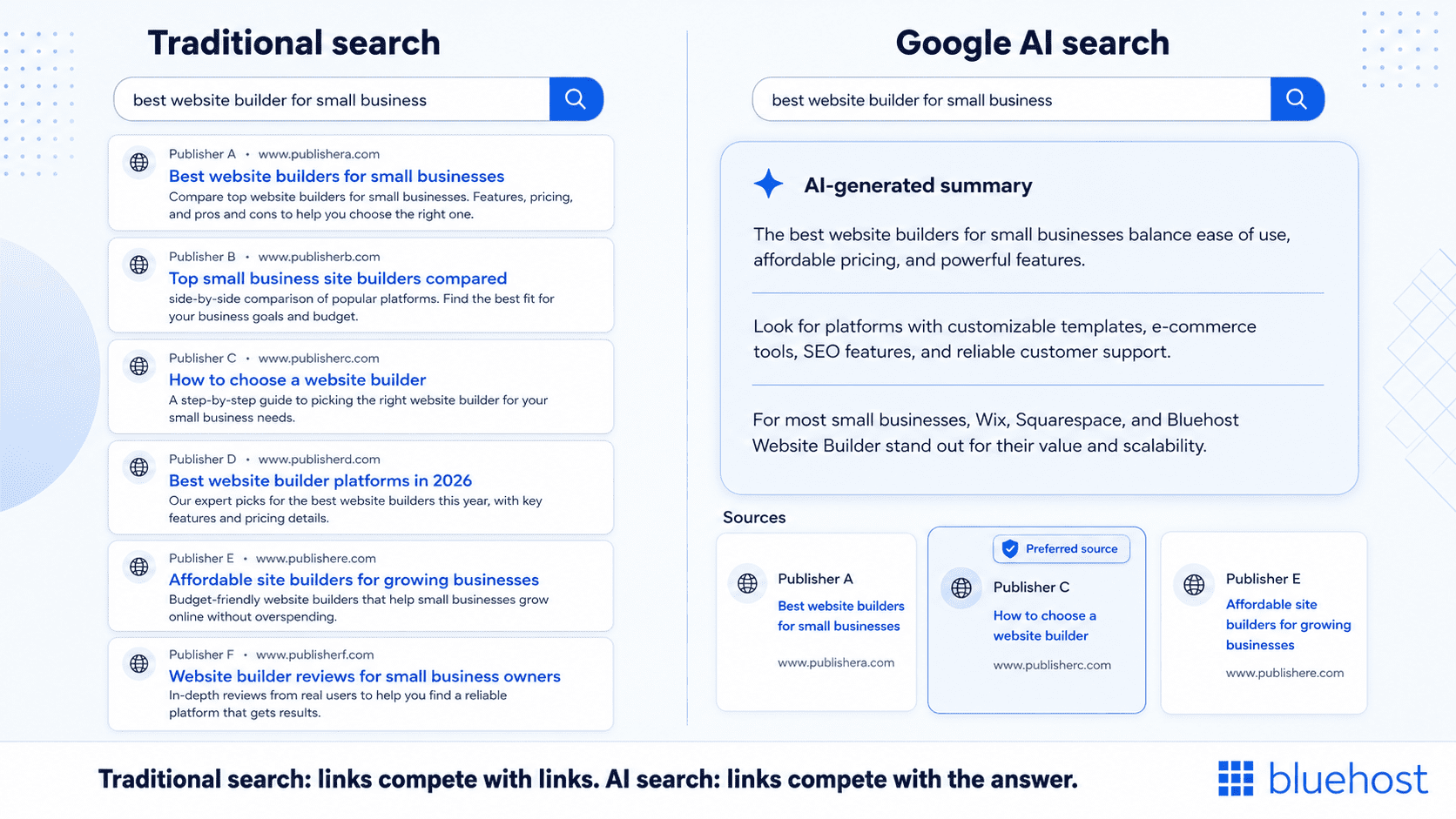
In AI Overviews and AI Mode, Google can summarize the answer first. Links still matter, but they sit inside a more compressed search experience. In that environment, a publisher is not only competing with other search results. It is competing with the answer Google has already generated.
That makes source recognition more valuable.
If a user has already selected your website as a preferred source, your content has a stronger chance of standing out when attention is limited. The preferred badge becomes a trust cue at the exact moment someone decides whether to click, read and believe.
This is where AI search engine optimization becomes more than technical SEO.
It is not only about schema, crawlability, keyword targeting or page structure. Those still matter. But they are no longer enough on their own. AI search engine optimization also has to account for brand memory, author credibility, original insight and repeat audience trust.
The real shift: From rankings to preference
For years, SEO has been built around discoverability.
Can Google find the page?
Can it understand the topic?
Can the content match search intent?
Can it earn links and engagement?
Those questions still matter. But Google Preferred Sources adds another layer: preference.
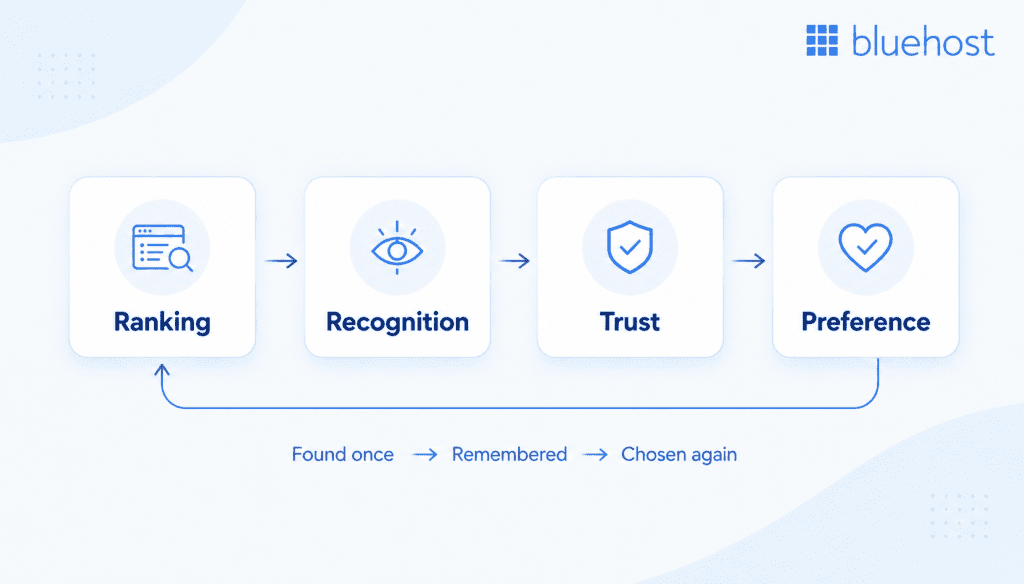
Google Preferred Sources suggests a new layer of AI search engine optimization: Earning enough trust to be chosen, not just found.
Ranking is what Google decides to show. Preference is what users tell Google they want to see.
That distinction matters because a page can rank and still be forgettable. It can answer a query and still leave no brand memory behind. But a site that earns preference has something stronger than a one-time visit. It has a place in the reader’s mind.
This is where website trust becomes an SEO asset.
A trusted source is easier to recognize. A recognized source is easier to choose. A chosen source is more likely to survive changes in how search results are displayed.
That does not mean traditional SEO is dead. It means SEO is becoming more connected to editorial quality, brand consistency and audience loyalty.
This is bigger than news publishers
At first, Google Preferred Sources may seem like a feature built mainly for news publishers because it appears in Top Stories. But the implications are wider.
Any website that publishes fresh, useful and recognizable content should pay attention.
That includes industry publications, SaaS blogs, educational platforms, local publishers, independent creators, review sites and brands that use content to build authority.
The opportunity is not simply to ask readers to add your site as a preferred source. The real opportunity is to become the kind of site readers would want to choose in the first place.
That requires a clear editorial identity.
If your site publishes generic content that sounds like every other result, readers have little reason to remember you. But if your site is known for sharp explainers, original research, strong analysis, useful comparisons or expert commentary, it becomes easier to trust.
Google Preferred Sources rewards recall. Recall begins with being known for something specific.
What should publishers and brands do now?
The wrong response is to treat Preferred Sources like a shortcut.
A button can help. A deeplink can help. But no CTA can create trust on its own.
Before asking readers to choose you, give them a reason to do it.
At Bluehost, we see this as an important reminder for website owners, creators and small businesses. Search visibility is not built by publishing more content alone. It is built by creating a website experience people trust enough to return to. Clear expertise, useful guidance, consistent publishing and a reliable website all work together to make a brand more memorable.
The takeaway: To earn preference, brands need content that readers can recognize, trust and revisit. Publish with a clear point of view, add expert context, make authorship visible, keep information updated, cite original sources and explain your methodology for reviews, comparisons or recommendations.
Most importantly, create content people would return for.
Search traffic often rewards one-time answers. Preferred Sources points toward repeat value. If readers feel your site helps them understand a topic better, they are more likely to remember you. If they remember you, they are more likely to choose you.
That is the new SEO challenge.
Not just more content. More recognizable content.
Not just more rankings. More trust.
What not to do?
Do not turn this into a growth hack.
The takeaway: Preferred Sources should not be treated as a shortcut for more visibility. Avoid thin content, click-driven headlines, premature “add us” requests and any strategy that uses the preferred badge as a substitute for real quality, trust and usefulness.
Google Discover can reward timely, useful and insight-led content. But it is not built for empty hype.
The safest path is also the strongest one: be useful, be specific, be credible and be worth choosing.
The bigger picture
Google Preferred Sources is a small feature with a large message.
Search is becoming more personal. AI is changing how answers are displayed. Users are getting more control over which sources they want to see. Publishers are being pushed to earn trust before they can earn preference.
For brands and publishers, this may become one of the most important lessons of Google AI search.
The future of visibility will not belong only to sites that publish more. It will belong to sites readers recognize, trust and want to see again.
For us at Bluehost, the takeaway is simple: a website should not only be built to appear in search. It should be built to earn trust every time someone lands on it.
In the old search world, the question was simple:
Can you get found?
In the AI search world, the better question may be:
Are you trusted enough to be chosen?

Write A Comment