 ChatGPT,
 Claude,
 Gemini,
 Grok — all four for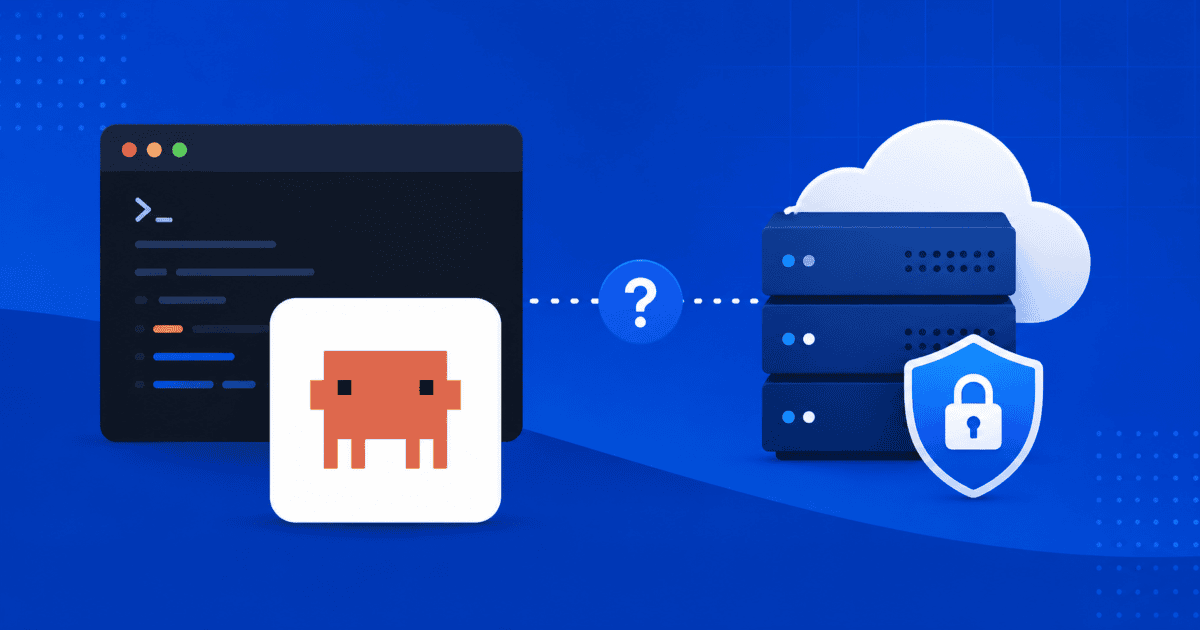
Key highlights
- Understand why you cannot directly self-host proprietary AI models like Claude Code.
- Explore powerful alternatives, including official APIs and open-source models.
- Discover how a Virtual Private Server (VPS) provides a flexible environment for AI development.
- Learn how Bluehost’s Self-Managed VPS plans offer the performance and root access required for AI projects.
Can you self-host Claude Code? The short answer is no. Claude Code depends on Anthropic’s proprietary Claude models, which are accessed through Anthropic’s commercial API and are not available to run on private infrastructure. However, this restriction does not prevent you from building highly customized, secure AI applications. By choosing to run open-source models on a Virtual Private Server, or VPS, you can achieve the level of control and privacy you need.
A VPS also provides an ideal, isolated development environment for safely connecting your code repository to the official Claude API. A dedicated virtual environment ensures your API keys remain secure while delivering the high-performance computing power your development projects require. Using isolated resources helps you bypass local hardware limitations and maintain an efficient development workflow.
What does self-hosting an AI model mean?
Self-hosting an AI model means you run the entire model on your own infrastructure. You are responsible for the server hardware, software, maintenance and security. This approach gives you complete control over your data and the model’s operation, avoiding the need to send potentially sensitive information to a third-party service. While it offers maximum control, it also requires significant technical expertise and financial investment. Weighing these requirements against your team’s capacity is the first step in deciding if self-hosting is the right path for your project.
Why can’t you self-host the Claude model?
You cannot self-host Claude because Anthropic’s Claude models are proprietary and closed source. Anthropic has not released the model weights required to run them on your own hardware, so they cannot be deployed on a private server or VPS. Instead, access is provided through Anthropic’s official API and other authorized platforms, allowing Anthropic to manage the models’ performance, security, and responsible use.
For developers, this means hosting your own development environment or AI workflow while connecting to Claude through the API, rather than hosting the model itself.
What are the technical challenges of self-hosting?
Self-hosting large AI models present several major technical hurdles.
First, the hardware requirements are substantial, It often involves multiple high-end GPUs that can be very expensive.
Second, you need specialized software and expertise to deploy, manage, and optimize the model.
Finally, ongoing maintenance, security, and troubleshooting demand a dedicated effort, making self-hosting impractical for most individuals and small businesses. These burdens are exactly what make a Claude Code VPS the more practical alternative.
What are good alternatives to self-hosting Claude?
Since self-hosting Claude is not an option, there are two excellent alternatives.
The most direct method is using Anthropic’s official API, which lets you integrate Claude’s capabilities into your applications without managing infrastructure.
For those committed to a self-hosted environment, you can run powerful open-source models like Llama, Mistral, or Falcon on your own server. A VPS for AI projects provides the perfect environment for either approach, giving you a single, controlled base to build from.
Why is a VPS a good choice for AI projects?
A Virtual Private Server is an ideal platform for AI projects. It provides dedicated resources and root access, allowing you to install the specific software and libraries needed to run open-source models or connect to APIs.
Unlike shared hosting, a VPS provides the isolated performance necessary for resource-intensive tasks. It offers a perfect middle ground between the limitations of shared hosting and the high cost of a dedicated server. Keep in mind that running a VPS does require more hands-on technical setup than shared hosting, since you are responsible for configuring and maintaining the server yourself.
Why choose Bluehost for your AI development needs?
Claude Code works best when it has a stable environment to inspect files, run commands, edit code and verify changes. Bluehost Claude Code VPS Hosting gives developers a persistent, self-managed runtime built for that workflow.
Key Bluehost Claude Code VPS Hosting features include:
- Persistent Claude Code runtime: Keep project files, tools, command history and dependencies available across sessions.
- Full root access: Control your terminal environment, permissions, packages, API clients and project setup.
- Fast NVMe storage: Support frequent file reads, repository searches, test runs and iterative coding loops.
- KVM-based isolation: Keep your development environment stable and separated from other workloads.
- Advanced workflow support: Run Git operations, MCP servers, subagents and browser-based testing from one controlled VPS.
- This setup gives Claude Code a reliable home base for terminal-native development, refactoring, bug fixing and repo exploration. You can organize your codebase, dependencies and integrations on one controlled server while Bluehost maintains the hardware, network and virtualization layer underneath.
This does not mean you are self-hosting Anthropic’s Claude models. Bluehost hosts the development environment around Claude Code while Claude still connects through Anthropic’s API.
Final thoughts
You cannot self-host Anthropic’s Claude models, but you can still build a powerful Claude Code workflow on infrastructure you control. The practical path is to use Claude through Anthropic’s API while hosting your development environment, repositories, dependencies and automation tools on a reliable VPS.
Bluehost Claude Code VPS Hosting gives developers a persistent, self-managed runtime with root access, NVMe storage and dedicated resources for terminal-native AI coding workflows. It gives Claude Code a stable home base for file access, repo exploration, test runs and iterative development, without depending on a local machine.
Ready to build a more reliable Claude Code workflow? Explore Bluehost Claude Code VPS Hosting and get the root access, speed and control your development setup needs.
Frequently asked questions
Yes, it is legal to use Claude’s API as long as you adhere to Anthropic’s terms of service and usage policies. These guidelines cover acceptable use cases and data privacy requirements.
Self-hosting a large open-source model typically requires a server with at least one powerful, enterprise-grade GPU with significant VRAM (often 24GB or more), a multi-core CPU, and a large amount of RAM (64GB or more).
Currently, Bluehost’s VPS and Dedicated Server plans do not include specialized GPU hardware. However, a VPS is perfectly suited for running the software that connects to external GPU resources or AI model APIs.
Absolutely. A Bluehost VPS gives you full root access, so you can install Python, TensorFlow, PyTorch, and any other libraries or dependencies required for your AI and machine learning projects.
Yes. While you cannot self-host Anthropic’s Claude models, you can run your Claude Code development environment on a VPS. A VPS provides a persistent runtime for your repositories, terminal tools, dependencies and API clients, while Claude securely connects to Anthropic’s API.
No. Self-hosting Claude models would require running Anthropic’s proprietary model weights on your own hardware, which is not possible. Hosting a Claude Code workflow means running your development environment on your own server while Claude accesses the models through Anthropic’s official API.
A VPS provides a stable, always-on development environment that remains available across sessions and devices. Your repositories, command history, dependencies and development tools stay in one place, making it easier for Claude Code to inspect files, run tests and support longer, uninterrupted development workflows.

Write A Comment