


Key highlights:
- Dropshipping simplifies eCommerce by allowing you to sell products without managing inventory or shipping.
- It’s a low-cost and flexible way to start a business, ideal for entrepreneurs with smaller budgets.
- Picking reliable suppliers is essential to ensure product quality and customer satisfaction.
- Profit margins depend heavily on smart pricing, marketing efficiency and supplier costs.
- Strong branding and customer support help you stand out in a highly competitive market.
If you’re looking for an affordable way to launch an online business, grasping the dropshipping meaning is key. Dropshipping, a retail model where you sell products without managing inventory, is experiencing explosive growth in 2026. The dropshipping sector continues to expand rapidly, propelled by specialized niche stores and AI-powered automation tools that are revolutionizing how entrepreneurs manage their operations. Moreover, sustainable and eco-friendly dropshipping approaches are resonating strongly with environmentally conscious consumers around the world.
Understanding dropshipping meaning starts with having the right eCommerce platform. The Bluehost WordPress Commerce Solution delivers everything you need to launch and manage your dropshipping store, from customizable templates to integrated payment options. This complete solution lets you focus on understanding dropshipping business models while confidently building and scaling your venture with tools designed for eCommerce success.
This comprehensive guide walks you through the fundamentals of dropshipping meaning and shows you exactly how to build your own successful dropshipping business from the ground up with Bluehost’s powerful eCommerce solutions.
What is dropshipping?
Understanding dropshipping meaning is essential for entrepreneurs exploring this business model. Dropshipping lets you sell products online without holding inventory or managing shipping logistics. In this eCommerce approach, suppliers handle product storage, packaging and direct delivery to your customers. This model is particularly valuable for business owners who want to focus on marketing, sales and building customer relationships.
Understanding the dropshipping meaning is essential for aspiring online entrepreneurs—this fulfillment model allows you to start with minimal capital and maximum flexibility. Rather than investing heavily in inventory or managing storage logistics, you only purchase from suppliers after securing customer orders. When executed with the proper platform and strategic approach, the dropshipping business model enables you to create a successful eCommerce business while avoiding traditional retail overhead and inventory risks.
Here’s an example:
Understanding dropshipping meaning through a practical example: Imagine you run an online store selling home decor items. A customer orders a modern table lamp from your website, but here’s how dropshipping works—you don’t stock the lamp yourself. Instead, you forward the order details to your supplier, who packages and ships the lamp directly to your customer. You earn the profit margin between your listed price and the supplier’s cost, all without handling inventory or touching the product. This business model exemplifies the core dropshipping meaning: a fulfillment method where you sell products without holding physical stock.
Understanding the dropshipping meaning reveals a business model where this hands-off approach to inventory and shipping management allows you to focus on growing your online store while your suppliers handle all fulfillment logistics.
1. How dropshipping works
Understanding the dropshipping meaning is essential before diving into how this fulfillment model works—here’s a clear breakdown of the dropshipping process:
- Customer order initiates the dropshipping process: When a customer completes a purchase in your dropshipping store, this transaction triggers the dropshipping meaning in action—beginning the fulfillment workflow where you forward order details to your supplier.
- You forward the order to the supplier: Once the order is confirmed, you send the customer details and payment to your supplier.
- Supplier ships the product: The supplier packages and ships the product directly to the customer on your behalf.
Understanding dropshipping meaning helps clarify how payment processing works in this business model. Your eCommerce platform seamlessly integrates with trusted payment solutions like PayPal and Stripe to handle transactions securely. This builds customer confidence while streamlining your dropshipping payment management and order fulfillment workflow.
Also read: How to securely accept payments on your WooCommerce store with PayPal and Stripe.
2. Benefits of the dropshipping business model
Understanding the meaning of dropshipping reveals why this business model presents distinct advantages that make it an appealing option for aspiring entrepreneurs:
- Low startup costs: You don’t need to invest in inventory or rent a warehouse.
- Flexibility: Run your business from anywhere with an internet connection.
- Scalability: Easily expand your product offerings without increasing overhead costs.
Understanding the dropshipping meaning is key to appreciating its advantages: this business model frees you from inventory management and logistics, allowing you to concentrate on scaling your business. YITH One-Click Checkout streamlines your checkout process to enhance customer satisfaction. This not only enhances their shopping experience but also helps reduce cart abandonment and increase conversions.
Understanding dropshipping meaning reveals why this business model, despite its challenges, offers an accessible low-risk entry point for aspiring eCommerce entrepreneurs seeking to build online businesses with minimal upfront investment.
3. Dropshipping in simple terms
Think of dropshipping like being a restaurant that takes orders but doesn’t have a kitchen. You run the storefront, take customer orders and handle the experience, while a supplier (the kitchen) prepares and ships products directly to your customers. The dropshipping meaning is simple: you sell products without ever touching them.
This ecommerce dropshipping model has three moving parts: your online store, your customer and your supplier. You handle marketing, pricing and customer service. Your supplier manages inventory, packaging and shipping. When someone buys from you, you simply forward their order to your supplier who ships it directly to them.
What you don’t need: Inventory, warehouse space, shipping labels or packing materials.
What you still own: Your brand identity, pricing strategy, customer relationships and the overall shopping experience. This dropshipping business model lets you focus on growth and marketing while leaving logistics to the experts.
4. How is dropshipping different than affiliate marketing?
While both models let you earn money online without inventory, they operate very differently. In dropshipping, you own and control your storefront, set your own prices, process customer payments and handle all customer relationships directly. You’re legally responsible as the seller of record, managing refunds and chargebacks yourself. With affiliate marketing, you simply promote other companies’ products through links, earning commissions when people buy—but you have no control over pricing, customer experience or business operations.
Quick comparison: Dropshipping = you run the business, affiliate marketing = you refer customers. For example, a dropshipper creates their own skincare store, handles orders and customer service. An affiliate blogger writes product reviews with referral links, earning when readers click and purchase.
Understanding the dropshipping meaning helps you make informed business decisions: Choose dropshipping to build and control your own eCommerce brand with full ownership. Choose affiliate marketing to generate commissions through product referrals without managing inventory or fulfillment operations.
Key players in the dropshipping model
Understanding the dropshipping meaning starts with knowing the four essential players that make this business model work. Each participant plays a crucial role in the dropshipping process, ensuring products move seamlessly from suppliers to your customers. Let’s explore how these key players interact.
1. Seller of record
This is you, the dropshipper. You’re responsible for running the online store, setting prices and building relationships with customers. Your brand is what customers interact with, even though you don’t handle the physical products.
2. Manufacturers
Manufacturers are the ones making the products. They usually don’t deal with individual store owners, but they supply the goods to wholesalers or dropshipping platforms. Their job is to keep the quality consistent.
3. Wholesalers
Wholesalers act as middlemen. They buy products in bulk from manufacturers and sell them to businesses like yours. Many dropshipping suppliers are wholesalers. They’re often the easiest way to access a variety of products without high upfront costs.
4. Dropshipping suppliers
These are the companies or platforms that store, package and ship products to your customers. A good supplier can make or break your business. So, choosing a reliable supplier is the backbone of your dropshipping business. Tools like AliExpress, Spocket or even independent wholesalers can help you find trusted suppliers to work with.
Dropshipping in 2026
The dropshipping landscape in 2026 looks both promising and challenging for beginners. Customer expectations around shipping transparency and speed continue to rise, making supplier vetting more critical than ever. Successful dropshippers now prioritize reliable partners who can deliver consistent quality and fast fulfillment. Meanwhile, branding and differentiation have become essential as generic stores struggle to compete. The most successful new dropshippers focus on niche markets and build authentic brand stories that resonate with their target audience.
Content marketing and SEO have emerged as primary customer acquisition channels, replacing expensive paid ads for many beginners. Analytics-driven product selection is now standard practice, with successful dropshippers using data to identify trending products before markets become saturated. Customer support expectations have also evolved—shoppers expect quick responses and personalized service, even from small operations.
What remains constant is the need for a solid technical foundation. Building on WordPress with WooCommerce still offers the best combination of flexibility, scalability and cost-effectiveness for growing dropshipping businesses. Reliable hosting becomes even more crucial as site speed and uptime directly impact customer trust and conversion rates. The dropshippers thriving in 2026 understand that while trends shift, investing in the right platform and infrastructure from day one sets the stage for sustainable growth.
How to start a dropshipping business
Starting a dropshipping business doesn’t have to be overwhelming. Take it one step at a time and you’ll set yourself up for success. Here’s how to get started:
1. Market research
Pick a niche that people are excited about. Look for trending products or items that solve everyday problems. Tools like Google Trends or Amazon Best Sellers can give you great insights. The key is to find something you’re interested in and that customers want to buy.
2. Selecting reliable suppliers
Your supplier is your business partner. They handle the products, so you need someone you can trust. Use platforms like Spocket or AliExpress to find suppliers with good reviews and proven reliability. Always test their services before committing. It’s better to know upfront than to deal with complaints later.
3. Setting up an online store
Understanding the dropshipping meaning and how this retail fulfillment model operates is the foundation, but building your dropshipping store is where your business truly takes shape. A well-optimized online store with user-friendly design and seamless functionality is critical for attracting visitors, converting browsers into buyers and scaling your dropshipping business from concept to consistent revenue.
Start by choosing a domain name that reflects your brand and is easy to remember. Your domain is the first thing customers notice, so make it simple, relevant and professional.
Next, select a reliable hosting platform to ensure your store runs smoothly and securely. A good hosting service will provide the stability and speed needed to deliver a seamless shopping experience.
Bluehost WordPress Commerce Solution stands out among competitors like Shopify, Amazon and BigCommerce by offering a seamless WordPress integration, free staging site and AI-powered onboarding for an effortless setup process.
While Shopify and BigCommerce focus on general eCommerce features, Bluehost provides built-in SEO tools and one-click checkout to enhance visibility and conversions. Unlike Amazon’s rigid platform, Bluehost’s customizable templates and hosting flexibility which makes it ideal for entrepreneurs looking for a personalized store design.
What makes Bluehost WP Commerce package even better:
- Free staging site: Test changes and updates before your store goes live.
- AI-powered onboarding: Step-by-step guidance tailored to your needs, making the setup process stress-free.
- Seamless payment integration: Connect with popular gateways such as PayPal and Stripe to simplify transactions and boost sales.
- Built-in SEO tools: Optimize your store to rank higher in search results and attract more organic traffic.
- One-click checkout: Streamline the purchasing process, reducing cart abandonment and improving conversions.
4. Marketing strategies
The real work begins when you try getting your store in front of customers. Use social media, email campaigns and even influencer partnerships to spread the word.
But building a store is only half the job. You need it to show up in search results. Yoast SEO can help you get your store noticed. A clean design and easy navigation also make a big difference for customers.
Want to grow even faster? Try YITH WooCommerce Affiliates to create an affiliate program. Let others promote your products while you sit back and watch your traffic and sales grow. You will have a team of marketers without hiring anyone.
5. Efficient order processing and customer service
Happy customers are loyal customers. Make sure orders are processed quickly and questions are answered on time. Jetpack Forms help capture customer inquiries and feedback right on your site. It’s an easy way to stay connected with your customers and show them you care. Quick responses can turn a one-time buyer into a repeat customer.
6. Dropshipping mistakes to avoid
Many beginners fall into predictable traps that can sink their dropshipping business before it takes off. Avoid choosing suppliers without testing product samples first—order items yourself to verify quality and shipping times. Don’t skip creating clear shipping and return policies, as unclear terms frustrate customers and hurt conversions. Weak product pages with generic descriptions and poor photos kill sales—instead, write compelling copy and use high-quality images that showcase your products effectively.
Another critical error is pricing products without calculating proper margins, leaving no room for advertising costs or unexpected expenses. Ignoring SEO (Search Engine Optimization) means missing free organic traffic—use tools like Yoast SEO to optimize your content from the start. Don’t underestimate customer service demands or rush into paid advertising before testing your store thoroughly. Finally, poor site performance drives visitors away—ensure your WordPress store loads quickly and works seamlessly on mobile devices to maximize conversions.
Steps to launch your dropshipping store using Bluehost
Starting a dropshipping store is easier when you have the right tools. Bluehost gives you a solid foundation to build, grow and scale your business. Here’s how to get started:
Get started with Bluehost hosting and domain registration
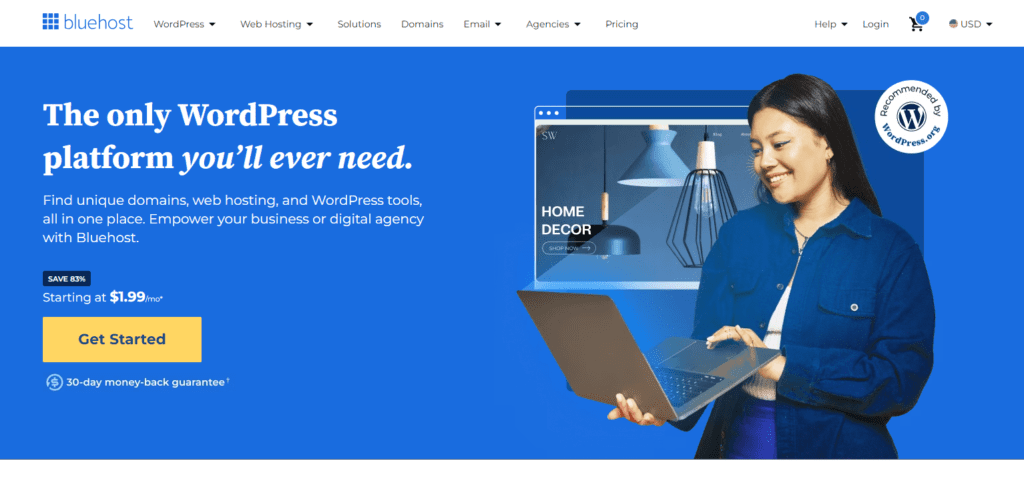
Every great store starts with a strong foundation. Bluehost provides reliable hosting and makes it easy for you to register your domain name. Choose a name that reflects your brand and is easy for customers to remember. Choose something simple and memorable—it’s the first thing customers will notice. The setup is quick, so you can move on to the fun part of building your store.
Design your store
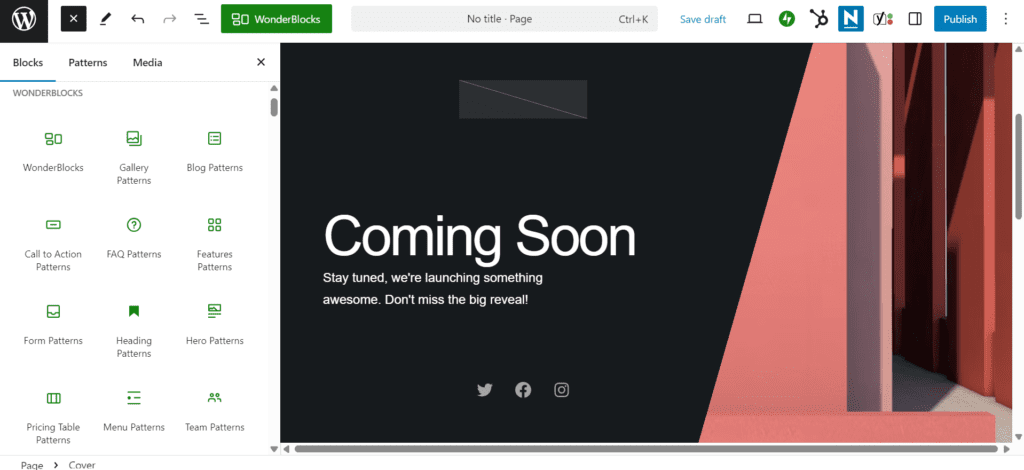
Your store’s design is what catches your customer’s eye. Focus on clean layouts, simple navigation and clear product images. Take time to create a design that reflects your brand. It doesn’t have to be fancy. Sometimes, simple is better.
Start by focusing on clean and organized layouts. Customers should be able to browse your store easily without feeling overwhelmed. Keep the navigation simple and intuitive—think of it as guiding your customers through a smooth journey from landing on your site to completing a purchase.
Use high-quality product images to showcase your offerings. Clear and appealing visuals help customers imagine the products in their lives, which increases their likelihood of buying. Add detailed, easy-to-read product descriptions that answer common customer questions.
Choose a design that reflects your brand’s personality. Whether it’s minimalistic, vibrant or playful, your store should feel authentic to your business.
Make the most of website templates to create a professional site effortlessly with WonderBlocks. You can easily create a stunning layout with the drag-and-drop tool. You don’t need any design or coding skills. Just pick, drop and adjust—it’s that simple.
Set up WordPress and WooCommerce integration
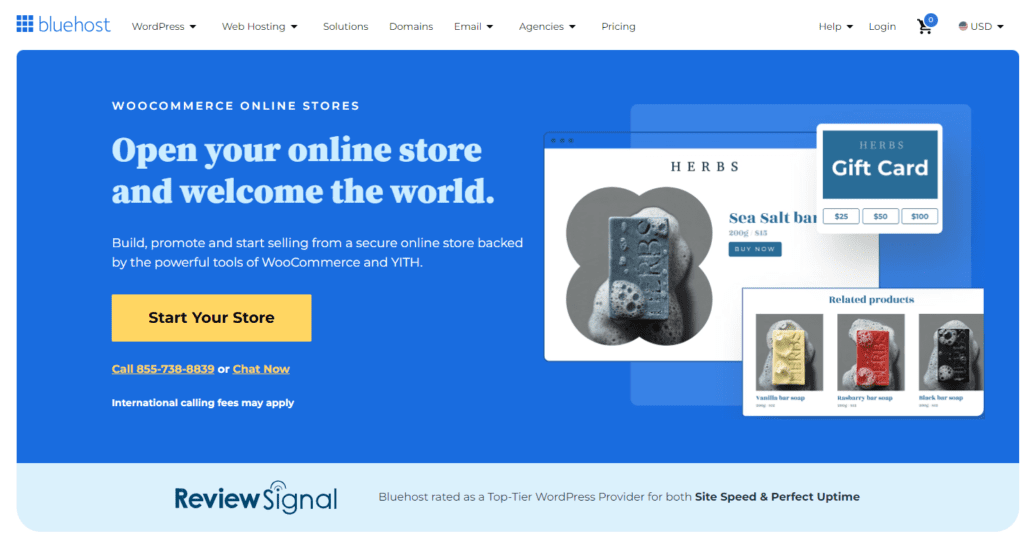
Next, you’ll need to set up your store platform. Bluehost makes installing WordPress easy. WooCommerce is the perfect tool to transform your WordPress site into a fully functional online store. From there, you can manage your products, payments and orders all in one place.
Already have a site on another platform? No problem. InstaWP Migration Tool helps you to move your website over without breaking a sweat. With its user-friendly interface, even those without technical expertise can switch platforms confidently and focus on growing their eCommerce business. It’s fast, seamless and saves you a lot of headaches.
Market and grow your dropshipping store
| Feature | Function |
|---|---|
| Relate to your audience | Understand why your audience is here and show how your product or service helps them. |
| Balance content and promotion | Use the 80/20 rule: 80% engaging content, 20% promotional material. |
| Collect subscribers | Offer incentives like contests or deals to grow your email list and encourage sharing. |
| Utilize list segmentation | Group subscribers by interests or preferences for more personalized email campaigns. |
| Proofread multiple times | Fix all errors—read aloud, use spell check and review again before sending. |
| Preview on multiple devices | Ensure emails look good on smartphones, tablets and computers to reach your full audience. |
Now that your store is live, it’s time to bring in customers. Use social media to showcase your products and connect with potential buyers. Build an email list to stay in touch with your audience. The more effort you put into marketing, the faster your store will grow.
Use CreativeMail to send personalized emails that keep your customers engaged. Whether it’s announcing a sale or showcasing new products, email marketing keeps your brand top of mind.
Don’t forget about search engines. Yoast WooCommerce SEO part of Bluehost WordPress Commerce Solution helps your store rank higher in search results. Better visibility means more traffic and more traffic means more sales.
Optimize performance and user experience
A fast, smooth website keeps customers happy. Make sure your pages load quickly and your store is easy to browse. Avoid clutter! Ensure everything works well on mobile devices too. A great user experience means fewer abandoned carts and more sales.
Add YITH WooCommerce Ajax Search to make it easier for customers to find what they’re looking for. Faster searches mean happier shoppers and better conversions.
Benefits and challenges of dropshipping
Dropshipping is a great way to start an online business, but like anything, it has its ups and downs. Understanding both the benefits and challenges helps you prepare for what’s ahead. Here’s what you need to know:
Benefits of dropshipping
- Low startup costs: You don’t need to buy inventory upfront or manage a warehouse.
- Flexibility: You can run your business from anywhere with an internet connection.
- Wide product selection: You can offer a variety of products without worrying about storage space.
- Focus on growth: With no inventory to manage, you can spend more time on marketing and scaling your business.
Challenges of dropshipping
- Lower profit margins: Since you’re relying on suppliers, your margins might be thinner compared to other business models.
- Inventory volatility: Suppliers might run out of stock unexpectedly, leaving you scrambling for alternatives.
- Shipping complexities: Long shipping times or errors in delivery can lead to unhappy customers.
- Legal liability: You’re responsible for ensuring that the products you sell comply with laws and regulations, even if you don’t manufacture them. Learn how to stay compliant with dropshipping legal regulations.
Is dropshipping right for you?
Dropshipping isn’t for everyone, but it can be the perfect fit if you understand what you’re signing up for. Successful dropshippers typically share certain characteristics: they have time to dedicate to learning and testing, patience to work through initial challenges and comfort handling customer inquiries and complaints. If you’re motivated by the idea of building something with confidence and appreciate simplicity in business operations, this model aligns well with your goals.
However, dropshipping may not be ideal if you’re expecting instant profits, uncomfortable with lower margins compared to traditional retail or lacking basic marketing skills. The reality is that most successful dropshipping businesses take 3-6 months to gain traction, requiring consistent effort in product research, supplier management and customer acquisition. You’ll need to focus on building relationships and solving customer problems rather than just technical specifications.
If you’ve decided dropshipping matches your situation and goals, your next crucial steps involve careful supplier selection and store setup. The foundation of any successful dropshipping business lies in partnering with reliable suppliers who can deliver quality products consistently, followed by creating a professional online presence that builds customer trust and drives conversions.
Choosing a dropshipping supplier
Your supplier is the backbone of your dropshipping business. A good supplier can make everything run smoothly, while a bad one can turn your business into a nightmare. Here’s how to find the right partner:
1. Researching potential suppliers
Start by looking for suppliers with solid reputations. Platforms like supplier directories, reviews and even forums are great places to start. Look for suppliers who have experience working with dropshipping businesses. It’s also helpful to test their response times—quick communication is always a good sign.
2. Evaluating supplier reliability and quality
Not all suppliers are created equal. Before committing order samples of their products. This gives you a chance to check the quality firsthand. Pay attention to things like shipping speed, packaging and how the product matches its description. A reliable supplier will deliver on what they promise—every single time.
3. Negotiating with suppliers
Don’t be afraid to negotiate. Many suppliers are open to discussing better terms, especially if you plan to scale. Talk about things like pricing, shipping costs and return policies. Building a good relationship with your supplier can lead to perks like faster shipping or exclusive deals.
Final thoughts
Dropshipping is a smart way to start an online business with less risk and upfront cost. It’s flexible and scalable and gives you the freedom to focus on growing your brand. For many, it’s an exciting first step into the world of eCommerce, while for others, it’s a smart addition to an already thriving store.
That being said, dropshipping isn’t without its challenges. Shipping delays, supplier issues and thinner profit margins can sometimes make things tricky. But with the right strategies, these hurdles can be managed.
At the end of the day, only you can decide if it’s the right path for your business. If you’re just starting out, it’s a fantastic way to test the waters without a big investment.
Ready to take the next step? With Bluehost WordPress Commerce Solution, you’ll have everything you need to build a store that stands out. From intuitive tools to seamless integrations, it’s your all-in-one solution for creating a store that’s not just functional but ready to grow. Get started today and bring your dream business to life.
FAQs
Yes, dropshipping is completely legal in most countries. However, it’s your responsibility to ensure that the products you sell comply with local laws and regulations. Selling counterfeit or restricted items can land you in trouble. We recommend always working with reputable suppliers and doing your research on product compliance.
Yes, dropshipping can be profitable when done right. Success depends on choosing the right products, finding reliable suppliers and effective marketing. While profit margins may be lower compared to traditional eCommerce business models, dropshipping’s low overhead costs make it a great way to start a business without significant investment.
Registering a business adds credibility protects you legally and helps with tax compliance. You can start as a sole proprietor and later move to an LLC or other structure as needed.


Write A Comment