


Key highlights
- Understand how OpenClaw functions as a structured execution and workflow automation layer built for operational AI systems.
- Explore how AutoGPT operates as an autonomous reasoning framework designed for goal-driven, recursive task execution.
- Compare how both AI agent tools address fundamentally different problems across separate architectural layers.
- Identify OpenClaw as the ideal choice for engineering teams prioritizing reliability, integrations and cross-system automation.
- Learn how a layered architecture combining both tools is a viable approach for complex AI system design.
AI agents are no longer experimental prototypes confined to research papers. In 2026, autonomous AI task automation is actively reshaping how development teams build software, process data and orchestrate complex workflows. The question for most developers is no longer whether to adopt an agent framework, but which framework to adopt and for what purpose.
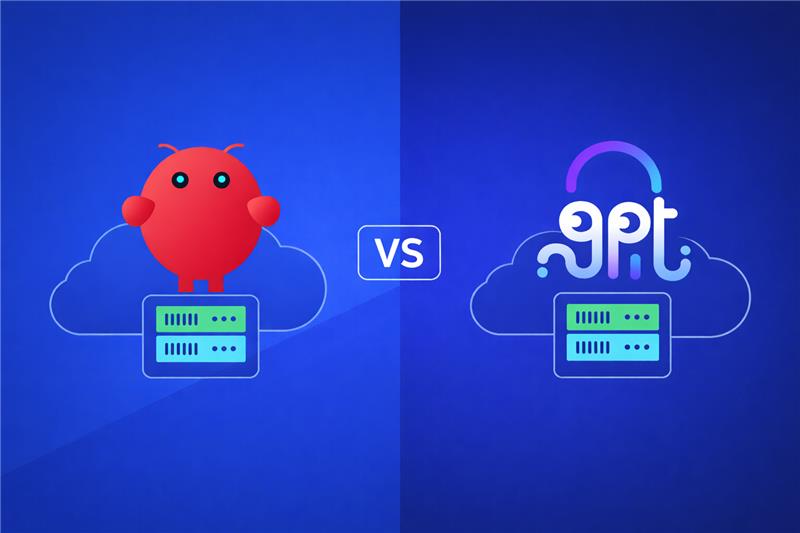
Two frameworks, OpenClaw and AutoGPT, frequently appear in the same conversation. While both enable AI-driven task execution, they operate at distinctly different layers of the AI architecture stack.
AutoGPT focuses on autonomous reasoning and decision-making, while OpenClaw targets structured execution and workflow reliability. Understanding this distinction is critical before committing to either tool in a production environment.
This guide provides a detailed OpenClaw vs AutoGPT comparison covering architecture, core capabilities, setup requirements and ideal use cases, so that you can make an informed decision in 2026.
Why is OpenClaw vs AutoGPT becoming an important comparison in AI automation?
Choosing the right AI agent framework in 2026 is no longer a minor technical decision; it is a strategic one. In this section, we explore why the OpenClaw vs AutoGPT debate has become so consequential and what is driving developers toward autonomous task execution. We also examine how these two frameworks embody fundamentally different philosophies for building agentic AI systems. By the end, you will have a clear foundation for the deeper architectural comparison that follows.
The shift from conversational AI to autonomous task execution
Modern AI systems no longer simply respond to prompts. Instead, they plan, execute, iterate and adapt based on outcomes. AI agents now break objectives into sub-tasks, invoke tools and evaluate results until a goal is satisfied. This transition from conversational AI to autonomous task execution marks the defining shift in AI agent technology. Instead of generating a single output, agents now decompose objectives into sub-tasks, invoke tools, evaluate results and loop until a goal is satisfied.
This evolution means that developers must evaluate frameworks not just on the quality of their reasoning, but also on how reliably and transparently they execute structured operations at scale.
Why are developers evaluating agent frameworks for automation systems?
Across engineering teams, AI agents are being adopted to automate research pipelines, build autonomous workflow systems and increase developer productivity. Specifically, organizations are deploying agent frameworks to handle tasks such as automated data collection and summarization, multi-step API orchestration, continuous integration monitoring and cross-platform workflow coordination. As autonomous agent adoption accelerates in 2026, framework selection has become a consequential architectural decision rather than a casual experiment.
How do OpenClaw and AutoGPT represent different approaches to AI agents?
At a high level, AutoGPT prioritizes autonomous reasoning and dynamic decision-making, making it well-suited for tasks where the execution path is uncertain and requires iterative problem-solving. OpenClaw, by contrast, prioritizes structured execution and workflow automation, making it the preferred choice when reliability, predictability and integration depth are the primary requirements. These two philosophies reflect genuinely different approaches to building autonomous AI systems.
Understanding why these frameworks diverge in design is just the foundation. To make an informed choice for your automation stack, you need to look more closely at what sets them apart under the hood. Eventually, this brings us to the next topic: the key differences between OpenClaw and AutoGPT.
Understanding the core difference between OpenClaw and AutoGPT
If you’re a developer evaluating open-source agent tooling in 2026, you’ve likely encountered both OpenClaw and AutoGPT. On the surface, they look similar, with both involving AI agents, both executing tasks without constant human input and both being open source. However, these two tools solve fundamentally different problems at fundamentally different layers of the stack. Before you commit to an integration pattern, here is what you need to know.
| Dimension | OpenClaw | AutoGPT |
|---|---|---|
| Primary role | Automation execution layer / personal agent runtime | Autonomous goal-driven reasoning framework |
| Execution model | Structured, deterministic workflows via a local gateway | Recursive planning and sub-task execution loops |
| Autonomy style | Controlled, with workflows that are defined and auditable | Dynamic, adapting when an approach fails |
| Deployment | Self-hosted, local-first, runs on your own infrastructure | Self-hosted or cloud-hosted platform |
| Model compatibility | Model-agnostic, supporting Claude, GPT, DeepSeek, Ollama and more | Pre-integrated with OpenAI, Anthropic, Groq and Llama |
| Best for | Production automation, long-running tasks, private infra | Prototyping, experimentation, open-ended problem solving |
| Predictability | High, structured and production-ready | Lower, with emergent behavior by design |
The table above gives you a quick read. But if you want to understand the architectural reasoning behind these differences and what it means for your specific stack, the sections below break down each tool on its own terms.
OpenClaw as an automation execution layer
OpenClaw is designed to serve as the execution layer in AI infrastructure. It enables developers to define structured workflows, connect agents to external systems and maintain operational reliability across long-running automation tasks. Rather than allowing agents to reason freely about what to do next, OpenClaw provides a controlled environment where workflows are deterministic, auditable and production-ready. This makes it particularly relevant for teams deploying private AI agents in self-managed infrastructure environments.
AutoGPT as an autonomous reasoning framework
AutoGPT operates as a goal-driven reasoning engine. A developer or operator defines a high-level objective and AutoGPT recursively plans and executes sub-tasks using available tools and memory until the goal is achieved. Its architecture centers on autonomous decision-making loops, enabling the agent to adapt dynamically when an approach does not produce the expected result. AutoGPT’s strengths lie in experimentation, prototyping and tasks where the solution path is not known in advance.
Why are OpenClaw and AutoGPT frequently compared despite solving different problems?
The OpenClaw vs AutoGPT comparison appears frequently because both belong to the growing category of AI agent frameworks. Both allow developers to build systems that can perform tasks autonomously, which makes them appear similar at first glance. However, the distinction becomes clearer when teams move from experimentation to operational deployment.
AutoGPT focuses on reasoning and goal planning, while OpenClaw focuses on executing structured workflows across real systems. When organizations begin building private AI infrastructure, execution reliability and infrastructure control become critical.
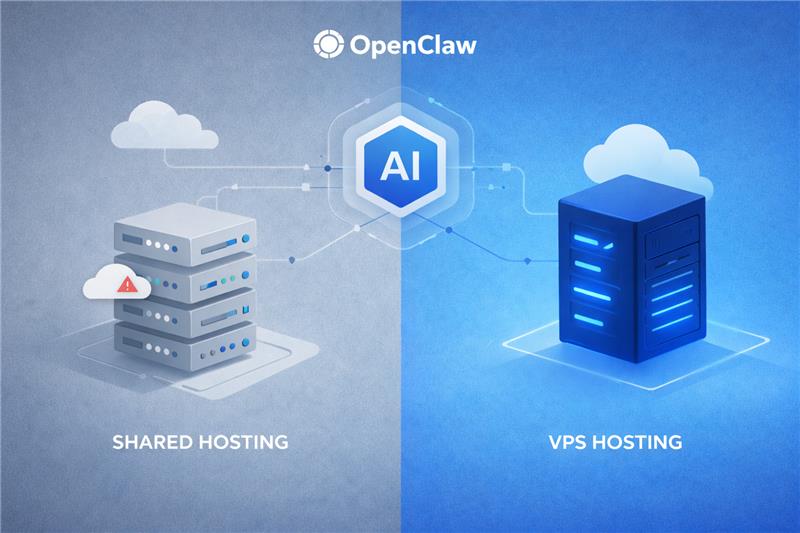
At Bluehost, teams can deploy OpenClaw on our self-managed VPS using a one-click installer. This allows developers to run private AI agents, automation workflows and integrations inside their own infrastructure, so they can run private AI agents and automation workflows within their own infrastructure. Unlike cloud-dependent alternatives such as AutoGPT, OpenClaw is designed to run locally, meaning your data, credentials and agent memory stay entirely within your own environment and not on a third-party server.
Ready to move from AI experimentation to real automation? Deploy OpenClaw in minutes with Bluehost Self-Managed VPS Hosting and start building your own private AI automation engine.
How do OpenClaw and AutoGPT work in practice?
Understanding how each platform actually operates is what separates informed tool selection from guesswork. OpenClaw and AutoGPT are built on distinct execution philosophies and those differences become most apparent when you look at how they handle tasks in practice.
How OpenClaw executes structured automation workflows compared to AutoGPT
OpenClaw’s operational model is built around persistent agents, configurable workflow triggers and deep integration with external tools. Rather than reasoning from scratch on each invocation, OpenClaw agents remain active, monitor defined conditions and execute predefined action sequences when triggers are met. This architecture is what makes OpenClaw suitable for continuous operational automation rather than one-off task completion.
1.1. Persistent agents and task execution
OpenClaw agents are designed to remain active across extended time periods. They monitor data sources, await trigger conditions and execute multi-step workflows without requiring constant human re-initiation.
In practice, these agents typically:
- Monitor defined data sources
- Wait for trigger conditions to occur
- Execute multi-step workflows when those triggers activate
This persistent execution model aligns directly with the requirements of production automation systems, where consistency and uptime are non-negotiable. That durability only holds real value when the agent can actually reach the tools and data it needs to act on.
1.2. Workflow automation and tool integrations
OpenClaw’s integration ecosystem connects agents to messaging platforms, REST APIs, databases and external automation tools. The OpenClaw API setup allows engineering teams to embed agent execution into existing systems without rebuilding surrounding infrastructure.
These integrations commonly include:
- Messaging platforms
- REST APIs
- Databases
- External automation tools
For teams asking what OpenClaw can do in a business context, the answer centers on its ability to serve as the connective tissue between disparate systems through structured, observable automation. Contrast this with AutoGPT, which takes a fundamentally different approach to structuring and pursuing a goal.
2. How does AutoGPT perform autonomous task execution?
AutoGPT begins with a goal statement and independently determines how to accomplish it. It generates a plan, selects tools, executes steps, evaluates outcomes and iterates. This model is powerful for exploratory tasks but introduces variability that can be difficult to manage in strict production environments. AutoGPT for automation works best when flexibility and adaptive reasoning are more valuable than deterministic execution.
2.1. Recursive reasoning loops
AutoGPT decomposes complex objectives into chains of smaller tasks, each evaluated against the overarching goal before the next step is determined. This recursive reasoning loop is the foundation of AutoGPT’s architecture and enables it to handle tasks without clearly defined solution paths.
That reasoning process generally involves:
- Breaking a goal into smaller tasks
- Evaluating each step against the objective
- Deciding the next action dynamically
AutoGPT features and capabilities in this area make it one of the most powerful autonomous reasoning tools available. What drives that reasoning forward is an equally flexible approach to tool selection.
2.2. Autonomous tool usage and experimentation
AutoGPT dynamically selects which tools to invoke based on its current reasoning state. It can browse the web, write and execute code, read files and interact with external APIs without being given explicit instructions for each action.
These capabilities often include:
- Web browsing
- Code generation and execution
- File reading and analysis
- API interaction
This flexibility makes AutoGPT an effective framework for AI experimentation and research agent development, where adaptive behavior is the primary requirement. With each system’s practical behavior now clear, the next step is examining how these differences trace back to their core architectures.
OpenClaw vs AutoGPT: architecture and capability comparison
OpenClaw and AutoGPT approach AI agents from different architectural philosophies. OpenClaw focuses on structured execution and operational automation, while AutoGPT emphasizes autonomous reasoning and adaptive task planning. Examining their architecture and capabilities side by side reveals where each system performs best.
1. Execution infrastructure vs reasoning systems
OpenClaw is fundamentally an execution infrastructure tool. Its architecture is built around reliable task runners, workflow state management and integration adapters.
AutoGPT is fundamentally a reasoning system. Its architecture centers on language model inference loops, memory buffers and dynamic tool invocation. These architectural priorities lead to different strengths and failure modes in production environments.
Verdict: OpenClaw provides a stronger foundation for production automation. Its architecture prioritizes reliable workflow execution and integration stability. AutoGPT focuses primarily on reasoning loops rather than production-grade execution infrastructure.
2. Workflow orchestration vs goal-driven autonomy
OpenClaw gives teams full control over their processes. Developers define workflows, set parameters and monitor execution against known baselines.
AutoGPT takes a different approach by offering flexibility. Operators define goals and the system determines the path forward. Teams with concerns around regulatory compliance, cost control or integration stability will find OpenClaw the safer option. Teams building exploratory agents for open-ended problem-solving will benefit more from AutoGPT’s autonomous approach.
Verdict: Neither tool is universally better in this category. OpenClaw is more effective for structured workflow orchestration. AutoGPT performs better when autonomous decision-making and flexible problem-solving are required.
3. Automation and workflow execution
OpenClaw delivers deterministic workflows, reliable external integrations and high operational consistency. It is the stronger choice when workflow repeatability and auditability are key requirements.
AutoGPT delivers autonomous task execution and dynamic tool usage. This makes it more effective when execution paths must adapt to changing conditions or incomplete information.
Verdict: OpenClaw is the better choice for automation workflows. Its deterministic execution model and integration capabilities make it more reliable for repeatable operational tasks. AutoGPT’s adaptive reasoning approach suits tasks that require flexibility over consistency.
4. Memory management and contextual awareness
OpenClaw maintains persistent workspace memory. This allows agents to carry operational context across sessions and workflow steps. AutoGPT employs reasoning memory loops that retain context within an active task cycle.
This enables the agent to refine its approach iteratively without losing the broader objective. Both memory models serve distinct purposes depending on whether the priority is operational continuity or adaptive reasoning.
Verdict: Both tools handle memory differently and neither clearly dominates. OpenClaw’s persistent workspace memory supports long-running operational workflows. AutoGPT’s reasoning memory loops help agents iteratively refine complex tasks.
5. Integration ecosystem and extensibility
OpenClaw connects readily with messaging platforms, APIs and automation toolchains. This makes it well-suited for organizations embedding AI agents into existing operational infrastructure. AutoGPT supports plugins and developer frameworks that extend its reasoning and tool-use capabilities.
Both tools support extensibility, but in different directions. OpenClaw extends outward into operational systems, while AutoGPT extends inward toward more sophisticated reasoning behaviors.
Verdict: OpenClaw stands out in integration-heavy environments. Its architecture is designed to connect directly with APIs, messaging platforms and automation tools. AutoGPT focuses more on reasoning extensibility through plugins and developer frameworks.
6. Reliability and operational observability
For production deployments, observability is a critical factor. OpenClaw provides structured logging, execution monitoring and workflow transparency. These features allow engineering teams to audit exactly what an agent did and when.
AutoGPT’s reasoning loops are inherently more opaque, making it harder to debug complex failures. Teams comparing OpenClaw vs AutoGPT for business use should weigh operational observability heavily in their evaluation.
Verdict: OpenClaw offers stronger reliability for production deployments. Its structured logging, monitoring and workflow transparency provide better operational visibility. AutoGPT’s more opaque reasoning loops make production auditing more challenging.
Which teams benefit the most from OpenClaw vs AutoGPT?
Not every team gets equal value from the same AI agent framework. The right tool depends on how your team works, what it builds and how much operational risk it can tolerate. The breakdown below examines which teams are best served by OpenClaw vs AutoGPT in 2026 and why.
1. Developers experimenting with autonomous AI agents
AutoGPT is the stronger starting point for developers exploring autonomous AI behavior, prototyping research agents or experimenting with goal-driven task decomposition. Its open-source codebase and active community make it accessible. The AutoGPT GitHub page and official documentation provide sufficient resources to quickly get started with AutoGPT, even for teams without prior agent framework experience.
2. Teams building operational automation systems
Engineering teams responsible for maintaining reliable, integrated automation systems will find OpenClaw better aligned with their requirements. Its structured execution model, persistent agents and integration depth make it suitable for deploying AI agents into workflows where failures have real operational consequences. Understanding how to integrate OpenClaw into an existing workflow is a core consideration for these teams.
3. Organizations designing a layered AI infrastructure
Organizations building a comprehensive AI infrastructure that spans reasoning, execution and monitoring will benefit from evaluating both tools not as competitors but as complementary components. A system in which AutoGPT handles high-level goal reasoning and OpenClaw manages structured task execution represents a more complete autonomous AI architecture than either tool provides in isolation.
Across each of these scenarios, the OpenClaw vs AutoGPT decision comes down to whether your team needs exploratory flexibility or structured, production-ready execution. Both tools occupy a legitimate place in the modern AI automation stack and for many organizations, they function as complementary rather than competing solutions. With a clear understanding of which teams each tool serves best, the next step is translating that knowledge into a deliberate AI automation strategy.
Choosing between OpenClaw and AutoGPT for your AI automation strategy
By this stage, the distinction between OpenClaw and AutoGPT should be clear. Both tools enable autonomous AI agents, but they serve fundamentally different purposes within a system. The decision ultimately comes down to whether your priority is structured operational automation or flexible, exploratory reasoning.
For teams moving from experimentation to real-world deployment, the question often shifts from raw agent capability to reliability, infrastructure control and seamless integration with existing systems and workflows.
When is OpenClaw the better choice?
Choose OpenClaw when the primary requirement is structured, reliable workflow automation across multiple external systems. Its local-first architecture is built to run persistent agents that interact with APIs, databases and messaging platforms such as WhatsApp, Telegram and Slack, while maintaining predictable, auditable execution across sessions.
Common scenarios include:
- building production automation pipelines that require consistent, auditable execution
- connecting AI agents to APIs, databases or messaging platforms with defined integration contracts
- deploying agents in environments where observability, monitoring and execution transparency are mandatory
- managing long-running operational agents that must remain active without manual re-initiation
For teams building internal AI infrastructure, this execution-first model serves as the foundation for reliable automation systems. Running long-lived agents that interact with APIs, databases and messaging platforms requires a stable infrastructure where workflows can operate continuously and securely.
At Bluehost, we enable teams to deploy OpenClaw on our Self-Managed VPS, giving developers the ability to run private AI agents and automation workflows directly inside their own environment with full control over integrations, execution logic and data. Explore our Self-Managed VPS to start deploying OpenClaw and build your own AI automation stack.
When does AutoGPT make more sense?
Choose AutoGPT when the primary requirement is autonomous reasoning, dynamic problem-solving or AI experimentation. Its low-code platform focuses on goal-driven planning and iterative decision-making, enabling agents to break objectives into subtasks. Additionally, it helps them execute without constant human intervention, rather than following a predefined deterministic workflow.
Typical scenarios include:
- prototyping research agents that adapt their approach based on intermediate results
- building goal-driven automation where the execution path cannot be fully predefined
- experimenting with autonomous task planning in proof-of-concept environments
- developing agents that must handle open-ended objectives using flexible tool selection
These use cases highlight AutoGPT’s strength as a reasoning and experimentation framework, particularly during the early stages of AI development and prototyping. Ultimately, the OpenClaw vs AutoGPT decision is not about which tool is superior; it is about matching the right agent architecture to your specific stage of AI adoption.
Final Thoughts
The OpenClaw vs AutoGPT comparison ultimately comes down to a design choice between autonomous reasoning, structured execution or a combination of both. AutoGPT excels at goal-driven reasoning and adaptive task decomposition, making it ideal for experimentation and research-focused agent development. OpenClaw delivers reliable, observable and deeply integrated workflow automation; the right choice when consistency and auditability are non-negotiable in production environments.
Once you commit to OpenClaw for production, your hosting infrastructure must deliver the same reliability and control your AI workflows demand. Bluehost’s self-managed VPS with OpenClaw automation gives you the infrastructure control and performance your AI agent stack needs. Explore Bluehost Self-Managed VPS to deploy OpenClaw in a secure, self-hosted environment.
FAQs
OpenClaw is an execution and workflow automation platform designed for structured, reliable, integration-heavy AI agent deployments. AutoGPT is an autonomous reasoning framework designed for goal-driven, adaptive task execution where the solution path is not predefined. They operate at different layers of AI architecture and serve distinct engineering needs.
OpenClaw is better suited for production automation, offering deterministic workflows, deep integrations and superior observability. For teams new to OpenClaw, deploying it on our Bluehost Self-Managed VPS is an excellent starting point. We give you a dedicated environment to learn, build and scale AI automation pipelines at your own pace.
Yes. A layered architecture in which AutoGPT handles high-level goal reasoning and OpenClaw manages structured task execution, is a well-recognized pattern for building comprehensive autonomous AI pipelines. This approach combines the flexibility of adaptive reasoning with the reliability of controlled workflow execution.
OpenClaw supports integrations with REST APIs, messaging platforms, databases and external automation toolchains. Its API setup process lets engineering teams embed agent execution into existing operational systems, making it well-suited for organizations running broader cross-system workflows.
So, get started with our Self-Managed VPS today and take full control of your AI agent infrastructure.

Write A Comment