



Key highlights
- Compare SEO and PPC across traffic type, cost model, speed, trust and longevity so you can choose the right channel with confidence.
- Choose the best strategy for your timeline, use PPC for instant traffic, SEO for compounding growth or both for full SERP coverage.
- Measure SEO vs PPC ROI accurately by applying the traffic-value method for organic search and the ad-spend formula for paid campaigns to guide smarter budget decisions.
- Merge SEO and PPC campaign data to identify high-converting keywords, optimize landing pages and eliminate wasted ad spend by leveraging the strengths of both strategies.
- Strengthen your technical foundation, speed, mobile experience, Core Web Vitals and SSL,nto improve SEO rankings and reduce PPC costs, giving your SEO vs PPC strategy a performance edge.
Every business wants more website traffic.
The real question is: how fast do you need it, and how long should it last? That is the core of the debate. Both strategies drive visitors to your website. But they work differently, cost differently and produce results on very different timelines.
Overall, organic search remains the most significant driver of digital discovery, accounting for 53.3% of all trackable website traffic globally, according to research from BrightEdge and data highlighted by HubSpot.
In comparison, paid search contributes roughly 15% of total web traffic, illustrating the massive reach of organic results for brands seeking long-term growth. Yet both channels remain essential in a modern digital marketing strategy. Understanding how each works and when to use them can transform your online growth.
In this SEO vs PPC guide, you will discover:
- What search engine optimization means and how it works,
- What pay-per-click advertising is and why businesses use it,
- The core SEO vs PPC differences every business should know,
- The pros and cons of each strategy and more!
Let’s dive in.
What is search engine optimization?
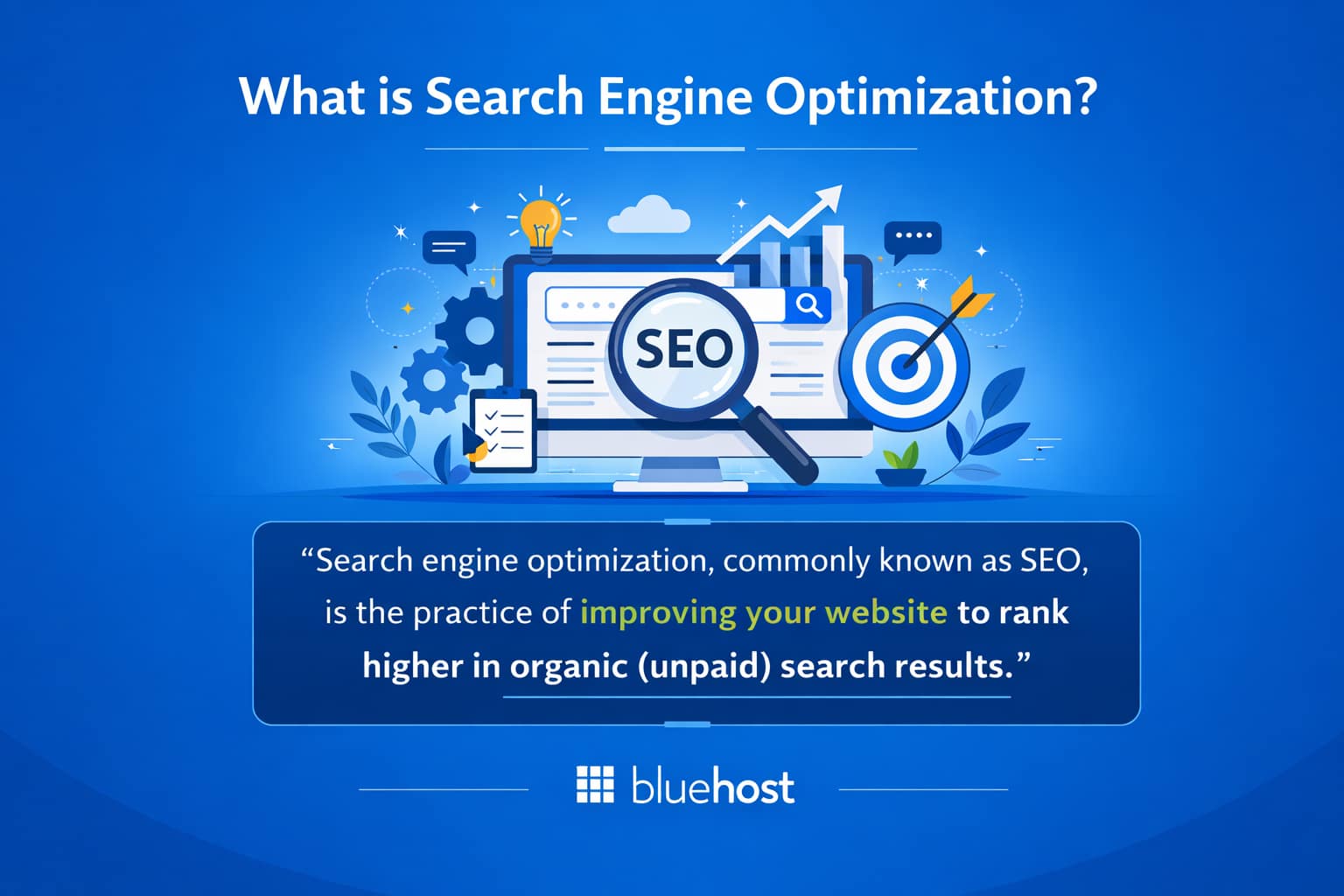
Search engine optimization, commonly known as SEO, is the practice of improving your website to rank higher in organic (unpaid) search results. When someone searches a query on Google, SEO determines whether your site appears on page one.
Here is how SEO works in a straightforward sequence:
- You research keywords and search intent to understand what people are actually looking for
- You create or improve content that answers those searches better than competing pages
- You optimize on-page elements like titles, headings, internal links and metadata
- You improve technical performance so search engines can crawl, index and rank your pages efficiently
- You build authority through backlinks and trust signals that strengthen your domain over time
- You track rankings, clicks and conversions, then refine pages based on real performance data
SEO delivers long-term visibility. There is no pay for each click. If you want sustainable growth, SEO builds traffic that compounds over time as your content and authority improve.
The trade-off is time. SEO typically takes three to six months before meaningful results build, especially in competitive industries. But once rankings are established, the traffic can continue for months or even years without additional spending.
SEO is also highly measurable. You can track impressions, clicks, click-through rate, rankings and organic conversions through tools like Google Search Console and Google Analytics. This makes it straightforward to optimize content, fix technical issues and improve ROI over time.
What are some common types of SEO pillars?
- On-page SEO: Optimizing page titles, headings, meta descriptions, internal links and keyword placement to improve relevance and rankings
- Technical SEO: Improving crawlability, indexation, site speed, mobile-friendliness, Core Web Vitals and overall site performance
- Off-page SEO: Building backlinks, brand mentions and authority signals that increase trust and ranking strength
- Local SEO: Optimizing your Google Business Profile, local citations and location pages to rank in map results and local searches
Why businesses choose SEO?
Businesses choose SEO because it builds long-term traffic growth without paying for every click. While results take time, SEO creates compounding visibility that keeps working even when you stop spending on ads.
Here is what you gain:
- Sustainable traffic: Once your pages rank, they can keep driving visitors for months or even years without additional ad spend
- Higher credibility: Organic rankings feel earned, which often increases trust and improves click-through rates compared to sponsored listings
- Lower long-term acquisition cost: SEO requires upfront investment in content and optimisation, but the cost per lead typically decreases over time
- Full-funnel reach: SEO captures users at every stage, informational research, comparison intent and high-intent purchase queries
- Brand authority: Ranking consistently for important topics positions your business as the expert in your space and strengthens long-term customer trust
What are some top SEO platforms and tools to know?
Choosing the right tools is just as important as choosing the right keywords. Here is a quick overview of the five platforms you should know:
- Google Search Console: The most essential SEO platform, Search Console shows you which queries drive traffic, how your pages perform in search, indexing issues and opportunities to improve rankings and click-through rate.
- Google Analytics 4 (GA4): GA4 helps you understand what organic visitors do after they land, including engagement, conversion paths and which pages generate leads or sales from search traffic.
- Semrush: Semrush is a powerful all-in-one SEO suite for keyword research, competitor analysis, backlink tracking, content planning and site audits, ideal when you want to manage SEO strategy at scale.
- Ahrefs: Ahrefs is best known for backlink intelligence and competitor research, making it especially valuable for off-page SEO, link-building opportunities and understanding why competing pages outrank you.
- Screaming Frog SEO Spider: This technical SEO crawler scans your website like a search engine, helping you identify broken links, redirect chains, duplicate content, missing metadata and crawlability issues that hold rankings back.
One factor that affects all five platforms: your website’s page load speed, mobile responsiveness and crawlability directly influence how efficiently search engines can access and rank your content. A faster, well-optimised site does not just improve user experience, it actively improves SEO performance too.
Also read: SEO Basics: Beginner’s Guide to Ranking Your Website
What is pay-per-click advertising?
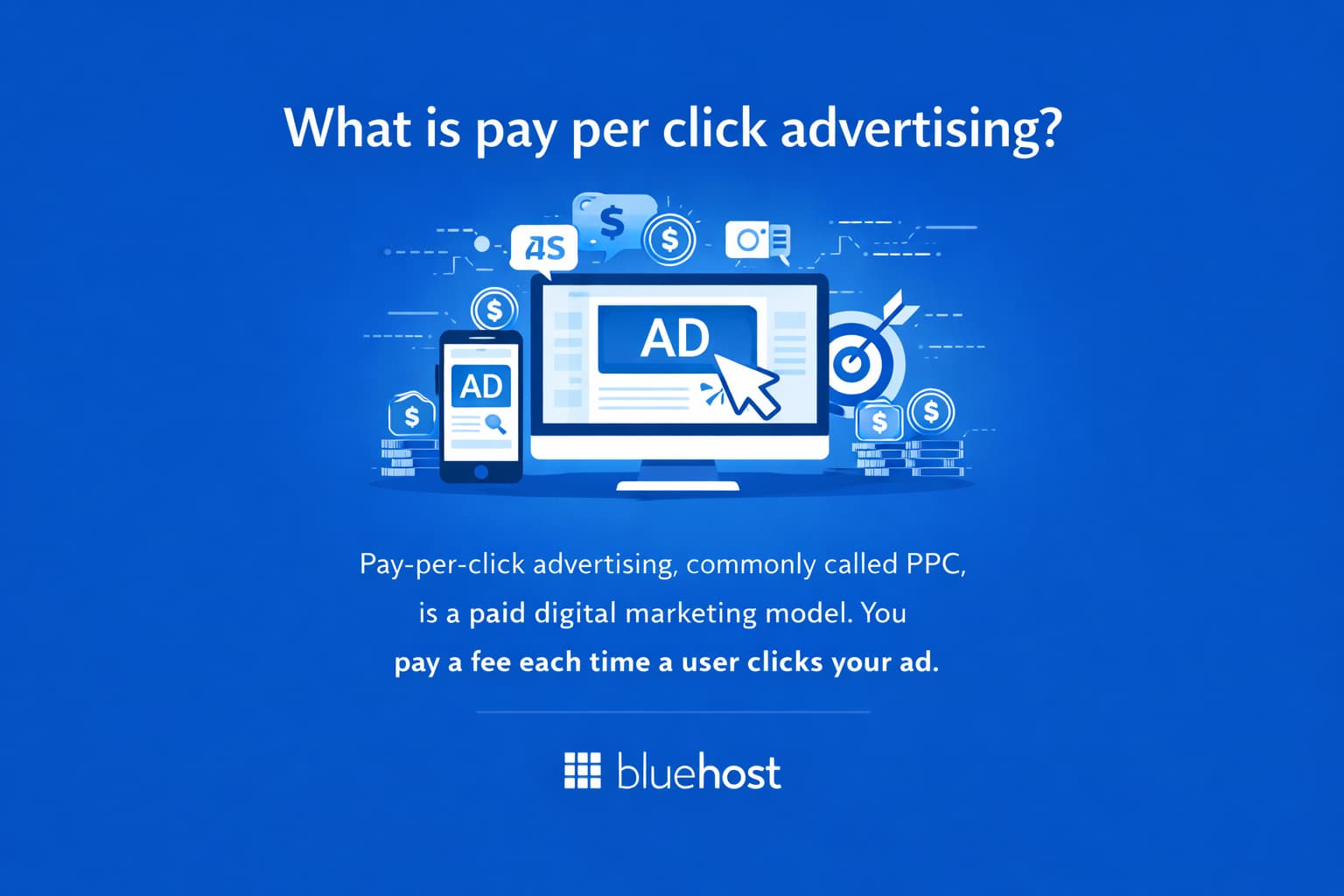
Pay-per-click advertising, commonly called PPC, is a paid digital marketing model. You pay a fee each time a user clicks your ad. The most widely used platform is Google Ads. Advertisers bid on keywords to appear at the top of search results pages.
Here is how PPC works in a straightforward sequence:
- You select your target keywords and set a daily budget
- Your ad enters an auction each time a user searches that keyword
- Google ranks your ad based on bid amount and Quality Score
- Your ad appears above organic results with a “Sponsored” label
- For search PPC, you typically pay when a user clicks your ad,
PPC delivers immediate visibility. There is no waiting for rankings to build. If you have a product launch, seasonal promotion or time-sensitive campaign, PPC gets traffic flowing within hours of setup.
The trade-off is direct cost. Popular keywords can cost anywhere from a few cents to over $50 per click depending on the industry. Once your budget is spent, your traffic stops completely.
PPC is also highly measurable. You can track impressions, clicks, conversions and cost-per-acquisition in real time. This makes it straightforward to optimize campaigns and calculate return on investment.
What are some common types of PPC advertising?
- Search ads: Text-based ads appearing in Google search results
- Display ads: Visual banner ads shown across Google’s partner websites
- Shopping ads: Product listings with images and prices in search results
- Remarketing ads: Ads targeting users who previously visited your website
Why businesses choose PPC advertising?
Businesses choose PPC advertising because it puts you in front of the right audience immediately, no waiting for rankings to build. Whether you are launching a new product or running a seasonal promotion, PPC drives qualified traffic from the moment your campaign goes live. Here is what you gain:
- Instant visibility: You appear at the top of search results within hours, even for highly competitive keywords where organic ranking would take years
- Precise audience targeting: You choose exactly who sees your ads, by location, device type, demographics and search intent, so your budget reaches people most likely to convert
- Full budget control: You set a daily spend cap so you never overspend, and you can pause or adjust campaigns at any time
- Measurable ROI: You track clicks, conversions and cost-per-acquisition in real time, making it straightforward to understand what your ad spend is actually returning
What are some top PPC advertising platforms to know?
Choosing the right platform is just as important as setting your budget. Here is a quick overview of the five platforms you should know:
- Google Ads: The largest and most powerful PPC platform, Google Ads covers search ads, display ads, shopping ads and YouTube ads, making it the go-to choice when you want to capture high-intent users actively searching for what you offer.
- Microsoft Advertising (Bing Ads): Cost-per-click on Microsoft Advertising is often 20% to 50% lower than Google Ads for competitive keywords, making it a smart addition if you want to stretch your budget further while reaching a distinct, often older and higher-income audience.
- Meta Ads (Facebook and Instagram): Meta Ads are particularly effective for businesses aiming to build brand awareness and engage with their audience through visually compelling content, ideal when your goal is audience-based targeting rather than direct search intent.
- LinkedIn Ads: For B2B marketers, LinkedIn is in a category of one, no other platform lets you target by job title, company size, industry, seniority level and skills with the same precision.
- Amazon Ads: Amazon Ads is an essential tool for eCommerce sellers, enabling them to promote products directly on Amazon’s platform and engage high-purchase-intent shoppers who are more likely to convert.
One factor that affects all five platforms: your website’s page load speed and mobile optimisation directly influence your ad Quality Score, which determines how much you pay per click. A faster, well-optimised site does not just improve your SEO, it actively lowers your PPC costs too.
Also read: How to Find and Hire the Best PPC Agency in 2026
What is the core difference between SEO and PPC?
Understanding the difference between SEO and PPC involves evaluating 7 critical factors.
| Factor | SEO (Search Engine Optimization) | PPC (Pay Per Click) |
|---|---|---|
| Traffic type | Organic (unpaid) | Paid (sponsored) |
| Time to results | 3–6+ months | Immediate (within hours) |
| Cost model | Time and content investment | Cost per click (CPC) ad spend |
| Traffic longevity | Long-term and compounding | Ends immediately when budget stops |
| User trust | Higher (earned organic credibility) | Lower (identified by “Sponsored” labels) |
| Control | Limited control over ranking speed | Full control over visibility and targeting |
| SEM context | Organic component of SEM | Paid component of SEM |
The table above gives you a quick side-by-side view, but the real value comes from understanding what each factor means in practice. Below, we break down every factor so you can choose the right mix of SEO and PPC based on your goals, timeline and budget.
1. Traffic Type: organic visibility vs sponsored placements
SEO drives organic (unpaid) traffic by earning rankings in the natural search results. PPC drives paid (sponsored) traffic by placing ads at the top of the results page. The difference matters because organic clicks are earned through relevance and authority, while paid clicks are purchased through bids, targeting and ad performance.
2. Time to results: 3–6+ months vs immediate traffic
SEO takes time because search engines must crawl, index and evaluate your content and your site needs to build trust and authority before rankings improve. PPC is immediate: once your campaign is live, your ads can begin generating traffic within hours. SEO is a long-term build; PPC is a short-term accelerator.
3. Cost model: time and content investment vs cost per click
With SEO, you invest in content creation, technical optimisation and authority-building. You do not pay per visitor, but you do invest resources to earn rankings. With PPC, you pay each time someone clicks your ad, so traffic scales directly with spend. SEO reduces marginal costs over time; PPC provides predictable traffic at a predictable cost.
4. Traffic longevity: compounding growth vs traffic that stops
SEO traffic compounds. A page that ranks well can generate visits for months or years, especially if it stays updated and competitive. PPC traffic is temporary. The moment you pause campaigns or run out of budget, visibility stops and traffic drops immediately. SEO is durable; PPC is switch-on, switch-off.
5. User trust: earned credibility vs “Sponsored” labels
Organic results often earn higher trust because users view them as credible and editorially earned rather than paid for. PPC ads are clearly labeled as “Sponsored,” which can reduce trust for some searchers. That said, PPC still performs extremely well for high-intent searches where users want the fastest solution and are ready to convert.
6. Control: limited ranking control vs full targeting control
SEO gives you influence, not direct control. You can improve rankings through content quality, technical performance, internal linking and backlinks, but you cannot force immediate placement changes. PPC offers full control over visibility: you choose keywords, budgets, locations, devices, schedules, audiences and messaging and you can adjust everything in real time.
7. SEM context: organic component vs paid component
SEO is the organic side of search engine marketing (SEM), it improves your visibility in unpaid results. PPC is the paid side of SEM, it buys visibility through ads. Together, they form a complete search strategy: SEO builds long-term authority and sustainable traffic, while PPC provides immediate reach and precise targeting when timing matters most.
Your organic conversion rate is the definitive metric bridging traffic and revenue, demonstrating whether your SEO efforts generate business results rather than simple page views. Evaluating your domain authority score confirms if your content and link-building strategies are successfully compounding into long-term ranking power.
Regarding PPC, analyzing your cost-per-acquisition (CPA) reveals whether your advertising spend is acquiring customers profitably. Your return on ad spend (ROAS) identifies which campaigns provide the best value, allowing you to scale success and minimize waste. Lastly, your Quality Score directly impacts efficiency; a higher score can help you earn better placement at a lower cost per click.
Also read: How to Increase Blog Traffic in 2026 | 11 Proven Strategies
How SEO and PPC focus on different features of the SERP landscape
SEO and PPC do not compete for the same space on the search engine results page, they each target entirely different zones of visual real estate. Here is how that breakdown works in practice:
- PPC claims the top sponsored positions: Google text ads appear at the top and bottom of the search results page, consisting of a headline, description and URL designed to match user intent and are clearly marked with a “Sponsored” label.
- PPC powers shopping carousels: Google Shopping ads display product images, prices and store names directly in search results, appearing prominently for product-related queries so users can browse and compare before clicking through.
- SEO targets traditional organic blue links: Organic listings are determined by algorithms that analyze thousands of factors to attain ranking power, no ad spend required.
- SEO wins featured snippets: Featured snippets can appear prominently near the top of Google’s results, providing a highlighted summary box that can earn outsized visibility.
- SEO captures local map packs: The introduction of features like local packs has changed the way users interact with search results, making local SEO a distinct organic opportunity separate from both PPC and standard blue links.
When to choose SEO, PPC or both?
There is no single right answer in the SEO vs PPC discussion. The best strategy depends on your goals, timeline and available budget.
Here is a practical guide to help you decide.
Choose SEO when:
SEO is the best choice when you are focused on building sustainable traffic and long-term authority, even if results take time to compound.
- You are building a long-term digital presence for your brand
- You run a content-driven business such as a blog, eCommerce store or service site
- Your budget is limited and you need traffic that does not require ongoing ad spend
- You are targeting informational or mid-funnel search queries
- You want to build brand authority and domain trust over time
Choose PPC when:
PPC makes the most sense when speed, targeting and immediate results matter more than long-term compounding traffic.
- You need traffic immediately, such as a new business launch or event promotion
- You are running a time-sensitive campaign with a clear deadline
- You want to test a new product, service offering or landing page quickly
- You are targeting high-intent, bottom-of-funnel keywords with strong purchase signals
- Your industry is too competitive for fast organic ranking growth
Use both SEO and PPC when:
A combined strategy works best when you want fast traction now while building an organic foundation that reduces paid dependency over time.
- You have the budget to invest in both channels simultaneously
- You want to dominate search results pages with both paid and organic listings
- You need short-term revenue while your long-term SEO strategy matures
- You want to use PPC conversion data to inform your SEO keyword priorities
Also read: 22 Proven Techniques to Increase Website Traffic Effectively
Should you invest your budget in SEO or PPC?
The answer depends on where you are in your business journey. If you are launching something new, a product, a service or an entire brand, PPC (pay-per-click advertising) gives you immediate cash flow by placing your offer in front of ready-to-buy audiences from day one.
There is no waiting for organic authority to build. That early revenue can fund the SEO (search engine optimization) investment that eventually reduces your cost per acquisition.
Think of budget allocation this way: PPC is your short-term fuel and SEO is your long-term equity. PPC gives you immediate visibility and lead flow, while SEO compounds in value over time rather than consuming budget daily.
The strategic “why” behind this split is straightforward: new websites need immediate PPC visibility, while established sites can leverage SEO’s compound growth effects to maximize cost savings. As your organic rankings strengthen, your dependence on paid spend naturally decreases.
Use this practical SEO vs PPC budget allocation framework to determine where your marketing spend will generate the strongest ROI:
- New business or launch phase: Lean into PPC for immediate traffic and revenue while planting SEO seeds early
- Growth phase: Balance both channels, use PPC data to sharpen your SEO keyword targeting
- Established presence: Shift more budget toward SEO as compounding organic traffic reduces your cost per lead
Regardless of where your budget goes, one factor affects both channels equally: your website’s performance. A slow or unreliable site hurts your organic rankings and inflates your PPC costs by lowering your Quality Score. A fast hosting foundation is not optional, it is the infrastructure that makes every dollar you invest in SEO or PPC work harder.
How to calculate and compare your ROI from SEO and PPC?
Calculating the ROI of SEO vs PPC requires distinct methodologies due to their unique cost structures. While PPC operates on a direct cost-per-click basis, SEO involves a dedicated investment in time and high-quality content.
Comparing SEO vs PPC across these key differences empowers you to make smarter, data-driven budget allocation decisions and build a more effective digital marketing strategy for your business.
- PPC ROI formula: Calculate returns using (Revenue Generated − Ad Spend) ÷ Ad Spend × 100.
- Immediate performance: Track your ROI in real-time through Google Ads; for instance, a $1,000 spend yielding $4,000 in revenue represents a 300% return.
- Instant data: Use paid search for immediate feedback and rapid scaling based on clear financial metrics.
- SEO traffic value method: Estimate ROI by multiplying organic traffic by its CPC equivalent and subtracting content and technical expenses to see what that traffic would cost via paid ads.
- Compounding returns: Unlike PPC, organic rankings provide sustainable long-term value, as top-tier content continues to generate traffic without additional costs per visitor.
- Strategic benchmarking: Monitor SEO progress via Google Analytics and Google Search Console on a quarterly basis, as organic results typically build across a 3–6 month horizon.
How SEO and PPC work better together?
The most effective digital marketing strategies use both SEO and PPC in combination. Here is why these two channels complement each other so powerfully:
- Keyword intelligence: PPC data reveals which keywords convert best. Apply those insights directly to your SEO content strategy.
- SERP domination: Appearing in both paid and organic results for the same query significantly increases brand visibility.
- Remarketing opportunities: PPC allows you to retarget users who found your site organically but did not convert.
- Content testing: PPC lets you test headlines and messaging rapidly. Apply winning copy to your organic meta titles and page content.
- Bridging the gap: While your SEO strategy builds momentum over months, PPC ensures consistent lead generation throughout.
A combined approach creates a layered marketing strategy. Each channel reinforces the other and reduces dependence on any single traffic source. Businesses that invest in both SEO and PPC consistently outperform those relying on just one channel.
Advanced data strategies for integrating SEO and PPC insights
Once you are running both channels, the real performance gains come from breaking down the data silos between them.
Integrating your SEO and PPC insights into a unified view removes guesswork, closes coverage gaps and creates a compounding search strategy where each channel actively improves the other’s results.
- Unified reporting dashboard: Merge Google Search Console with Google Ads data in a single Looker Studio or Google Analytics 4 dashboard to map keyword gaps, terms where you rank organically but have zero paid coverage and vice versa. This visual crossover tells you exactly where to allocate budget or content effort for maximum return.
- PPC audience data as SEO intelligence: Your paid campaigns reveal who converts, on which device and at what time of day. Feed those demographic profiles and peak conversion windows directly into your SEO content personas and publishing schedules, so you are writing for the right people at the right moment.
- High-traffic, low-conversion pages as retargeting targets: Organic pages that attract strong traffic but deliver below-average conversion rates are your highest-value PPC retargeting opportunities. These visitors already show intent; they just need a timely paid nudge to act.
- Strong CTR, weak conversions as a content signal: When a PPC campaign earns clicks but loses visitors immediately, the issue is not the ad, it is the landing page. Fixing that content improves your paid conversion rate and strengthens the same page’s organic performance simultaneously.
- Shared keyword governance: Combining Search Console data with Google Ads metrics helps identify keyword cannibalization opportunities and optimize budget allocation between organic and paid search efforts. A documented governance protocol ensures your SEO and PPC teams never bid against each other on branded terms, a common mistake that inflates cost-per-click without expanding your overall search presence.
What are some proven ways to run SEO and PPC together?
Running SEO and PPC simultaneously creates a compounding effect where each channel actively strengthens the other’s performance. These four tactics are specific and actionable, each one uses real data from one channel to sharpen results in the other.
- Feed PPC conversion data into your SEO strategy. Prioritise keywords that already drive sales in Google Ads because you know they convert, not just attract clicks.
- Retarget organic visitors who did not convert. Run remarketing campaigns on Google or Meta, these users already know your brand and respond better to a second touchpoint.
- A/B test PPC ad copy then apply winners to organic listings. Top-performing paid headlines and calls-to-action translate directly into stronger meta titles and page headings.
- Maintain PPC visibility while SEO builds domain authority. Bidding on high-competition keywords during your organic growth period protects your traffic flow until those pages rank naturally.
What are the technical foundations both strategies depend on?
Both SEO and PPC performance rely on one critical element: a fast and reliable website. Slow page load times hurt your organic rankings directly. They also increase your Google Ads cost-per-click by lowering your Quality Score.
Key technical foundations that support both strategies include:
- Page speed: Page speed is a confirmed ranking factor, especially on mobile and it matters most when pages are significantly slow.
- Mobile optimization: Mobile now drives around 60% of global web traffic, making a mobile-first experience essential for rankings and conversions.
- SSL certificate: Google has confirmed HTTPS as a ranking signal, but it’s generally considered a lightweight boost compared to stronger factors like content quality.
- Core Web Vitals: Google measures loading performance, interactivity and visual stability when ranking pages.
- Structured data: Schema markup helps search engines understand your content and improves eligibility for rich snippet results.
Your web hosting infrastructure directly impacts all of these metrics. A hosting provider with strong uptime guarantees, fast server response times and enterprise-grade infrastructure supports both your SEO growth and your PPC Quality Score.
Turn your SEO vs PPC plan into measurable results with Bluehost
If you’re ready to move from strategy to execution, our tools fit naturally into the workflow: start with a diagnostic (SEO Checker), then scale with done-for-you support (Professional Digital Marketing Services).
Bluehost Website SEO Checker
Use this when you want a fast baseline before you invest more time (SEO) or budget (PPC). Bluehost’s Website SEO Checker provides real-time SEO analysis, actionable SEO tips and a free SEO audit report to help you identify what’s holding your rankings back.
What it helps you spot (pointers for the offering):
- Broken links + status code errors (quick technical wins)
- Mobile compatibility checks (mobile speed, responsiveness, content scaling)
- Backlink analysis (link quality metrics, anchor text distribution and domain authority).
- Security signals (vulnerabilities, SSL issues, potential malware threats)
- Local SEO tracking (local search performance, Google Maps rankings and business listings).
Bluehost Professional Digital Marketing Services
Use this when you want SEO, PPC or both managed for you, especially if you want faster execution, expert oversight and clearer reporting. Bluehost Professional Digital Marketing Services provide on-demand reporting and a team that analyzes results.
What you get (pointers for the offering):
- Pro SEO Assist:
- Your own team of SEO experts
- On-page and off-page SEO to boost rankings
- Optimization support no matter where your site is hosted
- “Optimized for eCommerce performance”
- Help to populate business directories and referral links for authority
- Pro PPC:
- Your own team of Google PPC experts
- Control over when and where ads are displayed within your budget
- Expert-led tracking for instant campaign insights
Final thoughts
SEO and PPC are both effective strategies; choosing the right one depends on your specific business objectives and budget.
- SEO provides sustainable, long-term growth and builds brand authority.
- PPC offers immediate search visibility and precise audience targeting.
- Combined strategies maximize your total reach and diversify your traffic sources.
New websites often utilize PPC for instant traction, while established brands typically run both channels to dominate search results. Regardless of your choice, a fast and secure technical foundation is essential for converting that traffic into customers.
Success in search marketing requires constant optimization and expert management to stay ahead of the competition. Let our specialists handle the complexity of your campaigns so you can focus on running your business.
Ready to scale your reach? Drive more traffic and increase conversions with Bluehost Professional Digital Marketing Services today.
FAQs
SEO drives organic traffic by improving your website’s search rankings over time. PPC generates immediate paid traffic through ads. SEO is a long-term investment. PPC delivers instant visibility but stops when your budget ends.
It depends on your timeline and budget. SEO is cost-effective for long-term growth. PPC is better for immediate results. Many small businesses start with PPC for quick traffic and build SEO alongside it for sustainable growth.
Most websites begin seeing meaningful SEO results within three to six months. Competitive industries may take longer. The timeline depends on your domain authority, content quality and the competitiveness of your target keywords.
Yes, and this is often the recommended approach. Running both channels simultaneously allows you to generate immediate traffic through PPC while building long-term organic rankings through SEO. PPC data also informs smarter SEO keyword decisions.
A reasonable starting budget depends on your industry and goals. Many small businesses begin with $500 to $1,000 per month to test performance. Competitive industries like legal or finance may require significantly higher budgets to compete effectively.
No, SEO is evolving rather than disappearing. Modern search engine optimization focuses on user experience, content depth and topical authority instead of outdated tactics. As long as users rely on search engines to find solutions, organic optimization will remain a digital marketing essential.
PPC remains a vital complement to organic efforts, offering immediate visibility for high-intent keywords. It provides granular control over audience targeting, making paid placement a key advantage for driving rapid conversions and brand awareness in a competitive marketplace.
Both strategies present unique challenges. PPC requires precise budget management and continuous ad testing to maintain ROI. In contrast, SEO is a long-term commitment involving complex ranking factors and frequent algorithm updates. While PPC offers faster data feedback, the technical persistence required for SEO is equally demanding.


Write A Comment