 ChatGPT,
 Claude,
 Gemini,
 Grok — all four for
Key highlights
- Understand when shared hosting is a good fit for small eCommerce stores and when it may limit growth.
- Learn the key hosting requirements an online store needs, including SSL, uptime, storage, backups and plugin support.
- Explore the advantages and limitations of shared hosting before choosing it for your eCommerce website.
- Identify the signs that show when your store may need a stronger hosting solution.
- Discover how Bluehost Shared hosting can help small eCommerce websites launch with essential tools and upgrade options.
Launching an online store is exciting. But the hosting decision can get confusing fast.
You want something simple enough to start with, strong enough to handle customers and flexible enough to grow with your store. Shared hosting often comes up as the first option because it is easy to set up and usually costs less than advanced hosting types.
But is shared hosting good for eCommerce?
The short answer is yes, for the right kind of store. A small store with a simple setup can run on shared hosting. But as traffic, products, plugins and revenue grow, your hosting needs can change.
In this guide, we will break down when shared hosting works for eCommerce, when it does not, what features to check and when it makes sense to upgrade.
What is shared hosting?
Shared hosting is a type of web hosting where multiple websites use the same server. Each website gets a portion of that server’s resources, including storage, CPU and memory.
It works because the hosting provider manages the server, security updates and core infrastructure. You get a hosting account where you just need to build and manage your website without handling the server yourself.
As the cost of that server is spread across many customers, shared hosting is typically the most affordable entry point into web hosting, which is exactly why it appeals to store owners just getting started.
Is shared hosting good for eCommerce?
Yes, shared hosting is good for eCommerce if your store is small, simple and not handling heavy traffic yet.
It works best when you have a limited product catalog, standard product pages, basic payment processing and predictable traffic. For example, a home baker selling custom cakes and cupcake boxes can start with shared hosting when she’s ready to take orders online.
But shared hosting may not be the best long-term choice for every store. If your site has frequent promotions, high traffic, large images, many plugins or complex checkout flows, you may need a more eCommerce-focused hosting plan.
Before choosing a plan, check whether it can support the security, speed and reliability an eCommerce store needs.
Key eCommerce shared hosting requirements checklist
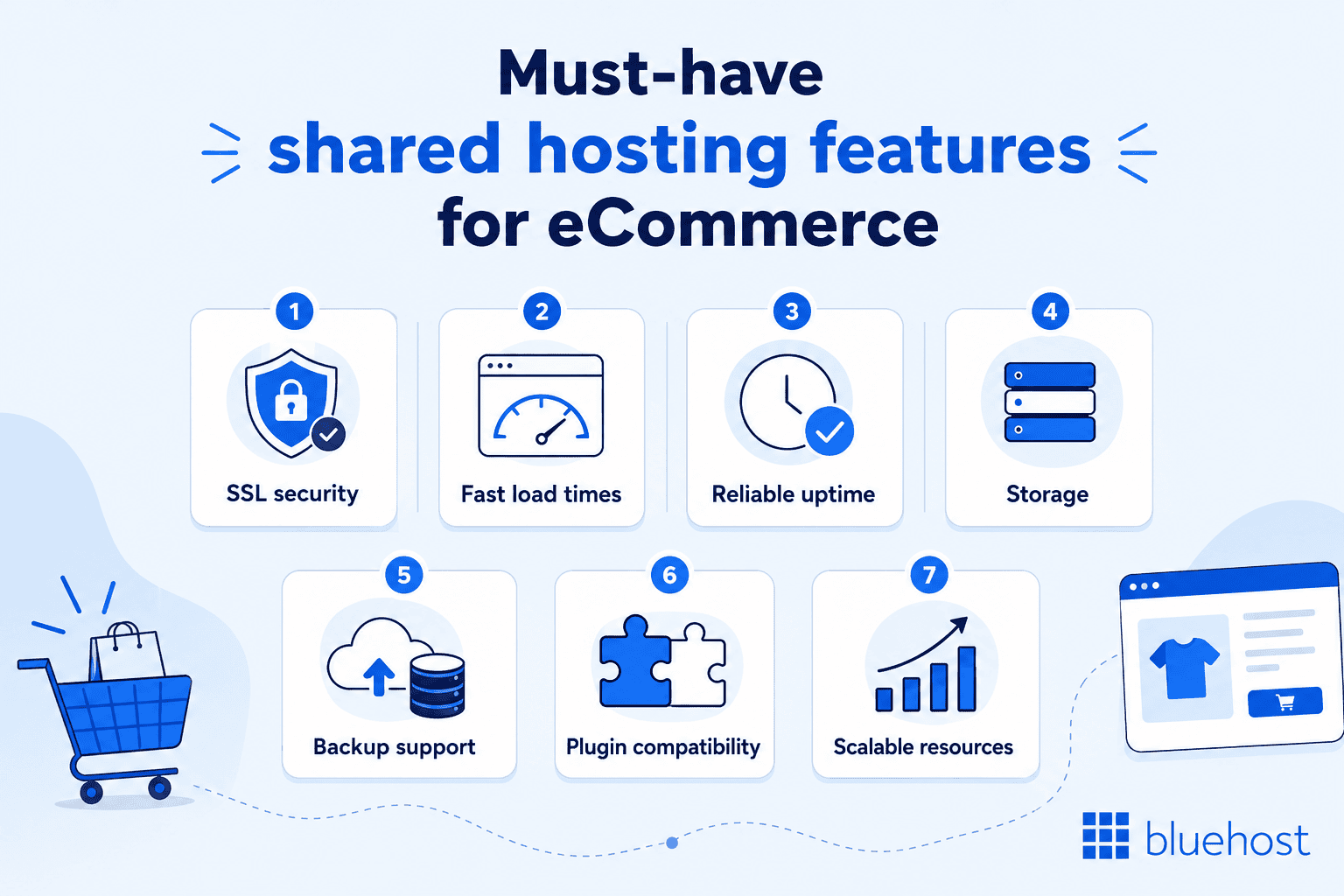
Before running an eCommerce site on shared hosting, check what the plan actually supports. Your hosting should help your store stay secure, fast and recoverable. It should also give you enough room to manage products, plugins and traffic without hurting the shopping experience.
- SSL security: SSL helps encrypt data between your website and visitors. This is important because eCommerce stores collect customer details and send users through checkout.
- Fast load times: Product pages and checkout flows need to load quickly, since slow pages directly increase cart abandonment and hurt conversions.
- Reliable uptime: Your store needs to stay available when shoppers are ready to buy. Downtime can block product views, cart access and checkout.
- Storage: Product images, descriptions, and order data add up fast, so your plan needs enough disk space to grow your catalog without hitting a wall.
- Backup support: Regular, automated backups protect your store data in case of errors, plugin updates, theme edits or accidental changes.
- Plugin compatibility: Most WordPress eCommerce stores depend on plugins for products, inventory, payments, shipping, SEO and marketing. Your hosting should support essential plugins without slowing the site.
- Scalable resources: A new store may not need advanced resources on day one. But growth can change hosting needs quickly. Even a basic plan should offer a way to upgrade as your traffic and order volume increase.
Running through this checklist against any hosting plan you are considering will quickly tell you whether it is built with online stores in mind or just repurposed for general websites.
Also read: How to Choose a Web Hosting Service Provider: Find Your Best Fit
Shared hosting for eCommerce: When it works and when it does not
Shared hosting is a good starting point when your store is simple. It becomes less ideal when your store needs more power, control or stability.
| Shared hosting works when | Shared hosting may not work when |
| Launching a new store | Frequent traffic spikes |
| Small product catalog | Hundreds or thousands of products |
| Low to moderate traffic | Sudden visitor surges during promotions |
| Simple checkout setup | Slow checkout, cart or payment pages |
| Only essential plugins are used | Heavy dependence on multiple plugins |
| Store is not yet revenue-critical | Downtime directly affects daily sales |
| Lower-cost starting point is needed | More custom setup is required |
| No need to manage server configurations | Advanced server-level control is needed for custom integrations |
A simple way to know: If most of your business matches the first list, shared hosting is a good option. If you find the second list familiar, it is worth reading the upgrade signs later in this article closely.
Advantages of shared hosting for eCommerce
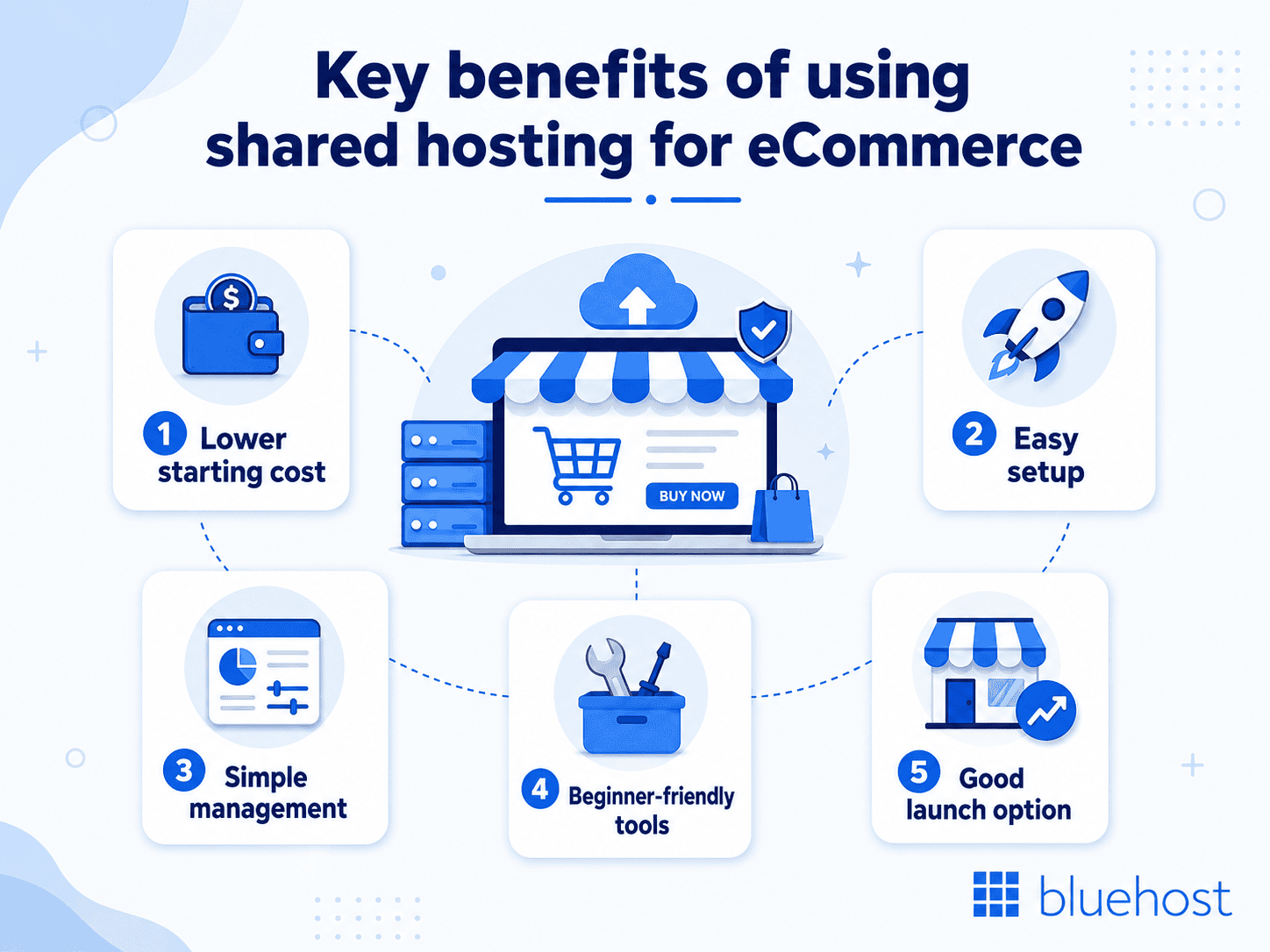
Shared hosting has real benefits for new eCommerce stores. It can help you get online without a complex setup or large upfront investment. The key is to use it for the right stage of growth.
- Lower starting cost: Because server costs are split among many users, shared hosting plans are priced far below Virtual Private Server (VPS) or dedicated options, making it accessible for tight startup budgets.
- Easy setup: Shared hosting is built for simpler website launches. Most providers offer one-click installation for WordPress and WooCommerce, so you can have a store online within a day rather than weeks.
- Simple management: Server maintenance, security patches, and software updates are typically handled by the host, freeing you from technical upkeep. This helps you focus on products, orders and customers instead of server tasks. For small business owners, this simplicity can be more valuable than advanced control.
- Beginner-friendly tools: Many shared hosting plans include tools for AI site creation, domain setup, management, etc. This makes shared hosting approachable even without coding experience.
- Good launch option: For testing a business idea, validating demand, or getting your first products in front of customers, shared hosting removes financial and technical barriers to getting started.
These strengths explain why shared hosting works well for store owners who want to launch first and scale once demand is clear.
Disadvantages of shared hosting for eCommerce
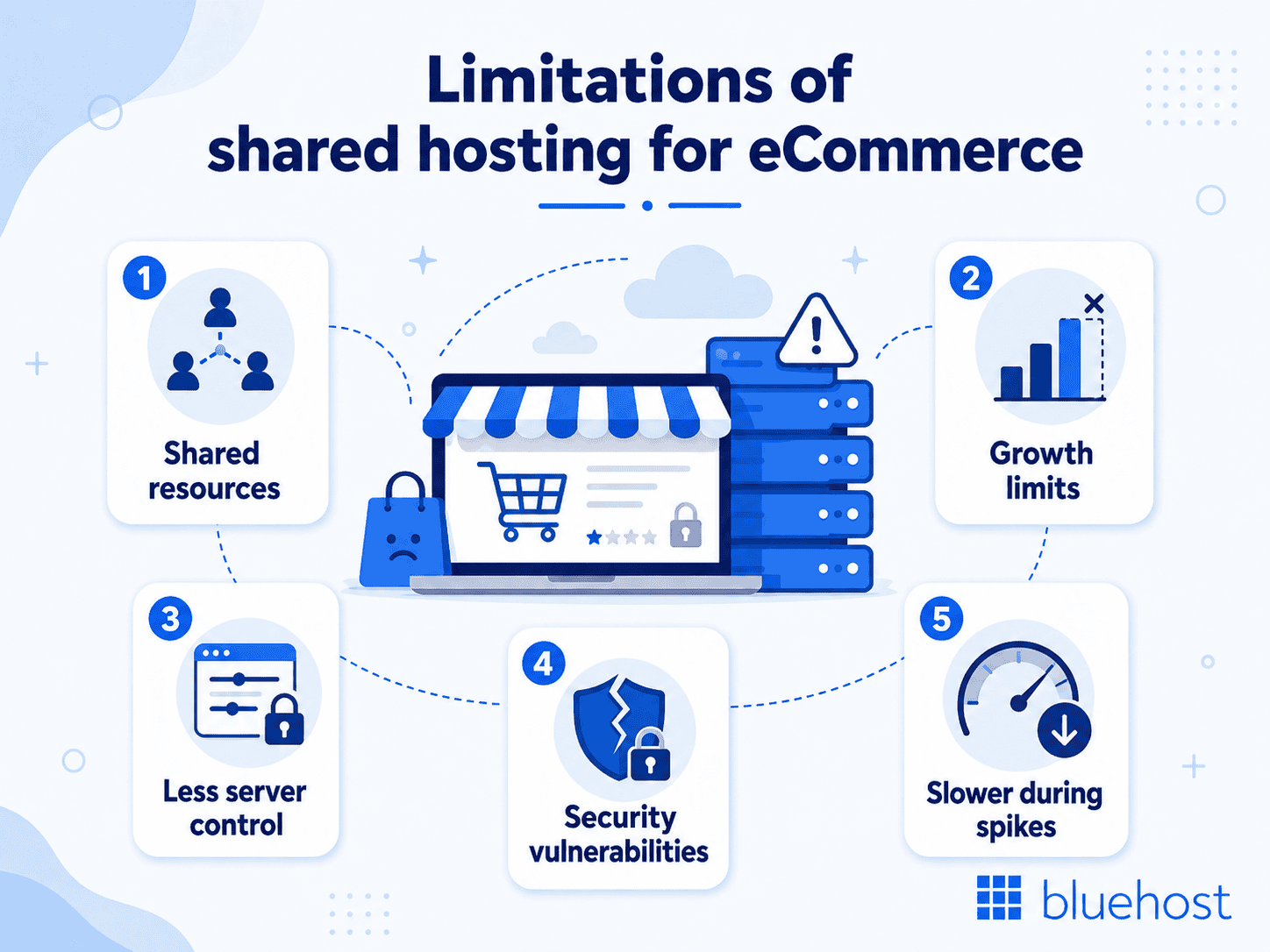
Shared hosting is useful, but it has limits. Those limits matter more for eCommerce because performance and security can affect revenue. The goal is not to avoid shared hosting but to know when the trade-offs upgrade becomes too important.
- Shared resources: On shared hosting, multiple websites use the same server resources. If one site uses more resources, it can sometimes affect others on the same server. For a small store, this may not be a problem. For a busy store, shared resources can become a performance concern.
- Growth limits: Shared hosting can support growth up to a point. As your traffic, orders and plugin needs increase, you may need more dedicated resources or a hosting plan built for larger store operations. Some advanced commerce features may also require paid plugins or extensions.
- Less server control: Shared hosting gives you less control than VPS or dedicated hosting. You may not be able to customize server settings deeply. That is fine for simple stores. But stores with custom development, advanced integrations or unusual performance needs may need more control.
- Security vulnerabilities: Shared hosting can be safe with the right provider, but the shared environment adds some risk. One poorly secured site on a shared server can create concerns for others. This is why security features matter. Look for SSL, malware scanning, backups, firewall protection and regular updates.
- Slower during spikes: Traffic spikes can put pressure on shared resources. This can happen during sales, seasonal campaigns, influencer mentions or email promotions. If speed drops during your most important selling windows, it may be time to move to a stronger hosting setup.
None of this means shared hosting is unsafe or unsuitable outright. It means the plan needs to match your current business size, with a clear path to move up when the numbers change.
When to upgrade from shared hosting?
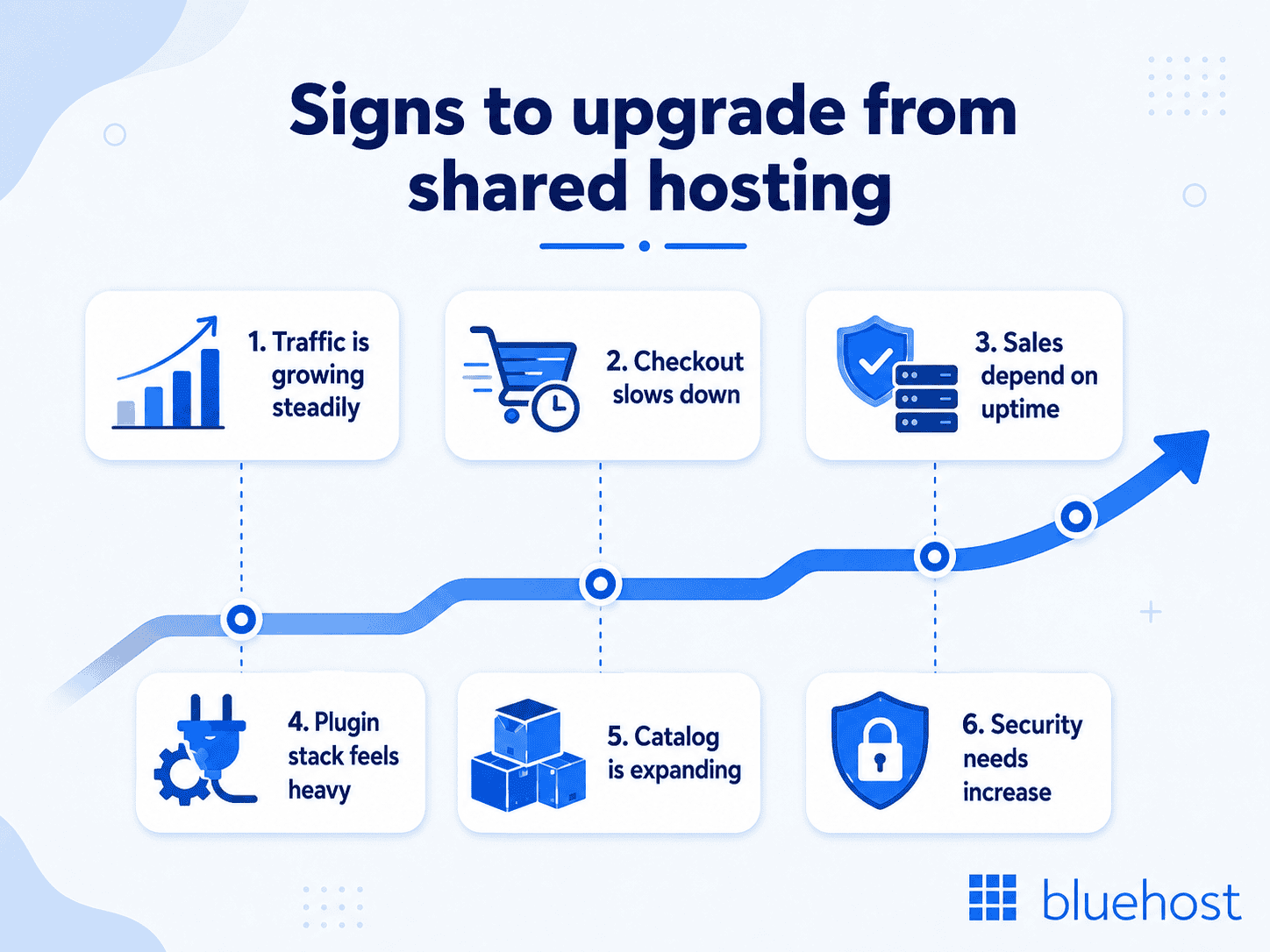
Growth is a good problem to have, but it does put pressure on infrastructure that once felt more than sufficient. You should upgrade when hosting starts limiting your store’s performance, reliability or growth. Watch for these signs that your store has outgrown its current plan.
- Traffic is growing steadily: If monthly visits keep increasing, your store needs more stable resources. Growth is a good sign, but only if your hosting can support it. When traffic starts affecting speed, it is time to review your plan.
- Checkout slows down: Checkout is one of the worst places for performance issues. If cart or payment pages are slow, shoppers may abandon the purchase. A stronger hosting setup can help support smoother checkout performance.
- Sales depend on uptime: If your store is now a meaningful revenue source, availability matters more. Downtime no longer means a small inconvenience. It means missed sales, frustrated customers and lost trust.
- Plugin stack feels heavy: WooCommerce stores often use plugins for SEO, payments, reviews, subscriptions, shipping, analytics and marketing. If your store needs many plugins to function, shared hosting may struggle to keep performance consistent.
- Catalog is expanding: A larger catalog means more product pages, images, filters, variations and database activity. If your store is moving from a few products to a full catalog, you may need hosting built for more eCommerce activity.
- Security needs increase: As your store grows, you may need stronger security, backups, malware protection and monitoring. This is especially important when customer trust, transactions and business reputation depend on your website.
Once two or more of these signs show up consistently, it is time to look at what comes next. It helps to compare hosting options and choose one that matches your store’s next phase.
Alternatives to shared hosting for eCommerce
Moving on from shared hosting does not mean jumping straight to the most expensive option available. Several tiers exist between a basic shared plan and a fully dedicated server, each suited to a different stage of growth.
| Hosting type | Best for | Main benefit | When to choose it |
| WooCommerce hosting | eCommerce stores built on WordPress | Store-focused tools and WooCommerce-ready setup | Selling online is your main goal |
| VPS hosting | Growing stores that need more resources | More control and dedicated resource allocation | Shared hosting feels too limited |
| Cloud hosting | Stores with traffic changes or scaling needs | Flexible infrastructure and better scaling | Traffic is less predictable |
| Dedicated hosting | Large stores with high performance needs | Full server resources and maximum control | Store needs a powerful custom setup |
If you have a WordPress-based online store, WooCommerce hosting is the natural next step after shared hosting. It is built for store-specific needs, so it can better support product pages, checkout flows, payment tools, shipping settings and WooCommerce plugins.
For stores with higher traffic or more complex requirements, VPS, cloud, or dedicated hosting can provide greater performance, scalability and control.
Also read: WooCommerce hosting vs shared hosting: Choose the Right Plan
Why choose Bluehost Shared hosting for eCommerce website?
Bluehost Shared Web hosting is a good place to start your small eCommerce websites, as you get all the essentials to launch, secure and manage your store without handling server configuration. You also get room to upgrade when your traffic, catalog or checkout needs grow.
- Free domain for first year: We include a free domain for the first year with our hosting plans. This helps you set up your store name and hosting together.
- Uptime guarantee: Our shared hosting plans come with a 99.99% uptime SLA to keep your store available for browsing and checkout whenever customers visit.
- Storage and security features: Our plans include NVMe SSD storage, free SSL, malware scanning, Web Application Firewall, DDoS protection and weekly backups.
- AI site creation tools: With our AI site creation tools you can build your website faster. This is useful when you want to launch without starting every page from scratch.
- Plugin compatibility: Our shared hosting plans support WordPress and essential eCommerce plugins, so you can add tools for payments, shipping and store management without a complex setup.
- 24/7 support: We offer around-the-clock chat support to provide help when setup or website issues need quick attention.
- Upgrade options: You can start with shared hosting and move to WooCommerce hosting, VPS, cloud or dedicated hosting later. This gives your store a clear path as it grows.
For small eCommerce websites, Bluehost Shared Web hosting gives you a simple foundation to get online, stay secure and grow at your pace. Explore our web hosting plans to start building your store.
Final thoughts
Shared hosting is a practical way to take your eCommerce idea from “almost ready” to live. It keeps the setup simple, so you can focus on products, orders and customers instead of server decisions.
If you are looking for an easy way to launch your new eCommerce store, shared hosting is a reliable place to begin. It gives you the essentials to start selling, with the flexibility to move to a more scalable plan as traffic, products or store operations grow.
Ready to launch? Choose Bluehost Web hosting and start building your eCommerce website today.
FAQs
Yes, shared hosting works well for small stores with modest traffic and a limited product catalog. It offers an affordable, simple way to launch before you need more dedicated resources.
Yes, most shared hosting plans support WooCommerce, giving you the tools needed to run product pages, checkout and payment processing without a server upgrade.
Shared hosting can be safe when the provider includes SSL certificates, malware scanning and regular backups. Our hosting includes all required security features, making us a practical option for small eCommerce stores.
Compress images, use caching plugins, limit unnecessary plugins and choose a lightweight theme. These steps reduce server load and help your store stay fast on shared resources.
Yes, most shared hosting plans come with a free SSL certificate. At Bluehost, our Web Hosting plans include free SSL, malware scanning, DDoS protection and weekly backups to help secure and protect your website.
Look for strong uptime guarantees, storage, SSL security, backup support, plugin compatibility and a clear upgrade path so your hosting can grow alongside your store. Our Bluehost Shared Web hosting plan includes these essential features to help small stores launch and grow.

Write A Comment