 ChatGPT,
 Claude,
 Gemini,
 Grok — all four for
Key highlights
- Learn what ChatGPT memory does and how it carries useful context across your separate chats.
- Understand how memory differs from a single chat’s history and from the data-training setting.
- Discover how to view, edit, delete and turn off your ChatGPT saved memories in minutes.
- Compare how ChatGPT, Claude and Gemini store memory so you pick the right approach.
- Know the privacy defaults for each plan before you share sensitive business details.
You ask ChatGPT the same background questions over and over, and re-explaining your business each session wastes time. ChatGPT memory fixes that by carrying useful context from one chat to the next, so you repeat yourself less. This guide explains what the ChatGPT memory feature is, how it works and how the newer “Dreaming” update changes things.
You will learn how to view, edit, delete and turn off memory, and what happens when you clear it. We also cover the privacy defaults by plan and how memory compares to Claude and Gemini. Finally, we share practical steps to keep your stored context accurate and safe for work.
What is ChatGPT memory?

ChatGPT memory is a personalization layer that lets the assistant remember useful details about you and carry them across separate chats. It stores things like your name, your role, your projects and your preferences, then applies them to future conversations without you re-entering them.
For example, tell it once that you run a small bakery and prefer short answers, and it can apply that in later chats. You stop restating your business type every time you brainstorm promotions or draft customer emails. Over weeks, that saved context adds up to real time back in your day.
This is different from a single chat’s history. History is the running thread inside one conversation, while memory is persistent context that follows you into new chats. So when people ask does ChatGPT remember across chats, the answer is yes when memory is on.
Memory is also separate from the data-training setting that decides whether OpenAI can use your content to improve its models. You manage each control on its own, which we explain later.
Used well, ChatGPT persistent memory turns the assistant into one of the best AI productivity tools for repeat tasks. It stops you from rebuilding context in every session.
How ChatGPT memory works?
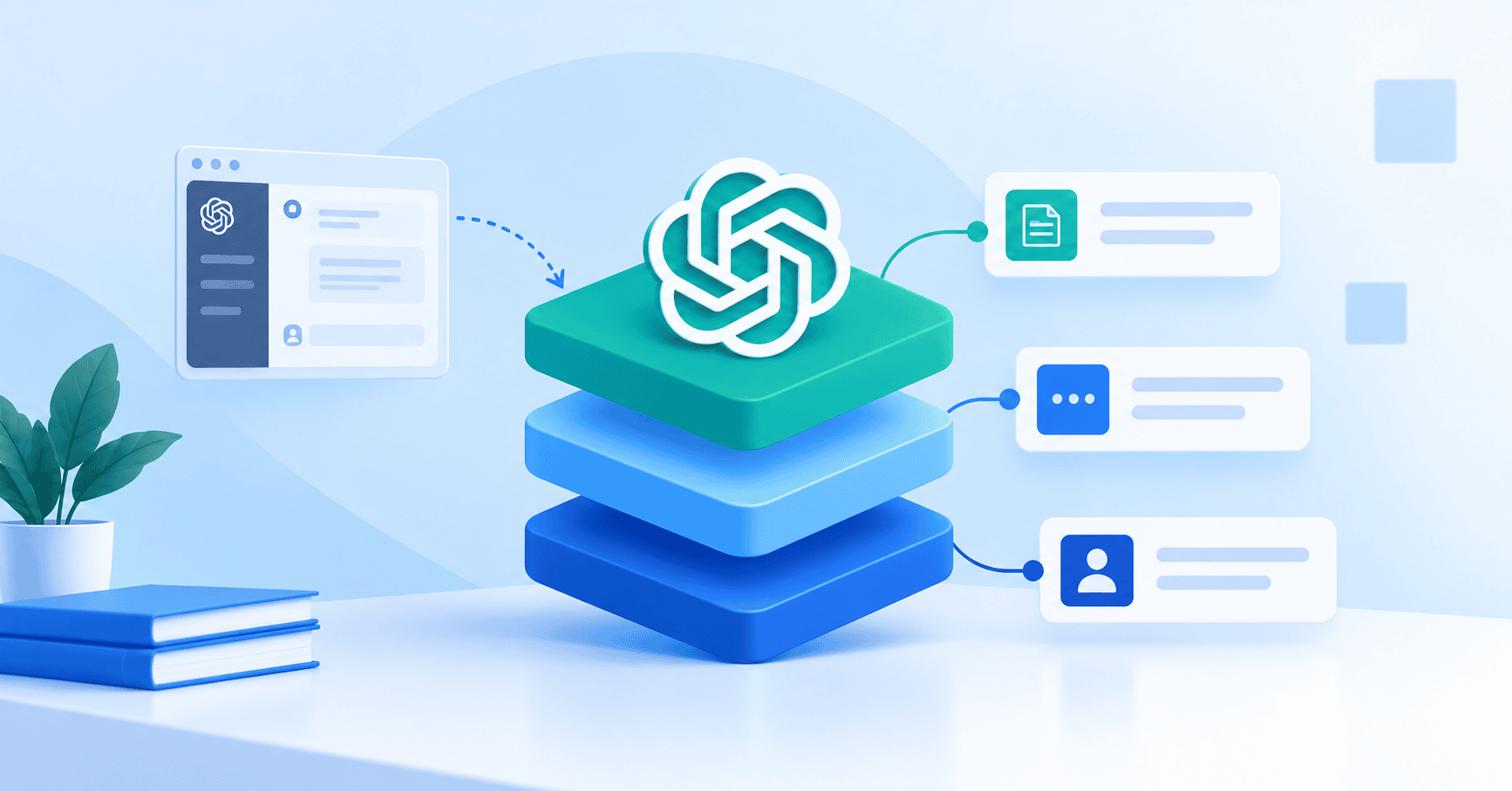
When memory is on, ChatGPT draws on stored context as it answers, so replies reflect what it already knows about you. You do not have to paste the same background into every prompt.
Understanding how ChatGPT memory works helps you control it with confidence. Memory operates through a few layers that each play a different role.
The layers behind memory
ChatGPT memory has grown from a simple list into a more layered system. Each layer captures a different type of context and feeds your future chats.
- Saved memories: discrete facts you ask ChatGPT to remember or that it saves on its own, such as your company name or your preferred tone.
- Chat history reference: the ability to draw on themes and details from your past conversations, beyond the explicit saved list.
- Synthesized profile: a broader picture ChatGPT builds from your interactions over time to personalize answers.
These layers work together so responses feel tailored to you. You can review and adjust much of this in your ChatGPT memory settings, which we walk through below.
How much does ChatGPT remember?
A common question is how much memory does ChatGPT have. OpenAI does not publish a fixed number of memories or a strict size cap, and the amount can vary by plan and over time.
What matters more is that memory is selective. ChatGPT tries to keep details that seem useful for future help and lets less relevant items fade. The stored context stays practical rather than complete.
Because capacity is not a fixed line, treat memory as a living record you manage. Reviewing it now and then keeps the most useful details in place and clears out what no longer applies.
From saved memories to Dreaming: how the feature evolved
OpenAI memory has changed a lot since it first arrived. Tracing that path helps you understand what your current version can do.
In April 2024, OpenAI introduced saved memories, where ChatGPT stored specific facts you shared or asked it to keep. In April 2025, OpenAI expanded memory to reference your past chats. The assistant began curating context in the background rather than relying only on an explicit list.
In June 2026, OpenAI began rolling out a “Dreaming” update that lets memory synthesize and refresh itself between sessions. According to OpenAI’s Dreaming update, the feature started reaching ChatGPT Plus and Pro users in the US on June 4, 2026. Expansion to Free and Go users and more countries is described as happening over the coming weeks.
Here is why that matters. Say you told ChatGPT you were “going to Singapore in July.” With self-updating memory, it can later revise that detail to “went to Singapore in July 2026” so the context stays current.
This rollout is still in progress, so your access depends on your plan, region and timing. OpenAI reports internal improvements in memory recall and freshness from this work, though it describes those results as self-reported and not independently verified. Treat them as the company’s own claims rather than confirmed benchmarks.
How to view, edit and delete your ChatGPT memories?

You stay in control of what ChatGPT stores, and reviewing it takes only a few minutes. Managing your ChatGPT saved memories keeps answers accurate and protects details you would rather not keep around.
Follow these steps to review and clean up your memory:
- Open your settings: go to Settings, then Personalization, then Memory to see your memory controls.
- Manage the summary: open the memory summary to view many of the details ChatGPT has saved about you.
- Correct or remove an item: use the in-chat update box to add a fact, fix an outdated one or forget something.
- Delete everything: use the three-dot menu and choose “Delete and turn off memory” to clear stored memories and pause the feature.
Deleting a chat leaves any memories tied to it in place, so remove the memory itself if you want it gone. According to OpenAI’s Memory FAQ, the memory summary does not show everything ChatGPT remembers. Treat it as a helpful view rather than a full record.
How to turn ChatGPT memory on or off?
If you want to know how to enable memory in ChatGPT, it comes down to one control. In Settings under Personalization, the “Enable memory” toggle turns the feature on or off for your account.
Turning memory off pauses it. ChatGPT stops saving new details and stops applying stored ones, while your existing memories and chat history stay in place until you delete them yourself.
Sometimes you want a one-off chat that leaves no trace in memory. Temporary Chat is built for that, and we cover how it behaves next.
Temporary Chat stays out of your history and leaves your memory unchanged. OpenAI also states it does not use these chats to train its models. It keeps them for up to about 30 days for safety, then removes them.
What happens when you clear ChatGPT memory?
Clearing memory removes the stored facts ChatGPT kept about you along with the synthesized profile it built from your chats. After that, the assistant starts fresh and no longer personalizes answers from prior context.
Clearing memory leaves your chat history in place. Your past conversations remain in the sidebar unless you delete them separately, since memory and history are distinct records.
Clearing memory also leaves your data-training setting unchanged. Those are separate controls, so removing memories does not by itself opt you in or out of model training.
One caution is worth stressing. Deleting memories is irreversible from your side, so once you clear them you cannot restore them. That differs from toggling memory off, which pauses the feature while keeping your stored details intact.
ChatGPT memory and your privacy
Memory and model training are separate settings, and knowing the difference protects your business information. Memory decides what ChatGPT remembers about you, while the data-training setting decides whether OpenAI can use your content to improve its models. Our guide on ChatGPT security best practices covers the wider picture.
The defaults depend on your plan. On Free, Plus and Pro, OpenAI may use your content, including memories, to improve its models unless you opt out in Data Controls.
OpenAI renamed ChatGPT Team to ChatGPT Business on August 29, 2025. On Business and Enterprise, workspace data including memories is by default not used to train OpenAI’s models.
The table below sums up how memory and training defaults differ by plan so you can match the plan to how sensitive your work is.
ChatGPT memory and training defaults by plan
| Plan | Memory default | Used for model training? | Best for |
|---|---|---|---|
| Free / Plus / Pro | Memory available and typically on | May be used unless you opt out in Data Controls | Individuals and everyday personal use |
| Business | Memory available for the workspace | By default, workspace data is not used to train models | Teams that want shared productivity with stronger data defaults |
| Enterprise / Edu | Memory available for the organization | By default, organization data is not used to train models | Larger organizations and schools with stricter governance needs |
The takeaway is simple: If you handle client or regulated data, a Business or Enterprise plan gives you stronger training defaults than a personal plan. Either way, avoid pasting highly sensitive details you would not want stored. For a broader look at protecting company data in the assistant, read our guide on ChatGPT privacy for businesses.
ChatGPT memory vs. custom instructions
Custom instructions and memory both personalize ChatGPT, and they work well together. Knowing what each one does helps you set them up so answers match your needs.
Custom instructions are explicit standing guidance you write yourself, such as “I run a small accounting firm” or “always answer in plain English.” ChatGPT applies that guidance to your chats because you told it to directly.
Memory works differently. It picks up details from your conversations over time, such as projects you mention often or formats you prefer. It reuses them without you spelling each one out.
You can keep both on at the same time. Use custom instructions for rules you always want followed, and let memory handle the evolving context it gathers as you work. Together they reduce repeated setup and make replies more consistent.
Memory for teams, business and GPTs
Memory can help a whole team work faster, and the defaults are built with business data in mind. On Business and Enterprise plans, workspace data including memories is by default not used to train OpenAI’s models. That gives teams a stronger starting point for handling client information.
Administrators get extra control at the organization level. An admin can turn memory off across the workspace, and doing so deletes members’ stored memories, which helps enforce a consistent policy. For a fuller look at safe team use, see our guide on using ChatGPT securely for business.
For everyday work, memory can retain preferences that save real time:
- Tone and voice: your preferred writing style for emails, proposals or customer replies.
- Formatting: how you like documents, summaries or reports structured.
- Coding preferences: the languages, frameworks or conventions your team uses.
Custom GPTs are a special case. OpenAI’s current documentation is ambiguous about how custom GPTs handle memory, so we will not make a definitive claim here. Check OpenAI’s current documentation before you rely on memory inside a custom GPT for confidential work.
How ChatGPT memory compares to Claude and Gemini?
ChatGPT, Claude and Gemini each handle memory differently, and those differences matter when you decide where to keep sensitive context. If you use more than one tool, our guide to compare Claude, ChatGPT and Gemini lines them up side by side.
The table below shows the key differences so you can see how each assistant approaches memory.
How memory works across ChatGPT, Claude and Gemini
| Assistant | How it stores memory | Scope | On by default? | How to control |
|---|---|---|---|---|
| ChatGPT | Saved memories plus a synthesized profile from your chats | Your account, applied across chats | Typically on for personal plans | Settings > Personalization > Memory; delete or turn off |
| Claude | Saved topic-by-topic as you chat, with per-Project spaces | Separate memory space for each Project | On for Free, Pro and Max; off for Team and Enterprise | Pause memory or permanently Reset it |
| Gemini | Personal context tied to your Google Account activity | Personal Google Account only | Requires “Keep Activity” on | Delete source chats in Gemini Apps Activity |
According to Claude’s memory documentation, Claude memory is on by default for Free, Pro and Max, and off by default for Team and Enterprise. It saves context topic-by-topic as you chat and gives each Project its own memory space.
Claude also keeps sensitive topics such as health, religion, race, politics and gender identity off by default. You can Pause its memory or permanently Reset it. For coding and writing tradeoffs, see our guide on ChatGPT and Claude compared.
Gemini works within Google’s account rules. Per the Gemini memory support page, Gemini memory is available only on a personal Google Account, not on work, school, Workspace or supervised accounts.
It also requires “Keep Activity” to be on. To delete stored context, remove the source chats in your Gemini Apps Activity, since asking Gemini to “forget” is not enough.
The takeaway is that each assistant treats memory on its own terms. Match the tool to the sensitivity and setting of your work rather than assuming they all behave alike. For a closer look at two of them, see our related guide, Gemini and ChatGPT compared.
Getting the most from ChatGPT memory
Memory pays off when you treat it as a tool you actively manage rather than set and forget. The benefits are real: less repetition, more consistent answers and faster help on recurring tasks because ChatGPT already knows your context. For a repeat task like a weekly sales update, it can recall your format and tone without a fresh setup.
The risks are worth watching too. Stored details can go stale or be auto-revised in ways you did not expect. Sensitive information can also linger in memory longer than you intend if you never review it.
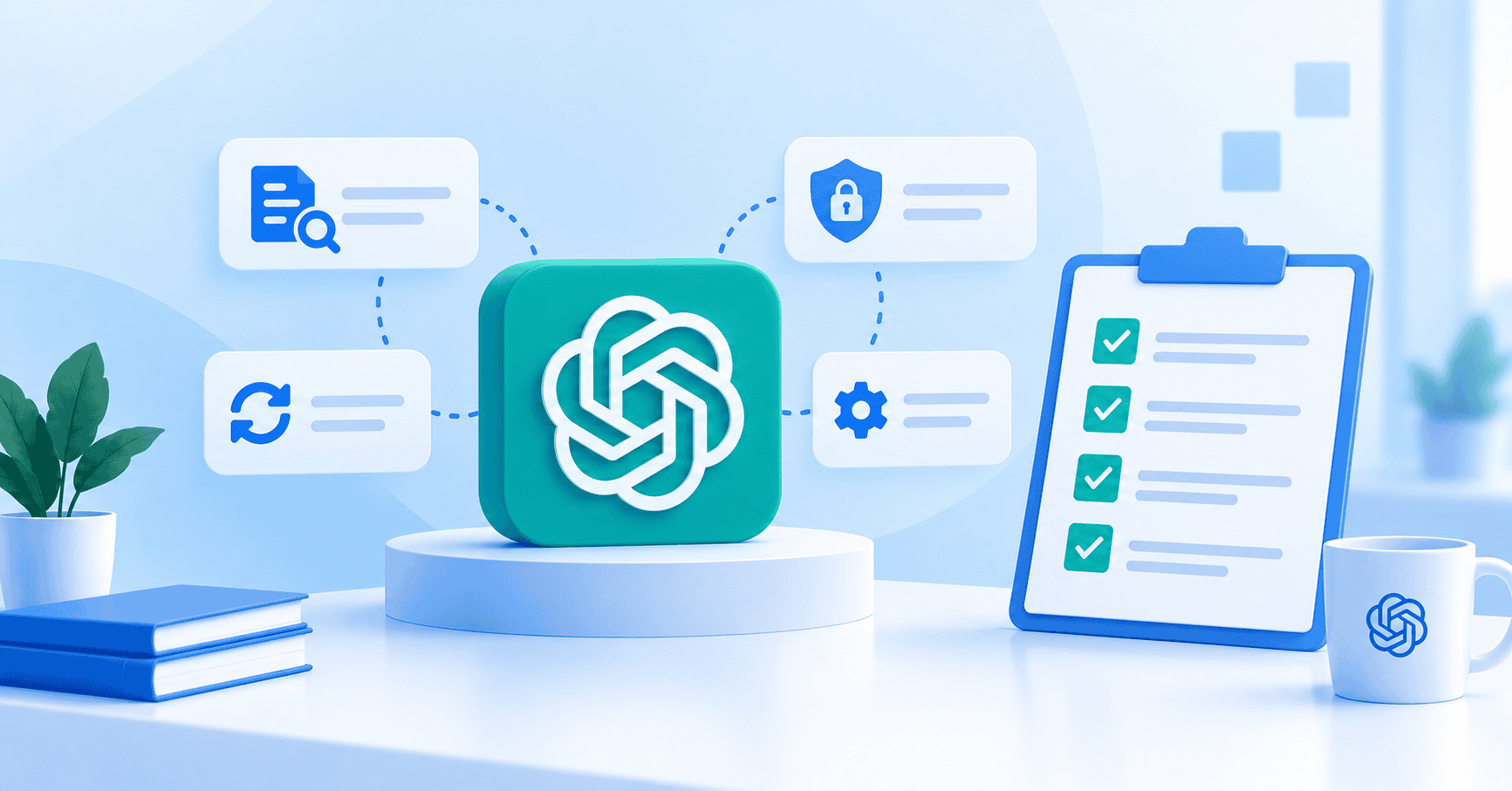
A quick memory audit keeps things accurate and safe. Run through this checklist every few weeks:
- Review the summary: open your memory summary and skim what ChatGPT has saved about you and your work.
- Fix stale facts: correct outdated projects, roles or details, especially any that self-updating memory may have revised.
- Remove sensitive items: delete client data, financials or personal details you would rather not keep stored.
- Confirm your settings: check that memory and your data-training setting each match the sensitivity of your work.
If you work across several assistants, carrying context between them saves setup time. Our AI All-Access Pack added Chat Memory for all users on August 21, 2026. Import Memory followed on August 24, 2026.
Import Memory lets you copy a prompt from the dashboard, run it in your other assistant, then paste the response back so your context transfers. You can read more about importing memory between AI tools in a multi-model setup.
Final thoughts
You now know what the ChatGPT memory feature does, how to control it and why the privacy defaults matter. Understand what memory stores, review and edit it, and keep an eye on the training defaults for your plan. Your next step is quick: Open Settings, go to Personalization and review your memory today.
If you use more than one assistant, our AI All-Access Pack puts paid ChatGPT, Claude, Gemini and Grok in one dashboard. You can switch models and carry context between them with Chat Memory and Import Memory, while Privacy+ adds controls that reduce exposure risk without promising complete protection. Compare models and manage memory in one place with our AI All-Access Pack.
FAQs
No. Deleting a conversation removes it from your chat history, but any memories ChatGPT saved from it stay in place. To remove that stored context, open Settings, go to Personalization and Memory, then delete the specific memory or clear them all.
It can, if you share such details and memory is on, which is why a regular review matters. ChatGPT may save specifics you mention, so remove anything you would rather not keep and avoid pasting confidential client or health data on personal plans. For sensitive work, use stronger training defaults or a Temporary Chat that does not update memory.
Yes. Memory is available on the free plan, and it is typically on so ChatGPT can carry context across your chats. On Free, Plus and Pro, OpenAI may use your content, including memories, to improve its models unless you opt out in Data Controls.
Yes. Memory is tied to your account rather than a single device, so stored context follows you when you sign in on your phone, tablet or computer. If you turn memory off, that change applies to your whole account, not just the device you are using.
No, they are different. Chat history is the record of your past conversations, while memory is the persistent context ChatGPT applies across new chats. You can delete a chat and still keep its memories, or clear memory while your history remains.

Write A Comment