



Key highlights
- Premium domain names boost your brand’s credibility and visibility, but they’re hard to get.
- Domain name brokers are experts who find and negotiate for high-value domains you can’t easily buy.
- Brokers save you money and hassle with their negotiation skills and industry connections.
- The acquisition process involves finding the domain, negotiating and securing it safely with escrow.
- You can avoid mistakes like overpaying or skipping legal checks by using a broker’s know-how.
Ever wondered why some domain names sell for millions of dollars? In the competitive world of online business, your domain name isn’t just a web address. It’s your brand’s first impression, your digital storefront and a powerful marketing tool all in one. With the right domain, you can instantly boost credibility, visibility and memorability.
But landing that perfect, high-value domain isn’t always easy. That’s where domain name brokers come in. These behind-the-scene experts specialize in securing premium domains, navigating negotiations and removing the guesswork from the process.
In this blog, we’ll take you inside the world of domain name brokers—what they do, why they matter and how they can help you claim a domain that sets your brand apart.
Who is a domain name broker?
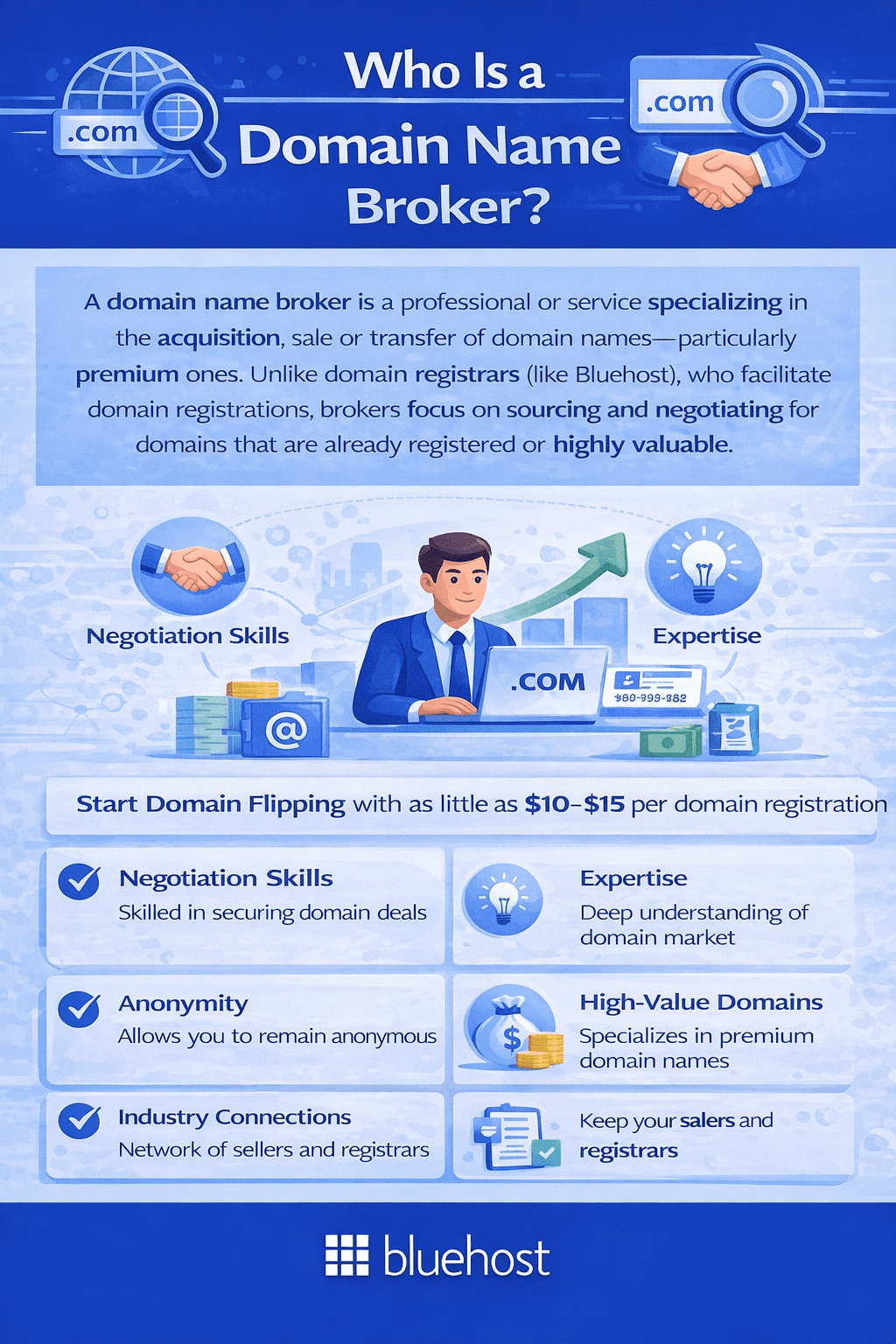
A domain name broker is a professional or service specializing in the acquisition, sale or transfer of domain names, particularly premium ones. Unlike domain registrars (like Bluehost), who facilitate domain registrations, brokers focus on sourcing and negotiating for domains that are already registered or highly valuable.
Also read: How to Transfer Domain Ownership
Difference between domain registrars and domain brokers
Domain registrars let you buy domain names that are available or listed in their marketplace. Brokers, however, step in when you need to buy a domain name that’s taken, working directly with owners to secure it.
Think of registrars as retailers and brokers as dealmakers who act as facilitators of preowned and premium domain name services. Below is a comparison table to help you understand the difference.
| Feature/Service | Domain name brokers | Domain registrars |
| Primary role | Acquisition of premium or already-owned domains | Acquisition of available domain names |
| Negotiation support | Expert negotiation with domain owners | No negotiation |
| Confidentiality | Enable stealth acquisitions | No anonymity |
| Escrow services | Often include escrow services | May offer escrow for marketplace purchases |
| Best for | Entrepreneurs or investors seeking premium or taken domains | Businesses or individuals registering new domains |
This table clarifies the distinct roles of brokers and registrars and will help you decide when to use a broker or a registrar.
A quick guide to domain brokers
Domain brokers are intermediaries who help you acquire domains that are already registered and owned by someone else. They locate owners, negotiate on your behalf and manage secure transactions through escrow, handling acquisitions you can’t complete through standard [domain registration services].
While domain registrars sell available domains, brokers focus on taken ones. Small businesses securing brand-perfect URLs, startups needing short memorable names and investors building portfolios typically hire brokers to avoid direct negotiation challenges and reduce risks like overpaying or encountering fraudulent sellers.
The typical process takes 2 to 6 weeks from initial contact to completed transfer and includes five steps: identifying the target domain and its owner, conducting confidential outreach to prevent price inflation, negotiating terms backed by market data, securing payment through escrow that protects both parties and coordinating the final transfer with your registrar. Complications such as unresponsive owners or trademark concerns can add weeks to the timeline. Brokers reduce your risk by verifying legitimate ownership, checking for trademark conflicts and ensuring you pay fair value supported by actual sales data.
Also read: Domain Flipping for Agencies 2026: Profit Strategies
When do you need domain brokers?
Below are some of the scenarios for which you might consider getting a premium domain acquisition with the help of a domain name broker:
- Premium domains: You want short and high-value domains, especially ones with a .com extension.
- Stealth acquisitions: You need confidentiality to avoid price hikes.
- Negotiations: The domain owner’s asking price is negotiable and you want the best deal.
- Domain investing: If you want to premium domain assets at a cheap price so that you can flip domain names for profit later.
How do domain name brokers help you acquire premium domains?
Domain name brokers are experts at making premium domain acquisitions easy and straightforward. Here’s how they help you get that perfect web address:
1. Finding exclusive domains
Brokers use their industry connections to track down high-value domains, like short, memorable or keyword-rich names, hthat aren’t always available on public marketplaces. They tailor their search to match your brand or investment goals, saving you hours of digging. This means you get access to unique URLs that can set your business apart.
2. Negotiating the best price
Brokers are pros at haggling with domain owners to secure a fair deal. They analyze market trends, traffic data and past sales to calculate domain price accurately, ensuring you don’t overpay. Their skills often turn inflated prices into budget-friendly deals.
Did you know?
Voice.com domain was sold for $30 million in 2019, setting a record for the highest cash-only domain sale
3 Ensuring secure transactions .
Brokers protect your money during the purchase process. They verify the transaction’s safety, so that funds are only released once the domain is ready to transfer. This eliminates the risk of scams and gives you peace of mind.
4. Maintaining confidentiality
If you want to buy a domain name that’s taken without revealing your identity, brokers keep things discreet. They handle negotiations anonymously, preventing sellers from raising prices based on your business’s size or plans. This is ideal for stealth acquisitions or big rebranding moves.
5 Handling legal details .
Brokers check for potential issues like trademark conflicts that could cause legal trouble later. They ensure your domain is free of disputes, protecting your investment from costly surprises. This due diligence keeps your purchase safe and legitimate.
How does the domain acquisition process work?
Here’s a step-by-step breakdown of how premium domain name brokers secure your dream domain:
Step 1: Identifying the right premium domain
Brokers start by understanding your goals—branding, SEO or investment. They’ll suggest domains that align with your vision, often ones you wouldn’t find on your own.
Step 2: Finding the owner and assessing domain value
Using exclusive domain sales tools and industry contacts, brokers track down owners and evaluate the domain’s worth based on traffic, keyword strength and market trends.
Step 3: Negotiating the purchase
They negotiate on your behalf, leveraging data to secure the best price without tipping off the seller to your urgency.
Step 4: Secure payment via escrow services
Payment is processed through a trusted escrow service, protecting both parties. Funds are released only when the domain is ready to transfer.
Step 5: Transferring the domain and finalizing ownership
The broker coordinates with the registrar (like Bluehost) to complete the domain transfer services, ensuring you’re the legal owner.
ICA’s best practices for domain name brokers
When hiring a domain broker, you want someone who follows industry standards that protect your interests and investment. The Internet Commerce Association (ICA)—a trade organization for domain professionals—has established best practices that reputable brokers should follow to ensure ethical, transparent transactions and minimize risks for buyers and sellers.
Here are the core principles you should expect from a professional broker. Look for brokers who provide a written agreement spelling out all fees, duties and obligations upfront, with no hidden costs or conflicts of interest. Your broker should maintain strict confidentiality, never disclosing your identity or strategies without permission. They should only act with your clear written authorization and keep you updated with documented progress reports throughout negotiations.
Professional brokers use secure escrow services for payments, verify domain ownership before finalizing deals and conduct ethical outreach that respects trademark rights. They should stay current on industry trends and serve your best interests regardless of how they’re compensated. Use this checklist when interviewing potential brokers—asking them to confirm in writing that they follow these practices helps you avoid costly mistakes and ensures your domain acquisition goes smoothly.
Best domain name brokers & marketplaces
Top domain brokers
- Sedo:Sedo is a global leader with a vast marketplace and expert brokers.
- DomainAgents: The DomainAgents platform is known for personalized service and stealth acquisitions.
- VPN.com:VPN.com specializes in premium and high-value domains.
- Grit Brokerage: GritBrokerage offers tailored solutions for businesses and investors.
Domain name marketplaces
- Bluehost: For publicly available domain names, you can buy a domain with Bluehost.
- Flippa: Flippa is the ideal place for buying or selling established sites with domains.
- Namecheap Marketplace: Namecheap provides affordable options for budget-conscious buyers.
Did you know?
The domain aftermarket, where brokers operate, is projected to reach $1.7 billion by 2033, according to market reports.
Common mistakes to avoid when acquiring a domain
Acquiring a premium domain can be a game-changer for your business or investment portfolio, but pitfalls abound for the unprepared. By steering clear of these common errors, you can save time and money, especially when dealing with the expensive domain names worth millions of dollars.
1. Overpaying due to lack of research
Without knowing how to calculate domain price, you might overspend on a domain that isn’t worth its asking price. Many buyers fail to research comparable sales or market trends, leading to inflated costs for domains that don’t align with their value. A premium domain broker service mitigates this by benchmarking against industry data, ensuring you pay a fair price based on traffic, keyword relevance and historical sales.
2. Failing to use escrow services
Skipping escrow payment opens the door to scams, leaving you vulnerable to losing money or never receiving the domain. Without a secure payment method, sellers might disappear after receiving funds, especially in private transactions for premium domains. Always use escrow services—often coordinated by brokers—to protect both parties and guarantee a safe exchange of ownership.
3. Not considering trademark conflicts
Buying a domain tied to an existing trademark can lead to legal battles, forcing you to forfeit the domain or face costly lawsuits. Many buyers overlook this risk, assuming availability or ownership equates to legal rights, only to discover conflicts later. Domain brokerage services check for trademark issues upfront, saving you from potential disputes and ensuring your investment is legally sound.
4. Rushing into deals without consulting a broker
Impatience can cost you, as hasty decisions often lead to overpaying or missing critical details like domain history or ownership disputes. Without expert guidance, you might jump into a deal that seems appealing but lacks long-term value for your brand or investment goals. A broker’s expertise ensures you make informed decisions, taking the time to evaluate all factors before finalizing the purchase.
Benefits of using a domain name broker
There are several benefits to hiring a domain name broker, if you’re trying to register a premium domain that’s already under ownership.
1. Access to exclusive premium domains
Brokers have networks that give them access to domains not listed on public marketplaces. They can source hidden gems tailored to your brand.
2. Expert negotiation skills
Overpaying is a common pitfall in domain investing. Brokers use their expertise to calculate domain price accurately and negotiate favorable terms, ensuring you don’t break the bank.
3. Confidentiality and anonymity
Want to buy a domain without revealing your identity? Brokers handle stealth acquisitions, keeping your business plans under wraps until the deal is done.
4. Legal and escrow services
From avoiding scams to ensuring a smooth domain transfer, brokers often provide escrow services to facilitate domain transactions through secure means.
How to choose the right domain broker
Choosing the right domain broker requires evaluating their track record, transparency and expertise. Look for brokers with proven success in your domain niche or TLD, clear fee structures, regular communication and strong escrow practices. Check references, verify their legal and trademark awareness and ensure they offer confidentiality when needed.
When vetting potential brokers, assess their specialization—some excel in .com premium acquisitions while others focus on niche TLDs or industry-specific domains. Process transparency is crucial: reputable brokers explain their valuation approach, share comparable sales data and outline their negotiation strategy upfront. Verify they use secure third-party escrow and understand trademark law. Ask how often they’ll update you during negotiations and whether they can represent you anonymously for stealth acquisitions.
Request references or case studies from similar deals before committing. Key questions include: What’s your commission structure? Are there minimum fees? How do you handle escrow? Can you demonstrate trademark clearance processes? Watch for red flags like pressure tactics rushing you into decisions, vague fee explanations without written agreements or suggestions to bypass escrow to “save costs.” A professional broker always provides transparent terms and documented processes.
Everything you need to know about working with a domain broker
Working effectively with a domain broker starts with proper preparation and clear communication. Before engaging a broker, you’ll need to discuss your desired domain name, budget, timeline and any specific branding requirements, along with alternate domain options and acceptable TLDs if your first choice isn’t available. Setting a firm budget ceiling upfront prevents surprises later and helps your broker negotiate within realistic parameters. You should also establish clear negotiation boundaries, what concessions you’re willing to make and your walk-away point, so your broker can represent your interests accurately.
Throughout the acquisition process, expect regular communication about offers and counteroffers. Your broker will handle outreach to the domain owner, present your offer anonymously and relay counterproposals back to you for approval. The broker makes discreet contact with the domain’s current owner, takes charge of all communication and disputes on your behalf and uses negotiation expertise to secure the most favorable price and terms. Once both parties agree, your broker coordinates the escrow process—you’ll deposit funds into a secure escrow account where they’re held until the domain successfully transfers to your control. The buyer deposits the agreed-upon funds into a secure escrow account where they are held safely and only released to the seller once all conditions of the sale have been fully met. Your broker should provide you with written documentation of the agreement terms, transfer confirmation and final ownership verification before the transaction closes.
Bluehost: Your go-to option for public domains
You don’t always need a domain name broker to register the perfect domain. Unless you’re specifically looking for a pre-owned domain, buying a new domain through a registrar can save you precious time and money.
Bluehost is among the most well-known domain registrars offering publicly available domains at a competitive price. You can use our website name generator to brainstorm ideas, making it easy to find the ideal domain name for your website. Once your mind is made up, you can purchase the domain in minutes and you’ll be on your way to building your dream website.
Final thoughts
Domain name brokers are like your go-to experts when you’re after a top-notch, pre-owned domain without paying a fortune. They’ll talk down the price with sellers and make sure the whole transfer process is safe and smooth.
But if you’d rather not wait or negotiate, you can skip straight to a brand-new domain with Bluehost’s domain registration service. It’s fast, affordable and gives you a huge list of options to choose from, so you can get your perfect web address up and running in no time.
Visit Bluehost to get started today!
FAQs
A domain name broker is a professional who specializes in buying, selling or negotiating premium domain names on behalf of clients, often dealing with domains that are already owned. Unlike domain registrars, that provide the platform to register publicly available domains, brokers focus on sourcing and securing high-value or pre-owned domains through negotiation and industry connections.
Domain brokerage typically range from 10% to 20% of the domain’s final sale price, though some may charge a flat rate depending on the complexity of the acquisition. For example, securing one of the most expensive domain names might involve higher fees due to the negotiation and legal work required.
Yes, it’s possible to buy a domain name that’s taken by contacting the owner directly, but it’s risky and time-consuming. Without knowing how to calculate domain price or negotiate effectively, you might overpay or encounter scams. The best domain brokers simplify the process with deep expertise in buying and selling premium domains
The timeline varies depending on the domain and owner responsiveness. On average, the process—from identifying the domain to completing the transfer—takes 2 to 6 weeks. Brokers expedite this by handling negotiations, payments and domain transfer services efficiently.

Write A Comment