


Key highlights
- Domain rentals vary widely – from low monthly leases to premium deals costing hundreds+ per month, depending on the domain.
- Opt for domain leasing as a cost-effective solution when working with a tight budget.
- Experiment with multiple brand names to test market response before a major investment.
- Know what every domain lease agreement must include before you sign anything.
- Domain rental can provide access to premium names that might be otherwise unavailable.
Whether you are launching a startup or scaling an existing business, your domain name is your first impression online. Committing to a premium domain purchase before validating your idea can feel like a big risk. That is where renting a domain for business comes in.
Renting a domain for business lets you use a premium domain name without buying it upfront – but you’ll need a clear lease agreement, renewal protections and DNS control to avoid losing your brand and SEO
In 2026, premium .com domains continue to command high prices, especially for short, brandable and keyword-rich names. More businesses are turning to domain rentals and lease-to-own models as a smarter alternative. This guide covers how it works, what it costs and what every business owner needs to know before signing a lease.
Let’s dive in!
TL;DR: What drives rent a domain for business pricing?
- Domain quality: Short, memorable, brandable names cost more.
- TLD: .com usually leases higher than niche extensions.
- SEO value: Existing traffic + backlinks can raise the monthly rate.
- Fit to your industry: Clear category relevance increases demand.
- Deal terms: DNS control, transfer protection, or lease-to-own options typically increase price.
Renting vs. Leasing vs. Lease-to-own: What is the difference?
These three terms are often used interchangeably. But they are not the same thing. Understanding the difference helps you choose the right model for your business.
Domain renting
Domain renting is a short-term arrangement. You pay a monthly fee to use a domain you do not own. The owner keeps full control and can end the agreement. This model works well for campaigns, events or short-term projects.
Domain leasing
Domain leasing is a longer-term agreement. It typically runs from six months to a few years. It usually comes with more structured terms, like renewal options and DNS access. This model suits businesses building a stable online presence on a budget.
Lease-to-own (LTO)
Lease-to-own means your payments go toward buying the domain outright. It is one of the fastest-growing models in 2026. This is ideal if you want a premium domain but cannot pay the full price upfront.
| Model | Term length | Ownership transfer | Best for |
|---|---|---|---|
| Renting | Month-to-month | No | Short campaigns, testing |
| Leasing | 6 months to 3 years | No | Growing businesses, brand testing |
| Lease-to-Own | 1 to 5 years | Yes, after full payment | Startups wanting premium domains |
Why rent a domain instead of buying one?
When you think about establishing an online presence, owning your domain might seem like the only option. However, there are several reasons why renting a domain could be a better choice for certain situations.
Consider the case of a small startup testing its market viability. The founders need an online presence, but they’re unsure if their idea will last long enough to justify buying a premium domain. Renting a domain for a year or two offers them the opportunity to test the waters and build their brand. This also helps them later to decide whether to purchase the domain or look for a more permanent solution. This flexibility is a major advantage in today’s fast-paced online world.
For new projects, the idea of ownership can feel both appealing and overwhelming. Leasing a domain offers a balanced solution, particularly when you’re not yet ready to make a full commitment.
Here are a few compelling reasons:
1. Short-term projects
For initiatives like event promotions, limited time offers or seasonal campaigns, renting a domain provides a temporary yet impactful web address. This approach ensures your project has a memorable online identity without the permanence of ownership.
2. Budget constraints
Acquiring premium domains can be costly. Renting domain offers a budget-friendly alternative, allowing businesses to utilize high-value domains without substantial financial investment.
3. Testing market ideas without long-term commitment
Before fully committing to a new business idea, renting a domain lets you test the waters. Gauge audience interest and market viability without the pressure of a long-term domain purchase.
The flexibility of leasing a domain ensures that you’re not locked into a long-term contract, giving you the freedom to pivot if your business model changes.
Best places to rent a domain for your business
Finding the perfect domain to rent is a strategic process. Here are the key avenues to explore:
1. Domain marketplaces
Online marketplaces are bustling hubs where domain owners list their properties for rent. These platforms often feature search filters and rating systems, helping you quickly identify domains that match your brand vision.

Sites like Flippa and Sedo are strong options in 2026. They are particularly useful for businesses exploring lease-to-own deals on premium domains.
2. Domain registrars
Picking the right domain registrar should be done carefully since some registrars offer rental programs alongside traditional domain sales. These services usually include additional support features like domain management tools, making the process straightforward and secure.

3. Direct negotiation
Sometimes the best deals come directly from the source. Reaching out to a domain owner for a one-on-one discussion can reveal flexible lease terms and might even lead to a long-term partnership. This could also help you secure a domain name that has expired or dropped, allowing you to access a premium name.
Each option presents unique benefits, so consider your project’s needs and budget when deciding where to search for your ideal rental domain.
When negotiating directly with an owner, always use a third-party escrow service like Escrow.com. It protects your payment until both parties fulfill the agreed terms.
4. Lease-to-own platforms
If your goal is to eventually own the domain, these platforms are built for that:
- Afternic (GoDaddy): One of the largest domain marketplaces. It offers LTO options with flexible payment plans and wide seller reach.
- Spaceship SellerHub: A newer platform with transparent commission structures for both buyers and sellers on LTO deals.
- Escrow.com: Not a marketplace, but a secure payment platform. Always recommended for direct LTO transactions between private parties.
How to rent a domain in 5 easy steps?
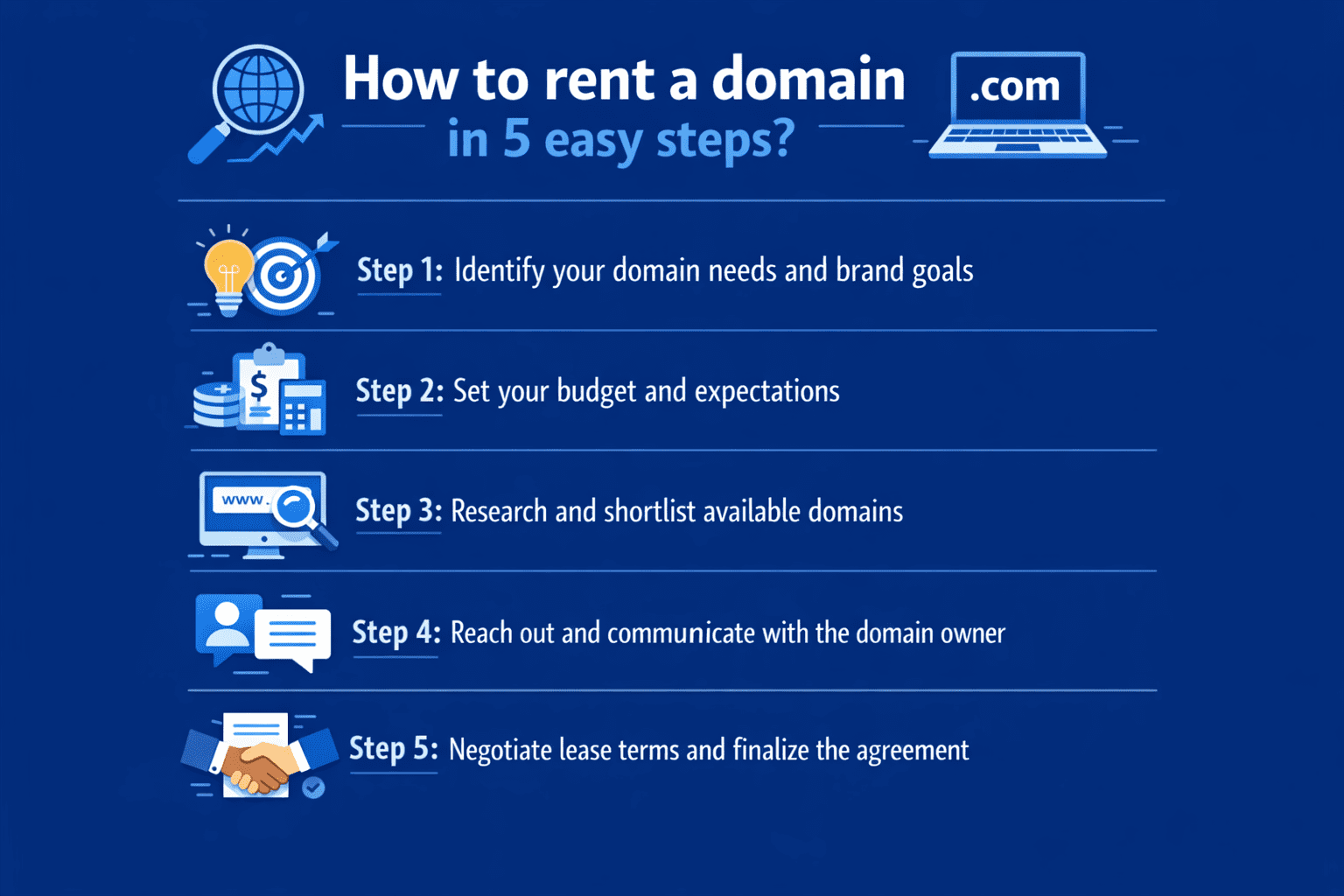
Renting a domain is relatively simple, but it’s essential to follow the right steps to ensure a smooth experience. Here’s how to go about it:
Step 1: Identify your domain needs and brand goals
Start by understanding what your project requires. Consider your target audience, desired brand image and future growth plans. This clarity will help you choose a domain that aligns perfectly with your vision.
Also decide upfront whether you want a standard rental, a lease or a lease-to-own arrangement. Knowing this before you search saves time and shapes which platforms you should use.
Step 2: Set your budget and expectations
The base rental cost is just one part of what you will pay. Factor these in before committing:
- Legal review: If signing a custom lease agreement, factor in the cost of having a lawyer review it before you sign.
- Platform commission: Afternic charges 15% to 30% depending on nameserver settings and plan type. Longer LTO terms come with commission discounts of up to 15% for sellers, which can influence pricing.
- LTO price range on Afternic: Only domains priced between $495 and $100,000 are eligible.
- Broker fees: If negotiating privately, a domain broker typically charges a percentage of the total deal. Always confirm the fee structure upfront.
Step 3: Research and shortlist available domains
Using marketplaces and registrar tools, compile a list of potential domains. To check if a domain name is available, pay attention to factors like domain relevance, traffic history and the terms offered by current owners.
For LTO deals, also check the domain’s traffic history using tools like Ahrefs or SEMrush. A domain with existing authority can give your business an SEO head start from day one.
Step 4: Reach out and communicate with the domain owner
Initiate a conversation with the owner to discuss rental terms, duration and any extra services. This direct communication often reveals the owner’s flexibility and willingness to negotiate.
Step 5: Negotiate lease terms and finalize the agreement
Once you are happy with a domain, get everything in writing. A solid lease agreement should cover the following:
- Lease duration and renewal terms: Know exactly how long the lease lasts and how to renew it.
- DNS and hosting control: Confirm you have access to manage DNS settings during the lease.
- Purchase option or LTO clause: If you want to buy the domain later, get that option locked in writing now.
- Mid-lease sale protection: What happens if the owner wants to sell the domain while you are leasing it?
- Dispute resolution: Agree on how disagreements will be handled before they happen.
- Escrow arrangement: For large deals, use an escrow service to protect your payments.
Best use cases for domain rentals
Renting a domain offers more than just financial flexibility – it’s an opportunity to adapt, test and grow your online presence without a long-term commitment. Whether you’re launching a new venture or experimenting with a seasonal campaign, renting a domain can provide the perfect solution.
Here are some of the top use cases where renting a domain makes perfect sense:
1. Startups
If you are starting a new business, every penny counts and renting a domain is a great way to minimize upfront costs. Your startup can rent a premium domain name for a specific period to see how it performs in the market. If the brand takes off, you can always transition to owning it.
Example: A tech startup might rent the domain [InnovativeTech].com for a year while they develop their product. After seeing the market response, they can choose to purchase the domain and make it permanent or rent it for another year.
Tip: Choose a domain with a short-term commitment while your business is in its early stages to assess the response before locking down a permanent investment.
Also read: How To Write a Business Plan for Your eCommerce Startup
2. Seasonal campaigns and events
If your brand is planning a seasonal promotion, a product launch or a special event, renting a domain can help you create a dedicated, memorable online presence for the duration of your campaign. Once the event ends, you can simply let the domain go or pass it on to another project.
Example: A fashion retailer could rent the domain [SummerSale2026].com for a couple of months leading up to a huge seasonal sale. It gives them a branded web presence without the hassle of maintaining it for a long-term.
Tip: Always ensure your rental period covers the full duration of your event. Set reminders for domain renewal if the event or campaign is extended unexpectedly.
Also read: Seasonal Affiliate Marketing: Valentine’s Day Campaign Ideas
3. Personal projects or blogging
Sometimes, you just want to start a personal project or blog with a name that reflects your unique interests. Leasing a domain can give you the chance to try it out before committing to a long-term project. If you end up loving it, you can always buy it later.
Example: A photographer may want a domain like [BestNatureShots].com for a photography blog or portfolio. Renting this domain for a year helps them build their portfolio without worrying about permanent ownership.
Tip: Renting is perfect for testing the waters. If you find you’re not passionate about the niche after a year, you haven’t invested too much.
Also read: Best Blogging Platforms in 2026: Compare WordPress, Wix, Bluehost & More
4. Real estate or property websites
If you are a real estate agent or a property manager, you may need a rent domain name temporarily for showcasing a specific listing, development or property. Renting a domain can give you a professional edge while keeping costs low. It can be an effective way to attract attention to your offerings.
Example: A real estate agency could rent the domain [LuxuryHomesNYC].com to showcase high-end properties in New York City for a few months. When the properties are sold, they can release the domain or rent it for a different listing.
Tip: Leasing domains related to a specific geographical location can help you target local search traffic, improving visibility for your real estate listings.
Also read: How To Build a Real Estate Website With WordPress
5. Business name placeholders
If you’re in the process of launching a business but haven’t fully set up your website, renting a domain allows you to secure your brand’s identity before someone else does. Additionally, ensure you have the necessary DNS information set up. You can use the domain as a placeholder and direct traffic to a “coming soon” page or a landing page with contact details.
Example: A new fitness company might rent the domain [FitLifeStudio].com while they work on building the business. They can put up a simple landing page with a sign-up form for early access or newsletter updates.
Tip: Don’t let your dream domain slip away! Renting ensures you lock in the perfect name even if you’re still in the early planning stages.
Also read: eCommerce Website Development: How to Build & Launch in 2026
6. SaaS and tech product launches
SaaS companies and tech startups often need a credible domain fast. Waiting to find the perfect domain at the right price is not always an option. Renting a strong domain during your MVP or beta phase gives you instant credibility. Once you confirm product-market fit, you can transition to owning the domain.
Example: A B2B SaaS startup might rent [ProjectManagePro].com while building their product. If the launch goes well, they negotiate a purchase or LTO agreement with the owner.
Tip: Look for domains with existing traffic or authority. A rented domain with a history can give your SEO a head start compared to a brand-new domain.
7. Temporary brand ventures
Renting a domain can also help businesses experiment with new brand ventures or side projects without fully committing. If you want to test a new product or service in a niche market, renting the domain can be an affordable first step.
Example: A major coffee chain might rent the domain [ColdBrewDelight].com to promote a limited-time cold brew product. If the campaign is successful, they can convert it into a permanent domain or let it expire.
Tip: Renting domains for temporary ventures can help businesses diversify without worrying about the long-term implications.
Also read: How to Make Extra Income While Working Full Time in 2026: 15 Proven Strategies
Each of these applications highlights the value of a flexible online identity that can evolve with your business needs.
Risks of renting a domain for your business
“Renting a domain has clear advantages. But it also comes with real risks that every business owner should understand before signing anything.”
1. You do not own the asset
“The domain belongs to the owner, not you. If they decide to sell it, raise the price or let it expire, your business loses the domain. All the brand recognition you have built disappears with it.”
2. Your SEO does not come with you
“Every backlink, every ranking and every bit of domain authority you build is tied to the domain. Not to you. If you lose the domain, you lose all of that SEO progress. You would be starting from zero on a new domain.”
3. Renewal and pricing risk
“There is no guarantee the owner will renew at the same price. Without a locked-in renewal clause in your agreement, they can raise the rate significantly. Always negotiate renewal terms before you sign.”
4. Limited legal protections
“Domain lease agreements are not regulated the way property leases are. There is no universal standard. Get a lawyer to review any lease agreement before you commit. This is especially important for long-term or high-value deals.”
“These risks are manageable with the right agreement in place. Revisit Step 5 to make sure your lease covers all the essential protections.
Is renting a domain right for you?
Deciding between renting and buying a domain hinge on your current business needs and future aspirations. Leasing a domain is a practical solution for short-term projects, limited budgets or when you’re experimenting with multiple market ideas. Renting is ideal if:
- You’re testing a new idea or market.
- Your project is temporary or seasonal.
- You need to minimize upfront costs.
- You prefer the flexibility to switch domains quickly.
When to consider buying a domain?
On the flip side, if your project is built for the long haul, buying a domain might be the right move if:
- You’re establishing a long-term brand presence.
- You require full control over your online identity.
- You want to avoid recurring rental fees.
- Your business is ready for a committed online presence.
- You are investing in SEO and content marketing. All domain authority and rankings belong to the domain. Owning it means that equity is yours.

When you are ready to build a lasting brand, owning a custom domain makes sense. At Bluehost, we offer a wide range of domain extensions, from the classic “.com” to trendy alternatives like “.shop” or “.org” you can easily find the perfect match for your brand’s vision. Our AI-powered domain name generator helps you brainstorm names that fit your brand in seconds.
We have:
- Easy domain management: Keep track of all your domains from one central dashboard.
- Domain forwarding: Point your domain to any existing website quickly and easily.
- Auto-renewal: We send reminders before your domain expires so you never lose it accidentally.
- Domain lock: Prevents unauthorized transfers and keeps your domain secure.
- 24/7 expert support: Our team is available by phone or chat anytime you need help.
You can also add Domain Privacy + Protection to replace your personal WHOIS details with generic information, reducing spam and protecting your identity online. It is available as an optional add-on during checkout.
Benefits of renting a domain vs. buying: A quick comparison
| Feature | Renting a domain | Buying a domain (with Bluehost) |
| Upfront cost | Lower, flexible payments | One-time investment with potential long-term savings |
| Flexibility | Ideal for temporary or test projects | Best for establishing a lasting brand |
| Control | Limited control, subject to rental terms | Full ownership and complete control |
| Management tools | Basic features, varies by provider | Comprehensive tools including auto-renewal, domain lock and AI-powered suggestions |
| Brand commitment | No long-term commitment | Full ownership to boost brand credibility |
| SEO ownership | Rankings and authority belong to the domain owner | Full SEO equity belongs to you |
| Support | Limited support | 24/7 expert support ready to help you grow your brand |
The right choice depends on where your business is today. If you are testing an idea, renting gives you the flexibility to move fast without a large commitment. If you are building for the long term, owning your domain gives you full control, full SEO equity and a stable foundation for your brand.
Our domain registration process is quick and straightforward. Search for your domain, add it to your cart, complete your details and your domain is ready to go.
Also read: Free Domain Name | How to Get a New Domain for $0 at Bluehost
Tips and tricks for renting or buying a domain
- Consider domain privacy: Whether you rent or buy, securing your personal info with Domain Privacy + Protection is always a wise move.
- Don’t rush the decision: Take time to research the best domain name for your project.
- Consider your future: If you plan to grow your website into a larger business, purchasing your domain may be a smarter investment.
- Leverage AI: Use Bluehost’s AI-generated domain tool to quickly find a name that’s both creative and memorable.
Final thoughts
In 2026, domain leasing and lease-to-own models are more accessible than ever for businesses of all sizes. Renting a domain is certainly a great option when you are in the initial stage of building businesses, projects or personal websites. It’s an accessible way to secure a premium domain name without the high upfront costs.
Whether you’re trying it out or just need it for a limited time, leasing gives you the flexibility to adapt as you grow. But if you’re ready for a permanent online presence, buying a domain remains the best option for long-term success.
Ready to find your perfect domain?
If you have decided that owning your domain is the right move, we make it simple. At Bluehost, you can search hundreds of domain extensions, get AI-powered name suggestions and manage everything from one dashboard. Find your domain with us today and lock in your brand’s online identity.
FAQs
When negotiating domain leasing terms, you should always focus on lease duration, renewal options, transfer rights and any additional services such as security or management support. It is essential to have clear communication during the negotiation to ensure mutual understanding and avoid any issues in the future.
Rental costs vary widely depending on different factors such as domain’s popularity, extension and market demand. That’s why it’s important to set a budget and compare offers from different providers or owners.
Yes, many agreements include provisions for an upgrade or eventual purchase. You can also discuss the terms and conditions for the same during the negotiation with the owner.
Generally, the lease agreement includes clauses for security and domain management. In case they are not included you can ask the owner to add them. Additionally, working with reputable platforms or registrars that offer robust security measures can provide peace of mind.
A lease-to-own domain lets you pay for a domain in installments. Each payment goes toward full ownership. It is a great option for businesses that want a premium domain but cannot pay the full price at once. Platforms like Afternic and DAN.com offer this model.
All your SEO progress is tied to the domain itself. If you lose access to a rented domain, your backlinks, rankings and domain authority go with it. This is one of the biggest risks of renting for business. Always have a renewal clause in your lease agreement.
A solid domain lease agreement should include the lease duration, renewal terms, DNS access rights, a purchase or LTO option, mid-lease sale protection and a dispute resolution process. Always have a lawyer review it before signing.


Write A Comment