 ChatGPT,
 Claude,
 Gemini,
 Grok — all four for
Key highlights
- Understand how to generate recurring revenue by converting your professional expertise into a sustainable membership model.
- Explore creative membership website ideas to identify the best format for your audience and technical goals.
- Learn effective techniques to increase member retention through live support, resources and community features.
- Try strategies to improve the signup experience using mobile-friendly navigation and clear pricing.
- Know how to launch your project with confidence by testing market demand and organizing your content.
A membership model gives creators, coaches and educators a way to earn recurring income while building a direct relationship with their audience. Instead of depending only on one-time sales, social platforms or changing algorithms, you can create a space people return to for useful content, support and community.
A membership site can include paid resources, online courses, coaching sessions, private groups or exclusive updates. The right idea helps you package your expertise in a way that feels valuable and worth staying connected to.
Here, you’ll find practical membership website ideas, examples and tips to help attract more sign-ups.
Quick TL;DR: Membership website ideas
- Exclusive content library
- Members-only podcast or video
- Fan club or supporter
- Behind-the-scenes access
- Premium newsletter with member-only archives
- Reward-based challenge community
- Coaching and accountability hub
- Nutrition and meal prep coaching
- Photography coaching
- Business or career coaching
- Fitness, wellness or habit coaching
- Online course
- Teacher resource library
- Tutoring or study support
- Skill-specific learning courses and community
- Language learning
- Professional development
- Student community or learning club
Also read: What Is a Membership Website? Examples, Features and Monetization Ideas
Top 6 membership website ideas for content creators
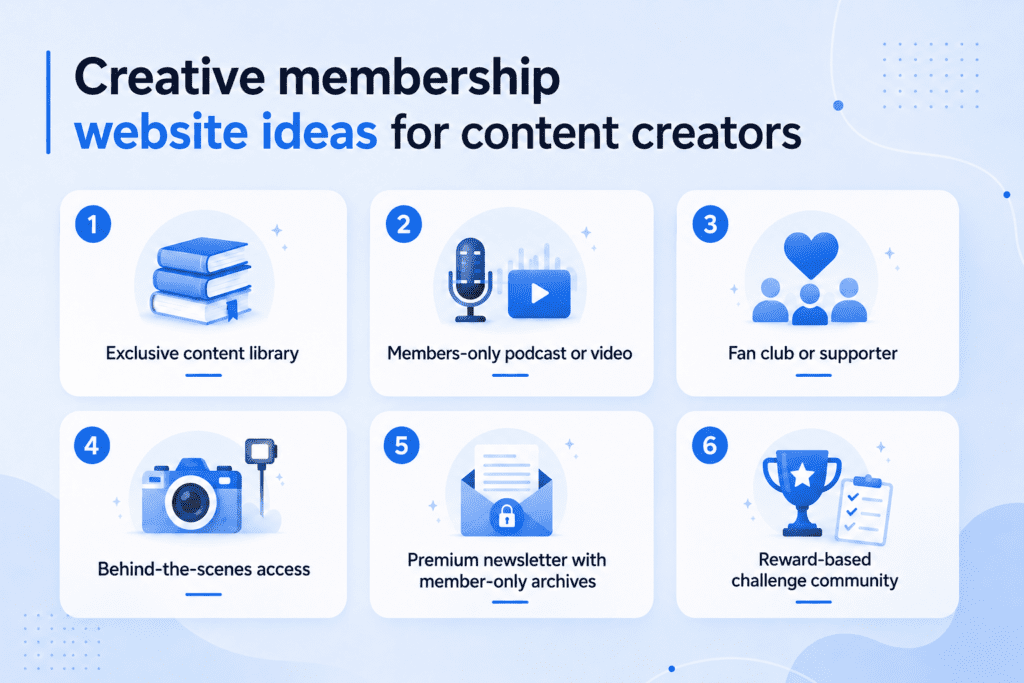
Content creators already have an audience that follows their ideas, voice or expertise. A membership site helps them offer deeper value beyond free social posts, videos or newsletters.
1. Exclusive content library
A content library gives members access to organized resources they cannot find on your free channels. It works well when your audience wants helpful content they can return to anytime.
What members get:
- Articles, tutorials or video lessons
- Downloadable guides, templates or checklists
- Searchable resources by topic, skill level or format
- Bonus content not shared publicly
Best for:
- Bloggers, YouTubers and podcasters
- Finance, food, design or lifestyle creators
Why it works:
Members get practical content in one place, while creators can turn existing knowledge into a resource hub with long-term value.
2. Members-only podcast or video
This membership gives members exclusive audio or video content beyond what you publish publicly. It works best when your audience already enjoys your regular content and wants more depth.
What members get:
- Bonus podcast episodes or videos
- Ad-free content or early access
- Long-form interviews or private lessons
- Member-only series or behind-the-scenes content
Best for:
- Podcasters and video creators
- YouTubers and educators
Why it works:
Members feel closer to your content and get more value than free viewers, which makes the membership easier to maintain with a regular publishing schedule.
3. Fan club or supporter
A fan club membership is built around connection, loyalty and support. It gives your audience a simple way to stay closer to your work and support what you create.
What members get:
- Early releases or exclusive updates
- Digital downloads or bonus posts
- Live chats, polls or community updates
- Recognition on your website or content
Best for:
- Artists, writers and musicians
- YouTubers, podcasters and independent creators
Why it works:
This model focuses on community and creator access, making it one of the simpler paid membership website ideas to start.
Also read: How to Create a Community Website using WordPress: Step by Step Guide
4. Behind-the-scenes access
Behind-the-scenes access gives members a closer look at how your work is planned, created and improved. It turns your process into useful learning content.
What members get:
- Drafts, planning notes or creative breakdowns
- Tool walkthroughs and workflow tips
- Production steps or editing processes
- “How I made this” content
Best for:
- Photographers, writers and designers
- YouTubers, filmmakers and creative professionals
Why it works:
Members get practical insight into your workflow, while you can create valuable content from the work you are already doing.
5. Premium newsletter with member-only archives
This membership gives subscribers regular insights through email and access to past issues on your site. It works well for creators who share ideas, research or curated resources.
What members get:
- Weekly or monthly newsletter content
- Searchable member-only archives
- Bonus resources, notes or recommendations
- Curated insights not shared publicly
Best for:
- Writers, analysts and researchers
- Business, career, wellness or niche creators
Why it works:
The archive adds long-term value because new members can access past content, while regular newsletters keep them engaged over time.
6. Reward-based challenge community
A reward-based challenge community helps members complete a goal within a set time. It combines structure, motivation and accountability in a community setting.
What members get:
- Weekly tasks or challenge prompts
- Progress tracking and check-ins
- Community threads or group support
- Rewards, badges or milestone recognition
Best for:
- Fitness, writing, productivity or creator niches
- Audiences working toward a specific goal
- Creators who want to build an active community
Why it works:
Members join for a clear outcome and stay engaged because the challenge gives them structure, momentum and visible progress.
Top 5 membership website ideas for coaches
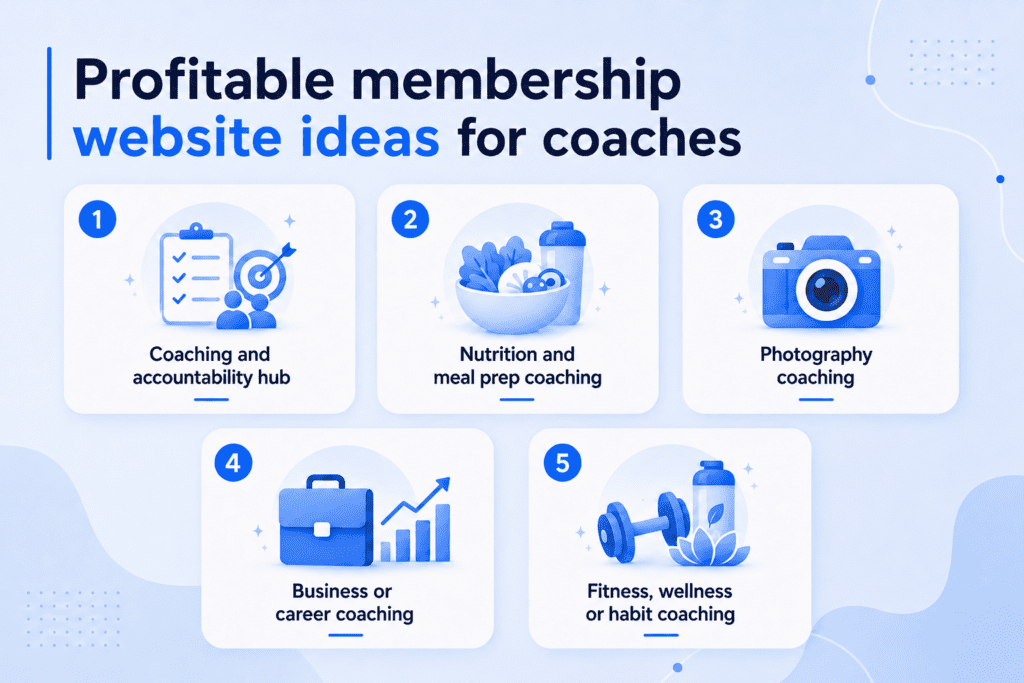
Coaches can use membership sites to offer support beyond one-to-one sessions. A membership can combine coaching, resources, community and accountability in one place.
1. Coaching and accountability hub
A coaching and accountability hub combines personal support, group coaching and progress check-ins. It helps members stay consistent while giving coaches a scalable way to guide more people.
What members get:
- Live coaching calls
- Worksheets, replays and action plans
- Weekly goals and progress check-ins
- Private community support
Best for:
- Life, business and career coaches
- Health, wellness and mindset coaches
Why it works:
Members get guidance and motivation between sessions, while coaches can offer support without relying only on one-to-one calls.
2. Nutrition and meal prep coaching
A nutrition and meal prep membership helps members plan meals, build healthier habits and stay consistent with food choices.
What members get:
- Weekly meal plans and grocery lists
- Recipe videos and portion guides
- Habit trackers and progress check-ins
- Live Q&A sessions or community support
Best for:
- Nutrition coaches
- Wellness and lifestyle coaches
Why it works:
Members often need ongoing help with planning and consistency, making this a useful model for repeat support.
3. Photography coaching
A photography coaching membership helps members improve their shooting, editing and creative style over time.
What members get:
- Photo challenges and practice prompts
- Editing tutorials and workflow tips
- Portfolio reviews or image critiques
- Gear guides and live critique sessions
Best for:
- Photography coaches
- Creative educators
- Beginners, hobbyists and portfolio builders
Why it works:
Members get feedback, structure and practice opportunities, which helps them improve with each project.
4. Business or career coaching
A business or career coaching membership helps members grow professionally with practical guidance and resources.
What members get:
- Resume reviews or interview practice
- Sales scripts, pricing guidance or client growth tips
- Leadership training or career workshops
- Worksheets, templates and action plans
Best for:
- Career coaches
- Business coaches
Why it works:
Career and business challenges are ongoing, so members stay when they get clear advice they can apply to real decisions.
5. Fitness, wellness or habit coaching
A fitness, wellness or habit coaching membership supports members with routines, motivation and realistic progress.
What members get:
- Workout plans or wellness routines
- Habit trackers and goal check-ins
- Meal planning support or lifestyle tips
- Weekly coaching prompts or live sessions
Best for:
- Fitness coaches
- Wellness and habit coaches
Why it works:
Members get structure they can follow over time, while coaches can organize support by goal, skill level or schedule.
Top 7 membership website ideas for educators
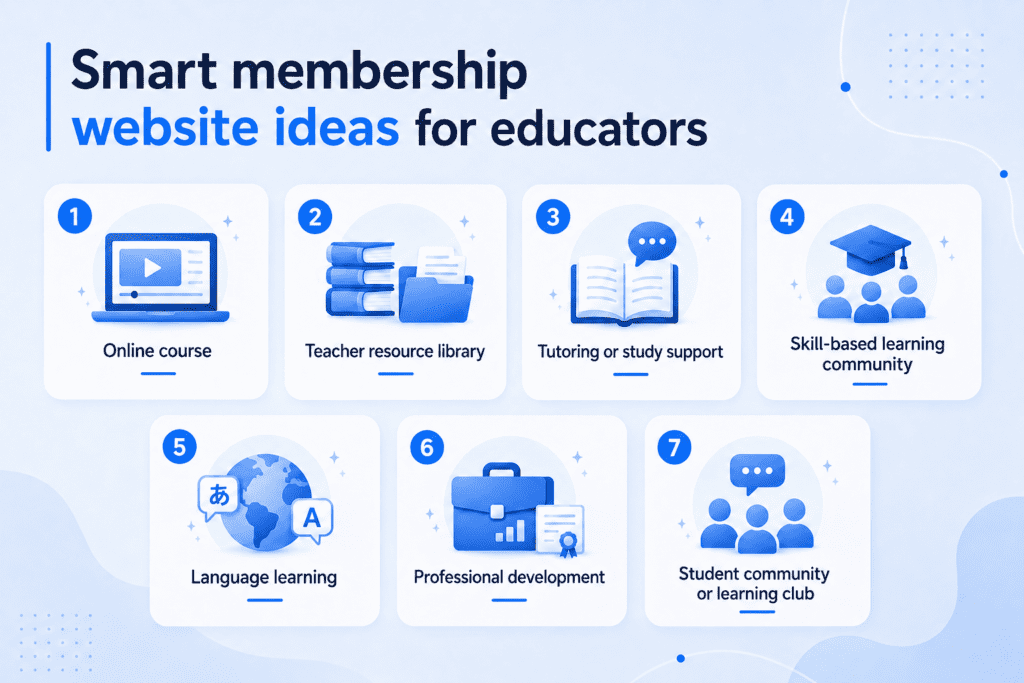
Educators can use membership websites to teach, share resources and support learners over time. These examples work for teachers, tutors, trainers, course creators and subject experts.
1. Online course
An online course membership gives learners access to a structured library of lessons or courses. It works well when your topic has multiple levels, modules or learning paths.
What members get:
- Course modules and video lessons
- Quizzes, assignments and progress markers
- Downloadable study materials
- Recommended learning paths
Best for:
- Course creators
- Trainers and subject experts
Why it works:
Members get organized learning in one place, while educators can build a repeatable teaching model that supports ongoing learning.
Also read: How to Create an Online Course and Sell It Globally
2. Teacher resource library
A teacher resource library gives educators ready-to-use classroom materials they can access throughout the year.
What members get:
- Lesson plans and worksheets
- Classroom activities and presentations
- Rubrics, printables and templates
- Resources organized by grade, subject or lesson type
Best for:
- Teachers and homeschool educators
- Curriculum creators
Why it works:
Teachers need fresh, practical resources often, so a well-organized library can save time and reduce lesson planning stress.
3. Tutoring or study support
A tutoring or study support membership gives students regular help with subjects, homework, test prep or academic skills.
What members get:
- Live tutoring sessions
- Study guides and practice tests
- Recorded lessons and Q&A support
- Homework help or exam preparation resources
Best for:
- Tutors and academic coaches
Why it works:
Students often need ongoing guidance, making this model useful for steady support and measurable academic progress.
4. Skill-based learning community
A skill-specific membership helps learners improve one practical skill over time, such as writing, coding, design or public speaking.
What members get:
- Skill-specific lessons and assignments
- Project prompts and practice exercises
- Feedback from instructors or peers
- Community discussions and progress tracking
Best for:
- Special skilled educators
- Creative or technical instructors
Why it works:
Members can improve through consistent practice, feedback and completed projects, which makes progress easier to see.
5. Language learning
A language learning membership helps members build vocabulary, grammar, speaking and listening skills through regular practice.
What members get:
- Vocabulary lists and grammar lessons
- Pronunciation videos and speaking practice
- Conversation groups or live sessions
- Progress levels and cultural learning resources
Best for:
- Language teachers
- ESL or foreign language educators
Why it works:
Language learning requires repetition, feedback and exposure, so a membership gives learners the structure to keep practicing.
6. Professional development
A professional development membership helps learners build career skills, meet industry requirements or prepare for certifications.
What members get:
- Training modules and webinars
- Templates, checklists and workbooks
- Expert interviews or live workshops
- Certificates or completion resources
Best for:
- Trainers and consultants
- Industry experts
Why it works:
Members can connect the learning to clear career outcomes, such as improving skills, saving time or meeting professional requirements.
7. Student community or learning club
A student community or learning club brings learners together around a shared subject, goal or interest.
What members get:
- Study groups and live discussions
- Resource lists and learning prompts
- Challenges, peer feedback and project sharing
- Topic channels and community guidelines
Best for:
- Teachers and tutors
- Course creators
Why it works:
Members stay engaged through shared goals, peer support and regular discussion, which makes learning feel less isolated.
How to choose the right membership website idea?
Selecting the best membership site idea is based on your audience’s needs, your strengths and the value you can offer consistently.
- Know your audience: Understand their goals, pain points, skill level, budget and learning style. This helps you choose the right offer, pricing and membership website design.
- Solve a repeat problem: Choose an idea that solves a problem people face often. Repeat needs, such as lesson planning, accountability or fresh content, give members a reason to stay subscribed.
- Offer ongoing value: Give members a reason to return each month through new content, challenges or community support. If the value ends quickly, it may work better as a one-time product.
- Check if people will pay: Test demand with a waitlist, pre-sale, audience survey or small pilot group. You can also study membership website examples to see what people already pay for.
- Match it with your skills: Choose a model you can deliver well. Courses, group coaching, newsletters or resource libraries should match your expertise, schedule and content style.
- Choose a simple membership model: Start with one audience, one clear promise and one easy-to-understand plan. You can add more tiers or features once you know what members value most.
- Keep it easy to manage: Pick a model that is realistic to maintain. Use content calendars, onboarding emails and clear support rules to keep the membership manageable.
- Think about long-term engagement: Plan how members will use your content, track progress, ask questions and connect with others. Strong engagement helps improve retention over time.
Once you’ve finalized your membership website idea, choose a setup that supports both content access and secure online payments from the start. With Bluehost, you can easily create paid memberships, manage recurring subscriptions and deliver exclusive content from one place.
Ready to bring your membership community to life? Launch your membership site with Bluehost Membership Website Builder and start building a thriving community around your expertise.
8 tips for membership website design
Good membership website design helps visitors understand the value, join with confidence and use the site easily after signup.
- Make the value proposition clear: Explain who the membership is for, what members get and why it matters. Be specific about the resources, support or results they can expect.
- Streamline registration and onboarding: Keep signup simple and ask only for the details you need. After registration, guide members to their first action, such as watching a welcome video or joining the community.
- Keep navigation simple: Use clear menus, categories and labels so members can find content quickly. Group resources by topic, format, skill level or goal.
- Ensure fast loading times: Compress images, avoid unnecessary plugins and use reliable hosting. Fast pages are important for videos, course dashboards, downloads and resource libraries.
- Keep it mobile responsive: Make sure your membership page, checkout, lessons and community areas work well on phones and tablets. Test buttons, forms, videos and downloads on mobile.
- Add a clear pricing and benefits section: Show what is included, how billing works and whether members can cancel. Use clear benefits like live Q&A calls, downloadable templates or course access.
- Use testimonials or member results: Add specific feedback that shows how the membership helped someone save time, learn faster or reach a goal. Specific results build more trust than broad praise.
- Test and iterate: Review signup rates, cancellations, feedback and support questions. Use those insights to improve your offer, onboarding, navigation and content.
Also read: How to Build a Membership Website
Final thoughts
A strong membership website starts with one useful idea that solves a real need. Choose a model from this list, define what members will get each month and test it with a small group before building everything.
When you’re ready to turn your idea into a working site, choose a setup that makes it easy to manage member pages, organize content and create a smooth signup experience. A builder designed for memberships can help you focus less on setup and more on delivering value to your audience.
Explore Bluehost Membership Website Builder to create, organize and launch your membership website with more confidence.
FAQs
A membership site is a website where users sign up to access exclusive content, resources, services or community features. It can be free or paid. Common examples include course libraries, coaching communities, paid newsletters, resource hubs and private learning groups.
A membership site focuses on gated access to content, community, learning or support. A subscription website mainly focuses on recurring payments for access to a product or service. Many paid memberships use subscriptions, but not every subscription includes a community or member experience.
You can make money with membership sites by charging monthly, annual or tiered fees. You can also sell premium content, coaching, courses, templates, workshops or community access. Strong memberships earn revenue by solving ongoing problems and keeping members engaged.
The most profitable membership websites usually solve repeat, high-value problems. Business coaching, career development, fitness, education, professional training and niche resource libraries can perform well. Profit depends on pricing, audience demand, retention, content quality and delivery costs.
Yes, membership websites can be useful for content creators who already have audience trust. They help creators offer exclusive content, behind-the-scenes access, fan communities, premium videos, paid newsletters or resource libraries while building a more predictable revenue stream.
Coaches can use a membership website to offer group coaching, accountability programs, live Q&A calls, worksheets, progress tracking and private community access. This helps them support more clients while giving members ongoing guidance between coaching sessions.
Educators can use a membership website to offer online courses, lesson plans, tutoring support, study groups, resource libraries or professional development training. A membership model works well when learners need ongoing lessons, practice, feedback or updated materials.
Test your idea before building a full site. Ask your audience, create a waitlist, run a small pilot or pre-sell founding memberships. A strong idea solves a repeat problem and attracts people willing to pay for ongoing support or resources.
Yes, you can start with a small audience if the offer is specific and useful. A focused group of engaged people is better than a large audience with low interest. Start with a simple model, collect feedback and improve over time.
Common mistakes include unclear benefits, too many features, poor onboarding, inconsistent content, weak community structure and complicated pricing. Avoid building before validating demand. Focus on one clear audience, one strong promise and a manageable delivery plan.

Write A Comment