 ChatGPT,
 Claude,
 Gemini,
 Grok — all four for

Key highlights
- Understand what is agency hosting and how it simplifies managing multiple client websites from one platform.
- Learn how agency hosting improves efficiency with centralized control, automation and built-in tools.
- Explore the key features that help agencies scale without increasing operational complexity.
- Uncover when to switch to agency hosting as your client portfolio and workload grow.
- Discover how agency hosting supports better performance, reliability and long-term scalability.
Modern agencies need more than just reliable hosting. They need a system that supports scale, efficiency and consistent performance across multiple client websites. Traditional hosting setups are not designed for this level of complexity, often leading to fragmented workflows and increased maintenance effort.
Agency hosting addresses these challenges by offering a centralized platform built specifically for managing multiple websites. In this guide, you will learn what agency hosting is, how it works and how it helps agencies operate more efficiently as they grow.
What is agency hosting?
Agency hosting is a web hosting solution designed for agencies that manage multiple client websites. It provides a centralized platform to host, manage and maintain websites from a single dashboard.
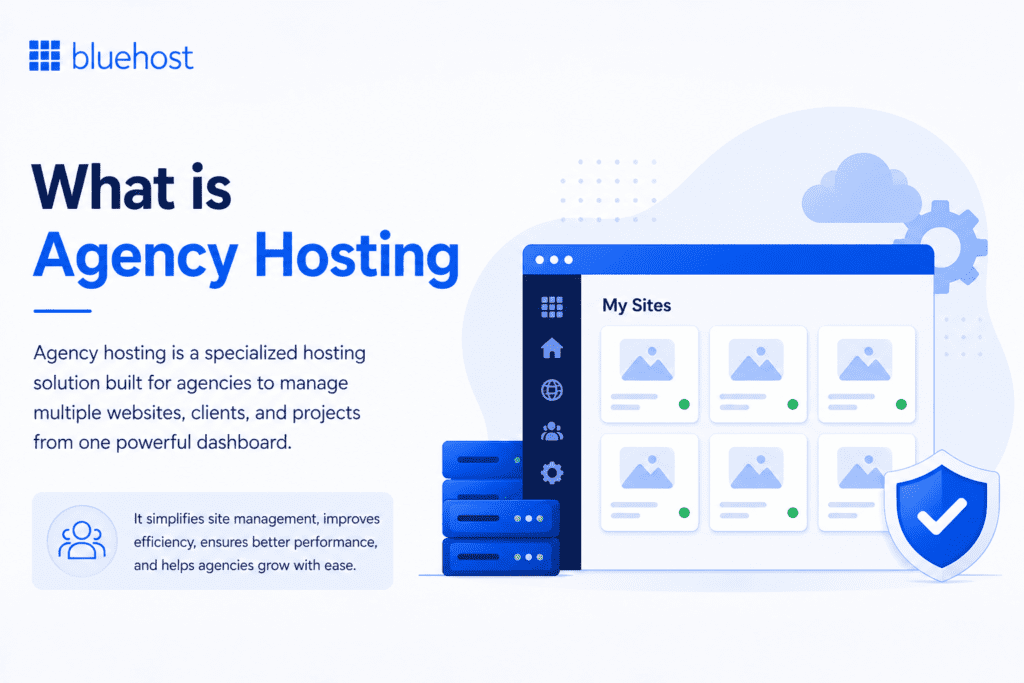
Instead of managing each website separately, agency hosting typically includes tools that help streamline updates, backups and performance monitoring. However, features and capabilities can vary depending on the hosting provider and plan.
As agencies grow, managing multiple websites across different hosting environments can become inefficient. Agency hosting addresses this by simplifying workflows and improving operational efficiency for multi-site management.
Agency hosting helps teams save time with centralized workflows, maintain consistent performance across websites and scale without increasing operational complexity. Now that you understand what agency hosting is, let’s explore how it works in practice.
How does agency hosting work?
This hosting model provides a single environment to house all your clients’ digital assets. Instead of juggling dozens of login credentials or individual billing dates, you oversee every project through a centralized dashboard. The system incorporates essential tools to handle maintenance tasks across your entire portfolio:
- One hosting account for multiple client websites
- Centralized dashboard for management
- Tools for updates, backups and security
Steps to get started
- Choose a hosting plan that fits your current client load and future growth
- Add client websites by migrating existing files or starting new projects
- Manage everything from one place to maintain consistent site performance
Understanding how the technical side functions is the first step toward improving your workflow. Now that you know how the system operates, you can explore the specific reasons why agencies need agency hosting to scale effectively.
Why agencies should look for agency hosting?
Managing a growing list of clients requires more than just technical skill; it requires efficient systems. Many agencies begin by using separate hosting accounts for every project, but this fragmented approach quickly leads to operational bottlenecks. Consolidated hosting solutions solve these frustrations by grouping your workflow into a single environment.
1. The burden of multiple dashboards
Navigating different hosting providers and keeping track of dozens of login credentials slows down your team. When every client uses a different interface, simple tasks take longer than necessary. Centralizing your portfolio allows you to access every site from one location. A unified dashboard reduces administrative overhead and prevents password fatigue.
2. Repetitive maintenance and updates
Keeping WordPress core, themes and plugins up to date is vital for security. However, performing these updates manually for every site consumes hours of billable time. A dedicated platform often includes tools to manage bulk updates. Automated workflows ensure your client sites remain secure without requiring constant manual intervention.
3. Performance and reliability gaps
Hosting clients on various low-quality servers leads to inconsistent page speeds and uptime. These performance issues reflect poorly on your agency’s reputation. By using a unified solution, you ensure that every project benefits from the same high-performance infrastructure and specialized support.
4. Obstacles to scaling your portfolio
Scaling a business is difficult when your infrastructure cannot keep up. Traditional hosting setups make it hard to provision new environments or hand over projects to clients quickly. Specialized hosting for agencies provides the flexibility to add new sites and manage resources as your client list expands.
Understanding these operational hurdles is the first step toward finding a better solution, which leads to the question: what features should you expect from agency hosting?
Essential features of agency hosting
Growing a digital business requires more than just server space. You need a platform that supports high-volume management and protects your professional reputation. High-quality hosting plans should provide the following essential tools.
1. Multi-site management
Agencies often juggle diverse projects simultaneously. Effective agency hosting provides the ability to deploy new WordPress instances or clone existing environments in minutes. Flexible management allows you to onboard new clients rapidly without technical delays.
2. Centralized dashboard
Managing fifty different client accounts becomes impossible without a single point of control. A unified interface allows you to monitor site health, update plugins and manage billing for every client from one location. Centralization saves time and reduces the risk of missing critical updates.
3. Built-in security and backups
Protecting client data is a top priority for any web professional. Look for solutions that include automated malware removal and daily backups. Automated security services prevent downtime and ensure you can restore a site quickly if a conflict occurs during a routine update.
4. Performance optimization
Page speed directly impacts search engine rankings and conversion rates. High-quality hosting uses NVMe storage and advanced caching layers to deliver content quickly. Optimized infrastructure ensures your clients’ sites remain competitive in a crowded digital landscape.
5. Team collaboration tools
Agency workflows involve multiple contributors. You need the ability to grant specific access levels to developers, designers and writers. Granular permissions help your team work together without sharing sensitive master credentials or risking account security.
While these features cater specifically to the needs of growing firms, it is helpful to see how they differ from standard web packages.
Agency hosting vs other hosting types
Finding the right infrastructure requires balancing ease of use with the ability to scale. While many providers offer general solutions, agency hosting provides a specialized architecture designed for professionals managing multiple client sites.
| Hosting type | Best for | Limitation |
| Shared hosting | Beginners | Limited scalability |
| VPS hosting | Developers | Requires technical expertise |
| Agency hosting | Agencies | Built for multi-site workflows |
Shared hosting serves as an entry-level option where multiple sites share the same server resources. Shared environments are cost-effective for new bloggers, but they often lead to performance issues during traffic spikes because resources are split among many users.
VPS hosting offers more power by providing dedicated resources within a virtualized environment. Developers often choose this for its flexibility, though the setup and ongoing maintenance require technical knowledge to keep the server secure and optimized.
Agency hosting bridges the gap between power and simplicity. It offers the high-performance capabilities of managed WordPress while providing a centralized dashboard to oversee all client sites. Professional workflows benefit from features like automated backups, staging environments and client billing integration that other hosting types typically lack.
Reviewing these core differences makes it easier to identify which professionals and organizations gain the most from specialized management tools.
Who should use agency hosting?
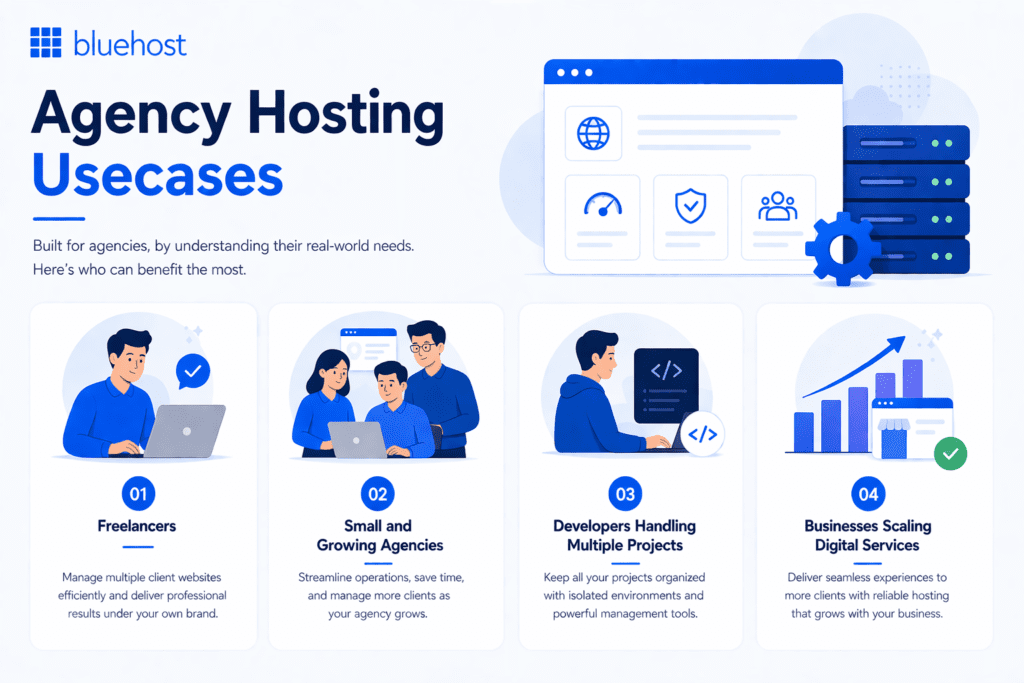
Professional multi-site plans are ideal for web experts, including freelancers, developers and agencies, who manage multiple client websites from a single account. These specialized packages provide centralized management and scalable resources. Centralized tools allow you to oversee dozens of sites efficiently without needing to juggle separate login credentials for every individual project.
1. Freelancers managing client websites
If you are a freelancer, you likely handle everything from initial design to long-term maintenance. Specialized dashboards allow you to manage every client site through one interface. You can provide individual access to your clients, which gives them professional experience without exposing your other projects or personal data.
Example: A freelance WordPress developer handling 6–10 client websites can update plugins, run backups and monitor site performance from one dashboard instead of logging into each website separately. This reduces time spent on routine tasks and helps maintain consistency across all client projects.
2. Small and growing agencies
Agencies that are ready to expand need an environment that grows with them. These plans provide the flexibility to add new sites quickly as your client list increases. Because you are buying resources in bulk, you can often lower your overhead costs while providing high-performance server space to everyone on your roster.
Example: A small agency managing 15–25 client websites can use a centralized dashboard to handle updates, backups and performance monitoring. As new clients are added, the team can scale operations without switching platforms or increasing manual effort.
3. Developers handling multiple projects
Developers often need separate environments for testing and production. Advanced hosting platforms include tools that make it easy to move sites from staging to live environments. You can manage complex projects across different domains while ensuring each one has the dedicated resources it needs to stay fast and secure.
Example: A developer working on 10+ client websites can use staging environments to test updates, push changes live and monitor performance from one dashboard. This reduces deployment risks and avoids switching between multiple hosting accounts for each project.
4. Businesses scaling digital services
Companies that offer marketing or search engine optimization services can benefit by adding web services to their packages. By hosting your clients’ websites, you maintain greater control over their performance and security. Providing a reliable home for sites creates an additional revenue stream and strengthens your customer relationships.
Example: A business running multiple brand websites, landing pages and regional sites can manage updates, monitor performance and handle security from one dashboard. As new services or campaigns launch, teams can add and manage websites without increasing operational complexity.
Identifying the signs that your business is ready to switch to agency hosting helps you maintain high performance for your clients as your service offerings grow.
Also read: PageHub Scaled Multiple site WordPress Operations with Bluehost Agency Hosting
When should you switch to agency hosting?
Deciding when to move away from individual plans depends on the complexity of your workflow and the pace of your growth. If your current setup feels like a bottleneck, agency hosting provides a specialized solution to manage client sites from a single location.
Several clear indicators suggest your agency has outgrown standard hosting environments:
- Managing five or more websites: Toggling between various accounts and control panels becomes inefficient once you handle a growing list of properties.
- Scaling your client portfolio: Sustainable growth requires a predictable way to deploy new sites and allocate resources without starting from scratch for every project.
- Spending too much time on maintenance: Manual updates, security monitoring and backups consume billable hours that you could spend on strategy or creative work.
- Experiencing performance issues: If sites load slowly or fail during traffic spikes, your professional reputation is at risk. High-performance architecture ensures faster page loads and reliability.
Identifying these triggers helps you determine the right time to upgrade your infrastructure to support a larger workload. Once you recognize these needs, you can explore how a dedicated platform improves your profitability. Discover how these solutions help your business grow in our guide to what are the benefits of agency hosting?
What are the benefits of agency hosting?
Agency hosting provides a centralized way to handle multiple client projects. It moves beyond standard hosting by providing tools specifically for managing high volumes of traffic and complex site structures.
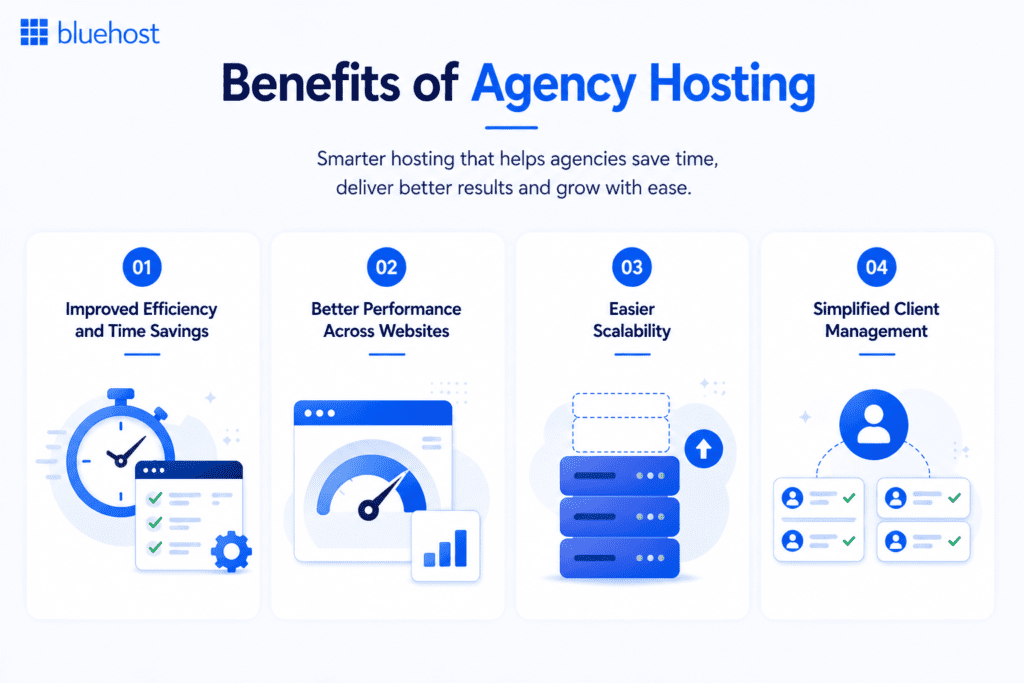
1. Improved efficiency and time savings
Managing several websites becomes much faster when you use a single administrative interface. Instead of logging into dozens of individual accounts, you can push updates, monitor security and manage backups across your entire portfolio from one spot. This centralized control removes repetitive manual tasks so your team can focus on creative work.
2. Better performance across websites
High-quality agency hosting plans use performance-heavy architectures like WPCloud to ensure 100% uptime. Your clients benefit from faster page loads and stable environments, even during traffic spikes. Faster sites lead to better user experiences and improved search engine rankings, which helps you deliver better results for the brands you represent.
3. Easier scalability
As your agency grows, your infrastructure needs to grow with you. Agency plans allow you to add new sites or increase resources without migrating to a new server every time. You can expand your service offerings without worrying about hidden overage fees that penalize your clients for increasing their traffic.
4. Simplified client management
Professional hosting solutions often include features that separate client environments. This organizational structure makes it easier to hand over access to specific stakeholders or manage individual billing cycles. Keeping everything organized helps you maintain a professional image and prevents technical confusion as your client list expands.
Selecting a platform that offers these advantages is the first step toward long-term growth. To find a provider that aligns with your specific goals, you need to evaluate several key factors.
What should you look for in an agency hosting provider?
Selecting a provider requires looking beyond basic server specs. You need a partner that supports your workflow and protects your profit margins.
- Ability to manage multiple websites from one dashboard: A central interface allows you to monitor site health, push updates and manage user access across your entire portfolio without switching accounts.
- Predictable cost per site: Fixed pricing structures help you maintain consistent profit margins and provide accurate quotes to your clients as your agency grows.
- Built-in tools for security and performance: Integrated features like automated backups, SSL certificates and caching reduce the need for third-party plugins while keeping client sites fast.
- Reliable support for issue resolution: Direct access to technical experts ensures that server problems are fixed quickly before they affect your clients’ business operations.
Bluehost agency hosting offer these capabilities, helping agencies scale without added complexity. Identifying these core features is the first step toward professional growth, though many teams remain hesitant due to common misconceptions about agency hosting.
Also read: Best WordPress Development Agency: 2026 Expert Picks
Common misconceptions about agency hosting
Many web professionals hesitate to adopt specialized environments because of lingering myths regarding cost and complexity. Understanding the truth behind these misconceptions helps you make an informed decision for your business growth and client management strategy.
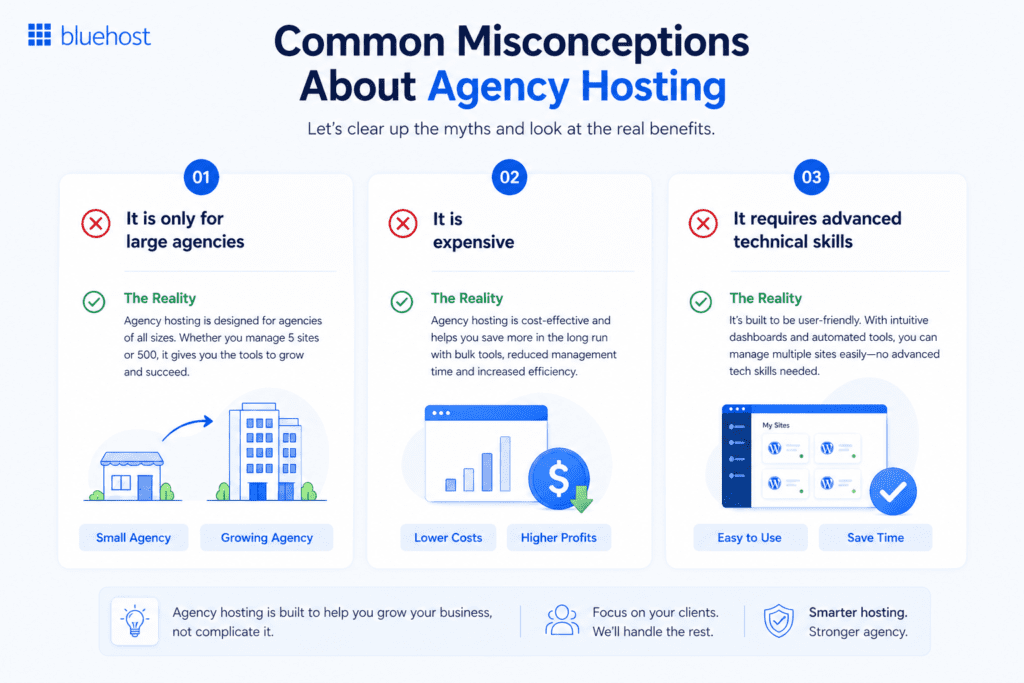
1. It is only for large agencies
Scale does not dictate the need for professional tools. Freelancers managing a handful of sites benefit from centralized management just as much as large firms. Agency hosting allows you to oversee every client project from a single dashboard: which saves time regardless of your portfolio size. Small teams often find that the organization provided by these platforms is what allows them to eventually grow into larger operations.
2. It is expensive
While the monthly price of a specialized plan might look higher than a basic shared account: the total cost of ownership is typically lower. Managing twenty separate hosting accounts is more expensive and time consuming than one consolidated plan. Bundled resources and flat-rate pricing models prevent unexpected overage fees. Choosing agency hosting also reduces the labor costs associated with manual site maintenance and security monitoring.
3. It requires advanced technical skills
You do not need to be a server administrator to use professional hosting tools. Modern providers prioritize user-friendly interfaces that remove the need for manual coding or command-line work. You can perform tasks like site migrations, SSL certificate renewals and staging environment setup through simple graphical controls. The platform manages the backend infrastructure so your team can focus on creative work and client results.
Final thoughts: Is agency hosting right for you?
Choosing a professional hosting environment depends on your current workload and future goals. For agencies scaling client websites, these solutions provide the infrastructure needed to handle multiple projects without compromising performance. Agency-specific plans allow you to move away from fragmented setups and bring every project into a single, manageable space.
Adopting these specialized services improves efficiency and workflow by providing tools tailored to professional teams. You gain access to centralized dashboards and staging environments that help your developers work faster. Specialized hosting ensures your team spends less time on server maintenance and more time on high-value tasks.
Managing growth effectively requires a foundation that expands alongside your portfolio. When you have the right technical support, you can onboard new clients with confidence. Explore agency hosting solutions to simplify your workflow and support long-term growth.
Important: Features may vary by provider
Agency hosting is not a standardized product. Features such as staging, automated backups, security tools and performance optimizations depend on the hosting provider and plan. Before choosing a solution, agencies should review documentation, plan limits and included features to ensure they meet their operational needs.
FAQs
Agency hosting is a type of web hosting designed for managing multiple client websites from a single platform. It typically includes centralized tools for updates, security and performance, though features vary by provider and plan.
Agency hosting is built for managing multiple websites with centralized control, while shared hosting is usually designed for single websites or smaller projects. Agency hosting often includes tools for multi-site workflows, though capabilities vary across providers.
Yes, agency hosting can be suitable for freelancers who manage multiple client websites. It helps streamline workflows and supports growth as the number of websites increases.
The number of websites depends on the hosting plan and provider. Some plans support a few websites, while others allow dozens or more. At Bluehost, we support upto 600 websites based on the requirements. Agencies should review plan limits before choosing a provider.
The cost of agency hosting varies based on features, number of websites and included resources. Many providers use a cost-per-site model, but pricing structures differ across plans and providers.

Write A Comment