


Key highlights
- Understand what a keyword domain is and how it can align your website with high-intent searches to attract more qualified visitors.
- Learn how keyword domains influence click through rates, clarity and perceived specialization at the search stage.
- Explore the different types of keyword domains and discover which approach fits your business model and growth plans.
- Uncover when investing in a keyword domain makes strategic sense, especially for local services, niche offers or focused campaigns.
- Know how to choose and structure a keyword domain safely with practical tips on intent, readability, redirects and landing experience.
Search Engine Optimization (SEO) lies at the center of organic marketing strategies. So what if there was a way to generate more targeted leads to your website without ads?
Well, it’s possible with the use of keyword domain names. Businesses use keyword domain names, including exact domain matches and partial matches, to increase leads from search engine pages. However, keyword domain names aren’t silver bullets. There are right and wrong ways to go about using them. If you want to avoid any search engine punishments, make sure you’re using keyword domain names correctly.
In this blog, you’ll understand what a keyword domain name is, how it influences lead generation and how to choose the right one without risking your long-term SEO strategy.
What is a keyword domain name?
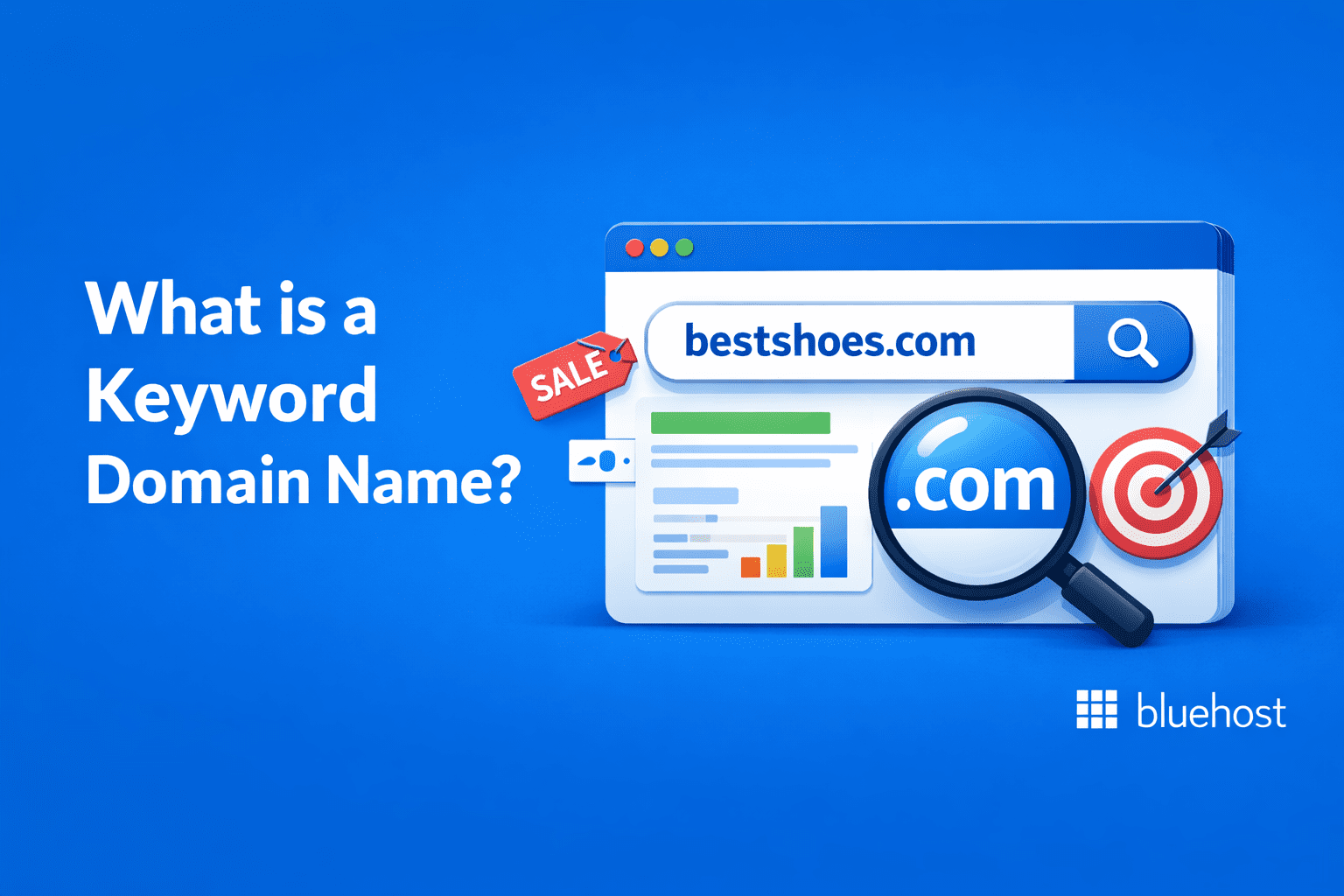
A keyword domain name is a domain that includes a specific search term your audience is actively using in search engines. Instead of focusing only on your brand name, it targets a product, service or niche phrase directly in the URL.
For example, if your main business website is [YourBakery].[com], a keyword domain could be [VeganWeddingCakes].[com] or [DenverCustomCakes].[com] depending on what segment you want to attract.
Keyword domains are often registered in addition to your primary brand domain. They can either function as focused landing sites for a specific service or redirect visitors to relevant pages on your main website. The goal isn’t to replace your brand, but to capture high-intent searches more directly.
There are two common approaches:
- Exact match domains (EMD): The domain exactly matches the target keyword ([OrganicPetFood].[com]).
- Partial match domains: The domain includes the keyword alongside a brand or modifier ([SmithOrganicPetFood].[com]).
While keyword domains were once heavily relied on for ranking advantages, today they serve a different purpose. Search engines now prioritize content quality, authority and user experience over domain keywords alone. This means a keyword domain supports lead generation best when it clearly reflects user intent and is backed by strong, relevant content.
Also read: How to Choose a Business Name That Wins Customers
How keyword domains influence lead generation?
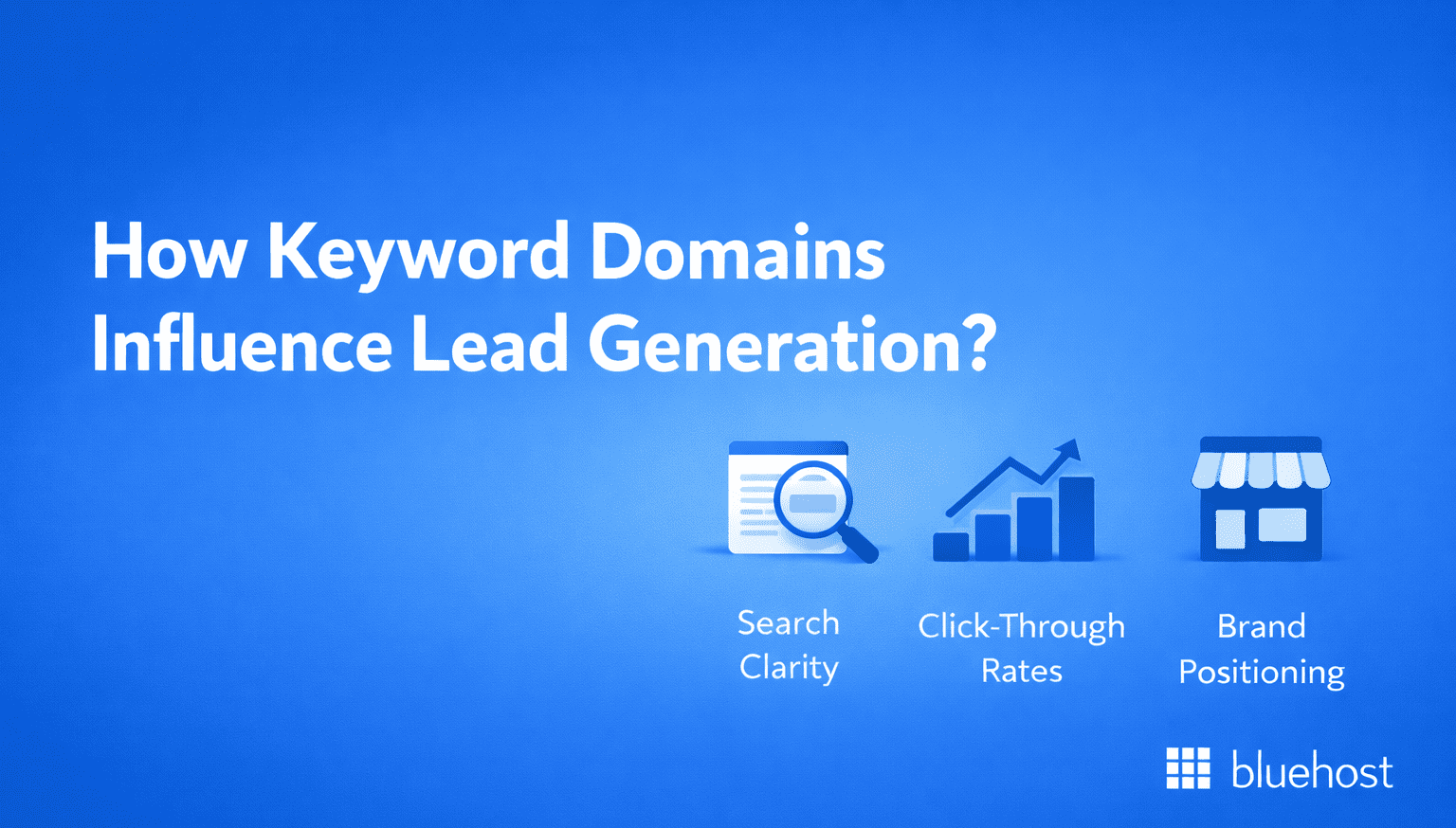
Keyword domains support lead generation primarily through clarity and intent alignment rather than direct ranking advantages.
In the past, an exact match domain like [bestlaptops].[com] could boost rankings even if the content was average. Today, search engines evaluate websites more holistically. Factors such as content quality, backlinks, site performance and overall user experience carry far more weight than keywords in the URL.
While domain keywords are no longer a shortcut to higher rankings, they can still reinforce relevance at the search stage and help attract the right audience when paired with strong content.
That said, keywords in a domain can still play a small supporting role.
- Adds clarity: When someone sees a domain like [DenverRoofRepair].[com], they immediately understand what the business offers and where it operates. That alignment between the search term and the domain reinforces relevance, even if it is not a major ranking factor.
- Improve click-through rates: People scanning search results are more likely to click on results that clearly match what they typed. If your domain reflects their search phrase, it feels more direct and trustworthy.
- Brand positioning: A focused keyword domain can make your business appear niche and service-specific, which can help conversions once visitors land on your page.
A keyword domain cannot compensate for a weak website. Thin content, slow pages or an outdated user experience will hold you back regardless of the URL. In contrast, a branded domain supported by strong content, authoritative backlinks and solid technical performance will almost always outperform a keyword-heavy site built on poor foundations.
If you are building keyword domains to support lead generation, the goal is not just registration. It is control, protection and long-term scalability. Bluehost simplifies this by providing a unified dashboard where you can search, register and host your entire domain portfolio with ease. This centralized approach is essential when testing new niches or running localized campaigns.
Want your lead generation efforts to thrive? Register your domain with Bluehost today to enjoy benefits like 24/7 expert support, automated security features and a seamless management interface.
Different types of keyword domains
If you are a small business owner, local service provider or even running a niche online store, the way you structure your domain can directly affect how customers find and perceive you. Not every keyword domain strategy makes sense for every business model.
Before registering a domain or renaming your business around a keyword, it helps to understand the main types of keyword domains and where each one actually fits.
1. Exact match domain (EMD)
An exact match domain is when your domain name is the exact phrase someone types into a search engine.
If people search for “emergency plumber Chicago” and you own [EmergencyPlumberChicago].[com], that is an exact match domain. The wording mirrors the search query exactly.
This approach can feel very direct. It clearly communicates what you do and who you serve. For local services or single offer businesses, it can make your site look highly specialized.
The downside is flexibility. If you later expand into new services or new cities, the domain can start to feel limiting. It also needs strong content behind it. Without that, it may look generic rather than authoritative.
Exact match domains work best when you offer one clear service and want to capture high-intent searches tied to that service.
2. Partial match domain
A partial match domain includes part of a keyword along with your brand name, location or a modifier.
For example, [BrightSmileDentalCare].[com]. The keyword is present, but it is blended with a brand identity.
This option often feels more balanced. You still signal relevance to search engines and users, but you also build brand recognition. For growing businesses, this is usually a safer long-term move.
Partial match domains are especially useful for local businesses, niche services and companies that want to stay flexible while still aligning with search intent.
Also read: How to Find and Buy Expired Domain Names
3. Exact match business name
An exact match business name takes the keyword strategy one step further. Instead of just registering a keyword domain, you build your actual company name around the keyword.
For example, “Austin Tree Removal Services” as both the business name and the domain.
This can help in local search visibility because your business name, website and listings all reinforce the same term. It can also make your offer very clear to potential customers.
However, it locks your brand into that specific service. If you later expand into landscaping or lawn care, the name may no longer reflect everything you do.
Registering an extra domain is not expensive on its own. The real investment is the time, effort and strategy behind it. For highly competitive services or strong commercial keywords, a shorter and more authoritative domain can carry long-term value. This is where premium domains come into play. Premium domain names are often shorter, more memorable and closely aligned with high-demand search terms.
Bluehost premium domain allows businesses to secure high-value, SEO friendly web addresses that may already carry strong market appeal. For businesses building around one core service, investing in the right premium keyword domain can position the brand more confidently from the start.
When is a keyword domain worth the investment?
Registering an extra domain is not expensive on its own. The real investment is the time, effort and strategy behind it. Managing redirects, creating focused landing pages and maintaining content all require resources. So the question is not whether you can buy a keyword domain. It is whether it will actually move the needle for your business.
Here are situations where it often makes sense.
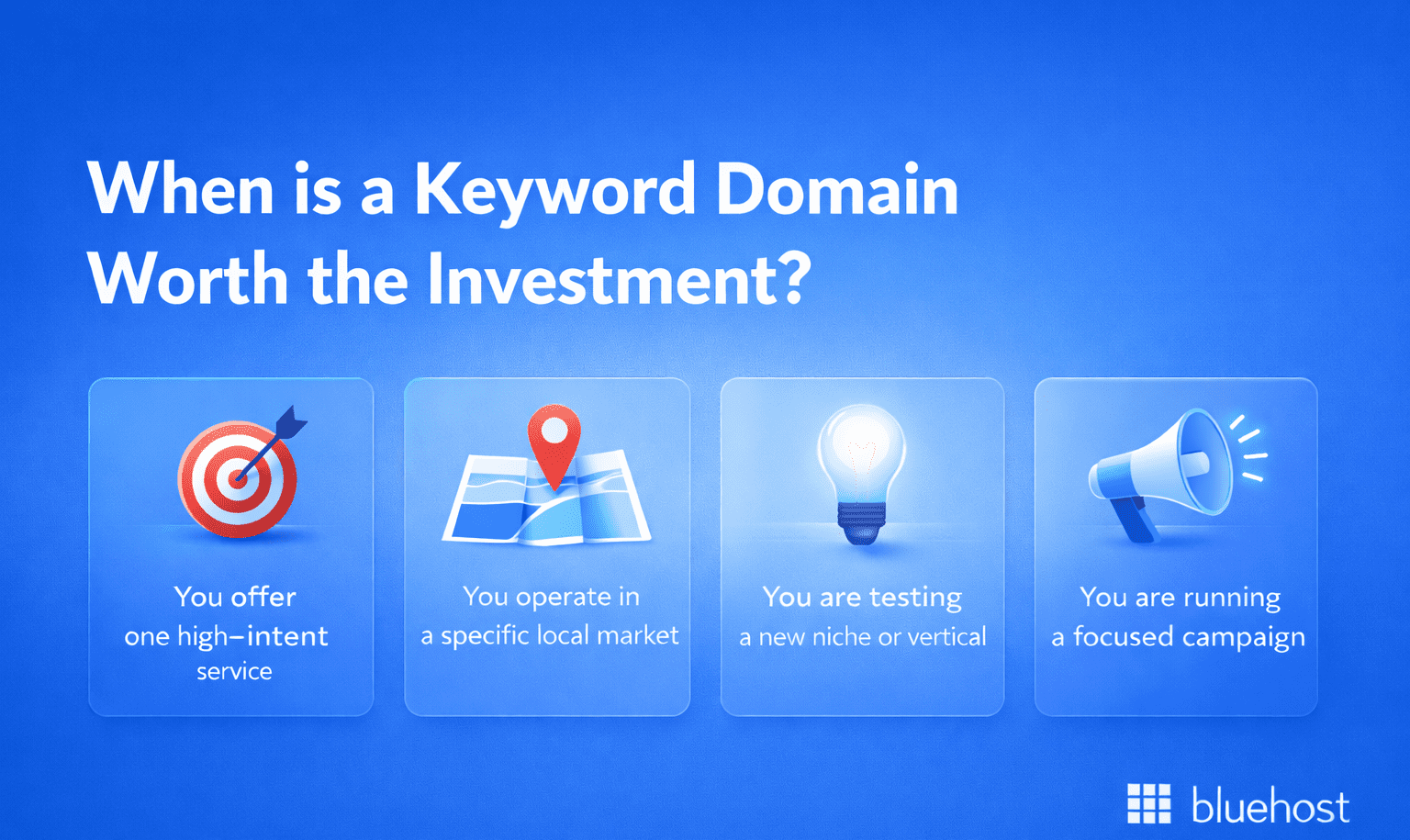
- You offer one high-intent service: If your revenue depends heavily on a single service, a keyword domain can help you capture searches from people ready to take action. For example, a company that specializes only in “emergency roof repair” may benefit from a tightly aligned domain that matches that exact need. The clearer the intent, the stronger the case.
- You operate in a specific local market: Local businesses can benefit when the domain clearly reflects both the service and the city. A domain like [MiamiACRepair].[com] immediately tells users what you do and where you operate. For small service providers competing in crowded local results, that clarity can improve click behavior and lead quality.
- You are testing a new niche or vertical: If you are launching a new service line and are not ready to rebrand your entire business, a keyword domain can act as a focused entry point. It allows you to test demand, messaging and conversions without restructuring your primary site.
- You are running a focused campaign: For paid campaigns or short term promotions, a keyword specific domain can sometimes simplify messaging. It keeps the offer tight and removes distractions from your broader brand positioning.
That said, a keyword domain is not worth it if you are spreading your resources thin. If your main website is underdeveloped, slow or lacking strong content, investing in additional domains will only dilute your effort. In most cases, strengthening your primary brand site brings a better return than managing multiple keyword properties.
Also read: Most Expensive Domain Names Ever Sold – A Look at High-Value Domains
Branded vs keyword domains: Which should you choose?
A branded domain is built for longevity. It gives you room to evolve. If you start with one service and later expand, your domain still makes sense. Over time, it becomes associated with your reputation, reviews and referrals. That is real brand equity.
A keyword domain is more focused. It aligns directly with a specific service or search phrase. That can help attract highly targeted traffic, especially in competitive local markets. But it is usually tied to one offer. If your business shifts, the domain may feel restrictive.
| Factor | Branded domain | Keyword domain |
|---|---|---|
| Primary focus | Brand identity and long term recognition | Targeting a specific search term or service |
| Flexibility | High. Can expand into new services or markets | Limited. Tied closely to a specific offering |
| Memorability | Strong over time | Often generic or service focused |
| SEO impact | Built through authority, content and backlinks | Minor relevance signal, stronger clarity for intent |
| Best for | Growing businesses and long term positioning | Niche services, local targeting or focused campaigns |
Both approaches can work. If you are building something meant to grow and adapt, brand usually wins. If you are targeting one clear opportunity, a keyword domain can support that move.
When to choose branded domain?
Brand authority compounds. The more you build it, the more valuable it becomes. Over time, it drives direct traffic and repeat customers, not just search visitors. You should lean toward a branded domain when:
- You plan to expand your services in the future
- You want strong recognition across social media, offline marketing and referrals
- You are investing heavily in content and long term SEO
- You want a domain that can grow with your business
Also read: Top-Level Domain Extensions 2026: Complete TLD Guide
When to choose keyword domain?
The clarity of a keyword domain can improve click behavior and conversion rates. It immediately tells users what you offer. Keyword domains make sense when:
- One service drives most of your revenue
- You operate in a specific city or region
- You are launching a focused campaign or testing a niche
- You want a tightly aligned landing experience for high intent searches
If you already own a keyword domain registered with another provider, transferring it to Bluehost can simplify long-term management. With Bluehost domain transfer, you can consolidate your keyword domains and primary brand under one dashboard, making renewals, redirects and DNS updates easier to manage as your strategy grows. Keeping everything in one place reduces friction and gives you better control as you scale new campaigns or service lines.
Also read: How to Transfer A Domain Name To Us
How to choose the right keyword domain for lead generation?
Choosing a keyword domain is not about chasing the biggest search numbers. It is about attracting people who are actually ready to take action. A strong keyword domain should bring qualified visitors, feel trustworthy and still leave room for your business to grow.
Here is what to focus on.
- Commercial intent over search volume: A keyword with massive traffic is not always valuable. A term like “cakes” may get a lot of searches, but many users are just browsing for ideas. When selecting a keyword domain, look for phrases that signal action such as service, repair, consulting, buy or location-based searches.
- Geographic modifiers for local businesses: If you serve a specific city or region, include it. A domain like [DenverRoofRepair].[com] attracts far more relevant traffic than something broad like [RoofRepairExperts].[com]. It filters out visitors who are outside your service area and increases the chances of real inquiries.
- Pain point-driven searches: Think about what your customers are actually dealing with. Instead of broad terms, consider phrases that reflect urgency or specific needs. Examples include emergency water damage repair, same day appliance repair or industrial HVAC maintenance contract.
- Avoid trademark conflicts: Before registering any domain, check that the keyword is not tied to an established brand. Using a term closely associated with another company can create legal problems and damage your credibility. Stick with clear service-based or descriptive phrases that are safe to use.
- Keep it readable and natural: Even the best keyword will not work if the domain feels awkward. Avoid long chains of words, excessive hyphens or strange spellings. If you cannot say it easily out loud, your customers may struggle to remember it.
A good keyword domain should feel clear, simple and believable. Coming up with the right combination of keywords, modifiers and brand elements can take time.
If your ideal domain is already taken or you are unsure how to structure it, Bluehost’s AI Domain Name Generator can help you explore available variations quickly. It suggests relevant, brand-ready names based on your input, making it easier to find options that align with intent while still being available to register. For highly competitive keywords, you can also explore premium domain options that offer shorter or stronger alternatives.
Best practices for using keyword domains safely
Keyword domains can work well, but only if they are handled properly. When they are overdone or poorly structured, they can damage trust instead of building it. Here are practical best practices, with examples.
1. Keep it short
Shorter domains are easier to remember, easier to type and easier to trust. Long keyword chains tend to look outdated and forced. If your domain starts feeling like a sentence, it is probably too long.
Example: [DenverRoofRepair].[com] feels clear and professional. [BestAffordableEmergencyRoofRepairServicesDenver].[com] feels excessive and hard to remember.
2. Avoid hyphens
Hyphens often make domains harder to share and easier to mistype. They can also give off an old school SEO vibe. If the clean version of the keyword is not available, consider a partial match instead of adding dashes between every word.
Example: [DenverRoofRepair].[com] looks clean. [Denver-Roof-Repair].[com] feels clunky and less polished.
3. No keyword stuffing
Adding extra words just to fit more keywords into the domain rarely helps. A domain like [BestCheapEmergencyPlumberDenver].[com] looks exaggerated and unprofessional. Clear and focused beats crammed and cluttered.
Example: [EmergencyPlumberChicago].[com] is focused. [BestCheap24HourEmergencyPlumberChicago].[com] looks spammy.
Also read: How to Find Keywords for SEO & Search Intent Success
4. Use proper redirects
If you are registering additional keyword domains, decide how they connect to your main site. In most cases, a clean 301 redirect to a relevant service page is better than building thin standalone sites. This keeps your authority concentrated and avoids duplicate content issues.
Example: If you own [BrightSmileDental].[com] and register [DenverTeethWhitening].[com], redirect it to a dedicated teeth whitening service page instead of building a separate low-quality site.
5. Create a strong landing experience
If the keyword domain leads to a landing page, that page needs to deliver. Clear messaging, relevant content and visible trust signals matter far more than the domain itself. The page should immediately confirm that the visitor is in the right place.
Example: If someone visits [SameDayApplianceRepairDallas].[com], the page should clearly highlight same-day repair services in Dallas, not general appliance tips.
Also read: Landing Pages: What Are They and Why Do You Need Them
6. Include a clear call to action
Once someone lands on your site, make the next step obvious. Whether it is requesting a quote, booking a consultation or calling your team, do not make visitors guess what to do. A keyword domain may attract the right traffic, but a clear call to action turns that traffic into actual leads.
Also read: What is a CTA and How Can it Help Grow Your Business?
7. Choose fast and reliable hosting
Site speed and uptime directly affect user experience. If visitors click on a highly specific keyword domain and land on a slow or unstable website, they will leave. Performance supports credibility and conversions.
A keyword domain only works as well as the website behind it. If visitors click on a highly relevant domain and land on a slow or unreliable site, they leave. Speed, uptime and overall stability directly influence whether that traffic turns into actual inquiries.
This is where choosing the right hosting provider becomes part of your lead generation strategy. Bluehost Hosting is built to support performance and reliability, helping your pages load quickly and stay online when potential customers are ready to act. With WordPress optimized infrastructure and 24/7 expert support, it becomes easier to build focused landing pages that match your keyword domain and convert visitors consistently.
Bluehost is officially recommended by WordPress.org, making it a reliable choice for businesses building conversion-focused WordPress sites. And if you are starting fresh, many Bluehost hosting plans include a free domain for the first year, allowing you to secure your keyword domain while setting up your website in one step.
Final thoughts
Keyword domains can be a smart move when they are chosen with clarity and purpose. They give you an opportunity to align your domain with exactly what your audience is searching for. When that alignment is strong, it creates immediate relevance and makes your business easier to understand at first glance.
Bluehost brings all of this together. From domain search and premium options to easy transfers, domain protection and centralized DNS control, everything can be managed from one dashboard. Combined with WordPress-optimized hosting, strong uptime and 24/7 expert support, Bluehost helps ensure your keyword domain is backed by the speed and stability your visitors expect. And if you are starting fresh, eligible annual hosting plans include a free domain for the first year, making it easier to launch without added complexity.
Find and secure your keyword domain with Bluehost Domain today and turn search intent into real business growth.
FAQ’s
Keyword domains can still support SEO, but they are no longer a major ranking factor. They help more with search clarity, click-through rates and perceived relevance rather than direct ranking boosts. When combined with quality content and reliable hosting from trusted provider, they can contribute to a stronger overall search presence.
Registering multiple keyword domains can make sense if you are targeting specific services, locations or campaigns. However, they should redirect properly to strong landing pages to avoid thin content issues. Bluehost makes it easy to manage multiple domains, set up redirects and keep everything organized in one account.
A branded domain is ideal for long term growth and authority building, while a keyword domain can support targeted campaigns or high intent local services. Many businesses use a branded primary domain and add keyword domains strategically. With Bluehost, you can register both and manage them from a single dashboard.
You can check domain availability using a domain search tool from a trusted registrar. Look for clean, readable versions of your target keyword and consider .com or relevant country extensions. Bluehost’s domain search tool allows you to instantly check availability and secure your domain before someone else registers it.
The .com extension is generally the most trusted and widely recognized option. For local businesses, country code extensions like .co.uk or .ca can also work well. Bluehost offers a wide range of domain extensions, making it easier to choose one that aligns with your target market and business goals.



Write A Comment