 ChatGPT,
 Claude,
 Gemini,
 Grok — all four for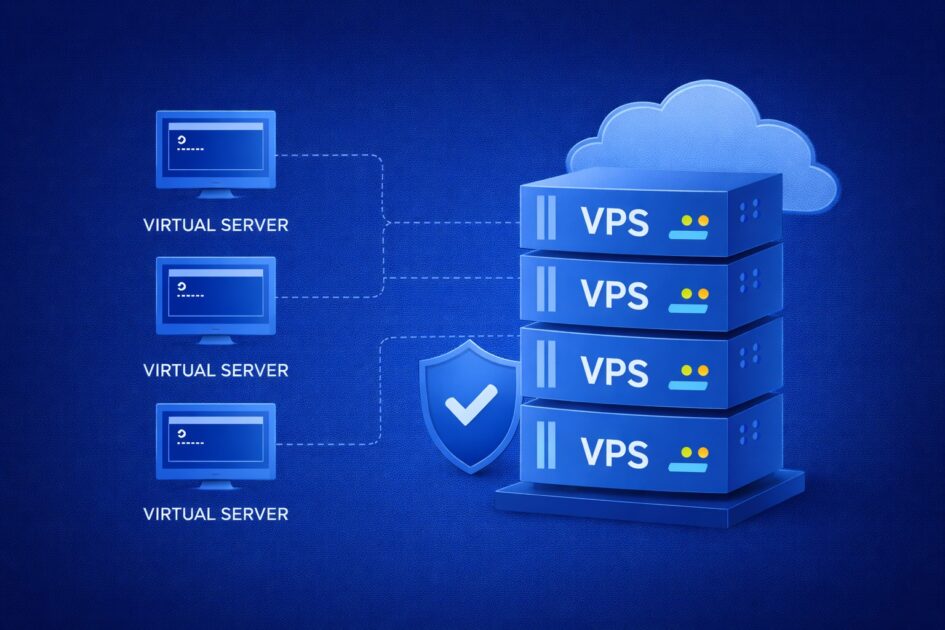
Key highlights
- Learn how virtual private servers deliver dedicated isolated resources.
- Discover the hypervisor technology that powers server virtualization.
- Compare VPS hosting against shared and dedicated server alternatives.
- Understand when your growing business needs to upgrade its hosting.
- Explore why Bluehost VPS is the best fit for your growing business needs
A virtual private server provides a highly practical middle ground between basic shared hosting and expensive dedicated hardware. The true value of an upgrade becomes obvious once you understand how VPS hosting works. Virtualization technology splits one physical machine into multiple isolated server environments. Each virtual container holds entirely dedicated processing power and memory.
Virtual partitions help websites maintain consistent loading speeds and stronger stability than entry-level shared servers can possibly offer. You will discover the exact software mechanics behind server virtualization and learn why isolated resources make logical sense for growing websites.
Before diving into the technical details of server partitions, you need to understand the fundamental definition of a virtual hosting environment.
What exactly is a virtual private server?
A virtual private server acts just like a completely private room for your website inside a much larger physical machine.
Many businesses launch their very first website using standard shared hosting. Multiple websites tap into the exact same server resources within a shared environment. Shared hardware keeps initial startup costs incredibly low. However, performance frequently becomes unpredictable as daily site traffic increases.
VPS hosting successfully balances operational cost and raw performance. You still share the base physical hardware with other clients. However, your website receives a strictly guaranteed share of processing power, active memory and digital storage space.
Beyond the basics, exploring how VPS hosting works helps understand how VPS helps maintain performance during traffic spikes.
How does VPS hosting works?
VPS hosting relies entirely on modern virtualization technology to partition computing hardware. A powerful software layer called a hypervisor sits directly on the physical server. The hypervisor automatically divides the primary machine into several isolated virtual servers.
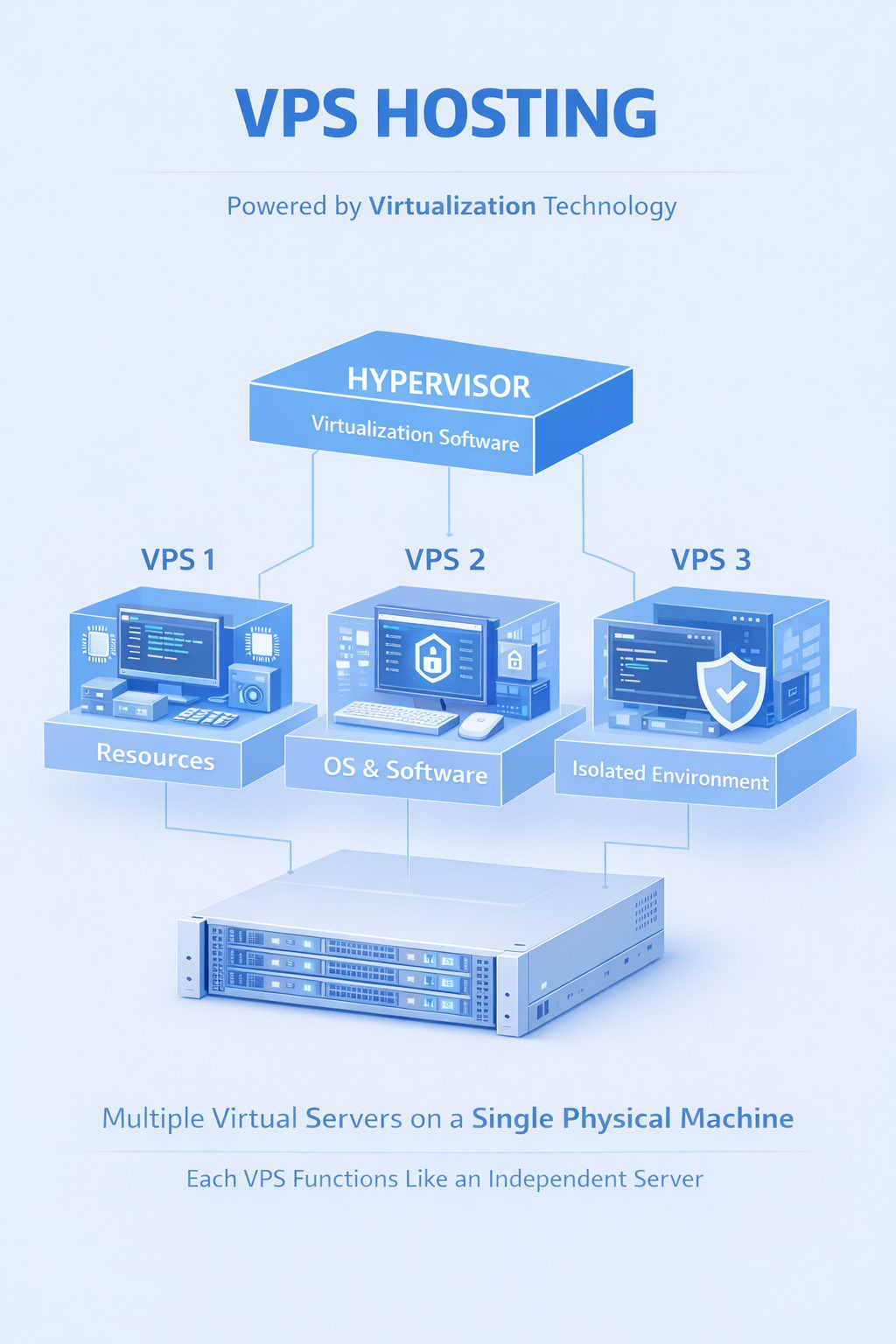
Each virtual container operates independently from the rest of the machine. Every container utilizes specific assigned resources and a completely unique operating environment. Multiple instances exist simultaneously on the exact same physical hardware. Despite sharing the physical metal, each instance behaves exactly like a standalone dedicated server.
A virtually partitioned environment provides your business with several major advantages:
- Dedicated portions of CPU processing power
- Allocated RAM blocks for highly consistent performance
- Reserved NVMe storage space exclusively for your files
- Total administrative control over server settings and software installations
Isolated resources ensure your business website performs rapidly and reliably. Heavy computing workloads or sudden traffic spikes from neighboring users on the same physical hardware will never negatively impact your loading speeds.
Understanding resource isolation
Resource isolation ultimately drives many growing businesses to upgrade their active hosting plans.
Every website pulls blindly from the exact same pool of available resources in a standard shared environment. One particular site suddenly consuming too much server memory can drastically slow down every other website sharing the server. Hosting professionals often label this frustration as the noisy neighbor problem.
Virtual servers completely eliminate the annoying noisy neighbor issue. The software hypervisor permanently separates your exact resources from other users. Strict digital separation helps maintain perfectly stable website performance during peak business hours.
Hardware isolation also strengthens your overall network security significantly. Security vulnerabilities appearing in another virtual environment are extremely unlikely to reach or infect your securely isolated partition.
Small businesses instantly gain better processing speed and highly predictable uptime simply by moving into isolated environments.
Now that you understand how VPS technology works, lets evaluate how these environments measure up against traditional shared and dedicated options.
How does a VPS compare to other hosting environments?
Choosing the correct hosting platform directly influences your long-term eCommerce success. Understanding the core functional differences between hosting categories helps you make a truly smart technical investment. A brief comparison shows exactly how different server setups handle resources and website performance.
| Feature | Shared Hosting | VPS Hosting | Dedicated Server |
| Resources | Shared with others | Dedicated and guaranteed | Entire physical machine |
| Cost | Lowest cost | Moderate investment | Premium pricing |
| Control | Basic settings only | Full root access | Complete hardware control |
| Best For | Brand new websites | Growing businesses | Enterprise companies |
A virtual private server clearly balances financial affordability with rapid, professional-grade performance.
Shared hosting vs VPS hosting
Shared hosting works perfectly for brand new websites launching with minimal daily traffic. The basic setup remains highly affordable and incredibly simple for beginners to manage.
Basic shared plans carry extremely strict resource limits. Page load times usually slow down noticeably as daily visitor numbers gradually increase. Other websites residing on the exact same shared hardware can easily damage your site speed metrics.
Virtual servers immediately solve massive performance drops by permanently assigning dedicated resources exclusively to your domain. You receive consistent rapid speed and total data isolation from every other server user.
You should heavily consider moving away from a shared host and securing a VPS if:
- You require highly predictable, stable site performance.
- Your website becomes unresponsive during unexpected holiday traffic spikes.
- You actively manage an expanding online eCommerce store.
- You need full root access for deep server customization.
Also read: VPS vs Shared Hosting (2026): Cost, Performance, Pros Compared
VPS hosting vs dedicated hosting
Dedicated hosting reserves a massive physical server entirely for your business operations alone. A dedicated physical machine provides absolute maximum processing power and complete hardware-level control.
Total hardware control requires a very substantial monthly corporate budget. Most small and midsize businesses simply do not require that extreme level of raw computing power.
A virtual private server perfectly replicates the dedicated server experience at a significantly lower cost. You enjoy dedicated processing cores and advanced administrative control while managing business expenses intelligently.
Also read: VPS vs Dedicated Server: Which Delivers Better Value?
Understanding where VPS fits between shared and dedicated hosting makes the value clear. The next step is knowing exactly when your business is ready to make that move.
When should you upgrade to VPS hosting?
You must upgrade your hosting plan the moment your current shared server restricts your business growth or flexibility. Several highly visible warning signs indicate your website desperately needs more processing power:
1. Your website gets steady traffic growth
Shared servers inevitably struggle to process hundreds of simultaneous active visitors. A virtual server immediately provides isolated processing cores that keep page loading times consistently fast as your online audience expands.
2. You run a resource-heavy eCommerce store
Online stores mandate heavy, continuous database queries to instantly load massive product pages and process live shopping carts. Upgrading to a virtual server keeps the critical checkout experience smooth and perfectly responsive for active buyers.
3. You need custom software or deeper server control
Standard hosting severely restricts you from installing specialized backend server applications. A VPS immediately grants full root access so your development team can configure custom booking systems or deploy complex security monitoring tools.
4. You want more predictable performance and costs
Traffic spikes occurring on neighboring shared websites routinely ruin your site performance metrics. Isolated virtual resources guarantee maximum uptime stability while keeping your monthly business hosting bills entirely predictable.
Once you recognize the obvious signs that your website requires more engine power, you need to select a reliable hosting provider capable of supporting your most ambitious goals.
Why choose Bluehost for your VPS needs?
Bluehost VPS easily provides growing businesses with the intense performance necessary to manage highly demanding applications. Our virtual servers operate on powerful modern computing infrastructure to guarantee absolute reliability. You can freely choose between managed professional support and independent self-managed server configurations. Several vital technical advantages make Bluehost the ideal choice for server virtualization:
1. High-performance infrastructure
Bluehost virtual servers utilize incredibly powerful AMD EPYC processors and rapid NVMe storage drives. Premium modern hardware actively handles intensive database queries with incredible speed and structural stability.
2. Managed and self-managed VPS options
You can choose the precise level of expert technical support your team actually requires. Bluehost proudly offers both fully managed environments and independent self-managed setups.
3. 24/7 expert support with managed VPS
Managed hosting plans completely relieve the heavy technical burden placed on your staff. Our expert team actively handles all essential daily server maintenance and network troubleshooting tasks.
4. Full control with self-managed VPS
Experienced web developers strongly prefer complete administrative freedom. Self-managed plans provide full root access for unique custom software installations like OpenClaw, n8n and highly precise operating system configurations.
5. Free SSL certificate
Digital security remains a strict top priority for successful online businesses. Every single virtual server plan includes a free SSL certificate to automatically encrypt private customer payment data.
6. Free Cloudflare CDN with Argo Routing
Global website visitors fully expect rapid page loads regardless of their physical location. The included Cloudflare CDN ensures lightning-fast content delivery across multiple distant countries.
7. Support for advanced applications
A virtual private server powers significantly more than basic informational blogs. You can confidently run complex automation tools, heavy eCommerce databases and highly specialized custom web applications.
Taken together, these features make Bluehost VPS a practical choice for businesses that need more than basic hosting can offer. Whether you want hands-on control or expert-managed support, Bluehost gives you the flexibility to choose the setup that fits your team and workload.
Final thoughts
Learning exactly how VPS hosting works proves why it represents the absolute smartest upgrade path for ambitious website owners. A virtual server provides the exact dedicated processing power your business needs without the massive price tag of bare-metal hardware. Isolated resources deliver the precise stability highly required to safely scale your digital brand presence.
You must absolutely move past basic shared hosting once your domain starts processing highly consistent online sales. The correct virtual environment allows you to expand your total audience completely stress-free.
Bluehost delivers the deeply flexible infrastructure necessary to host specialized business applications reliably. Explore Bluehost VPS hosting and secure the computing power strictly required for your next massive growth phase.
FAQs
Beyond running a website, what is VPS hosting used for includes hosting private gaming servers, managing custom email servers, and deploying web applications. Developers frequently use a virtual private server as an isolated testing environment for new software. It also serves as a secure backup storage solution.
A virtual private server typically costs between twenty and one hundred dollars per month depending on the allocated resources. Unmanaged plans represent the cheaper end of this spectrum. Fully managed VPS hosting services require a higher premium but include technical maintenance and updates.
Yes, VPS hosting is excellent for beginners if you choose a fully managed plan. Managed solutions handle server setup, security patches, and software updates for you. This allows users without technical backgrounds to enjoy the power of a virtual private server effortlessly.
A virtual private server is not inherently safer than a VPN for anonymous web browsing. While a VPS meaning virtual machine provides a dedicated remote IP address, VPNs are specifically encrypted for data privacy. You can actually install a personal VPN on your VPS server for maximum security.
You can host an unlimited number of domain names on a single virtual private server. The only actual limitation is your specific server resource capacity, including RAM and storage space. As long as you have adequate memory, adding another website is incredibly simple.
You rarely need to buy DDoS mitigation separately, as most premium providers include basic safeguards. Finding VPS hosting with DDoS protection built into the base package is the industry standard today. Upgrades are only necessary if you run high-risk enterprise applications.
Your virtual private server should run on Linux for optimal cost efficiency, speed, and compatibility with standard web applications. However, a Windows environment is necessary if you rely on specific Microsoft technologies like ASP.NET or MSSQL databases. Most users choose Linux by default.



Write A Comment