


Key highlights
- Learn the root causes behind common Outlook IMAP errors and how they impact your email workflow.
- Discover proven step-by-step troubleshooting methods to resolve IMAP connection failures and sync issues quickly.
- Understand essential Outlook configuration settings that prevent recurring IMAP authentication problems.
- Explore practical solutions for server timeout errors, port configuration issues and SSL certificate problems.
- Master advanced diagnostic techniques to identify and fix complex IMAP errors without losing your email data.
Are you frustrated with persistent Outlook IMAP errors that interrupt your email workflow? You’re not alone. Millions of users experience IMAP connectivity issues that can disrupt business communications and personal correspondence. Whether you’re dealing with server timeout messages, connection drops or configuration problems, this comprehensive guide will walk you through proven solutions to resolve your IMAP error Outlook problems once and for all.
In this detailed troubleshooting guide, you’ll discover the root causes behind common IMAP errors, learn step-by-step repair methods and implement preventive measures to maintain stable email connections. From basic configuration adjustments to advanced server settings, we’ll cover everything you need to know about how to fix Outlook IMAP errors effectively.
Understanding IMAP errors in Microsoft Outlook
Internet Message Access Protocol (IMAP) enables you to access your emails from multiple devices while keeping them synchronized with the mail server. However, various factors can cause IMAP problems that manifest as connection failures, synchronization issues or complete service interruptions.
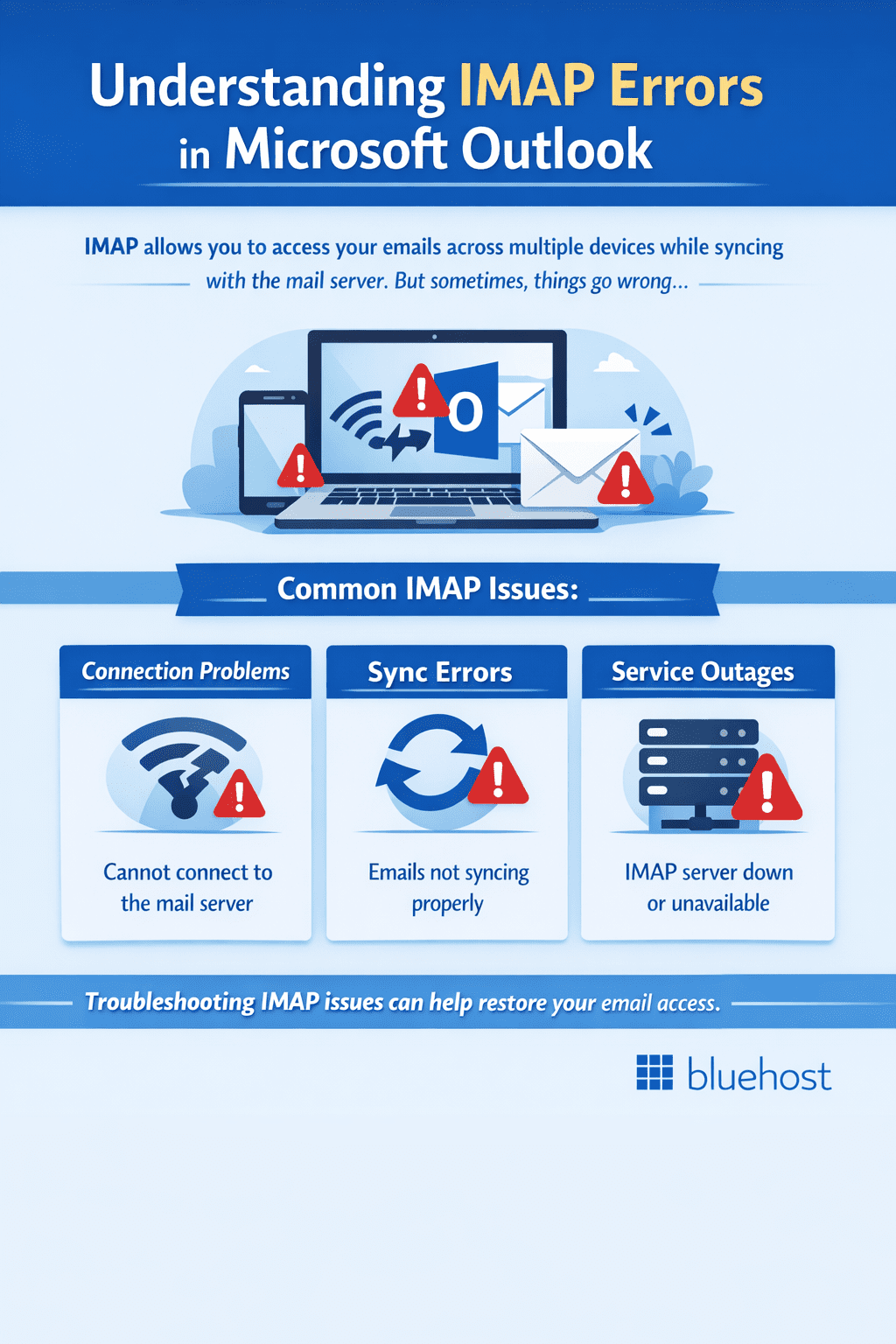
IMAP errors typically occur due to:
- Server connectivity issues and network problems
- Incorrect server configuration settings
- Authentication failures and credential problems
- Firewall and antivirus software interference
- Outlook profile corruption
- Server maintenance or temporary outages
Understanding these underlying causes helps you identify the most appropriate solution for your specific situation.
Why IMAP errors impact your productivity?
When IMAP Outlook not working properly, you may experience delayed email delivery, missing messages or inability to send emails. These disruptions can significantly impact your daily workflow, especially in business environments where timely communication is crucial.
What is an IMAP connection timeout?
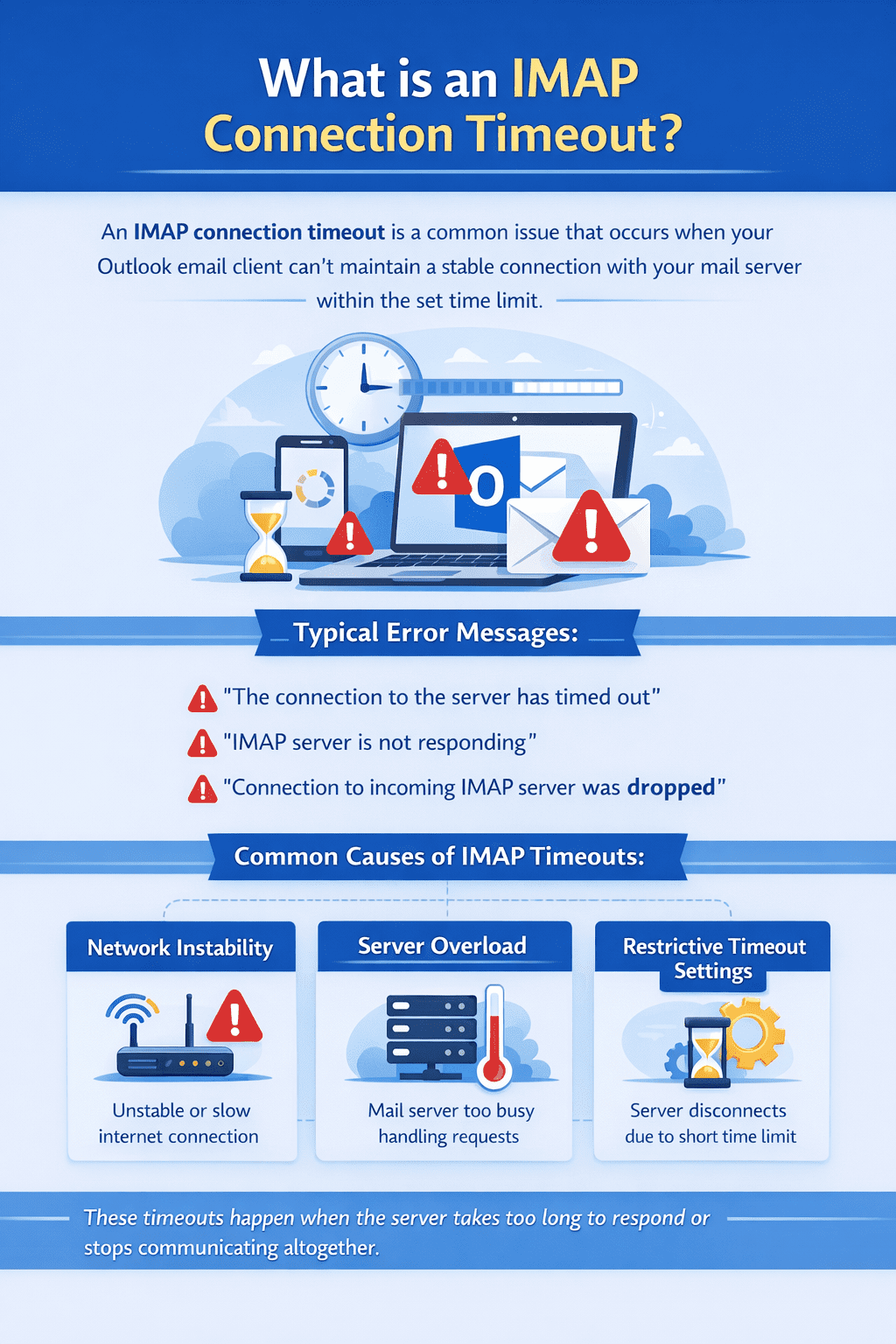
An IMAP connection timeout is a common issue that occurs when your Outlook email client can’t maintain a stable connection with your mail server within the set time limit. When this outlook imap error happens, you’ll typically see messages like “The connection to the server has timed out,” “IMAP server is not responding” or “Connection to incoming IMAP server was dropped.” These timeouts occur because your server either takes too long to respond or stops communicating altogether, often due to network instability, server overload or restrictive timeout settings.
There are two main types of timeouts you might encounter. An “idle timeout” happens when your imap server idle connection timeout setting kicks in after your email client remains inactive for too long, causing the server to automatically disconnect your session to free up resources. A “connect/auth timeout” occurs when Outlook can’t initially connect to or authenticate with your IMAP server within the allowed timeframe, usually due to server issues or network problems.
You can quickly identify timeout errors versus other imap error outlook problems by looking for these key signs: error messages specifically mentioning “timeout” or “connection dropped,” intermittent connectivity that works sometimes but fails randomly and the ability to reconnect successfully after waiting a few minutes. Unlike permanent configuration issues, timeout problems often resolve temporarily when you retry the connection, making them particularly disruptive to your daily workflow.
Most common Outlook IMAP error types and symptoms
Before diving into solutions, let’s identify the most frequent IMAP error messages you might encounter in Outlook.
1. IMAP server timeout errors
The IMAP server idle connection timeout is one of the most common issues users face. This error appears when your email client cannot maintain a stable connection with the mail server. You’ll typically see messages like:
- “The connection to the server has timed out”
- “IMAP server is not responding”
- “Connection to incoming IMAP server was dropped”
These IMAP timeout errors often result from network instability, server overload or incorrect timeout settings in your email client.
2. Server connection dropped errors
When you see “the connection to the incoming IMAP server was dropped Outlook” or “your IMAP server closed the connection,” it indicates that the mail server has terminated the connection unexpectedly. This can happen due to:
- Server maintenance periods
- Maximum connection limits reached
- Authentication problems
- Network interruptions
3. Configuration and authentication errors
Messages like “IMAP mail outlook com is not responding” or “IMAP server failed” typically indicate configuration problems. These errors suggest that your Outlook IMAP settings need adjustment or your server credentials require updating.
How to set up an IMAP account in Outlook?
Sometimes IMAP connectivity issues stem from incorrect initial setup rather than server problems. If you’re experiencing persistent connection errors, reviewing your account configuration can resolve many common issues before they become recurring headaches.
- Open Outlook and navigate to File > Account Settings > Account Settings
- Click “New” to add an account and select “Manual setup or additional server types”
- Choose “POP or IMAP”
- Enter your account details using your full email address (like [yourname]@[example].com) as both username and email address for proper authentication
- Configure incoming mail server: Enter your email provider’s IMAP server address using port 993 with SSL encryption
- Configure outgoing SMTP server: Use port 587 or 465 with TLS/SSL encryption
- These specific port and encryption combinations establish secure, stable connections that prevent timeout errors and connection drops
- When two-factor authentication is enabled, generate an app-specific password instead of your regular account password
- This specialized password allows Outlook to connect securely without compromising your account’s security settings
- After entering all server details, click “Test Account Settings” to verify the connection works properly before completing setup
Common reasons for IMAP server timeout
IMAP server timeouts occur when your email client loses connection with the mail server, typically due to several underlying factors:
- Network connectivity issues like unstable internet connections, DNS resolution problems or ISP interruptions
- Outlook configuration problems such as incorrect server timeout settings, outdated client versions or corrupted user profiles
- Large mailboxes with thousands of messages, extensive folder synchronization settings or oversized attachments that can overwhelm the connection and cause IMAP server idle connection timeout issues
- Security software including overly aggressive firewalls, antivirus programs blocking IMAP ports or VPN interference that disrupts email connectivity
- Server-side factors like email provider maintenance, overloaded servers, maximum connection limits or authentication system updates
Now let’s walk through proven methods to resolve these connectivity problems and restore stable email access.
3 solutions for common IMAP connection problems
Now let’s explore proven methods to resolve these frustrating IMAP connectivity issues.
Method 1: Verify your IMAP server settings
Incorrect server settings are the primary cause of IMAP connection failures. Follow these steps to change email server settings in Outlook:
- Open Outlook and navigate to File > Account Settings > Account Settings
- Select your email account and click “Change”
- Click “More Settings” and navigate to the “Advanced” tab
- Verify your incoming server settings match your email provider’s specifications
- For outlook.office365.com IMAP accounts, ensure you’re using the correct server addresses
Common IMAP server configurations include:
- Outlook.com IMAP settings: Server – outlook-int.outlook.com, Port 993, SSL encryption
- Gmail IMAP: Server – imap.gmail.com, Port 993, SSL encryption
- Yahoo IMAP: Server – imap.mail.yahoo.com, Port 993, SSL encryption
Method 2: Adjust server timeout settings
Increasing your Outlook server timeout setting can resolve many connection drop issues:
- In Account Settings, click “More Settings”
- Navigate to the “Advanced” tab
- Increase the “Server Timeouts” slider to maximum (10 minutes)
- Click “OK” and test your connection
This adjustment gives your server more time to respond, reducing timeout-related errors.
Method 3: Configure firewall and antivirus settings
Security software can block IMAP connections. To resolve this:
- Temporarily disable your firewall and antivirus software
- Test your email connection
- If successful, add Outlook to your security software’s exception list
- Re-enable your security protection
Ensure ports 993 (IMAP) and 587 (SMTP) are open in your firewall settings.
Fix IMAP authentication failures in Outlook 2016
Authentication failures in Outlook 2016 appear as persistent credential prompts, “password was rejected” errors or repeated login pop-ups even with correct details. These authentication-specific outlook imap error problems require targeted troubleshooting steps.
- Verify your username includes the complete email address format
- Re-enter credentials manually to clear corrupted saved passwords
- Check if your email provider recently changed your account password
- Confirm IMAP access is enabled in your provider’s security settings
- Review antivirus or firewall software that may block authentication
- Use app-specific passwords when multi-factor authentication is enabled
If it still fails
Consider switching to POP3 or Exchange ActiveSync as a last-resort workaround, though this may limit synchronization features across multiple devices.
Advanced IMAP troubleshooting techniques
When basic solutions don’t resolve your IMAP error, these advanced techniques can help.
1. Repair your Outlook profile
A corrupted Outlook profile can cause persistent IMAP issues. To repair profile problems:
- Close Outlook completely
- Press Windows + R, type “appwiz.cpl” and press Enter
- Find Microsoft Office in the programs list
- Click “Change” and select “Quick Repair”
- Restart your computer and test Outlook
If Quick Repair doesn’t work, try Online Repair for more comprehensive fixes.
2. Create a new Outlook profile
Sometimes creating a fresh profile resolves stubborn IMAP problems:
- Go to Control Panel > Mail > Show Profiles
- Click “Add” to create a new profile
- Configure your email account with correct IMAP settings
- Set the new profile as default
- Launch Outlook with the new profile
3. Convert POP to IMAP configuration
If you need to change email account from POP to IMAP for better synchronization:
- Create a backup of your existing emails
- Remove the existing POP account from Outlook
- Add the account again, selecting IMAP as the account type
- Configure proper IMAP server settings
- Import your backed-up emails if needed
Office 365 and Outlook.com IMAP configuration
Many users experience issues with Office 365 IMAP not working due to specific configuration requirements.
1. Outlook.com IMAP settings configuration
For Outlook.com IMAP settings support.microsoft.com recommendations, use these settings:
- IMAP hostname Outlook: outlook-int.outlook.com
- Port: 993
- Encryption: SSL/TLS
- Authentication: Normal password
2. Azure account configuration
For Outlook IMAP settings Azure account configuration:
- Ensure your Azure account has IMAP access enabled
- Use your full email address as the username
- Configure two-factor authentication if required
- Use app-specific passwords when necessary
3. Enable IMAP in Office 365
Sometimes IMAP isn’t enabled by default in Office 365 accounts:
- Log into your Office 365 web portal
- Navigate to Settings > Mail > Sync email
- Ensure IMAP access is enabled
- Configure your desktop client accordingly
Resolving server-side IMAP issues
Some IMAP problems originate from the email server rather than your client configuration.
1. Understanding server maintenance messages
When you encounter “IMAP waiting for your email provider” messages, it typically indicates:
- Scheduled server maintenance
- Temporary server overload
- Provider-side technical issues
In these cases, waiting for the provider to resolve the issue is often the best approach.
2. Identifying your IMAP server information
If you’re unsure about what is my IMAP server or what is the IMAP server for Outlook, consult these resources:
- Your email provider’s support documentation
- Email account setup wizards
- Provider-specific help pages
- System administrator (for business accounts)
Preventing future IMAP connection problems
Implementing these preventive measures can help you avoid recurring IMAP issues.
1. Regular maintenance practices
- Keep Outlook updated to the latest version
- Regularly clean up your mailbox to prevent oversized folders
- Monitor your internet connection stability
- Backup your Outlook data regularly
2. Optimal IMAP configuration settings
Configure these settings for better IMAP performance:
- Set appropriate folder synchronization limits
- Enable IMAP idle Outlook support for real-time updates
- Configure proper caching settings
- Adjust send/receive intervals appropriately
3. Network and security considerations
- Use stable internet connections when possible
- Configure VPN settings properly if using corporate networks
- Keep security software updated but properly configured
- Monitor for provider-side service announcements
Final thoughts
Resolving Outlook IMAP errors requires a systematic approach that addresses both client-side configuration and server-side connectivity issues. By following the comprehensive troubleshooting methods outlined in this guide, you can effectively diagnose and fix most IMAP problems that interrupt your email workflow.
Remember that successful IMAP error Outlook resolution often involves verifying server settings, adjusting timeout configurations and ensuring proper network connectivity. When basic solutions don’t work, advanced techniques like profile repair or creating new profiles can resolve persistent issues.
The key to maintaining stable IMAP connections lies in proper initial configuration, regular maintenance and staying informed about your email provider’s service requirements. Whether you’re dealing with Office 365 IMAP not working or general connectivity problems, the solutions provided here will help you restore reliable email service and improve your overall productivity.
By implementing these troubleshooting techniques and preventive measures, you’ll be well-equipped to handle future IMAP connectivity challenges and maintain seamless email communication across all your devices.
FAQs
This error typically occurs due to server timeout settings, network interruptions or authentication issues. Try increasing your server timeout settings and verifying your login credentials.
First, check your internet connection stability. Then verify your IMAP server settings, increase timeout values and ensure your firewall isn’t blocking the connection.
This prompt appears when Outlook tries to automatically configure your email settings. Click “Allow” if you trust the source, or manually configure your settings using your provider’s specifications.
This usually indicates server-side issues. Wait a few minutes and try again. If the problem persists, check your provider’s status page for maintenance announcements.
Ensure IMAP is enabled in your Office 365 settings, use correct server configurations and verify that your authentication credentials are current. Consider using app-specific passwords if two-factor authentication is enabled.



Write A Comment