 ChatGPT,
 Claude,
 Gemini,
 Grok — all four for
Key highlights
- Understand what is web hosting and where it works best.
- Learn how WooCommerce hosting is optimized for online stores.
- Compare the core differences in WooCommerce vs web hosting.
- See when to choose web hosting vs WooCommerce hosting for your website.
- Explore Bluehost’s hosting plans tailored for general websites and eCommerce stores.
- Get answers to common hosting questions, from shared hosting to managed WordPress hosting.
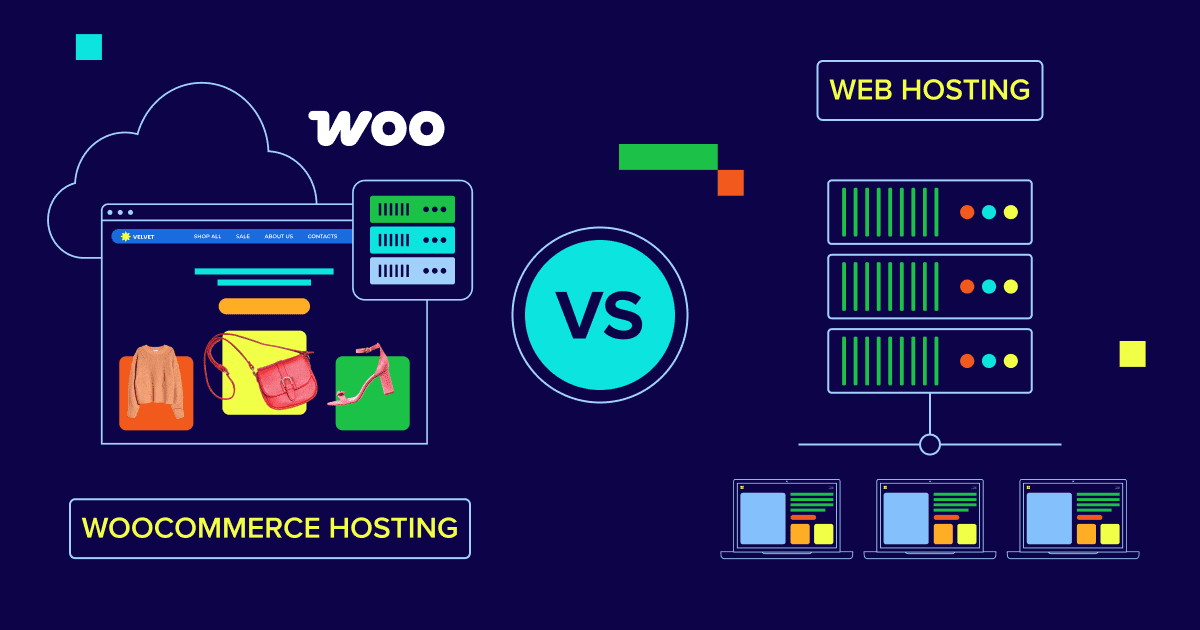
Choosing between web hosting and WooCommerce hosting often comes down to your website goals. Both serve WordPress users, but they’re designed for very different purposes.
The real challenge in WooCommerce vs web hosting is choosing the hosting type that matches your goals. Are you building a content-driven site or do you plan to run a full-fledged online store? Understanding that distinction is key to making the right choice.
In this guide, we’ll break down WooCommerce vs web hosting, their advantages and disadvantages and highlight their key differences. Further, we’ll help you decide which option makes the most sense for your website’s goals.
What is web hosting?
Web hosting is a service that allows a website to be accessible on the internet. In simple terms, it provides the server space and resources needed to store your site’s files and makes them available to visitors worldwide.
It’s a general-purpose solution suited for different types of websites, such as blogs, business sites, portfolios and small WordPress websites. So before diving into the details of WooCommerce hosting, let’s first look at the strengths and limitations of standard web hosting.
What are the advantages of web hosting?
Web hosting keeps things simple, affordable and flexible, which is why so many first-time site owners choose it. Here are some of the biggest benefits of choosing web hosting.
- Budget-friendly start: A low-cost way to launch a website for beginners, freelancers and small businesses.
- Easy setup: One-click installs and simple dashboards make management straightforward.
- Flexible use: Supports blogs, portfolios, business sites and multiple CMSs.
- Managed maintenance: Providers handle server setup, server updates, uptime and server maintenance tasks for you.
While web hosting has clear advantages, it also comes with limitations that may affect long-term growth or performance.
What are the disadvantages of web hosting?
To make the right choice, it’s important to understand the downsides too. Knowing these will help you decide whether basic web hosting is enough or if you need something more specialized.
- Shared resources: Performance can drop if other sites on the server see traffic spikes.
- Limited scalability: Basic plans aren’t built for fast-growing sites or high traffic. You may need to upgrade to VPS, a dedicated server or cloud hosting as your site expands.
- Lacks eCommerce tools: Requires plugins or specialized hosting for online stores.
- Basic security: While SSL is usually included, advanced protections like firewalls, malware removal or DDoS defense are often missing.
Having said that, web hosting works well for blogs, portfolios or small sites. However, it struggles with the demands of online selling and that’s where WooCommerce hosting comes in.
What is WooCommerce hosting?
WooCommerce hosting is a specialized type of WordPress hosting designed for eCommerce websites offered by many WordPress hosting companies . It comes with pre-installed WooCommerce plugin and runs on servers optimized to handle the extra load of online stores. Beyond performance, it also includes built-in eCommerce tools, stronger security measures and support tailored for store owners.
Let us take a look at how these specialized features translate into both advantages and disadvantages for your online store.
Also read: Bluehost WooCommerce Hosting Plans Comparison
What are the advantages of WooCommerce hosting?
Since WooCommerce is optimized for eCommerce, it covers everything from speed and security to store management. Here’s what that looks like in practice:
- Pre-installed WooCommerce: Start your store instantly without manual setup or configuration.
- Optimized performance: Faster storage, advanced caching and CDNs improve site speed and keep product pages and carts running smoothly.
- Stronger security: SSL certificates, automated backups, firewalls and malware protection safeguard transactions.
- Built-in store tools: Subscriptions, memberships, bookings, gift cards and email templates included.
- Specialized support: eCommerce-trained teams resolve checkout errors, plugin issues and store-specific problems quickly.
Also read: How to Choose WooCommerce Hosting: A Step-by-Step Guide
What are the disadvantages of WooCommerce hosting?
WooCommerce hosting is ideal for online businesses. However, it isn’t the most cost-effective or flexible option for everyone. Let’s take a look at some of the key limitations of WooCommerce hosting:
- Higher cost: More expensive than basic web hosting due to added performance, security and eCommerce tools.
- WordPress-only: Works exclusively with WordPress and WooCommerce; not compatible with other CMSs or platforms.
- Plugin restrictions: Some hosting providers block certain plugins to maintain stability and security.
- Not ideal for non-stores: Overkill for simple sites like blogs, portfolios or basic business pages.
Now that you’ve seen the pros and cons of both hosting types, the real question is how they stack up against each other. Let’s break down the key differences between WooCommerce hosting and web hosting. Additionally, let’s break down these two options further to see which one is the best fit for your site.
What are the key differences between WooCommerce vs web hosting?
Choosing between web hosting and WooCommerce hosting isn’t just about cost. It’s about how well each service handles the specific demands of an online store. To help you see and identify the contrast more clearly, let’s first look at the differences between the two hosting types. Further, we’ll break it down by the areas that impact your site’s performance, security and growth.
| Feature | Web hosting | WooCommerce hosting |
| Caching | Works well for simple sites by speeding up static pages like blogs and portfolios. | Uses smarter caching rules that keep carts and checkout pages updated, while still caching product descriptions and other static content. |
| Database load | Handles light queries such as posts and pages | Optimized for heavy queries from products, orders and on-site searches. |
| Security | Basic protection: SSL, firewall, malware scans. | Advanced safeguards: WAF, DDoS protection, daily backups, malware removal. |
| Updates | Site owner manages WordPress and plugin updates. | Managed updates for WordPress, WooCommerce and extensions, with staging for safe testing of all the technical aspects. |
| Performance | Shares server resources with multiple websites in a shared hosting plan. Works fine for smaller sites with low to moderate traffic. | Built for speed. Uses faster storage, extra processing power and a global network to keep online stores running smoothly even during busy periods. |
| Support | General technical support from customer service teams for setup and troubleshooting. | eCommerce-trained support teams who can fix store-specific issues quickly. |
| Pricing | Most affordable option for simple sites. | Higher cost, but includes performance, security and eCommerce tools needed for growth. |
| Performance | Standard Shared | Optimized for Carts |
| Security | Basic SSL | Dedicated eCommerce protection |
| Scalability | Shared resources | High-performance/Cloud-ready |
| Best for | Blogs & portfolios | Online stores |
For store owners in 2026, the WooCommerce hosting performance vs cost comparison clearly favors dedicated solutions. Bluehost offers the high-performance scalability and security essential for growing WooCommerce web hosting environments.
2026 Update: WooCommerce hosting vs Web hosting
In 2026, the hosting landscape has evolved from simple storage to intelligent infrastructure, with Core Web Vitals serving as the new benchmark for online success. While standard web hosting remains a cost-effective solution for basic blogs and portfolios, it often lacks the computational power required for modern eCommerce. Today’s online stores demand the specialized high-performance architecture found in updated WooCommerce hosting plans, which leverage advanced cloud infrastructure. Bluehost’s Oracle Cloud integration delivers the sub-second load times and 100% network uptime essential for retaining impatient mobile shoppers.
Beyond speed, the integration of artificial intelligence and enhanced security has redefined what users should expect. WooCommerce web hosting in 2026 now standardizes AI-guided store creation and automated onboarding, dramatically reducing setup time. More importantly, security has shifted from reactive to proactive, with specialized plans offering PCI-ready environments and AI-driven malware defense to protect sensitive transaction data. The following WooCommerce hosting performance vs cost comparison highlights why upgrading to a dedicated solution is critical for serious merchants.
| Feature | Standard Web hosting | WooCommerce hosting (2026) |
| Setup experience | AI site creation | AI-guided store creation |
| Performance | Shared resources & standard caching | High-performance cloud (OCI) & object caching |
| Security | Basic SSL & Firewall | Dedicated eCommerce Defense & PCI Ready |
| Scalability | Limited CPU/RAM flexibility | Elastic scaling for traffic spikes |
| Best for | Content sites, blogs, portfolios | High-volume online stores |
As the table illustrates, the evolving standards of 2026 position web hosting WooCommerce solutions not just as a premium option, but as a necessity for security-conscious and performance-driven businesses.
Which hosting option should you choose?
Choosing between web hosting and WooCommerce hosting isn’t only about the type of website you’re building today. It also comes down to your priorities like budget, growth plans and how much performance and security you’ll need as your site evolves.
When does web hosting make sense?
If your main goal is to get online at the lowest possible cost, web hosting is the place to start. It’s straightforward, affordable and covers the essentials without adding eCommerce-specific features you may not need.
The trade-off is flexibility. Web hosting keeps things simple, but if you later decide to add a store, you’ll likely need to upgrade or migrate. That can be done, but it adds extra steps.
When should you opt for WooCommerce hosting?
If eCommerce is part of your plan, whether from day one or in the near future, WooCommerce hosting is worth the investment. These plans come with store tools, stronger security and performance optimizations built in. That means you don’t have to piece things together later with extra plugins or upgrades.
The upfront cost is higher, but the long-term value is clear. You avoid migration headaches, you get a store-ready environment from the start and your site can scale smoothly as traffic and sales grow.
If you’re still weighing both options after reviewing their use cases, a side-by-side comparison can make the decision much clearer.
Quick decision guide: WooCommerce vs Web hosting
This guide sums up the core differences in one place, so you can quickly match your website’s goals with the right hosting type. Think of it as a shortcut to confirm the option that best fits your needs.
| Decision factor | Best fit | Why |
| Starting budget is very limited | Web hosting | Lower upfront cost to launch your website online |
| Planning to sell products soon | WooCommerce hosting | Store tools and payment security included |
| Expecting traffic growth over time | WooCommerce hosting | Optimized stack to handle scale |
| Don’t want migration headaches later | WooCommerce hosting | Already built for eCommerce from the start |
| Need a simple, temporary site | Web hosting | Easy, low-commitment option |
In the end, the decision isn’t just about today’s setup. If you value simplicity and the lowest cost, web hosting is enough. But if eCommerce is in your roadmap even a little down the line, WooCommerce hosting saves time, effort and risk in the long run.
Once you’ve figured out whether web hosting or WooCommerce hosting is the right fit, the next step is choosing a provider you can trust. That’s where Bluehost comes in.
Why choose Bluehost for your hosting needs?
Picking the right hosting provider is just as important as choosing between web hosting and WooCommerce hosting. This section highlights what Bluehost offers under each plan, so you can see exactly how it supports both general websites and online stores.
Bluehost simplifies the WooCommerce vs Web hosting decision by offering both solutions.
1. Bluehost web hosting
For blogs, portfolios and business sites that don’t need eCommerce tools, Bluehost’s shared hosting offers a strong foundation to build and grow online. It delivers reliable performance, advanced security features and an intuitive control panel designed to simplify site management.
With benefits like a free domain for the first year and SSL certificate, you have all the essentials to get started easily. Further, our hosting is designed to deliver long-term stability and premium value for non-eCommerce websites backed with 24/7 human support.
2. Bluehost WooCommerce hosting
If you’re running an online store, you can opt for Bluehost WooCommerce hosting, which is tailored specifically for eCommerce. Our WooCommerce hosting plan comes with WordPress and WooCommerce pre-installed, plus built-in tools powered by YITH plugins. This includes subscriptions, memberships, bookings, gift cards and email templates.
Performance features include NVMe storage, optimized PHP workers and a Cloudflare CDN with Argo routing. Together, these keep stores fast and responsive.
Beyond speed, security is also a priority. Every plan of ours includes free SSL certificates and daily backups for essential protection. For stronger safeguards, like malware scanning or DDoS defense, higher-tier plans are available.
Bluehost WooCommerce hosting also comes with built-in SEO support through Yoast SEO plugins. The eCommerce Essentials plan includes the free Yoast SEO plugin, while the eCommerce Premium plan adds advanced options like Yoast Local SEO, Yoast News SEO and Yoast Video SEO. This helps your store rank better across search engines and content formats.
Beyond these features, Bluehost stands out as a hosting provider thanks to its WordPress credibility, reliable support and growth-friendly extras.
Key features & benefits:
- Bluehost is officially recommended by WordPress.org and trusted by more than 5 million websites worldwide, providing strong credibility within the WordPress community.
- 24/7 customer support includes both general teams and eCommerce-trained specialists, ensuring prompt help across your website’s journey.
- New WooCommerce plans include AI-powered store setup tools. This helps in accelerating site creation and manageability.
- A free domain (first year) simplifies initial setup and adds immense value for new sites.
- Free site migration removes technical friction, making it easier to switch to Bluehost from another host.
- Exclusive eCommerce Bundle savings, which combines premium plugins and tools at a discounted rate. This gives you more value compared to buying them separately.
How easy is it to set up a WooCommerce store with Bluehost?
Setting up a WooCommerce store with Bluehost is designed to be quick and beginner-friendly. With our WordPress AI Builder, you get a guided onboarding flow that helps you launch a functional store without needing technical know-how, so you can spend more time on products and sales.
- Guided setup wizard
- Step-by-step onboarding for all skill levels
- Helps you choose a store type, add products and configure essentials
2. Payments made simple
- Guided prompts to connect payment gateways
- Reduces setup errors and missed steps
3. AI Site creation for faster design
- Generates a unique, professional layout based on your inputs
- Helps you start with a polished storefront without designing from scratch
4. Launch-ready WooCommerce environment
- Store setup is streamlined so you can go live faster
- Less time on configuration, more time growing your business
Overall, Bluehost makes setting up a WooCommerce store fast and user-friendly. Its guided onboarding and AI tools help you launch quickly and focus on growing your business.
Final thoughts
Choosing between Bluehost’s web hosting and WooCommerce hosting doesn’t have to be difficult. Both serve different purposes and once you understand the differences, the right option becomes clearer.
Web hosting works best for general websites like blogs, portfolios and company pages. WooCommerce hosting, on the other hand, is built for eCommerce, with faster performance, stronger tools and dedicated support for online stores.
The key is to align your hosting with your website goals. Whether you’re starting simple or aiming to sell online, Bluehost makes it easy to get started and scale as you grow.
Ready to launch your site? Take the next step today and choose the Bluehost hosting plan that fits your needs and boosts your site for long-term success.
FAQs
Web hosting is a general service that supports many types of websites. WordPress hosting, on the other hand, is optimized specifically for the WordPress CMS, with server settings, caching and security features tailored for WordPress sites.
Many WordPress hosting providers, including Bluehost, offer WordPress-optimized servers and easy WordPress installation, making it faster and more reliable for running a WordPress website.
Shared hosting is cost-effective and works for blogs, small portfolios or simple websites. WordPress hosting goes a step further by offering WordPress-specific features like automatic software updates, managed hosting tools and specialized support.
If you plan to sell products online, WooCommerce hosting is the best choice for your WordPress site. WooCommerce hosting solutions are designed for eCommerce and include performance upgrades, security and store-ready tools.
Bluehost WooCommerce hosting plans come with pre-installed WooCommerce. Additionally, we provide features like gift cards, subscriptions and optimized server environments that make store setup easier.
You should move to VPS hosting or a dedicated server when your site needs more dedicated resources than a shared hosting plan can provide. A virtual private server (VPS) gives you a portion of a physical server with dedicated server resources, while dedicated hosting means you control the entire physical server.
Bluehost’s VPS hosting and dedicated server hosting options are built for growing businesses that need more control and scalability.
Managed WordPress hosting handles updates, security and maintenance for you, letting you focus on content and growth. Regular hosting requires you to manage these tasks by yourself.
Yes, Bluehost offers free WordPress migration services for eligible customers, making it simple to transfer your site from another WordPress hosting provider. Our team takes care of the backup and transfer process for you, saving time and effort while ensuring a smooth, hassle-free transition.

Write A Comment